August 13, 2026
The Structural Trap at the Heart of Gold Mining's Biggest Debate
When a mining company's most valuable assets begin to feel like a liability to its shareholders, something has gone fundamentally wrong with how value is being communicated, managed, or both. That tension sits at the centre of the Barrick North American IPO investor backlash, a corporate governance dispute that is now reshaping how the gold sector thinks about asset carve-outs, minority listings, and what institutional shareholders will actually tolerate.
The debate is not simply about one proposed listing. It reflects a deeper question about whether large, diversified gold producers can sustain investor confidence when operational delivery consistently falls short of what premium assets should theoretically produce. Furthermore, this dispute arrives at a moment when the gold price paradox between rising bullion prices and lagging equity performance has never been more pronounced.
When big ASX news breaks, our subscribers know first
The Strategic Logic Behind Asset Carve-Outs in Gold Mining
The idea of separately listing high-quality mining assets has a long history in the sector. The underlying theory is straightforward: a diversified parent company often trades at a conglomerate discount, where the market applies a blended multiple across assets of varying quality, geography, and risk profile. By separating premium assets into a standalone vehicle, management can argue that the market will apply a more favourable, sector-specific valuation multiple to those operations.
This logic has worked in some historical cases and failed badly in others. The critical variable is almost always the same: whether the carve-out genuinely transfers value to existing shareholders or whether it dilutes their economic exposure to the assets they most wanted in the first place.
For Barrick, the argument for a North American listing centres on the Nevada Gold Mines complex, a joint venture with Newmont that is widely regarded as the largest gold-producing complex anywhere in the world. Operations across the Carlin Trend, Battle Mountain corridor, and Turquoise Ridge represent some of the highest-grade, lowest-cost gold production in North America. These are not marginal assets, and that is precisely why the proposed IPO structure is generating such friction.
What the Proposed IPO Vehicle Actually Contains
The assets earmarked for the proposed listing span several distinct operations and exploration positions:
- Nevada Gold Mines stake: Barrick's share of the joint venture complex that collectively contributes more than half of the company's total profit
- Fourmile discovery: An exploration-stage asset in Nevada with significant drill intercepts suggesting high-grade potential, providing speculative upside to the IPO narrative
- Dominican Republic operations: The Pueblo Viejo mine, one of the Caribbean's largest gold operations, adding geographic diversification to the proposed vehicle
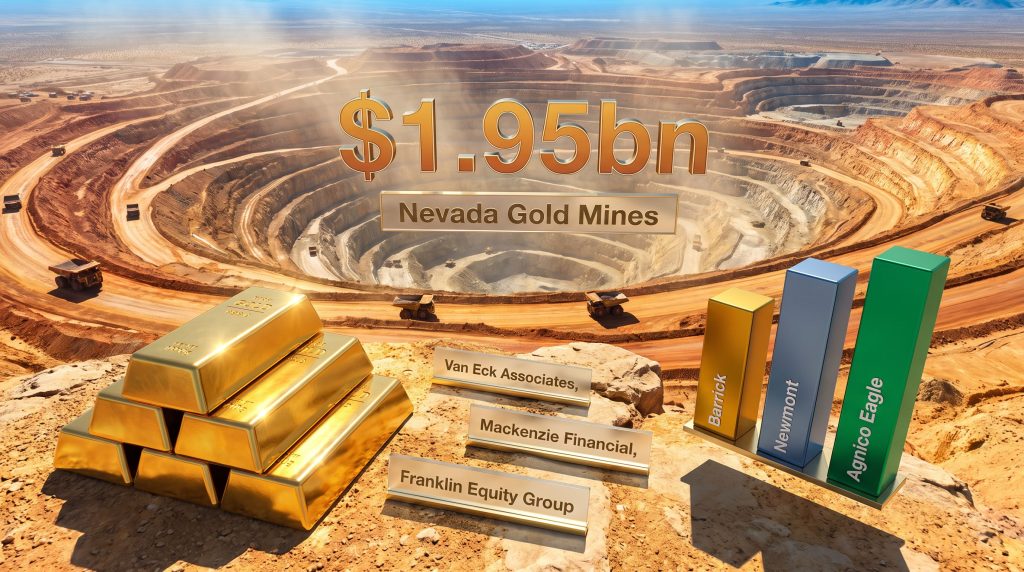
A critical structural precondition for the proposed listing was resolved when Barrick and Newmont completed a $1.95 billion asset transaction that consolidated relevant Nevada assets into the Nevada Gold Mines joint venture framework. This transaction removed a key complexity that would have made the IPO structurally difficult to execute. In addition, gold M&A activity across the broader sector has intensified scrutiny of how such deals are structured and who ultimately benefits.
Mark Hill has been named to lead the planned North American entity, a signal that Barrick's board intends to pursue the listing despite mounting institutional resistance.
Who Is Pushing Back Against the Barrick North American IPO Investor Backlash
Three significant institutional investors have publicly or formally registered opposition to the proposed structure, and their combined influence over Barrick's shareholder register is considerable.
Van Eck Associates has pushed back against the plan, a notable development given that Van Eck's gold-focused ETFs and funds represent one of the most widely referenced institutional exposures to senior gold producers in the market. This Van Eck takeover opposition reflects a broader pattern of the firm actively challenging structures it views as detrimental to existing shareholders.
Mackenzie Financial has gone further, with one portfolio manager publicly calling for the resignation of Barrick chairman John Thornton. This represents an escalation beyond objecting to a transaction and into direct governance confrontation.
Franklin Equity Group has also opposed the structure, adding institutional weight to what is becoming a coordinated, if not formally organised, shareholder response.
The core financial objection raised across all three firms is consistent: selling a minority interest in Barrick's most profitable and strategically significant assets would reduce existing shareholders' proportional exposure to those operations by as much as 15%, without necessarily fixing the operational challenges that have caused underperformance in the first place.
The Financial Mechanics of the Objection
| Concern | Detail |
|---|---|
| Estimated shareholder dilution | Up to 15% reduction in exposure to North American assets |
| Asset profit contribution | Nevada operations generate more than half of Barrick's total profit |
| Structural risk | Minority IPO does not address underlying operational gaps |
| Governance opacity | No confirmed shareholder vote requirement has been disclosed |
The distinction between a full demerger and a minority listing is financially significant. In a full demerger, existing shareholders receive proportional stakes in the new entity. In a minority IPO, the parent retains majority ownership while new capital enters, diluting the economic interest of those who already held the assets before the transaction.
This is why the Barrick North American IPO investor backlash has such intensity. Investors who bought Barrick shares partly because of the Nevada exposure now face the prospect of that exposure being diluted through a process they have no formal vote to block, at least based on current disclosures.
Is This a Governance Dispute Wearing a Financial Mask?
The leadership dimension cannot be separated from the financial one. John Thornton's tenure as chairman has attracted persistent criticism centred on executive compensation structures, board accountability, and strategic direction. The public call from a Mackenzie portfolio manager for Thornton to step down is not an isolated comment; it reflects an accumulation of investor frustration that predates the IPO proposal itself.
In the gold mining sector, chairman-level disputes of this kind typically signal that institutional investors have exhausted quieter channels of influence and are now using public pressure as their primary tool. The fact that this pressure coincided with a major strategic announcement suggests the IPO proposal has become the focal point for broader governance grievances.
How Did Barrick Arrive at This Point?
Understanding why the Barrick North American IPO investor backlash carries such weight requires understanding the performance context from which it emerged.
Barrick has meaningfully underperformed its two closest peers over the period of elevated gold prices that might have been expected to lift all major producers. While Newmont and Agnico Eagle maintained or grew their production profiles and delivered relatively stable shareholder returns, Barrick's production declined and its share price lost ground on a relative basis. Notably, the broader trend of gold miners vs ASX benchmarks has underscored just how stark Barrick's relative underperformance appears when viewed against sector-wide tailwinds.
The most damaging data point is this: former CEO Mark Bristow was removed in September 2025 after the company missed its own internal production guidance for 14 consecutive quarters. That is three and a half years of systematic shortfall against self-imposed targets, occurring during a period when the gold price environment was broadly supportive.
The Gold Price Paradox
Barrick's underperformance is particularly striking because it unfolded against a backdrop of structurally supportive gold prices. This raises a question that investors are now asking directly: are the company's challenges cyclical and correctable, or structural and embedded in its operating model?
Gold's safe-haven demand characteristics, combined with central bank accumulation and persistent inflationary pressures, created conditions that should have allowed a company with Barrick's asset quality to outperform. The fact that it did not suggests the problem lies not in what Barrick owns but in how it is being managed and governed.
This is the context in which the IPO proposal must be evaluated. Investors are not simply assessing whether a separate listing might attract a valuation premium. They are asking whether the proposed structure would make the remaining Barrick entity better or worse positioned to resolve the operational issues that caused the underperformance in the first place. Understanding gold equities performance dynamics is consequently essential to contextualising why institutional pushback has been so pronounced.
A Peer Comparison That Tells Its Own Story
| Metric | Barrick | Newmont | Agnico Eagle |
|---|---|---|---|
| Strategic direction | North American IPO carve-out | Integrated global portfolio | Focused Canadian/Americas growth |
| Recent operational trend | Production decline | Stable to growing | Outperforming guidance |
| Shareholder sentiment | Elevated tension | Relatively stable | Broadly positive |
| Leadership stability | Under active scrutiny | Settled | Settled |
Three Scenarios for How This Resolves
The range of outcomes for the Barrick North American IPO debate is wider than it might appear. Each scenario carries materially different implications for shareholders.
Scenario 1: The IPO Proceeds as Originally Structured
If Barrick pushes forward without meaningful modifications, a minority stake is listed and the company retains majority control. The outcome for shareholders depends entirely on whether the market assigns a premium multiple to the North American vehicle that more than compensates for the diluted exposure. Historical precedents suggest this outcome is achievable in strong gold markets but fragile during sentiment shifts.
Scenario 2: The Structure Is Modified Under Investor Pressure
Barrick concedes on some terms, potentially widening the proposed shareholder vote requirement, adjusting the ownership split, or altering the asset composition of the listing vehicle. This outcome preserves some institutional confidence but extends the timeline and introduces execution risk at a moment when Barrick's operational credibility is already strained.
Scenario 3: The IPO Is Abandoned
Sustained institutional opposition makes the listing politically untenable, particularly if Thornton's position becomes the central issue rather than the transaction itself. In this scenario, Barrick reverts to a consolidated operating model with internal reform as the primary value lever. Share price relief might follow in the short term, but the underlying valuation discount would likely persist without a credible operational turnaround.
The Fourmile Factor: What Exploration Upside Actually Means Here
One underappreciated element of the Barrick North American IPO narrative is the role of the Fourmile discovery. Unlike producing assets, exploration-stage discoveries are valued primarily on drill results and geological interpretation rather than cashflow. Fourmile has produced drill intercepts that have attracted significant attention within Nevada's gold geology community, with high-grade intersections suggesting the potential for a new tier-one deposit within the Carlin Trend geological corridor.
Including Fourmile in the IPO vehicle serves a specific purpose: it provides growth optionality and a speculative premium that producing assets alone cannot deliver to new public market investors. However, for existing Barrick shareholders who already carry this exposure, the value of including Fourmile in a separately listed entity depends entirely on how the market prices exploration upside at the moment of listing.
The Nevada Gold Mines joint venture structure also adds a layer of complexity that is absent from simpler demerger scenarios. Because the Nevada assets are already jointly owned with Newmont, any IPO vehicle must accommodate the governance and economic rights embedded in that pre-existing arrangement. This is not an insurmountable obstacle, but it means the proposed listing is structurally more complex than a straightforward carve-out, and institutional investors are pricing that complexity into their risk assessments. For further context on the Barrick and Newmont settlement that cleared a key hurdle for the proposed listing, independent reporting offers useful background on how that precondition was resolved.
The next major ASX story will hit our subscribers first
What Investors Should Watch as This Unfolds
For those monitoring the Barrick North American IPO investor backlash, several decision points will determine the direction of this story over the coming quarters.
- Quarterly earnings disclosures: Production numbers, all-in sustaining costs, and profit margins will either strengthen or weaken Barrick's ability to argue that the IPO is a strategic enhancement rather than a distraction from operational problems.
- Leadership and domicile announcements for the new entity: The formal structure of the North American vehicle, including its listing jurisdiction and governance framework, will reveal how seriously Barrick is taking institutional concerns about transparency.
- Shareholder vote confirmation: Whether Barrick formally commits to, or rules out, a shareholder vote on the IPO is perhaps the single most important governance signal the board can send in the near term.
- Board composition changes: Any further adjustments to board membership or executive leadership will indicate how far institutional pressure is actually influencing decision-making at the highest level.
- Institutional investor communications: Watch for further public statements or formal letters from Van Eck, Mackenzie, or Franklin, as these would signal whether opposition is hardening or softening in response to company communications.
The Deeper Question the Gold Sector Cannot Avoid
At its core, the Barrick North American IPO investor backlash is a referendum on whether financial engineering can substitute for operational excellence in the gold mining sector. The Nevada assets are genuinely world-class. The Fourmile discovery adds genuine optionality. The Dominican Republic operations provide meaningful cashflow diversification. On paper, the IPO vehicle contains everything a standalone gold producer would need to attract a premium market valuation.
However, the investors pushing back are making a different argument: that the value was already theirs, and that creating a new public market structure around it does not add value so much as redistribute it, with some portion flowing to new shareholders rather than those who accepted the risks of holding Barrick through years of operational underperformance. Broader investor backlash reporting from specialist mining media further reinforces just how widespread these concerns have become.
Whether Barrick's board can resolve that tension without triggering a broader governance crisis may prove to be the most consequential test of institutional investor activism in the gold sector in years.
This article is for informational purposes only and does not constitute financial advice. Forward-looking statements, scenario projections, and assessments of shareholder outcomes involve inherent uncertainty. Readers should conduct independent research and consult qualified financial advisers before making investment decisions.
Want to Track the Next Major ASX Gold Discovery Before the Market Moves?
Discovery Alert's proprietary Discovery IQ model delivers real-time alerts on significant ASX mineral discoveries, cutting through complex geological and market data to surface actionable opportunities the moment they are announced — explore Discovery Alert's dedicated discoveries page to see the historic returns major mineral finds have generated, and begin your 14-day free trial to position yourself ahead of the broader market.