Critical Resources Ltd
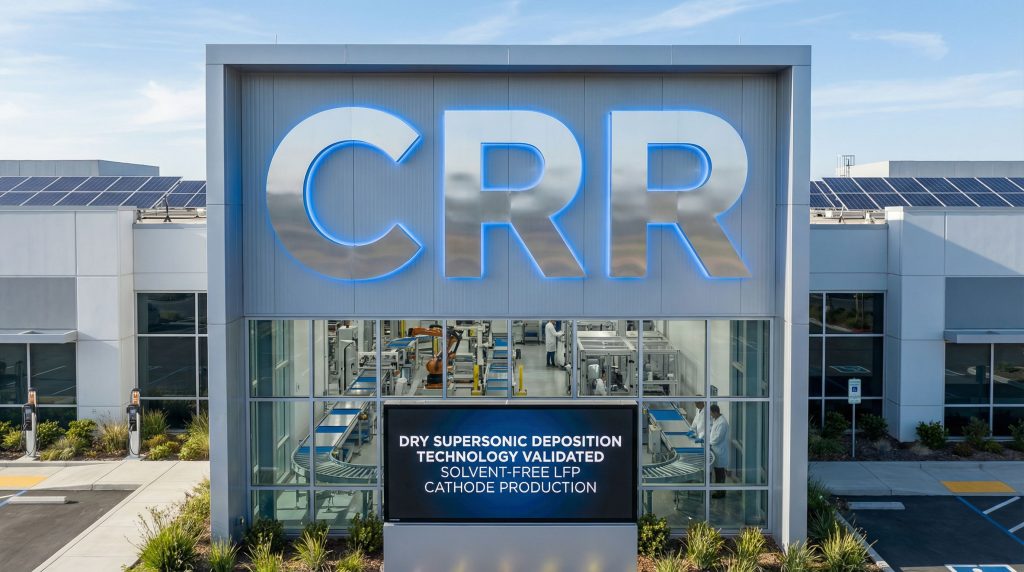
The breakthrough battery technology at Critical Resources Ltd represents a pivotal advancement in how lithium iron phosphate cathodes are manufactured. Critical Resources (ASX:CRR) has achieved a significant technical milestone in its solid-state battery evaluation program, successfully validating Dry Supersonic Deposition (DSD) technology for manufacturing lithium iron phosphate (LFP) cathodes without solvents or polymer binders. This breakthrough represents a potentially game-changing advancement in battery manufacturing that could simplify production processes, reduce energy consumption, and enhance safety outcomes.
The company's laboratory-scale validation at South Dakota School of Mines & Technology has demonstrated that DSD can produce mechanically robust and electrochemically active cathodes whilst preserving active material integrity—addressing a critical technical risk in solvent-free manufacturing pathways.
Revolutionary Manufacturing Process Validation
The DSD technology validation has delivered three key technical achievements that position Critical Resources at the forefront of next-generation battery manufacturing:
| Key Achievement | Technical Outcome | Commercial Significance |
|---|---|---|
| Material Integrity Preserved | LFP crystal structure remains intact after high-velocity deposition | Eliminates primary technical risk in solvent-free manufacturing |
| Strong Binder-Free Adhesion | Dense mechanical bonding to aluminium current collectors | Enables durable electrodes without solvents or polymer binders |
| Tunable Performance | Heat treatment optimises for energy vs. power applications | Allows customisation for different battery use cases |
The validation work confirms that X-ray diffraction (XRD) analysis shows LFP maintains its crystal structure across all tested DSD conditions. Furthermore, Scanning Electron Microscopy (SEM) reveals dense, mechanically anchored coatings with strong interfacial bonding and no delamination.
Electrochemical Performance Demonstrates Commercial Viability
Critical Resources' testing reveals that cathode performance can be deliberately tuned through controlled processing parameters:
- As-deposited cathodes: Retain stronger high-rate (power-focused) tolerance, ideal for applications requiring rapid charge/discharge cycles
- Annealed cathodes: Deliver improved low-rate (energy-focused) performance through partial restoration of crystalline structure
This tunability represents a significant advantage over conventional manufacturing methods. Consequently, it allows optimisation toward specific end-use applications ranging from stationary energy storage to high-power duty cycles.
Managing Director Tim Wither commented: "These results mark an important milestone in our solid-state battery evaluation program. We have demonstrated that dry supersonic deposition can produce functional, solvent-free cathodes without damaging the active material, whilst delivering predictable and tunable electrochemical performance."
When big ASX news breaks, our subscribers know first
Understanding Dry Supersonic Deposition Technology
Dry Supersonic Deposition (DSD) represents a fundamental departure from conventional battery cathode manufacturing. Instead of mixing active materials with liquid solvents and polymer binders—then drying in industrial ovens—DSD accelerates dry powder particles to supersonic velocity in an inert gas stream.
Upon impact, particles undergo plastic deformation and mechanically bond directly to aluminium substrates. This creates dense cathode layers without solvents or binders. This kinetic energy-driven consolidation eliminates:
- Solvent handling systems and associated safety risks
- Energy-intensive drying infrastructure
- Solvent recovery equipment and ventilation systems
- Polymer binder requirements
Why This Matters for Battery Manufacturing
Conventional electrode drying and solvent recovery represent major contributors to manufacturing energy use, capital intensity, and process complexity in battery production. In addition, a validated solvent-free pathway could significantly reduce manufacturing costs whilst improving safety outcomes—particularly relevant for infrastructure-scale stationary storage applications.
The technology operates by accelerating LFP powder particles to supersonic speeds in an inert gas stream. When these particles impact the aluminium current collector at high kinetic energy, they undergo plastic deformation and create mechanical bonds with both the substrate and neighbouring particles.
This process creates a dense, continuous cathode layer without requiring the chemical binders or solvents used in traditional slurry-casting methods. Furthermore, the breakthrough battery technology at Critical Resources Ltd eliminates many of the environmental and safety concerns associated with conventional manufacturing approaches.
Strategic Infrastructure-Scale Opportunities
Critical Resources' DSD validation directly addresses growing demand for stationary battery storage driven by grid-connected electrification and data centre expansion. These applications prioritise:
- Safety and reliability over maximum energy density
- Predictable performance under steady-state conditions
- Scalable manufacturing without complex solvent handling
- Reduced environmental impact from simplified processing
The company's disciplined, capital-light evaluation approach through university partnerships minimises execution risk whilst maintaining strong intellectual property protection. However, Critical Resources has filed two separate 12-month provisional U.S. patent applications covering both DSD and broader solid-state battery projects, reinforcing early commercial and technological advantages.
Comprehensive Next-Phase Development Plan
Critical Resources has outlined a structured progression toward commercial readiness:
- Process Parameter Refinement – Optimise deposition parameters for improved coating uniformity and reproducibility
- Expanded Performance Validation – Broader electrochemical testing across defined C-rate ranges and extended cycling
- Application-Specific Optimisation – Tune cathode performance for energy-focused vs. power-focused applications
- Advanced Chemistry Evaluation – Extend DSD trials to other commercially relevant cathode materials
- Solid-State Integration – Progress to composite cathode-electrolyte structures for prototype development
Technical Performance Results Support Commercial Viability
The electrochemical testing demonstrates clear performance characteristics that can be tailored to specific applications. According to the company's announcement, cyclic voltammetry testing revealed distinct performance profiles between as-deposited and annealed cathodes.
As-deposited electrodes showed broader redox features and higher polarisation. In contrast, annealed electrodes exhibited sharper, more stable peaks with nearly double the peak current. This difference reflects the structural changes induced by controlled heat treatment.
| Cathode Type | Low-Rate Performance (0.1-0.2C) | High-Rate Performance (≥1C) | Optimal Application |
|---|---|---|---|
| As-deposited | Moderate capacity utilisation | Superior rate capability retention | High-power duty cycles |
| Annealed | Higher discharge capacity | Reduced fast-charge tolerance | Steady-state energy storage |
These results confirm that cathode properties can be deliberately engineered through processing parameters. Consequently, this provides manufacturers with flexibility to optimise performance for intended end-use applications.
Investment Thesis: Positioned for Battery Technology Leadership
Critical Resources' successful DSD validation establishes several competitive advantages that strengthen the investment case:
Technology Differentiation: The company now holds validated intellectual property in solvent-free cathode manufacturing—a potential game-changer for large-scale battery production. For instance, this technology has applications across stationary storage, electric vehicles, and industrial systems.
Strategic Optionality: With exclusive options over five granted U.S. patents and additional pending applications in solid-state battery technologies, Critical Resources maintains multiple pathways to commercialisation. These include licensing, partnerships, or direct development.
Market Timing: Global stationary battery storage demand is accelerating, driven by renewable energy integration and data centre growth. Furthermore, the breakthrough battery technology at Critical Resources Ltd addresses key manufacturing pain points in this expanding market.
Risk-Managed Development: The university partnership model through the CEPS research framework provides access to world-class facilities and expertise whilst maintaining capital efficiency and strong IP protection.
Manufacturing Advantages Drive Commercial Appeal
The DSD process addresses several critical pain points in conventional battery manufacturing:
- Energy Efficiency: Eliminates energy-intensive solvent drying requirements
- Safety Improvements: Removes solvent handling and associated fire/explosion risks
- Environmental Benefits: Eliminates solvent recovery and disposal requirements
- Process Simplification: Reduces manufacturing complexity and associated infrastructure
These advantages become particularly significant for large-scale manufacturing operations. In addition, energy costs, safety considerations, and environmental compliance represent major operational factors in these settings.
Market Context and Strategic Relevance
The announcement notes that global demand for stationary battery storage is increasing. This growth is driven by grid-connected electrification and data centre growth. These applications emphasise safety, reliability, and predictable performance over maximum energy density.
Critical Resources' DSD technology aligns with these market requirements by offering a manufacturing pathway that prioritises:
- Consistent, predictable cathode performance
- Enhanced manufacturing safety through solvent elimination
- Scalable production without complex chemical handling
- Reduced environmental impact through simplified processing
The company's focus on infrastructure-scale energy storage applications positions the technology for markets that value reliability and manufacturing scalability. However, these markets prioritise these factors over cutting-edge performance metrics.
The next major ASX story will hit our subscribers first
Why Investors Should Follow Critical Resources
The successful validation of DSD technology represents more than a technical milestone. Furthermore, it establishes Critical Resources as a potential disruptor in battery manufacturing. The company has demonstrated that complex manufacturing challenges can be solved through innovative engineering, creating intellectual property with broad commercial applications.
| Investment Catalyst | Timeline | Potential Impact |
|---|---|---|
| Solid-State Integration Progress | Next 6-12 months | Prototype readiness and partnership opportunities |
| Advanced Chemistry Trials | 12-18 months | Expanded market addressability |
| Commercial Partnership Development | 12-24 months | Revenue generation and technology licensing |
| Manufacturing Scale-Up Studies | 18-36 months | Industrial-scale validation and market entry |
Critical Resources combines a diversified critical minerals portfolio (Mavis Lake Lithium Project, Halls Peak Base Metals, New Zealand gold assets) with breakthrough battery technology development. This provides investors with exposure to both traditional mining upside and next-generation energy storage innovation.
The company's approach to technology development through university partnerships demonstrates disciplined capital allocation whilst maintaining strong intellectual property protection. Consequently, this strategy reduces execution risk whilst preserving optionality for future commercialisation through multiple pathways.
Key Investment Takeaway:
Critical Resources has achieved a genuine breakthrough in battery manufacturing technology that could reshape how cathodes are produced globally. With strong IP protection, strategic university partnerships, and a clear development roadmap, the company offers compelling exposure to the rapidly growing energy storage market whilst maintaining disciplined capital allocation.
The convergence of validated technology, growing market demand, and strategic intellectual property positions Critical Resources as a company to monitor closely in the evolving battery technology landscape. The successful DSD validation removes a critical technical risk and establishes a clear pathway toward commercial development. For instance, the breakthrough battery technology at Critical Resources Ltd opens new opportunities in the expanding stationary energy storage market.
Could Critical Resources Be Your Next Strategic Battery Technology Investment?
Critical Resources Ltd (ASX:CRR) has just achieved a major breakthrough in solvent-free battery manufacturing that could revolutionise cathode production globally. With validated Dry Supersonic Deposition technology, strong intellectual property protection, and multiple development pathways in the rapidly expanding energy storage market, this ASX-listed company presents compelling investment opportunities for forward-thinking investors. Don't miss the chance to explore how Critical Resources is positioning itself at the forefront of next-generation battery technology whilst maintaining a diversified critical minerals portfolio. Discover more about Critical Resources and their groundbreaking battery innovations here.