Far Northern Resources Ltd
Far Northern Resources Delivers a 31% Resource Upgrade at Bridge Creek — Setting the Stage for a Potential Northern Territory Gold Operation
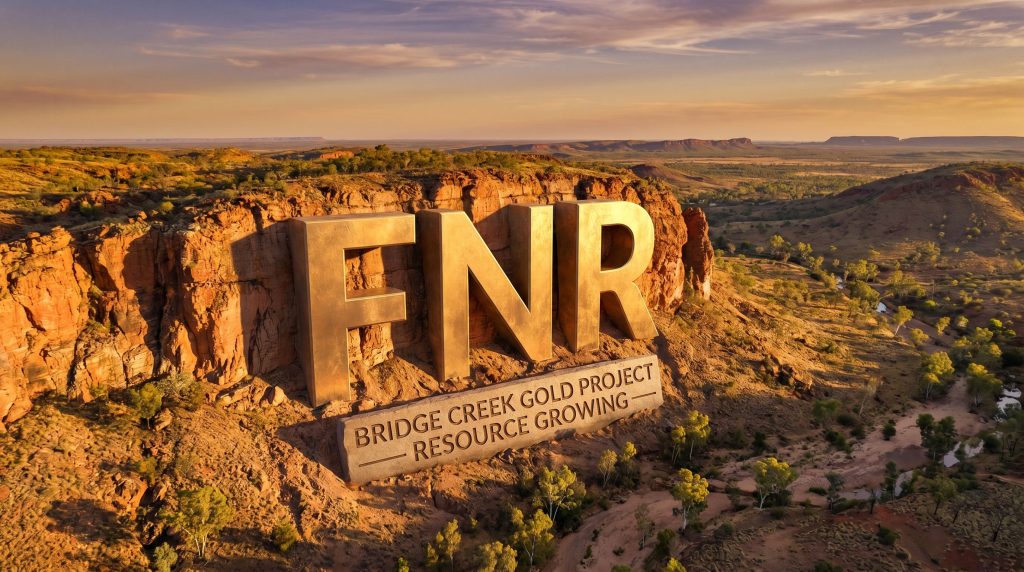
Far Northern Resources Limited (ASX: FNR) has delivered one of its most significant technical milestones to date with the Far Northern Resources Bridge Creek 31% gold resource upgrade, announcing a 31% increase in contained gold ounces at its Bridge Creek Gold Project in the Northern Territory. The updated Mineral Resource Estimate (MRE), effective 12 June 2026, takes the Bridge Creek resource to 93,000 ounces of gold and lifts FNR's total Northern Territory gold inventory by 23% to 117,000 ounces — a result the company's Managing Director described as better than expected.
For a company that listed only recently and is still in the resource definition phase, this upgrade represents a meaningful step toward demonstrating that Bridge Creek has the scale and grade to support a genuine development pathway.
When big ASX news breaks, our subscribers know first
What the Numbers Actually Say
The updated MRE covers two sub-deposits within Bridge Creek — the Central deposit and the South deposit — both reported at a 0.5 g/t Au cut-off grade and classified entirely as Inferred Resources under the JORC Code (2012).
Bridge Creek MRE Summary — June 2026
| Deposit | Tonnes (Mt) | Grade (g/t Au) | Contained Gold (koz) |
|---|---|---|---|
| Bridge Creek Central | 2.0 | 1.18 | 76 |
| Bridge Creek South | 0.7 | 0.80 | 17 |
| Bridge Creek Total | 2.7 | 1.08 | 93 |
The Central deposit is the headline contributor, hosting 76,000 ounces at 1.18 g/t Au across 2.0 million tonnes. The South deposit adds a further 17,000 ounces at 0.80 g/t Au.
Breaking the resource down by oxidation state gives investors an important lens into the ore's character and the range of potential processing options:
Bridge Creek MRE by Oxidation State — June 2026
| Oxidation State | Tonnes (Mt) | Grade (g/t Au) | Ounces (koz) |
|---|---|---|---|
| Oxide | 0.4 | 0.91 | 11 |
| Transitional | 0.2 | 0.95 | 5 |
| Fresh | 2.1 | 1.12 | 77 |
| Total | 2.7 | 1.08 | 93 |
Fresh material dominates the resource at 77,000 ounces, with the best grade sitting in that category at 1.12 g/t Au. Oxide material, which initial metallurgical testing indicates is amenable to heap leaching, accounts for 11,000 ounces.
The Full NT Portfolio: 117,000 Ounces and Growing
Bridge Creek does not sit in isolation. When combined with the nearby Ios Gold deposit, FNR's total Northern Territory resource footprint now stands at 117,000 ounces at 1.15 g/t Au.
FNR Northern Territory Resource Portfolio — June 2026
| Project | Tonnes (Mt) | Grade (g/t Au) | Ounces (koz) | Classification |
|---|---|---|---|---|
| Bridge Creek Central | 2.0 | 1.18 | 76 | Inferred |
| Bridge Creek South | 0.7 | 0.80 | 17 | Inferred |
| Ios | 0.5 | 1.49 | 24 | Inferred |
| NT Total | 3.2 | 1.15 | 117 | Inferred |
The Ios deposit carries the highest grade in the portfolio at 1.49 g/t Au, and its proximity to Bridge Creek forms part of the strategic rationale for FNR's focus on consolidating a meaningful inventory in the Pine Creek Goldfields.
Including the Queensland-based Empire Stockworks project (which contributes 23,000 ounces at 0.85 g/t Au with an Indicated component), FNR's total company resource stands at 140,000 ounces across 4.0 million tonnes at 1.09 g/t Au.
Managing Director Cameron Woodrow commented:
"This MRE update was better than expected and has reinforced the Company's focus on its Northern Territory tenements. We will continue to focus on identifying and confirming the best mineral inventory available to support the early years of a potential long-life operation in the Northern Territory… FNR believes this approach will deliver the highest-value and lowest-risk development pathway and provide the best outcome for our shareholders. With 117,000 ounces of gold now centrally located just 135km outside of Darwin, FNR believes it will be in a position to commence early mining studies on a starter pit that could lead to a much larger operation."
Understanding Mineral Resource Classifications: A Technical Foundation
For investors unfamiliar with mining terminology, understanding the JORC Code classification system is essential to evaluating resource announcements. The Australian Code for Reporting of Exploration Results, Mineral Resources and Ore Reserves (JORC Code) establishes mandatory standards for resource reporting on the ASX.
JORC Resource Categories
| Classification | Confidence Level | Drilling Requirements | Economic Studies |
|---|---|---|---|
| Inferred | Lowest | Wide-spaced drilling | Cannot be used directly |
| Indicated | Moderate | Close-spaced drilling | Can inform preliminary studies |
| Measured | Highest | Detailed drilling & sampling | Required for reserves |
Key Terms for Investors
| Term | Definition |
|---|---|
| Cut-off Grade | The minimum gold concentration considered potentially economic. FNR uses 0.5 g/t Au, meaning 0.5 grams of gold per tonne of rock |
| Contained Gold | Total ounces of gold within the resource, calculated by multiplying tonnes × grade |
| Oxidation State | The degree of weathering – affects processing methods and costs |
| g/t Au | Grams of gold per tonne – the standard measure of gold concentration in rock |
The Inferred classification means geological evidence supports the assumption of grade and geological continuity, but additional drilling is required before the resource can support formal economic studies. This represents the starting point of a development pathway rather than a final assessment.
Understanding the Geology: Why Bridge Creek Is Structurally Compelling
The geology at Bridge Creek is not a simple flat-lying deposit. Understanding its architecture helps explain both the Far Northern Resources Bridge Creek 31% gold resource upgrade and the growth potential that remains.
The mineralisation sits in the Howley Anticline, a tightly folded structural setting that has been a reliable host for gold throughout the Pine Creek Goldfields — the same broader geological province that hosts the nearby Cosmo Howley mine, located just 12 km to the south along strike.
What Are the Two Mineralisation Styles at Bridge Creek?
Two distinct mineralisation styles coexist at Bridge Creek:
Central deposit: A steeply dipping to subvertical lode system striking approximately 650 metres along strike and extending 200 metres down dip. Lodes dip at 75–88 degrees, predominantly to the west. This style is geologically analogous to the Cosmo Howley deposit.
South deposit: Classic "saddle reef" style mineralisation hosted by fold hinge zones, extending 530 metres along strike and 150 metres down dip. This style is comparable to the Enterprise deposit in the same region.
Both styles remain open along strike and down dip, which is a key point for investors. The Central deposit is open to the north (toward Ios) and approximately 750 metres to the south of the current pit shell. This open-ended geometry is the primary driver of the company's upcoming drilling programmes and the reason management believes further resource growth is achievable.
Gold occurs predominantly as inclusions within chalcopyrite, as visible gold associated with secondary pyrite, and as free grains in wall rock — a style that is broadly consistent with conventional open-pit mining and processing assumptions.
Near-Term Catalysts: What Comes Next?
The MRE upgrade is not the end of the story — it represents the technical baseline that enables the next phase of work. Furthermore, FNR has outlined a clear sequence of activities designed to advance Bridge Creek toward a potential mining study.
Planned Work Programme
| Activity | Purpose | Stage |
|---|---|---|
| Diamond drilling — Central deposit | Collect density, geotechnical and metallurgical samples | Next programme |
| RC / diamond infill drilling — northern extensions | Test strike extensions toward Ios | Ongoing review |
| RC / diamond drilling — southern extensions | Test ~750m of open strike to the south | Ongoing review |
| Bulk density data collection | Reduce a key technical risk identified in the MRE | Tied to diamond programme |
| Metallurgical testwork expansion | Test separate lithologies and finer grind sizes | Ongoing |
| Early mining study — starter pit | Evaluate economic case for initial open-pit operation | Pending study work |
The company has flagged that it is currently reviewing a larger drilling programme that would advance toward the northern end of the Central pit and the Ios deposit. Given that Ios sits at 1.49 g/t Au and is located along the same structural corridor as the Central deposit, the potential to connect these two bodies of mineralisation represents a meaningful exploration upside.
The Investment Thesis: Proximity, Grade, and an Open-Ended System
Several factors underpin the investment case at this stage of FNR's development:
1. Meaningful Resource Size at a Credible Grade
At 93,000 ounces at 1.08 g/t Au for Bridge Creek alone, and 117,000 ounces at 1.15 g/t Au across the NT portfolio, FNR is building toward a resource base that could support an initial open-pit mining study. The cut-off grade parameters used in the Whittle pit optimisation — including a gold price assumption of approximately $6,500/oz — suggest the deposit sits comfortably within the range of potential economic extraction at current gold prices, though this remains an early-stage assessment.
2. Location Advantage
Bridge Creek sits just 135 kilometres from Darwin, with access via the Stuart Highway. Proximity to infrastructure — roads, port facilities, and an established regional supply chain — represents a practical advantage for any future development scenario.
3. A Genuinely Open Deposit System
Both the Central and South deposits remain open along strike and down dip. The Central deposit has approximately 750 metres of untested strike to the south and is open to the north toward Ios. This open-ended geometry means the resource has genuine growth potential through additional drilling, not just reclassification of existing material.
4. Strategic Position in the Pine Creek Goldfields
Bridge Creek sits 12 km north along strike from the Cosmo Howley mine, in the same geological setting. The Pine Creek Goldfields have a long history of gold production, providing a well-understood geological framework for resource interpretation and a regional precedent for economic extraction.
5. A Defined Pathway Toward Mining Studies
The MRE has been prepared with RPEEE (Reasonable Prospects for Eventual Economic Extraction) considerations incorporated. The Competent Person has assessed preliminary mining, metallurgical, economic, environmental, social, and geotechnical parameters and concluded the MRE represents a fair and reasonable reflection of the project's potential. This provides the technical foundation for formal mining studies to advance.
Key Risks to Keep in Mind
Transparency on risk is important. The Competent Person identified several areas where additional work is required:
- Bulk density uncertainty: Density data is limited, particularly across the different weathering zones and rock types. Diamond drilling is specifically planned to address this.
- Downhole survey gaps: Approximately 26% of drillholes have assumed downhole dip due to missing or unrecorded survey data, which introduces some uncertainty into the drill path accuracy.
- Inferred-only classification: The entire resource is classified as Inferred, meaning confidence levels must be improved through infill drilling before the resource can support a formal economic study.
- Metallurgy requires further work: Initial testing showed recoveries of 58%–90% using conventional gravity and CIP processing. Further testwork at finer grind sizes and on separate lithologies is recommended.
- Early-stage ESG baseline: As an early-to-mid stage greenfields project, environmental and social impact assessments are not yet well advanced.
These are standard risks for a project at this stage and are not unusual for a company transitioning from resource definition to preliminary economic studies.
The next major ASX story will hit our subscribers first
Why Investors Should Keep Watching FNR
The Far Northern Resources Bridge Creek 31% gold resource upgrade has moved the company from a recently listed explorer to one with 140,000 total ounces across two jurisdictions, a defined geological model, a clear drilling pipeline, and a stated ambition to commence early mining studies on a starter pit at Bridge Creek.
The upcoming diamond drilling programme represents the most immediate catalyst to watch. It serves a dual purpose: collecting the technical data (density, geotechnical, metallurgical) needed to advance a mining study, while simultaneously testing the northern and southern extensions that could deliver further resource growth.
With 117,000 ounces in the Northern Territory sitting 135 kilometres from Darwin, a structurally open deposit system, and a clear sequence of technical milestones ahead, FNR represents a company that investors with an interest in early-stage Australian gold development should be monitoring closely.
Key Takeaway:
Far Northern Resources has established a credible and growing gold inventory in one of Australia's most historically productive goldfields. The 31% resource upgrade at Bridge Creek, combined with an open-ended deposit system and a defined path toward mining studies, positions FNR as a junior gold developer with genuine near-term catalysts. Upcoming diamond drilling and metallurgical testwork results are the milestones to watch.
Ready to Learn More About Far Northern Resources' NT Gold Project?
Far Northern Resources (ASX: FNR) is advancing a growing gold inventory in the Pine Creek Goldfields, just 135 kilometres from Darwin, with a 31% resource upgrade at Bridge Creek already under its belt and a clear pathway toward early mining studies. With 117,000 ounces across its Northern Territory portfolio, an open-ended deposit system, and a defined drilling programme ahead, this is a junior gold developer with near-term catalysts worth watching closely. To find out more about FNR and the Bridge Creek Gold Project, visit the company's website at farnorthernresources.com.