
July 1, 2026
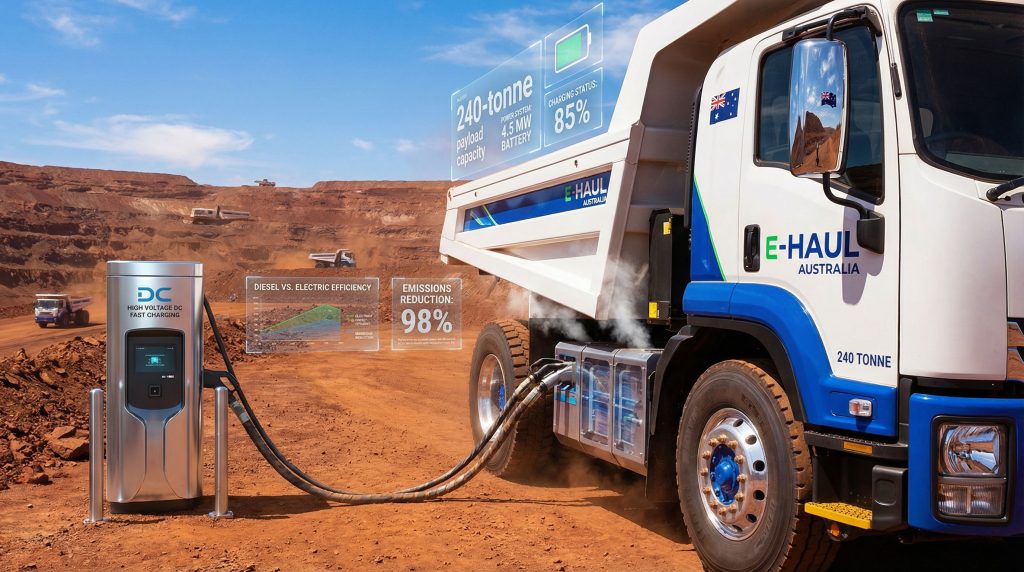
Battery-electric haulage systems represent the convergence of energy storage innovations, power management protocols, and heavy-duty vehicle engineering designed specifically for continuous operation under extreme environmental conditions. The emergence of BHP and Rio Tinto battery-electric haul trucks demonstrates how major mining corporations are investing in zero-emission alternatives to traditional diesel-powered fleet operations. Furthermore, these systems integrate regenerative braking mechanisms, thermal regulation networks, and high-capacity charging infrastructure to deliver sustainable mining solutions. The development of electric vehicles transforming mining operations represents a significant shift in how the industry approaches environmental responsibility.
Understanding the Technical Architecture of Mining Fleet Electrification
Power System Design and Battery Configuration
The technical foundation of electric mining haul trucks centers on advanced battery architectures capable of delivering sustained high-torque performance under continuous load cycles. Current battery-electric mining vehicles utilise lithium-ion cell configurations optimised for industrial applications, featuring enhanced thermal stability and cycle durability compared to standard automotive battery systems. Additionally, recent battery recycling breakthrough developments support the sustainability of these operations.
Critical Performance Specifications:
• Energy density requirements exceeding 200 Wh/kg for adequate range capabilities
• Power delivery systems supporting instantaneous loads above 1,000 kW
• Regenerative braking recovery efficiency rates between 15-25% of total energy consumption
• Operating temperature ranges from -20°C to 60°C with active thermal management
The integration of regenerative braking technology represents a significant advancement in energy recovery systems. During descent operations, electric motors function as generators, converting kinetic energy back into stored electrical power. This process reduces brake wear while extending operational range between charging cycles.
| System Component | Diesel Configuration | Battery-Electric Configuration |
|---|---|---|
| Primary Power Source | Internal combustion engine (400-500 HP) | Electric motor array (300-400 kW) |
| Fuel/Energy Storage | Diesel tank (2,000-3,000L capacity) | Battery pack (1,000-1,500 kWh) |
| Transmission System | Mechanical/hydraulic | Direct drive electric |
| Maintenance Intervals | 250-500 operating hours | 1,000-2,000 operating hours |
| Emissions Output | 50-70 tons CO2/year | Zero direct emissions |
Charging Infrastructure Engineering Requirements
High-voltage charging systems for mining operations require specialised engineering solutions to manage power delivery rates exceeding 1 MW. These installations must accommodate the unique operational patterns of mining fleets, including predictable route cycles and concentrated charging periods during shift transitions. Moreover, battery-grade lithium advancements continue to improve the efficiency of these systems.
Infrastructure Design Parameters:
• DC fast-charging stations rated between 1-3 MW capacity
• Grid connection requirements ranging from 11kV to 33kV distribution systems
• Automated charging connector systems designed for dusty, high-vibration environments
• Energy storage buffer systems to manage peak demand loading
Remote mining locations present significant grid integration challenges due to limited electrical infrastructure capacity. Many operations require dedicated power generation facilities or substantial transmission upgrades to support fleet electrification initiatives.
Power Demand Calculation: A 50-truck electric fleet operating on 12-hour cycles requires approximately 75-100 MW of installed charging capacity to maintain continuous operations, equivalent to powering 50,000-70,000 residential homes.
When big ASX news breaks, our subscribers know first
What Operational Challenges Define Large-Scale Mining Electrification?
Productivity Metrics and Performance Benchmarking
Electric haul truck performance must match or exceed diesel equivalents across multiple operational parameters to achieve commercial viability. Key metrics include payload capacity maintenance, cycle time consistency, and operational availability rates under varying environmental conditions. However, renewable energy mining transformations are helping address some of these challenges.
Performance Comparison Framework:
| Operational Metric | Diesel Trucks | Electric Trucks | Performance Gap |
|---|---|---|---|
| Average Cycle Time | 45-60 minutes | 50-65 minutes | +8-12% longer |
| Daily Operating Hours | 20-22 hours | 18-20 hours | 2-4 hours less |
| Payload Consistency | 95-98% rated capacity | 90-95% rated capacity | 3-5% reduction |
| Availability Rate | 85-90% | 80-85% | 5-10% lower |
| Range per Fuel/Charge | 400-500 km | 200-300 km | 40-50% shorter |
Temperature extremes significantly impact battery performance characteristics. In the Pilbara region's harsh climate conditions, battery systems experience reduced capacity during extreme heat periods (above 45°C) and slower charging rates during cooler periods (below 10°C). Thermal management systems consume additional energy, further reducing operational efficiency.
Critical Environmental Factors Affecting Electric Truck Reliability:
• Dust ingress requiring specialised filtration and sealing systems
• Vibration resistance for battery mounting and electrical connections
• Thermal cycling effects on battery cell degradation rates
• Humidity variations affecting electrical component reliability
Environmental Operating Conditions Impact
Mining environments present unique challenges for battery-electric systems beyond standard automotive applications. Continuous exposure to particulate matter, extreme temperature variations, and mechanical shock requires enhanced protection systems that add complexity and weight to vehicle designs.
Dust protection systems must maintain IP65 or higher ratings while allowing adequate cooling airflow for thermal management. Advanced filtration systems increase maintenance requirements while reducing overall system efficiency through additional parasitic power consumption.
How do electric haul trucks compare to diesel in mining productivity? Electric haul trucks currently demonstrate 5-15% longer cycle times compared to diesel equivalents, primarily due to reduced range capabilities and charging time requirements. However, improved torque delivery and regenerative braking systems provide operational advantages on specific route profiles with significant elevation changes.
Which Mining Giants Are Leading the Electrification Transformation?
Major Iron Ore Producer Technology Adoption Strategies
Australia's largest mining operations are implementing distinct approaches to fleet electrification, balancing technological risk with operational requirements. BHP and Rio Tinto battery-electric haul trucks represent different strategic philosophies regarding technology adoption and deployment timelines.
Current Trial Programs:
BHP has initiated battery-electric haul truck trials at the Jimblebar mine using Caterpillar 793 XE Early Learner vehicles. These prototype units undergo comprehensive testing protocols to evaluate performance under actual mining conditions. The trial program focuses on operational integration challenges including charging infrastructure requirements, workforce training protocols, and maintenance procedure development. Meanwhile, BHP welcomes first Caterpillar battery-electric haul trucks to the Pilbara region.
Rio Tinto plans to commence separate trials using Komatsu battery-electric vehicles beginning in 2026. This parallel approach allows for comparative technology assessment between different manufacturer solutions. The company operates 18 separate mining sites across the Pilbara region, presenting scalability challenges requiring flexible technology solutions. In addition, Rio Tinto and BHP collaborate on trials in the Pilbara region.
| Company | Technology Partner | Trial Location | Timeline | Fleet Size |
|---|---|---|---|---|
| BHP | Caterpillar | Jimblebar Mine | Current | 2 units |
| Rio Tinto | Komatsu | Multiple Pilbara Sites | 2026+ | TBD |
| Combined | Various | Pilbara Region | 2025-2030 | 10-50 units |
Investment Commitment Analysis:
Both companies have committed substantial capital toward electrification initiatives, though specific investment amounts remain largely undisclosed. BHP expects meaningful deployment at scale beyond FY2030, indicating a cautious approach to technology rollout. Rio Tinto's timeline aligns similarly, suggesting industry consensus on technological maturation requirements.
Collaborative Development Models in Heavy Industry
The mining industry has adopted collaborative approaches to technology development, sharing costs and risks associated with unproven systems. This strategy differs from traditional competitive dynamics, reflecting the substantial investment requirements and technical uncertainties involved. For instance, innovations in direct lithium extraction collaboration demonstrate industry cooperation.
Joint Development Framework Benefits:
• Risk distribution across multiple operators reduces individual company exposure
• Shared data collection improves technology development speed and reliability
• Standardised charging infrastructure reduces deployment costs
• Coordinated workforce training programmes enhance industry-wide skill development
Industry-wide collaboration extends beyond individual company partnerships to include equipment manufacturers, energy providers, and research institutions. This comprehensive ecosystem approach addresses technical, operational, and financial barriers to large-scale deployment.
Collaborative Testing Approach: Joint trials between competing mining companies represent an unprecedented level of cooperation in heavy industry, driven by shared recognition that electrification challenges exceed individual company capabilities to solve independently.
What Are the Economic Implications of Mining Fleet Electrification?
Capital Expenditure Analysis and ROI Projections
The financial implications of mining fleet electrification encompass multiple cost categories beyond vehicle acquisition prices. Infrastructure development, operational modifications, and technology risk factors contribute to complex economic calculations extending over decades.
Total Cost Analysis Framework:
Initial capital requirements include vehicle procurement costs, charging infrastructure installation, electrical grid upgrades, and facility modifications. Battery-electric haul trucks currently carry premium pricing compared to diesel equivalents, with estimates suggesting 40-60% higher acquisition costs for equivalent payload capacity vehicles.
| Cost Category | 10-Year Diesel Fleet | 10-Year Electric Fleet | Difference |
|---|---|---|---|
| Vehicle Acquisition | $15-20 million | $24-32 million | +60-80% |
| Fuel/Energy Costs | $8-12 million | $3-5 million | -60-75% |
| Maintenance Costs | $5-8 million | $3-5 million | -40-60% |
| Infrastructure | $2-3 million | $15-25 million | +400-700% |
| Total Cost | $30-43 million | $45-67 million | +50-80% |
Return on Investment Considerations:
Long-term financial benefits depend on diesel price stability, electricity cost trends, and carbon pricing mechanisms. Current projections suggest break-even periods extending 8-15 years, depending on operational intensity and energy cost differentials.
Hypothetical Scenario – 100-Truck Fleet Conversion Impact:
A complete transition of a 100-truck mining fleet would require approximately $400-600 million in total investment over 5-7 years. Annual operational savings could reach $50-80 million through reduced fuel and maintenance costs, though initial infrastructure investments would delay positive cash flow realisation until years 6-8 of the programme.
Operational Cost Structure Transformation
Electric fleet operations fundamentally alter mining cost structures by eliminating diesel fuel expenses while introducing new categories of operational expenditure. Energy costs become predictable and subject to long-term contract pricing, reducing exposure to volatile commodity fuel markets.
Cost Structure Evolution:
• Eliminated Costs: Diesel fuel procurement, fuel transportation to remote sites, diesel storage infrastructure maintenance
• New Costs: Electricity purchasing agreements, charging infrastructure maintenance, battery replacement reserves
• Modified Costs: Reduced mechanical maintenance, increased electrical system servicing, specialised technician training
What are the long-term cost savings of electric mining trucks? Over 15-20 year operational periods, electric mining fleets could generate 25-40% lower total operating costs compared to diesel equivalents, primarily through reduced fuel expenses and simplified maintenance requirements. However, these savings require substantial upfront infrastructure investments and depend on continued battery technology improvements.
Insurance and risk management costs may initially increase due to technology novelty and limited operational history. As electric truck technology matures and safety records develop, insurance premiums should normalise to levels comparable with conventional diesel fleets.
How Do Battery-Electric Trucks Address Mining Industry Emissions?
Carbon Footprint Reduction Quantification
Battery-electric haul trucks offer substantial emissions reduction potential, though actual environmental benefits depend on electricity grid carbon intensity and battery manufacturing impacts. Mining operations in regions with high renewable energy penetration achieve greater decarbonisation benefits compared to coal-dependent grids.
Emissions Comparison Analysis:
| Emissions Source | Diesel Trucks (Annual) | Electric Trucks (Annual) | Reduction Potential |
|---|---|---|---|
| Direct Operations | 50-70 tons CO2-e per truck | 0 tons CO2-e per truck | 100% elimination |
| Fuel Production | 15-20 tons CO2-e per truck | N/A | 100% elimination |
| Electricity Generation | N/A | 10-30 tons CO2-e per truck | Grid dependent |
| Total Operational | 65-90 tons CO2-e | 10-30 tons CO2-e | 65-85% reduction |
Rio Tinto's Pilbara operations generate approximately 70% of total emissions from diesel consumption, while BHP attributes 40% of operational greenhouse gas emissions to diesel fuel usage. These figures highlight the significant decarbonisation potential available through fleet electrification initiatives.
Lifecycle Assessment Considerations:
Battery manufacturing processes contribute additional carbon intensity that must be considered in comprehensive environmental assessments. Current estimates suggest battery production adds 5-15 tons CO2-e per vehicle, equivalent to 6-12 months of electric truck operations compared to diesel alternatives.
Percentage Reduction Calculation: A fully electrified 100-truck mining fleet could eliminate 5,000-7,000 tons of annual CO2-e emissions, equivalent to removing 1,500-2,000 passenger vehicles from roads permanently.
Regulatory Compliance and ESG Investment Drivers
Environmental regulations increasingly influence mining company operational decisions through carbon pricing mechanisms, emissions reporting requirements, and investor ESG criteria. Electric fleet adoption supports compliance with evolving regulatory frameworks while addressing institutional investor demands for decarbonisation commitments.
Key Environmental Regulations Driving Adoption:
• Australian Safeguard Mechanism requiring emissions reduction from large industrial facilities
• Paris Agreement commitments necessitating net-zero targets by 2050
• State-level renewable energy targets influencing grid carbon intensity
• International investor pressure for science-based emissions reduction targets
Regulatory Framework Evolution in Western Australia:
The Western Australian government has implemented policies supporting mining industry decarbonisation through infrastructure investment programmes and renewable energy initiatives. The Pilbara renewable energy hub development aims to provide clean electricity for industrial operations, improving the carbon reduction potential of electric mining fleets.
ESG investment criteria increasingly weight environmental performance in mining company valuations. Electric fleet adoption demonstrates tangible progress toward sustainability commitments, potentially improving access to capital markets and reducing borrowing costs for sustainability-linked financing arrangements.
What Technology Hurdles Must Be Overcome for Mass Deployment?
Battery Technology Limitations and Development Roadmap
Current battery technologies face fundamental limitations that constrain widespread mining fleet deployment. Energy density, charging speed, cycle life, and cost factors require substantial improvements to achieve operational parity with diesel systems.
Technology Development Requirements:
| Performance Parameter | Current Capability | Required Improvement | Target Timeline |
|---|---|---|---|
| Energy Density | 150-200 Wh/kg | 300-400 Wh/kg | 2028-2032 |
| Charging Speed | 0.5-1C rate | 2-3C rate | 2026-2030 |
| Cycle Life | 3,000-5,000 cycles | 8,000-10,000 cycles | 2027-2031 |
| Cost per kWh | $200-300/kWh | $100-150/kWh | 2025-2029 |
Battery degradation patterns under heavy-duty mining conditions differ significantly from standard automotive applications. Continuous high-load operations, extreme temperature exposure, and mechanical vibration accelerate capacity loss, requiring more frequent replacement than initially projected.
Advanced Battery Technologies Under Development:
• Solid-state batteries offering improved safety and energy density
• Lithium-metal anodes increasing capacity by 30-50%
• Silicon nanowire electrodes extending cycle life significantly
• Advanced thermal management systems reducing temperature-related degradation
Infrastructure Scalability Challenges
Large-scale electric fleet deployment requires massive electrical infrastructure expansion in remote mining locations. Current grid capacity limitations and transmission constraints present substantial engineering and economic challenges.
Power Grid Requirements Analysis:
Hypothetical Scenario – 1,000-Truck Fleet Power Demands:
A theoretical 1,000-truck electric mining fleet would require 750-1,500 MW of charging capacity during peak periods, equivalent to a large coal-fired power station. This demand level exceeds current grid capacity in most remote mining regions by factors of 10-20.
Infrastructure Scaling Solutions:
• Distributed renewable energy generation with battery storage systems
• High-voltage transmission line extensions to mining sites
• Modular charging systems allowing phased capacity expansion
• Smart charging algorithms optimising power distribution across fleets
Off-Grid Charging Systems: Remote mining operations may require dedicated power generation facilities, including large-scale solar farms with battery storage systems capable of providing 24/7 charging capabilities independent of traditional grid connections.
Maintenance facility modifications represent another scalability challenge. Electric vehicle servicing requires specialised equipment, high-voltage safety protocols, and technician training programmes. Existing maintenance infrastructures need comprehensive upgrades to support electric fleet operations safely and efficiently.
The next major ASX story will hit our subscribers first
When Will Electric Mining Trucks Achieve Commercial Viability?
Technology Maturation Timeline and Milestones
Commercial viability for electric mining trucks depends on achieving specific performance benchmarks across multiple technical and economic criteria. Industry consensus suggests meaningful deployment will occur in phases over the next decade with BHP and Rio Tinto battery-electric haul trucks leading the transformation.
Deployment Phase Timeline:
| Phase | Timeline | Fleet Size | Key Milestones |
|---|---|---|---|
| Pilot Testing | 2024-2026 | 5-20 trucks | Technology validation, performance benchmarking |
| Limited Deployment | 2026-2029 | 50-200 trucks | Infrastructure scaling, cost optimisation |
| Commercial Adoption | 2029-2032 | 500+ trucks | Grid integration, operational maturity |
| Mass Deployment | 2032-2035 | 1,000+ trucks | Technology standardisation, economic parity |
Performance Benchmarks for Commercial Adoption:
• Operational availability rates exceeding 85% consistently
• Charging time reduction to less than 2 hours for 80% capacity
• Total cost of ownership parity with diesel equivalents
• Maintenance interval extension to match diesel truck schedules
BHP expects diesel displacement at scale beyond FY2030, indicating conservative industry timelines for technology maturation. This timeline reflects recognition that current technology requires substantial development before achieving commercial viability at mining scale operations.
When will electric haul trucks replace diesel in mining? Large-scale replacement of diesel mining trucks with electric alternatives will likely occur gradually between 2030-2040, with complete fleet transitions extending into the 2040s for most major mining operations. Technology readiness, infrastructure capacity, and economic factors will determine specific adoption rates.
Industry Transformation Scenarios and Investment Implications
Factors Accelerating Adoption:
• Breakthrough battery technologies achieving energy density targets ahead of schedule
• Government subsidies or tax incentives for electric fleet adoption
• Carbon pricing mechanisms making diesel operations economically disadvantageous
• Equipment manufacturer production scaling reducing vehicle costs significantly
Factors Potentially Delaying Adoption:
• Battery technology development slower than projected timelines
• Grid infrastructure limitations constraining deployment rates
• Economic conditions reducing mining company capital expenditure capacity
• Operational reliability issues during extended trial periods
Competitive Advantage Analysis:
Early adopters may gain operational cost advantages and improved ESG ratings, attracting sustainability-focused investment capital. However, fast followers could benefit from proven technology and reduced implementation risks, avoiding the costs associated with pioneering unproven systems.
Lessons from Heavy Industry Electrification:
The marine shipping industry's experience with electric propulsion systems provides relevant insights for mining applications. Port-based electric vessel charging infrastructure development faced similar scalability challenges, with solutions emerging through collaborative industry investment and government infrastructure support programmes.
Strategic Implications for Mining Industry Stakeholders
Technology Convergence and Autonomous Integration
Battery-electric haul trucks represent one component of broader mining automation trends. Integration with autonomous haulage systems could accelerate adoption by optimising operational efficiency and reducing labour costs associated with electric fleet management.
Autonomous electric trucks could operate continuously with minimal human intervention, maximising asset utilisation while minimising operational complexity. Predictable autonomous routing patterns align well with electric vehicle charging requirements, enabling more efficient energy management systems.
Investment Decision Framework:
| Risk Factor | Impact Level | Mitigation Strategy |
|---|---|---|
| Technology Performance | High | Phased deployment with extensive testing |
| Infrastructure Costs | High | Collaborative industry investment programmes |
| Regulatory Changes | Medium | Engagement with policy development processes |
| Market Acceptance | Medium | Demonstrated operational success examples |
| Competitive Positioning | Low | Flexible technology adoption strategies |
Skills Development Requirements:
Workforce transition to electric fleet operations requires comprehensive training programmes covering high-voltage safety protocols, battery system diagnostics, and charging infrastructure maintenance. Mining companies must invest substantially in technician education and certification programmes.
Key Investment Considerations: Mining companies evaluating electric fleet adoption should prioritise operational flexibility, infrastructure scalability, and technology partnership strategies that allow adaptation as technologies evolve and mature over the coming decade.
Long-term Industry Transformation:
Successful electric fleet deployment could fundamentally alter mining industry dynamics through reduced operational costs, improved environmental performance, and enhanced operational predictability. Companies achieving early implementation success may gain sustainable competitive advantages in increasingly ESG-conscious commodity markets.
The convergence of electrification, automation, and renewable energy systems positions mining operations for substantial operational transformation. These integrated technology solutions offer pathways to achieve net-zero emissions targets while maintaining or improving operational efficiency metrics.
Mining equipment manufacturers face strategic decisions regarding technology development priorities and production capacity allocation. Success in electric vehicle markets requires substantial research and development investments alongside manufacturing capability expansion to meet projected demand growth.
Disclaimer: This analysis contains forward-looking statements regarding technology development, adoption timelines, and economic projections. Actual outcomes may vary significantly based on technological developments, regulatory changes, and market conditions. Investment decisions should be based on comprehensive due diligence and professional financial advice.
Considering Opportunities in Electric Mining Technology?
Discovery Alert's proprietary Discovery IQ model delivers real-time alerts on significant mineral discoveries across emerging technology sectors, including battery metals and mining innovation companies. Understand why historic discoveries can generate substantial returns by exploring Discovery Alert's dedicated discoveries page, showcasing exceptional examples of early-stage investment opportunities in transformative mining technologies. Begin your 30-day free trial today and position yourself ahead of the market as the mining industry undergoes its greatest technological transformation.