Dalaroo Metals Ltd
Geophysical Surveys Confirm Sediments up to 50 Metres Deep and Reveal Multiple New Exploration Corridors in Greenland
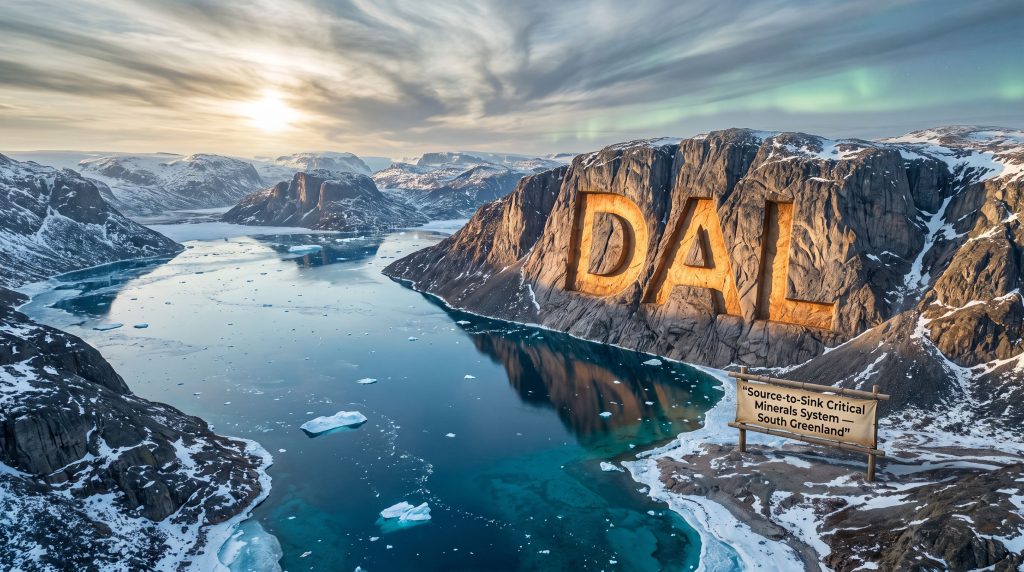
Dalaroo Metals (ASX: DAL) has reported a technical step change in its understanding of the Dalaroo Metals Blue Lagoon rare earth project Greenland survey results. Independent Ground Penetrating Radar (GPR) and Single Beam Echo Sounder (SBES) surveys completed across the 100%-owned asset have confirmed sediment accumulations reaching approximately 50 metres in depth, identified multiple previously unrecognised source-to-sink valleys extending beyond the current exploration footprint, and delivered what the company describes as the first three-dimensional model of the Blue Lagoon sedimentary basin.
According to the announcement, the results reframe the scale of what Dalaroo is exploring at Blue Lagoon, with the emerging picture considerably larger than originally understood.
When big ASX news breaks, our subscribers know first
What the Surveys Found
The GPR program comprised 21 survey lines across five priority shoreline target areas, while the SBES component used 10 bathymetric traverses to map the lagoon floor for the first time. Combined, the datasets provide an integrated view of the basin's geometry, sediment thickness and transport pathways.
The headline findings across the five survey sites are summarised below.
| Site | Interpreted sediment depth | Key observations |
|---|---|---|
| Site A | ~2 to 50+ metres | Most significant accumulation identified; multiple zones exceed GPR penetration limit, suggesting depth may exceed 50m; open at depth |
| Site B | ~2 to 50+ metres | Similar characteristics to Site A; continuous sediment package interpreted as favourable for heavy mineral accumulation |
| Site C | ~2 to 50 metres | Sediment thickness increases toward shoreline and adjacent peninsula; broad, continuous package |
| Site D | ~1 to 30 metres | Moderate accumulation; secondary target with potential for localised heavy mineral concentration |
| Site E | Up to ~10 metres | Thinner sediment cover; provides a reference comparison with deeper systems |
The thickest and most prospective sediment packages are concentrated at Sites A, B and C, where interpreted depths consistently range between 30 and 50 metres. Furthermore, in multiple zones, the GPR system reached its effective penetration limit, meaning actual depths could be greater than currently interpreted.
CEO John Morgan commented: "Our 2025 exploration program confirmed widespread rare earth mineralisation within shoreline sediments. This latest work now demonstrates that those sedimentary environments are substantially thicker than originally understood, with sediment accumulations extending to approximately 50 metres in several priority areas."
The Concept That Makes This Important: Source-to-Sink Exploration
For investors less familiar with sediment-hosted mineral systems, the source-to-sink model helps explain why this survey carries weight.
What Is a Source-to-Sink System?
In conventional hard-rock rare earth projects, mineralisation sits within solid rock and must be drilled, blasted and processed from that material. Sediment-hosted systems, however, operate differently. Over geological time, rare earth-bearing rocks — in this case alkaline granites surrounding Blue Lagoon — are naturally weathered and eroded.
The heavy minerals they contain, including rare earth element (REE)-bearing phases, zircon and hafnium, are transported by water and deposited in downstream sedimentary environments such as lagoon shorelines and valley floors. The "source" is the alkaline granite terrain, while the "sink" is the sedimentary basin where heavy minerals concentrate over time. The valleys connecting the two act as transport pathways.
Why Does Sediment Thickness Matter?
In these systems, thicker and more continuous sediment packages are associated with greater volumes of potentially mineralised material. The GPR survey has confirmed that Blue Lagoon's sediment accumulation zones — referred to as depocenters — are both extensive and deep, suggesting the basin may have the capacity to preserve substantial quantities of heavy mineral-bearing sediment accumulated over a long geological timeframe.
Why Do the New Valleys Matter?
Each newly identified sediment-filled valley is interpreted as a previously unrecognised transport pathway draining REE-enriched alkaline granite terrain into the lagoon basin. According to Dalaroo, these valleys represent new exploration corridors that could host additional heavy mineral accumulations comparable to those already identified in the main Blue Lagoon basin.
Glossary of Key Terms
- GPR (Ground Penetrating Radar): A geophysical method that sends radar pulses into the ground and records reflections to map subsurface structures without drilling.
- SBES (Single Beam Echo Sounder): An acoustic instrument used to measure water depth and map the shape of a lake or lagoon floor, known as bathymetry.
- Depocenter: A location within a basin where sediment accumulation is greatest.
- Alkaline granite/intrusive: Igneous rocks enriched in alkaline minerals, often associated with elevated concentrations of rare earth elements, zirconium and niobium.
- Heavy minerals: Dense, resistant minerals, including REE-bearing phases and zircon, that survive weathering and concentrate in sedimentary environments.
- Gardar-age intrusions: A globally recognised suite of alkaline intrusive complexes in South Greenland, noted for associations with critical mineral systems.
A Geological Setting Built for Critical Mineral Concentration
Blue Lagoon sits within the Helene alkaline granite, forming the westernmost exposure of the Nunarsuit Complex in southern Greenland. According to the announcement, the Nunarsuit Complex is the largest, and among the youngest, of the Gardar-age alkaline intrusions in the region, composed predominantly of alkaline syenitic and granitic units.
The project area is bounded to the east by extensive alkalic syenite, which the company says adds further prospectivity for zirconium, niobium and REE enrichment. This geological setting brings together three features relevant to a sediment-hosted heavy mineral system:
- Fertile source rocks: alkaline granites reported to be naturally enriched in REEs, zirconium and hafnium
- Extensive drainage catchments: multiple valleys channelling weathered material into the lagoon
- An enclosed depositional environment: the lagoon itself, acting as a natural trap for heavy minerals over geological time
The GPR survey has confirmed that the sediment-filled eastern valleys identified during field mapping drain directly from these REE-enriched granite catchments, which Dalaroo says reinforces the geological logic of the source-to-sink model across a considerably larger area than previously mapped.
What the Survey Has Changed, and Why It Matters
The results extend beyond confirming existing targets and, consequently, broaden the exploration thesis across the wider Blue Lagoon district.
Before this survey, Dalaroo reported knowing:
- Surface sampling had returned widespread REE, zirconium and hafnium mineralisation in shoreline sediments
- Alkaline granites surrounding the lagoon were prospective source rocks
- The project warranted further subsurface investigation
After this survey, the company states it now understands:
- Sediment accumulations in priority zones reach up to approximately 50 metres, and potentially deeper in several locations
- The sedimentary basin is considerably larger than originally recognised
- Multiple new source-to-sink valleys extend beyond the current exploration footprint
- The Blue Lagoon system appears interconnected rather than a collection of isolated depositional areas
- A three-dimensional framework now exists to help guide drilling, bulk sampling and resource evaluation
Exploration Manager Trystan Hughes noted: "Rather than representing isolated depositional environments, these valleys appear to form part of a much larger interconnected sedimentary system that remains largely unexplored."
Upcoming Catalysts and Exploration Timeline
With the geophysical and bathymetric data now in hand, Dalaroo has outlined a series of planned next steps intended to systematically test and advance the Blue Lagoon system.
| Activity | Purpose | Timeline |
|---|---|---|
| Integrate GPR model with geological mapping and assay results | Refine high-priority drill targets | Near-term |
| Complete mineralogical and metallurgical studies | Characterise heavy mineral assemblages | Near-term |
| Develop three-dimensional geological model | Provide framework for resource evaluation | Near-term |
| Evaluate bulk sampling opportunities | Test volumetric potential of key sites | Near-term |
| Assess newly identified source-to-sink valleys | Expand exploration into new corridors | 2027 field season |
| Continue district-scale evaluation of broader Blue Lagoon area | Identify additional sediment-hosted targets | 2027 field season |
The 2027 field season is set out as a period of particular note, with auger drilling, bulk sampling and systematic testing of the newly identified valleys all planned.
The next major ASX story will hit our subscribers first
Why Investors Should Be Watching Dalaroo Metals
Completion of this survey program touches on several elements relevant to the Dalaroo investment case.
Is the Scale Potential Expanding?
The recognition of sediment depths reaching 50 metres across multiple sites, combined with the identification of numerous new source-to-sink valleys, increases the geological search space at Blue Lagoon under the company's stated model. What began as a shoreline sampling exercise is now supported by a three-dimensional basin model pointing toward a larger district-scale system.
How Has the Exploration Model Progressed?
Each phase of work at Blue Lagoon has built methodically on the last, according to the company. Surface sampling identified mineralisation, geological mapping identified source rocks and valley systems, and geophysics has now mapped the subsurface architecture. This staged approach is presented as reducing geological uncertainty step by step, though exploration outcomes remain inherently uncertain.
What Makes Sediment-Hosted Systems Distinct?
Unlike hard-rock REE projects that require large-scale mining and intensive processing, sediment-hosted heavy mineral systems can carry different cost and processing characteristics. Blue Lagoon's unconsolidated sediment packages, now interpreted at significant depths, are a relevant feature of this exploration approach.
In addition, the regional geological setting is well documented. The Gardar-age alkaline intrusive province of South Greenland is recognised internationally for its association with critical mineral systems, and Blue Lagoon sits firmly within this setting, surrounded by alkaline granites interpreted as the source for the REE-bearing heavy mineral assemblages being targeted.
Beyond Blue Lagoon, Dalaroo holds a growing portfolio of gold exploration assets in the Birimian Greenstone Belt of West Africa (Côte d'Ivoire), including the Bondoukou and Bongouanou Gold Projects, along with the Lyons River and Watheroo Projects in Western Australia.
Key takeaway: The Dalaroo Metals Blue Lagoon rare earth project Greenland survey results have positioned Blue Lagoon as an emerging district-scale sediment-hosted critical minerals system, with geophysical surveys confirming sediment depths of up to approximately 50 metres and revealing multiple new unexplored valleys extending beyond the current footprint. With auger drilling, bulk sampling and expanded exploration planned for 2027, investors tracking the critical minerals sector may wish to follow how this geological model develops.
Want to Know More About Dalaroo Metals' Blue Lagoon Project?
With sediment depths confirmed at up to 50 metres, multiple new source-to-sink valleys identified, and a district-scale exploration programme taking shape ahead of the 2027 field season, Dalaroo Metals (ASX: DAL) is building a compelling case at Blue Lagoon. Investors looking to learn more about the company, its critical minerals strategy, and its broader project portfolio can visit the official Dalaroo Metals website at www.dalaroometals.com.au.