June 5, 2026
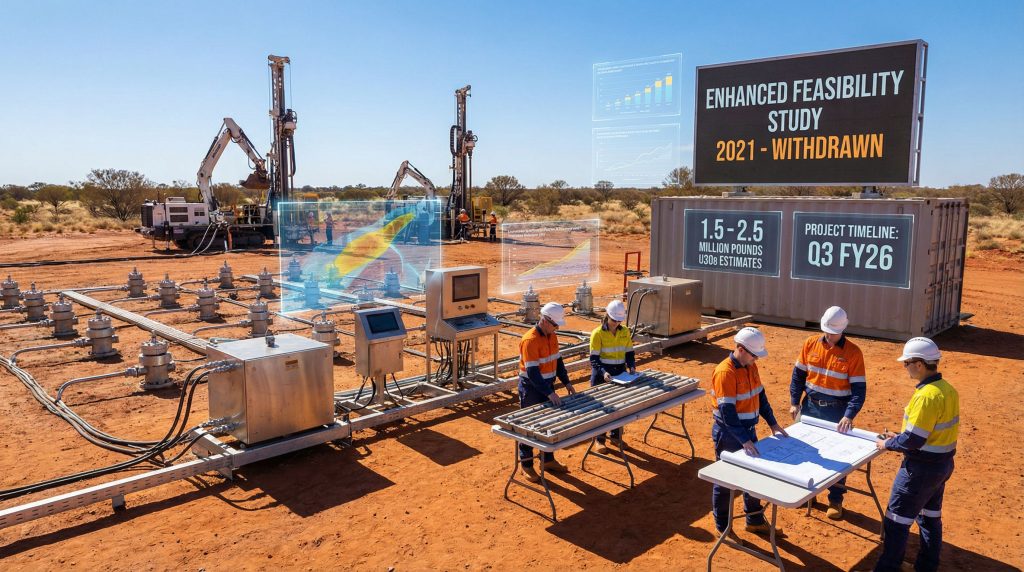
Boss Energy's recent decision to withdraw its 2021 Enhanced Feasibility Study for the Honeymoon uranium project highlights the complex technical challenges facing uranium developers in today's market. The Boss Energy feasibility study withdrawal stems from fundamental geological assumptions that proved incorrect, creating significant implications for project economics and investor confidence. This development underscores the critical importance of accurate geological modeling in uranium extraction operations, particularly for in-situ recovery (ISR) projects where subsurface conditions directly impact operational viability.
Understanding the Technical Scope of Boss Energy's Feasibility Study Withdrawal
Boss Energy (ASX: BOE) experienced a significant market correction, with shares declining 22% following the formal withdrawal of its 2021 Enhanced Feasibility Study for the Honeymoon uranium project. This withdrawal represents more than a technical adjustment; it constitutes a complete abandonment of the geological and engineering framework that underpinned the project's economic assumptions from FY27 onwards.
The technical deficiencies identified encompass three primary domains that collectively invalidated the study's conclusions. First, geological modeling errors revealed that uranium mineralization patterns followed pod-like distribution rather than the originally assumed continuous zones. This fundamental shift affects well field optimization and drilling density requirements.
Second, vertical stacking assumptions proved incorrect, with mineralisation horizons sitting apart rather than overlapping as expected, limiting infrastructure reuse potential. Third, downstream processing assumptions failed to account for impermeable clay lithologies that create barriers to effective uranium leaching.
The practical consequence manifests as a material reduction in recoverable uranium, estimated between 1.5 to 2.5 million pounds compared to the 2021 study baseline. This reduction directly impacts mine life projections, with shortened operational periods from FY27 onward and corresponding revenue outlook adjustments.
Furthermore, the withdrawal removes key valuation anchors that institutional investors relied upon for long-term modeling, creating what analysts describe as a "forecast gap" where multi-year cash flow projections lack reliable foundation assumptions.
When big ASX news breaks, our subscribers know first
Geological Assumptions and Their Impact on Uranium Mining Economics
The relationship between geological accuracy and mining economics proves particularly sensitive in ISR operations due to the method's dependence on subsurface hydrogeological continuity. When uranium mineralization occurs as isolated pods rather than continuous zones, the fundamental parameters governing well field design efficiency become compromised.
| Parameter | Original Assumption | Revised Understanding | Economic Impact |
|---|---|---|---|
| Mineralization Continuity | Continuous zones | Pod-like distribution | Higher drilling density required |
| Vertical Stacking | Multiple overlapping horizons | Separated horizons | Reduced infrastructure efficiency |
| Permeability | Uniform leaching conditions | Clay barriers present | Lower recovery rates |
| Grade Distribution | Predictable patterns | Irregular distribution | Increased operational complexity |
The shift to pod-like mineralization fundamentally alters capital intensity metrics. ISR production technology relies on predictable spacing between injection and extraction wells to optimize lixiviant circulation patterns. When uranium occurs in discrete pods separated by barren or low-grade material, the drilling requirements per unit of recoverable uranium increase substantially, directly elevating the capital expenditure per pound of production.
Clay barrier impacts on leaching efficiency represent another critical economic sensitivity. Impermeable lithologies adjacent to or within uranium-bearing zones prevent effective lixiviant circulation, creating zones where extraction becomes technically challenging or economically unviable. This geological complexity introduces uncertainty into production scheduling and forces more conservative recovery assumptions in economic models.
In addition, the presence of separated rather than stacked mineralisation horizons eliminates the opportunity for infrastructure optimization that was central to the original economic model. Sequential development of separate horizons requires additional well fields, processing infrastructure, and operational complexity compared to the assumed vertical integration scenario.
Financial Implications of Feasibility Study Withdrawals
The Boss Energy feasibility study withdrawal created immediate and cascading financial implications that extend beyond simple production forecast adjustments. The 22% share price decline reflects market reassessment of multiple valuation components simultaneously affected by the technical reset.
Net Present Value (NPV) calculations become obsolete when fundamental geological assumptions prove incorrect. The withdrawal removes the foundation for discounted cash flow models that institutional analysts use for investment recommendations and portfolio allocation decisions. Risk-adjusted discount rates typically increase when technical uncertainty rises, further compressing valuations even before production and cost assumption revisions.
Capital expenditure reassessment encompasses multiple cost categories affected by the geological revelations:
- Well field infrastructure costs increase due to higher drilling density requirements for pod-based mineralization patterns
- Processing plant modifications become necessary to implement enhanced leaching chemistry protocols and pressure management systems
- Sustaining capital profiles require adjustment for higher proportional maintenance and remediation costs associated with complex geological conditions
The timeline uncertainty created by feasibility study withdrawal affects investor confidence in management's ability to deliver predictable returns. Prior to withdrawal, institutional investors could model cash flows from FY27-FY32 using the 2021 Enhanced Feasibility Study assumptions as anchor points.
However, post-withdrawal, this forward visibility becomes speculative until completion of new technical studies scheduled for Q3 FY26. Production profile impacts include mine life reduction from the affected period, with annual production rates requiring downward revision for post-FY26 years.
The market interpreted this as a material increase in model risk and forecast uncertainty, reflecting heightened technical risk regarding resource continuity and recovery methodology that increases the cost of capital applied to future cash flows.
The 1.5-2.5 million pound resource reduction translates directly into revenue outlook adjustments that compound over the project's operational life, demonstrating how uranium market volatility can be exacerbated by company-specific technical challenges.
Regulatory Framework Driving Feasibility Study Withdrawals
Mining companies withdraw feasibility studies when fundamental assumptions prove materially incorrect, creating both legal liability exposure and fiduciary obligations to correct public disclosures. The regulatory framework governing these decisions operates through multiple overlapping compliance requirements.
The JORC Code 2012 establishes competent person sign-off requirements that mandate appropriately qualified professionals with relevant experience certify technical studies. Under Section 4 of the JORC Code, competent persons must base conclusions on sufficient geological data, drilling density, and metallurgical testing to support "reasonable prospects for eventual economic extraction" (RPEEE).
When subsequent drilling reveals that geological assumptions no longer support this standard, the study loses its technical foundation. ASX Continuous Disclosure Obligations under Listing Rule 3.1 require companies to immediately disclose information that a reasonable person would expect to have a material effect on share price.
The materiality threshold for Boss Energy's withdrawal was crossed when management determined that assumptions became incorrect from FY27 onward, affecting multiple years of production forecasts and cost curves. The decision to withdraw rather than revise indicates that identified deficiencies exceeded materiality thresholds where continued reliance would constitute misleading disclosure under:
- ASX Listing Rules section 3.1 covering continuous disclosure obligations
- Corporations Act 2001, section 912D addressing financial services licensee obligations regarding misleading conduct
- JORC Code competent person responsibilities for technical study accuracy
Boss Energy's management prioritized transparent correction over preserving market confidence in outdated assumptions, demonstrating compliance with governance frameworks that require prompt disclosure of material technical changes. This approach, while immediately damaging to share price performance, reduces longer-term regulatory risk and potential shareholder litigation exposure, according to market analysis reports.
Technical Solutions for Project Viability Restoration
Boss Energy has outlined potential technical modifications that could address the identified geological deficiencies, though these remain conceptual pending detailed engineering studies and pilot testing programs. The proposed solutions center on fundamental redesign of the ISR well field configuration to accommodate the revised geological understanding.
The wider-spaced ISR well field design represents the primary technical solution pathway. This approach increases distance between injection and extraction wells to extend lixiviant residence time, allowing more complete uranium dissolution despite the pod-like mineralization pattern. Management estimates this redesigned approach could increase recoverable uranium by up to 49%, potentially offsetting the 1.5-2.5 million pound reduction identified in the withdrawal.
Recovery enhancement strategies include:
- Advanced leaching chemistry protocols to overcome clay barrier constraints through modified lixiviant compositions
- Pressure management systems for improved circulation patterns around geological obstacles
- Selective well placement targeting high-grade pods while avoiding areas of significant clay interference
- Extended extraction cycles to maximize uranium recovery from each well field section
Furthermore, the proposed modifications could extend mine life beyond original projections despite the reduced resource base, as improved recovery efficiency may unlock uranium that was previously considered uneconomic under conventional ISR parameters. However, these benefits come with increased capital intensity and operational complexity that must be quantified through detailed engineering studies.
Technical validation requirements include pilot testing programs to demonstrate the effectiveness of modified leaching protocols under actual geological conditions. The success of clay barrier mitigation strategies cannot be assumed without field-scale demonstration, particularly given the higher-than-expected geological complexity revealed through recent drilling programs at the Honeymoon project site.
Investment Evaluation Framework for Mining Project Resets
Mining project resets require sophisticated risk assessment frameworks that account for both technical uncertainties and market variables affecting long-term investment returns. The Boss Energy situation demonstrates the importance of evaluating multiple risk factors simultaneously when assessing uranium development projects.
Technical risk evaluation should focus on geological confidence assessment through multiple validation layers:
- Drilling density and sample quality verification to ensure adequate data coverage for revised resource estimates
- Independent geological review processes by qualified competent persons with relevant ISR experience
- Hydrogeological modeling accuracy validation through comprehensive aquifer testing programs
- Resource estimate classification analysis showing proportions of Measured, Indicated, and Inferred categories
Timeline and milestone analysis becomes critical for investment decision-making when companies undergo technical resets:
| Study Phase | Expected Timeline | Key Deliverables | Risk Factors |
|---|---|---|---|
| Scoping Study | Q2 FY26 | Preliminary economics | Technical assumptions validation |
| Feasibility Study | Q3 FY26 | Definitive project parameters | Capital cost accuracy |
| Permitting | Post-FY26 | Regulatory approvals | Environmental compliance |
| Construction | TBD | Production readiness | Execution risk |
The compressed timeline from scoping study to feasibility study completion (Q2 to Q3 FY26) raises questions about the adequacy of time allocation for comprehensive technical validation. Investors should monitor whether sufficient drilling, metallurgical testing, and engineering design work can be completed within these timeframes to support credible study outcomes.
Consequently, financial capacity evaluation must account for the potential capital cost increases associated with the revised technical approach. Wider-spaced well fields and enhanced processing requirements will likely increase both initial capital expenditure and ongoing sustaining capital compared to the original 2021 study assumptions.
The next major ASX story will hit our subscribers first
Broader Uranium Sector Implications and Market Dynamics
The Boss Energy feasibility study withdrawal highlights systemic challenges facing uranium developers as the sector transitions from exploration to production phases following an extended period of underinvestment. These challenges extend beyond company-specific technical issues to encompass industry-wide constraints affecting project development timelines and execution risk.
Resource development risks have intensified due to limited recent operational experience with ISR methods in many uranium regions. The extended uranium bear market from 2011-2020 resulted in reduced industry expertise and technical capability, creating knowledge gaps that manifest as development projects advance toward production readiness.
The complexity of ISR operations, particularly in geologically challenging deposits, requires specialized expertise that may be constrained across the industry. This trend occurs alongside broader u.s. uranium tariff disruptions that are reshaping global supply chains and investment flows.
Capital intensity during commodity price volatility creates additional challenges for uranium developers. While uranium prices have recovered substantially from historical lows, the cyclical nature of commodity markets creates uncertainty about price sustainability through multi-year development timelines. Companies must balance the need for rapid development to capture current price levels against the risk of committing capital during potentially unsustainable price peaks.
Market confidence factors affecting the broader uranium sector include:
- Increased investor skepticism regarding feasibility study accuracy following high-profile project delays and cost overruns
- Enhanced due diligence requirements for uranium investments, particularly for development-stage projects
- Higher risk premiums applied to companies without operational track records
- Greater focus on management experience with similar deposit types and extraction methods
In addition, regulatory complexity for uranium projects continues to evolve, with environmental compliance requirements becoming more stringent and permitting timelines extending in many jurisdictions. This regulatory environment particularly affects ISR projects, which must demonstrate groundwater protection capabilities and waste management protocols that satisfy increasingly demanding environmental standards.
These challenges contrast with positive developments such as record u.s. uranium production achievements and the senate ban on russian uranium that are creating new supply opportunities for domestic producers.
Risk Monitoring and Investment Strategy Framework
Effective monitoring of uranium project developments requires systematic tracking of technical, regulatory, and market variables that affect investment outcomes. The Boss Energy case study demonstrates the importance of establishing comprehensive monitoring frameworks before committing capital to development-stage uranium projects.
Key Performance Indicators (KPIs) for technical progress should include:
- Drilling program completion rates relative to planned schedules and budget allocations
- Resource estimate confidence levels showing progression from Inferred to Indicated and Measured categories
- Metallurgical test work results demonstrating processing assumptions under actual ore conditions
- Environmental baseline studies progress toward regulatory submission requirements
- Pilot testing program outcomes validating proposed extraction methodologies
Financial health indicators require particular attention during technical reset periods:
- Cash runway adequacy for completing planned development activities without additional fundraising
- Access to additional funding sources including debt facilities and equity market capacity
- Capital cost escalation trends relative to original study assumptions and peer company experiences
- Revenue contract coverage through long-term offtake agreements providing cash flow certainty
Risk mitigation strategies for uranium sector investing should emphasize diversification across multiple dimensions:
- Geographic spread across uranium regions to reduce jurisdiction-specific regulatory risk
- Development stage diversification balancing exploration, development, and production assets
- Technology risk distribution across different extraction methods and deposit types
- Market exposure balance through companies with varying production timelines and cost structures
Portfolio construction considerations must account for the extended development timelines characteristic of uranium projects. The Boss Energy feasibility study withdrawal experience demonstrates that even advanced projects with completed feasibility studies can face material technical setbacks requiring comprehensive reassessment of project economics and timelines.
What are the Key Investment Strategy Implications?
The Boss Energy feasibility study withdrawal provides valuable insights for uranium sector investment strategy formulation. Investors should prioritize companies with demonstrated operational experience, conservative geological assumptions, and comprehensive technical validation programs. The emphasis on management track records becomes particularly important when evaluating development-stage projects with complex geological conditions.
Due diligence enhancement should include independent technical reviews by qualified consulting firms with relevant ISR experience. The complexity of uranium project evaluation requires specialized expertise that may exceed the capabilities of generalist investment analysts, making independent technical validation a critical component of investment decision-making processes.
However, market timing considerations remain important given the volatility inherent in uranium price cycles and the extended development timelines required for new production. The Boss Energy situation demonstrates that technical setbacks can occur even during favourable market conditions, emphasizing the importance of company-specific risk assessment independent of broader market sentiment.
Disclaimer: This analysis is based on publicly available information and should not be considered as investment advice. Mining projects involve significant risks, and technical assumptions may prove incorrect despite thorough analysis. Investors should conduct their own due diligence and consider seeking professional advice before making investment decisions.
Ready to Capitalise on the Next Major Mineral Discovery?
Discovery Alert instantly alerts investors to significant ASX mineral discoveries using its proprietary Discovery IQ model, turning complex mineral data into actionable insights. Understand why historic discoveries can generate substantial returns by visiting Discovery Alert's dedicated discoveries page, showcasing historic examples of exceptional outcomes, and begin your 30-day free trial today to position yourself ahead of the market.