June 8, 2026
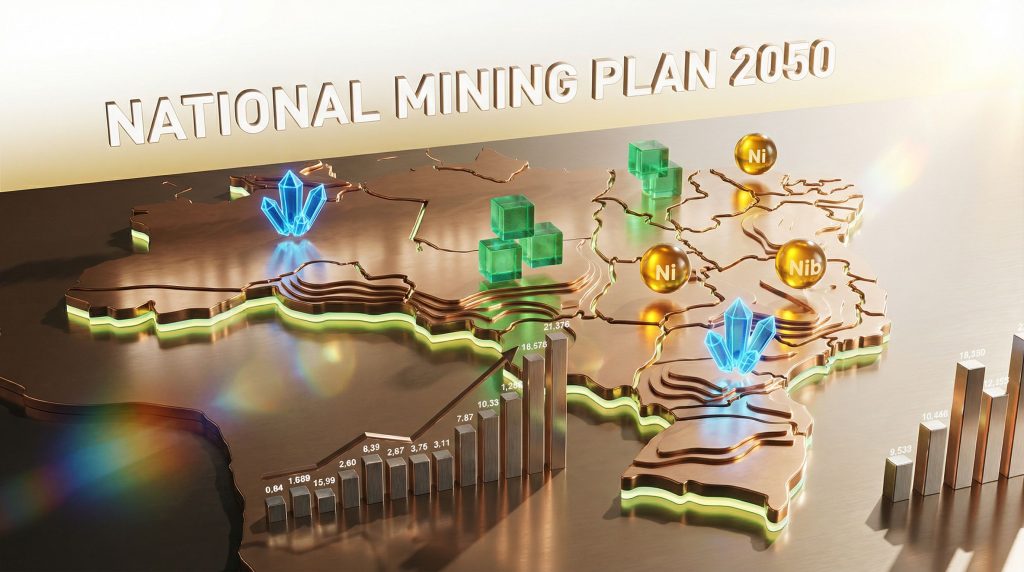
Brazil's ambitious transformation of its national mining strategy represents a pivotal moment in the global race for critical minerals supremacy. As nations worldwide grapple with securing reliable access to materials essential for renewable energy infrastructure and electric vehicle production, Brazil updates long-term national mining plan to position itself as a dominant force in the critical minerals supply chain, leveraging its vast geological wealth to capture greater value from natural resource endowments.
Furthermore, South America's largest economy stands at a critical juncture, transitioning from a traditional raw material supplier to an integrated value-added processor. This strategic evolution encompasses comprehensive policy frameworks designed to streamline development processes while establishing Brazil as a key player in global energy transition security.
Strategic Positioning in the Global Critical Minerals Landscape
Brazil's mineral wealth encompasses some of the world's most sought-after deposits, positioning the country as a potential cornerstone in the global energy transition. The nation holds significant reserves of lithium concentrated in its northeastern states, substantial niobium deposits that represent over 80% of global reserves, and extensive iron ore formations that have long anchored its mining sector.
The strategic value extends beyond individual commodities to encompass Brazil's unique geological diversity. Unlike countries dependent on single mineral exports, Brazil's resource base includes:
- Lithium deposits in Minas Gerais and northeastern pegmatite formations
- Rare earth element concentrations in alkaline complexes across multiple states
- Copper mineralization in the Amazon region and established southern operations
- Nickel laterite deposits suitable for battery-grade processing
- Graphite resources essential for battery anode production
This geological advantage creates opportunities for integrated supply chain development, where multiple critical minerals can be processed within coordinated industrial complexes. Consequently, this approach reduces transportation costs and improves operational efficiencies significantly.
Competitive Analysis Against Global Leaders
Brazil's positioning relative to established mining jurisdictions reveals both opportunities and challenges in the critical minerals landscape. Australia maintains dominance in lithium production through hard rock spodumene mining, while Chile controls significant market share through brine operations in the Atacama Desert.
| Country | Primary Advantage | Market Position | Processing Capacity |
|---|---|---|---|
| Australia | Established hard rock lithium | 60% of global lithium | Limited domestic processing |
| Chile | Low-cost brine operations | 25% of global lithium | Expanding battery materials |
| Brazil | Diversified mineral portfolio | 2% of global lithium | Developing integrated capacity |
| Argentina | Lithium triangle resources | 6% of global lithium | Early-stage development |
The competitive landscape suggests Brazil's advantage lies not in single commodity dominance but in the potential for diversified, integrated operations. Moreover, the establishment of a battery-grade lithium refinery infrastructure could supply multiple critical minerals to downstream manufacturers.
When big ASX news breaks, our subscribers know first
Economic Impact Projections and Value Creation Potential
The transition from raw material export to domestic processing represents a fundamental shift in economic value capture for Brazil's mining sector. Current commodity exports generate limited domestic economic impact beyond extraction activities, with most value-added processing occurring in importing countries.
Downstream processing initiatives could generate substantial economic multiplier effects across multiple sectors. Battery materials production facilities require significant infrastructure investment, creating construction employment during development phases and permanent technical positions during operations.
Employment Generation Scenarios
The mining sector's employment impact extends beyond direct extraction activities to encompass processing, transportation, and support services. Critical minerals processing tends to be more labour-intensive than traditional bulk commodity operations, requiring specialised technical skills and creating opportunities for workforce development.
Direct employment estimates for integrated critical minerals operations range from 50-200 workers per processing facility, depending on scale and technology deployment. Indirect employment through supplier networks and service providers typically generates 2-3 additional positions for each direct mining job.
The skills development component represents a strategic investment in human capital, as battery materials processing requires expertise in:
- Hydrometallurgical processing techniques
- Quality control and materials characterisation
- Environmental monitoring and compliance
- Advanced automation and process control systems
Policy Framework Architecture and Implementation Mechanisms
Brazil updates long-term national mining plan through coordinated policy implementation across federal agencies, designed to streamline regulatory processes while maintaining environmental and social safeguards. The framework addresses key bottlenecks that have historically limited mining sector development.
Regulatory Coordination and Streamlined Permitting
The establishment of centralised coordination mechanisms aims to reduce regulatory uncertainty and accelerate project development timelines. Traditional mining projects in Brazil face complex permitting requirements across multiple federal and state agencies, creating delays that can extend development periods by several years.
Integrated licensing processes combine environmental, mining, and infrastructure approvals into coordinated review procedures. This approach addresses a critical constraint identified by mining companies operating in Brazil, where regulatory complexity often exceeds technical and financial challenges. Additionally, companies can benefit from a comprehensive streamlined permitting guide to navigate these improved processes.
The strategic mapping component involves systematic assessment of mineral resources to identify priority development areas. This government-led mapping reduces exploration risk for private companies while ensuring optimal resource allocation across the most prospective geological formations.
Financial Incentive Structures and Risk Mitigation
Capital constraints represent a significant barrier for junior mining companies seeking to develop critical minerals projects. Traditional mining finance models often prove inadequate for the extended development periods and technical complexity associated with battery materials processing.
Government-backed guarantee mechanisms could reduce financing costs by providing risk mitigation for lenders. This approach proves particularly important for projects in early development stages where technical and market risks remain elevated.
Tax incentive programs focused on downstream processing activities create competitive advantages for domestic value-added operations. These incentives target:
- Reduced corporate income tax rates for battery materials production
- Accelerated depreciation schedules for processing equipment
- Import duty exemptions for specialised technology not available domestically
- Research and development tax credits for innovative processing techniques
Market Readiness and Investment Climate Assessment
The readiness of Brazil's mining sector to capitalise on critical minerals opportunities depends on multiple factors beyond policy frameworks. These include infrastructure capacity, technical expertise, and capital availability.
Infrastructure Requirements and Development Gaps
Critical minerals processing demands reliable power supply, water access, and transportation connectivity to both raw material sources and export markets. Brazil's existing mining regions possess varying degrees of infrastructure development, with some areas requiring substantial investment before large-scale operations become viable.
Power generation capacity represents a critical constraint, as battery materials processing requires consistent, high-quality electricity supply. Hydrometallurgical operations for lithium and rare earth processing can consume 15-25 megawatt hours per ton of refined product, necessitating dedicated power arrangements for large-scale facilities.
Transportation infrastructure affects both input costs and export competitiveness. Remote mineral deposits require road and rail connections to processing facilities, while finished products need efficient routes to ports serving international markets.
Capital Market Conditions and Investor Sentiment
Global mining investment patterns show increased interest in critical minerals projects, driven by supply chain security concerns and energy transition requirements. However, investor preferences favour jurisdictions with established regulatory frameworks and proven operational track records.
Risk premium assessments for Brazilian mining projects reflect both country-specific and sector-specific factors. Political stability and regulatory predictability influence cost of capital calculations, while technical complexity and market volatility affect project-level investment decisions.
The venture capital component of critical minerals development requires specialised investors familiar with mining sector dynamics and long-term commodity cycles. Furthermore, traditional equity markets often prove inadequate for financing exploration and early-stage development activities.
Technology Integration and Innovation Partnerships
Critical minerals processing technologies continue evolving rapidly, with new extraction and refinement techniques offering improved efficiency and reduced environmental impact. Brazil's development strategy must incorporate technology transfer mechanisms to ensure competitiveness in global markets.
Advanced Processing Technologies and Competitive Positioning
Direct lithium extraction (DLE) technologies represent a significant advancement over traditional evaporation pond methods, offering faster processing times and reduced water consumption. These technologies prove particularly relevant for Brazil's hard rock lithium deposits, where conventional brine processing proves inapplicable.
Rare earth element separation requires sophisticated hydrometallurgical processes involving multiple extraction stages and precise chemical control. The technology barrier to entry remains high, creating opportunities for partnerships with established processors or technology licensing arrangements.
Environmental processing innovations address key concerns about mining sector sustainability, including:
- Closed-loop water recycling systems that minimise freshwater consumption
- Tailings management technologies that reduce environmental footprint
- Carbon capture and utilisation for process-related emissions
- Renewable energy integration for processing facility power requirements
Research and Development Collaboration Models
University partnerships and research institutes play crucial roles in developing locally-adapted processing technologies and training technical personnel. Brazil's established academic institutions provide platforms for collaborative research programmes with international partners.
Public-private research consortiums can accelerate technology development while sharing costs and risks among multiple stakeholders. These arrangements prove particularly effective for pre-competitive research activities that benefit the entire sector. Additionally, mining industry innovation continues driving technological advancement across all operational aspects.
Environmental and Social Governance Integration
Sustainable mining practices increasingly influence investment decisions and market access for mineral products. ESG considerations affect everything from project financing to customer acceptance of processed materials.
Environmental Impact Mitigation Strategies
Critical minerals extraction and processing present unique environmental challenges distinct from traditional bulk commodity operations. Water management assumes particular importance, as many processing techniques require substantial water volumes and generate liquid waste streams requiring treatment.
Biodiversity protection measures must address the specific ecosystems where critical minerals deposits occur. Brazil's mineral resources often locate in regions with high ecological value, requiring careful impact assessment and mitigation planning.
Carbon footprint optimisation becomes increasingly important as downstream customers face pressure to reduce supply chain emissions. Processing facilities powered by renewable energy sources create competitive advantages in markets with carbon pricing or environmental procurement requirements.
Community Engagement and Benefit Sharing
Effective community relations represent both a social imperative and business necessity for mining operations. Local employment programmes create shared value while addressing community development needs.
Indigenous consultation processes require specialised expertise and long-term relationship building. Many of Brazil's critical minerals deposits occur in or near indigenous territories, necessitating respectful engagement and benefit-sharing agreements.
Revenue sharing mechanisms can align community interests with mining development while providing funding for local infrastructure and social programmes. These arrangements require careful design to ensure transparency and equitable distribution.
The next major ASX story will hit our subscribers first
Investment Opportunities and Strategic Positioning
The convergence of policy support, market demand, and technological advancement creates multiple entry points for investors across the critical minerals value chain. Brazil updates long-term national mining plan to capitalise on these emerging opportunities.
Downstream Processing and Value-Added Manufacturing
Battery materials production represents the highest-value segment of the critical minerals supply chain. Facilities producing lithium hydroxide, nickel sulfate, and processed graphite capture significantly more value than raw material exporters.
Rare earth processing capabilities remain concentrated in few global locations, creating opportunities for new entrants with appropriate technology and financing. The complexity of rare earth separation creates natural barriers to entry that protect established operations.
Copper processing expansion leverages Brazil's existing smelting infrastructure while incorporating new technologies for higher-purity products required in renewable energy applications. Moreover, establishing a critical raw materials facility could enhance regional supply chain resilience.
Infrastructure Development and Supporting Services
Specialised transportation services for critical minerals require different handling and storage capabilities compared to bulk commodities. Temperature-controlled storage, contamination prevention, and security measures create opportunities for specialised service providers.
Testing and certification facilities ensure processed materials meet strict quality specifications required by battery manufacturers and other downstream customers. These facilities require substantial technical investment but generate steady revenue streams.
Timeline Expectations and Implementation Phases
Realistic expectations for Brazil's critical minerals development must account for the extended timelines typical in mining sector development, regulatory implementation, and market development.
Near-Term Development Milestones (2025-2028)
Regulatory framework completion requires finalising coordination mechanisms between federal agencies and establishing clear procedures for project evaluation and approval. According to Brazil's National Mining Policy Council, these frameworks aim to accelerate development while maintaining environmental standards.
Initial project developments will likely focus on existing operations expanding into critical minerals processing, leveraging established infrastructure and operational expertise.
Technology transfer agreements and partnership establishment represent critical early-phase activities that determine long-term competitive positioning.
Medium-Term Capacity Development (2029-2035)
Large-scale processing facilities require 3-5 years for construction and commissioning, meaning projects initiated in the near term will reach production during this phase.
Workforce development programmes must scale to support expanding operations while maintaining quality and safety standards.
Export market development involves establishing customer relationships and supply agreements with international battery manufacturers and other end-users.
Long-Term Strategic Positioning (2036-2050)
Market leadership positions in select commodities become achievable through accumulated experience, optimised operations, and established customer relationships.
Integrated supply chain development creates competitive advantages through coordinated operations across multiple minerals and processing stages.
Technology innovation leadership positions Brazil as an exporter of mining and processing expertise to other developing mineral economies.
Risk Assessment and Mitigation Strategies
Critical minerals development involves multiple risk categories that require careful assessment and management throughout project lifecycles. Brazil updates long-term national mining plan with comprehensive risk mitigation frameworks.
Market and Price Volatility Considerations
Commodity price cycles affect project economics and financing availability. Critical minerals markets remain relatively young and subject to substantial price volatility as supply and demand conditions evolve.
Technology substitution risks could reduce demand for specific materials if alternative technologies prove more cost-effective or environmentally preferable.
Geopolitical factors influence trade flows and investment patterns, with supply chain security concerns creating both opportunities and risks for new suppliers. Brazil's sustainable critical minerals development strategy addresses these global dynamics comprehensively.
Operational and Technical Risk Management
Processing technology risks require careful evaluation of proven versus developmental technologies, with appropriate risk allocation between technology providers and project developers.
Environmental compliance risks demand proactive management and contingency planning, particularly given evolving regulatory standards and increasing public scrutiny.
Resource quality variations can significantly impact processing costs and product specifications, requiring comprehensive geological assessment and process flexibility.
Brazil's transformation from raw material exporter to integrated critical minerals processor represents a strategic opportunity to capture greater value from natural resource endowments while addressing global supply chain security concerns. Success will require coordinated policy implementation, substantial infrastructure investment, and strategic partnerships to overcome technical and financial barriers.
The global critical minerals landscape continues evolving rapidly, with new technologies, changing demand patterns, and shifting geopolitical dynamics creating both opportunities and challenges for emerging suppliers. Brazil's diversified mineral base and growing industrial capacity position the country to play an increasingly important role in secure, sustainable supply chains essential for the global energy transition.
Disclaimer: This analysis contains forward-looking projections and strategic assessments based on current market conditions and policy frameworks. Actual outcomes may vary significantly due to changes in commodity markets, technology development, regulatory conditions, and global economic factors. Investment decisions should be based on comprehensive due diligence and professional advice specific to individual circumstances.
Are You Tracking Brazil's Critical Minerals Investment Wave?
Brazil's transformation into a critical minerals powerhouse creates exceptional opportunities for ASX investors, particularly in junior exploration companies with Brazilian exposure. Discovery Alert's proprietary Discovery IQ model instantly identifies significant mineral discoveries across the ASX, helping subscribers capitalise on major breakthrough announcements before the broader market reacts. Begin your 30-day free trial today to position yourself ahead of emerging critical minerals opportunities.