July 19, 2026
Global Critical Minerals Market Dynamics
The worldwide transition toward renewable energy and electrification has fundamentally reshaped mineral commodity priorities, creating unprecedented demand pressures across battery metals and rare earth elements. This transformation extends far beyond traditional mining economics, establishing new strategic relationships between resource-rich nations and technology-dependent economies. Within this evolving landscape, Brazilian Mining Day in minerals critical exploration emerges as a pivotal platform positioned to challenge established supply chain hierarchies through Brazil's exceptional geological endowments and expanding production capabilities.
Market analysts recognise that critical minerals energy transition represents one of the most significant geopolitical challenges of the energy transition era. While established producers continue dominating current output, emerging jurisdictions with substantial reserves are rapidly developing infrastructure to capture market share. This dynamic creates compelling investment opportunities for stakeholders willing to navigate the complexities of international mining development.
When big ASX news breaks, our subscribers know first
Brazil's Strategic Position in Global Critical Minerals Markets
Brazil's Geological Advantage and Reserve Portfolio
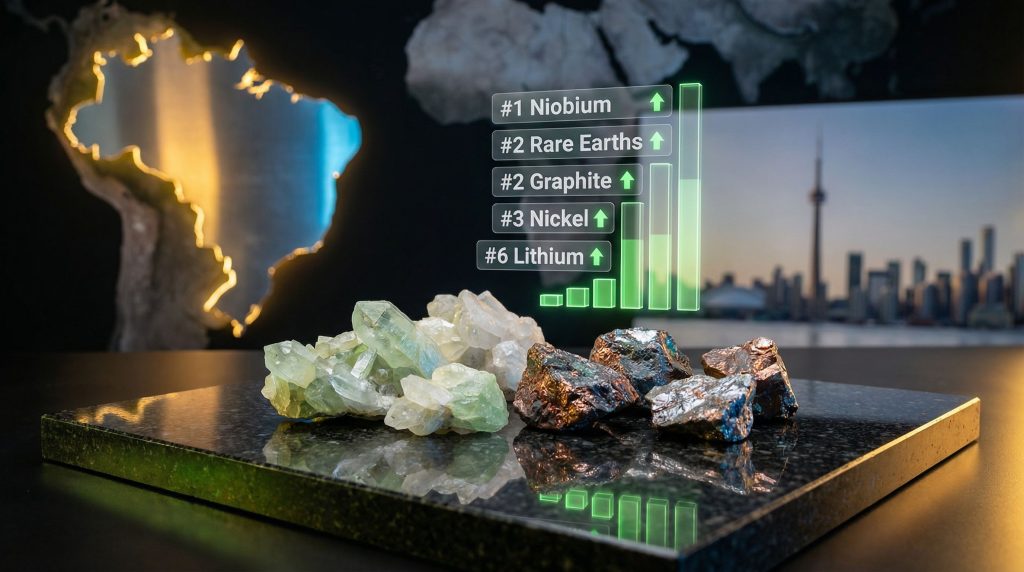
Brazil commands exceptional positions across multiple critical mineral categories, establishing the foundation for significant supply chain influence. The country maintains dominance in niobium production, controlling approximately 92% of global reserves and producing roughly 90% of annual worldwide output. The primary Araçuaí deposit in Minas Gerais represents the world's most significant niobium resource, operated by Companhia Brasileira de Metalurgia e Mineração with consistent annual production of 40,000-50,000 metric tons.
Beyond niobium supremacy, Brazil holds the second-largest rare earth element reserves globally with approximately 22 million metric tons of rare earth oxide equivalents. This positions the country as a potential alternative to Chinese market dominance, particularly as Western economies seek critical raw materials supply diversification. Similarly, Brazil possesses the world's second-largest graphite reserves at 70 million metric tons, primarily consisting of vein graphite deposits suitable for battery applications.
Furthermore, in base metals critical to energy transition, Brazil ranks third globally in nickel reserves with 12 million metric tons, while lithium resources total approximately 3.2 million metric tons of lithium carbonate equivalent, placing Brazil sixth internationally. These combined positions create a unique diversified portfolio rarely matched by individual mining jurisdictions.
Production Scaling Trajectories and Market Positioning
The transformation of Brazil's lithium sector exemplifies the country's potential to rapidly scale critical mineral production. Prior to 2023, Brazil maintained negligible commercial lithium output. However, Sigma Lithium Corporation's Grota do Circo project achieved first production in late 2023, establishing Brazil as an emerging lithium producer with significant expansion potential.
Current lithium production capacity operates at approximately 15,000-20,000 tonnes per annum, with announced scaling targets reaching 40,000-50,000 tonnes annually by 2026-2028. This represents a 2.5-3x capacity expansion within a compressed timeframe, demonstrating Brazil's ability to rapidly respond to market demand signals.
In addition, rare earth development progresses through six active project initiatives, including significant deposits at Araxá and Santa Quitéria in Ceará. These projects target commercial production timelines aligned with global supply security concerns, particularly among Western automotive manufacturers seeking alternatives to Chinese rare earth processing.
Competitive Analysis Against Established Mining Jurisdictions
Brazil's competitive positioning reflects both significant advantages and notable challenges compared to established critical mineral producers. Advantages include:
• Diversified mineral portfolio spanning battery metals, rare earths, and industrial minerals
• Geographic proximity to major North American and European markets
• Established mining infrastructure and experienced technical workforce
• Stable regulatory framework with predictable permitting processes
However, critical challenges persist:
• Processing capacity gaps requiring international technology partnerships
• Environmental permitting complexity extending project development timelines
• Infrastructure limitations in logistics and port capacity
• Capital requirements for downstream value-added processing facilities
Consequently, the distinction between reserve endowments and production capacity represents a fundamental consideration for international investors. While Brazil's geological advantages are undisputed, translating reserves into competitive production requires substantial capital allocation and technical expertise partnerships.
Brazilian Mining Day as an International Investment Gateway
Strategic Integration Within Toronto's Mining Capital Ecosystem
The positioning of Brazilian Mining Day in minerals critical exploration within the broader PDAC 2026 convention reflects sophisticated market access strategy. Toronto functions as the global epicentre for junior mining finance, hosting the Toronto Stock Exchange and Toronto Venture Exchange, which collectively represent the world's largest mining capital market by number of listed companies.
The Brazilian delegation, comprising 33 mining companies plus government representatives and sector entities, establishes a comprehensive presence within this critical financial ecosystem. The 90 square metre Brasil Pavilion serves as a centralised business development hub, facilitating structured interactions between Brazilian projects and international capital sources.
Investment Facilitation Infrastructure and Programming
The five-day programming schedule demonstrates systematic approach to investor engagement through PDAC conference insights:
February 28, 2026: Welcome reception enabling Brazilian delegation networking and coordination
March 1, 2026: Brazil-Canada Mining Brunch at Toronto Stock Exchange targeting CEOs, executives, and institutional investors
March 2, 2026: Brazil-Canadian Capitals Lunch organised by the Brazil-Canada Chamber of Commerce, plus Mine Hunters student competition participation
March 3, 2026: Brazilian Mining Day in minerals critical exploration featuring comprehensive project presentations and bilateral meeting opportunities
March 4, 2026: Convention conclusion with follow-up meeting coordination
This structured approach maximises exposure while enabling focused discussions between project developers and qualified investors. The bilateral meeting infrastructure within the Brasil Pavilion supports simultaneous negotiations and due diligence presentations.
Institutional Coordination and Government Support
The delegation benefits from coordinated support across multiple institutional levels. ADIMB (Associação Brasileira de Infraestrutura para Mineração) leads delegation management, while the Brazil-Canada Chamber of Commerce provides agenda organisation and business facilitation. The Brazilian General Consulate in Toronto offers institutional support, creating official diplomatic backing for commercial negotiations.
This multi-institutional approach reflects Brazilian government recognition of mining sector importance to economic development. Moreover, the coordination between private sector associations and government entities enables comprehensive support for project financing and international partnership development.
Critical Minerals Investment Themes Driving Market Development
Energy Transition Demand Dynamics and Supply Response Requirements
Global energy transition projections establish compelling demand fundamentals for Brazilian critical minerals development. Lithium demand is projected to grow from 0.5 million tonnes in 2023 to approximately 2.0 million tonnes by 2030, representing 300% growth primarily driven by electric vehicle battery production.
Nickel demand for battery and stainless steel applications is expected to reach 3.0-3.5 million tonnes annually by 2030, representing approximately 40% growth from current baseline levels. Rare earth elements face 8-12% annual growth through 2030, driven by permanent magnet applications in wind turbines and electric motors.
Perhaps most significantly, graphite demand for lithium-ion battery anodes is projected to grow from 0.15 million tonnes (2023) to 0.45-0.60 million tonnes (2030), representing 200-300% expansion in a critical battery component where Brazil holds substantial reserves.
Downstream Processing Infrastructure Development Priorities
Brazil's strategic emphasis on value-added processing reflects recognition that ore concentrate exports provide significantly lower margin returns compared to processed materials. Current lithium spodumene ore concentrate pricing averages $1,500-2,000 per tonne, while battery-grade lithium carbonate commands $15,000-25,000 per tonne, demonstrating the economic imperative for downstream processing investment.
The development of processing capabilities requires substantial capital allocation and technical partnerships. Brazilian projects increasingly structure joint ventures with international processing specialists to access both financing and technological expertise. These partnerships typically involve long-term offtake agreements with battery manufacturers seeking supply security outside Chinese-dominated supply chains.
Government Policy Alignment and Investment Incentive Structures
Brazilian government policy has shifted decisively toward promoting domestic processing rather than raw material exports. Presidential directives emphasise transitioning from traditional ore concentrate exports toward establishing Brazil as an integrated industrial processing hub for critical minerals.
This policy orientation creates favourable conditions for international investors willing to develop processing infrastructure within Brazil. Investment incentive structures include:
• Tax advantages for value-added mineral processing operations
• Streamlined permitting for strategic critical mineral projects
• Infrastructure investment support through development bank financing
• Research and development partnerships with Brazilian universities and technical institutions
Foreign investment promotion specifically targets critical minerals processing technology transfer, recognising that domestic technical capabilities require international partnership to achieve competitive processing standards.
High-Potential Critical Minerals Projects and Investment Opportunities
Lithium Development Pipeline Assessment
Brazil's lithium project pipeline demonstrates rapid scaling potential across multiple development stages. The Sigma Lithium Grota do Circo project represents the most advanced operation, achieving commercial production in late 2023 with current capacity targeting 15,000-20,000 tonnes per annum.
Expansion plans indicate production scaling to 40,000-50,000 tonnes annually by 2026-2028, requiring additional capital investment estimated at $150-200 million for processing facility expansion and infrastructure development. The project's spodumene deposits contain lithium oxide grades averaging 1.2-1.4%, competitive with established lithium-producing regions.
Additional lithium projects in development include initiatives across Minas Gerais and other mineralised regions, collectively targeting Brazil's position among the world's top five lithium producers within the current decade. Investment requirements for bringing these projects to commercial production range from $50-300 million depending on deposit size and processing infrastructure requirements.
Rare Earth Elements Strategic Development Initiatives
Six active rare earth development initiatives position Brazil to challenge Chinese processing dominance in specific rare earth categories. The most significant projects include deposits at Araxá, Minas Gerais and Santa Quitéria, Ceará, containing heavy rare earth elements particularly valuable for permanent magnet applications.
Technical analysis indicates Brazilian rare earth deposits contain favourable distributions of neodymium, praseodymium, and dysprosium, essential elements for electric vehicle motors and wind turbine generators. However, commercial viability depends on developing domestic separation and purification capabilities, currently concentrated in Chinese facilities.
Investment requirements for establishing integrated rare earth processing operations in Brazil range from $200-500 million per facility, necessitating international technology partnerships and long-term offtake agreements with end-users seeking supply chain diversification.
Graphite and Nickel Development Prospects
Brazil's 70 million metric tonnes of graphite reserves primarily consist of vein graphite suitable for battery applications after appropriate processing and purification. Current graphite projects focus on developing spherical graphite production capabilities for lithium-ion battery anodes, requiring specialised processing technology and quality control systems.
Nickel development leverages Brazil's 12 million metric tonnes of reserves, with existing production operations providing foundation for expansion. Class I nickel production suitable for battery applications requires upgrading existing facilities and developing new operations specifically targeting battery-grade output specifications.
Investment Evaluation Framework and Risk Assessment
Due Diligence Considerations for Critical Minerals Projects
International investors evaluating Brazilian critical minerals opportunities require comprehensive due diligence frameworks addressing geological, regulatory, and market factors. Reserve quality assessment must verify grade consistency, mineralogy, and processing characteristics through independent technical evaluation.
Key technical evaluation criteria include:
• Resource estimation confidence based on drilling density and geological modelling
• Metallurgical testing results demonstrating processing recovery rates and product quality
• Infrastructure requirements for power, water, transportation, and waste management
• Environmental baseline studies and permitting timeline projections
Regulatory compliance evaluation encompasses environmental licensing, indigenous land considerations, and mining permit security. Brazilian environmental permitting typically requires 18-36 months for completion, representing a critical timeline factor for investment return calculations.
Market Risk and Currency Considerations
Critical minerals pricing exhibits significant volatility based on supply-demand imbalances and geopolitical factors. Lithium carbonate pricing has fluctuated from $75,000 per tonne (peak 2022) to $15,000-20,000 per tonne (2024), demonstrating the importance of long-term contract structures for project financing.
Currency risk management represents a fundamental consideration for international investors. Brazilian Real volatility against major currencies requires hedging strategies or natural currency matching through domestic cost structures and export revenues.
Risk mitigation strategies typically include:
• Long-term offtake agreements with investment-grade counterparties
• Currency hedging programmes covering 50-70% of projected cash flows
• Political risk insurance through multilateral development institutions
• Joint venture structures with established Brazilian mining operators
The next major ASX story will hit our subscribers first
International Mining Convention Impact on Capital Allocation
PDAC Convention Economic Influence and Transaction Volume
The annual PDAC convention functions as a critical capital allocation mechanism for global mining projects, facilitating billions of dollars in transaction volume through direct networking and deal origination. Historical data indicates that 60-70% of junior mining financings announced in the six months following PDAC involve companies or investors who participated in convention networking activities.
Brazilian delegation participation leverages this transaction ecosystem, with previous PDAC cycles generating measurable outcomes for participating companies. Success metrics from recent conventions include term sheet executions, joint venture agreements, and equity financing completions within 6-12 months post-event, reflecting broader mining industry trends in capital allocation.
Comparative Convention Analysis and Strategic Positioning
PDAC's positioning within Toronto's financial ecosystem provides unique advantages compared to other major mining conferences. Unlike resource-focused events such as the Denver Gold Forum or purely networking conferences, PDAC combines technical presentations, investment facilitation, and direct access to North America's largest mining capital market.
Competitive advantages of PDAC participation include:
• Direct access to TSX and TSXV listing requirements and processes
• Institutional investor presence from major mining-focused funds
• Junior mining company networking with potential joint venture partners
• Technology provider exhibitions enabling equipment and processing partnerships
For Brazilian companies seeking international capital, PDAC provides unparalleled access to investors specifically focused on Latin American mineral development opportunities.
Long-Term Strategic Implications for Global Supply Chains
Supply Chain Diversification Impact and Geopolitical Considerations
Brazil's emergence as a significant critical minerals producer addresses fundamental supply chain security concerns among Western economies. Current Chinese dominance in rare earth processing and battery materials manufacturing creates strategic vulnerabilities for countries committed to energy transition goals.
Brazilian production scaling enables supply chain diversification across multiple critical categories simultaneously. Unlike single-commodity producers, Brazil's diversified critical minerals portfolio allows integrated supply relationships spanning battery metals, permanent magnet materials, and industrial minerals within a single jurisdiction, as outlined in their critical minerals strategy.
Strategic partnership opportunities with Western economies include:
• Government-to-government agreements on critical minerals supply security
• Development finance institution support for processing infrastructure development
• Technology transfer partnerships with leading processing companies
• Long-term supply agreements integrated with domestic manufacturing development
Future Market Positioning Scenarios and Competitive Dynamics
Five-year production growth modelling indicates Brazil's potential to capture 15-20% market share in lithium production, 10-15% in rare earth elements, and maintain dominant positions in niobium and significant graphite market presence. This trajectory positions Brazil among the world's most important critical minerals suppliers within the current decade, supported by comprehensive Brazilian critical minerals development programmes.
Competitive positioning scenarios depend on:
• Processing infrastructure development pace and international technology partnerships
• Capital allocation efficiency across multiple simultaneous project developments
• Regulatory environment stability and continued government policy support
• Market demand growth exceeding current projections, creating additional expansion opportunities
The convergence of exceptional geological endowments, supportive government policies, and international capital access through initiatives like Brazilian Mining Day in minerals critical exploration creates compelling conditions for sustained growth in Brazil's critical minerals sector. For international investors seeking exposure to energy transition supply chains, Brazil's diversified portfolio and rapid scaling capabilities represent significant strategic opportunities within the evolving global mining landscape.
Investment Disclaimer: This analysis contains forward-looking statements and projections based on current market conditions and available data. Critical minerals markets exhibit high volatility, and actual results may differ significantly from projections. Investors should conduct comprehensive due diligence and seek professional advice before making investment decisions in mining projects or mineral exploration companies.
Looking to capitalise on Brazil's critical minerals boom?
Discovery Alert's proprietary Discovery IQ model delivers real-time alerts on significant ASX mineral discoveries, instantly empowering subscribers to identify actionable opportunities ahead of the broader market. Begin your 14-day free trial today and secure your market-leading advantage in the evolving critical minerals landscape.