May 15, 2026
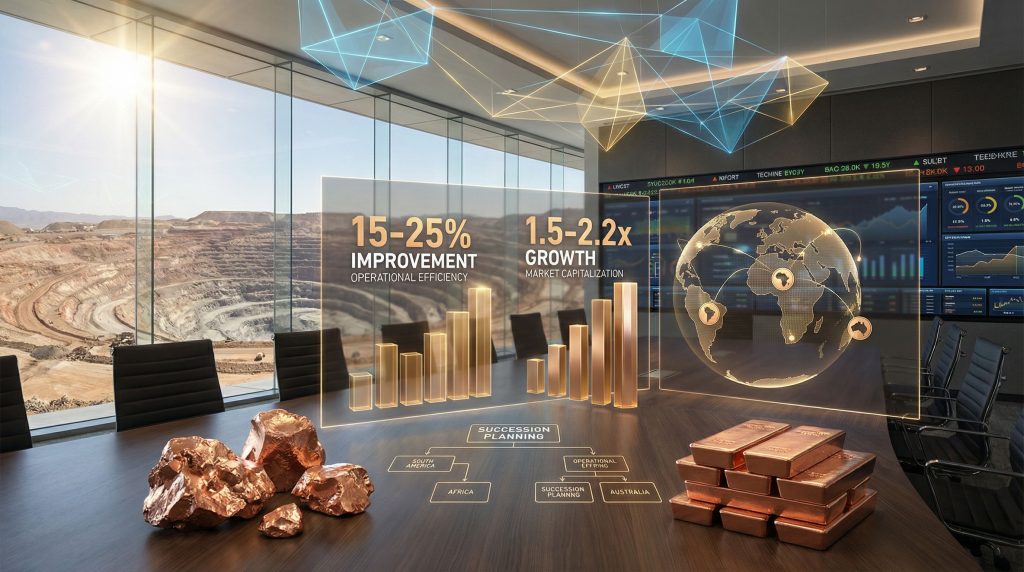
The global mining industry operates within complex ecosystem dynamics where executive leadership transitions create ripple effects across commodity markets, institutional investment patterns, and strategic resource allocation frameworks. When veteran mining executives depart major corporations, their accumulated institutional knowledge, strategic networks, and decision-making capabilities represent irreplaceable assets that can influence market confidence and long-term value creation trajectories. Furthermore, the Brian Gilbertson death announcement serves as a poignant reminder of how individual leaders can shape entire industry landscapes through their strategic vision and operational expertise.
Executive Knowledge Capital and Market Dynamics in Resource Sectors
Mining industry veterans accumulate decades of specialised expertise that extends far beyond operational management to encompass intricate understanding of geological formations, commodity price cycles, regulatory environments, and stakeholder relationship management. This institutional knowledge becomes particularly valuable during periods of market volatility or strategic transformation initiatives.
The departure of Brian Gilbertson from BHP Billiton in 2003 exemplifies how executive transitions can create uncertainty in global resource markets. Gilbertson, who passed away at age 82 in December 2025, had orchestrated the transformational merger between BHP and Billiton in 2001, creating what became the world's largest mining company at the time. His resignation due to reported disagreements with company directors highlighted the challenges of maintaining strategic continuity during leadership changes.
Moreover, understanding management red flags becomes crucial when assessing the potential impact of executive departures on investment portfolios. Consequently, the Brian Gilbertson death announcement reminds us of the importance of leadership stability in resource sector investments.
Leadership Transition Risk Factors:
- Strategic Vision Continuity: Maintaining long-term capital allocation frameworks during executive changes
- Stakeholder Relationship Preservation: Sustaining trust with government entities, community partners, and institutional investors
- Operational Excellence Standards: Preserving safety protocols, environmental compliance, and productivity benchmarks
- Market Confidence Metrics: Managing analyst expectations and institutional investor positioning
Mining companies that successfully navigate leadership transitions typically implement structured knowledge transfer protocols that document strategic decision-making frameworks, preserve critical stakeholder relationships, and maintain operational excellence standards throughout periods of organisational change.
When big ASX news breaks, our subscribers know first
Mega-Merger Architecture and Value Creation Dynamics
The BHP Billiton merger represented a landmark consolidation that reshaped global mining industry competitive dynamics. This transaction demonstrated how skilled merger architects can create substantial shareholder value through strategic asset combination, operational synergy realisation, and enhanced market positioning capabilities.
In addition, the current merger and joint ventures landscape continues to evolve, with companies seeking strategic partnerships to optimise their operational footprint. However, successful transactions require strong leadership vision and execution capabilities.
Merger Value Creation Framework:
| Integration Phase | Strategic Objectives | Value Drivers | Risk Mitigation |
|---|---|---|---|
| Pre-Closing | Due diligence completion | Asset optimisation | Regulatory approval |
| Year 1-2 | Operational integration | Cost synergies | Cultural alignment |
| Year 3-5 | Strategic optimisation | Revenue synergies | Market positioning |
| Long-term | Portfolio enhancement | Geographic diversification | Competitive advantage |
The 2001 BHP Billiton combination created a diversified mining portfolio spanning multiple commodities and geographic regions, providing enhanced resilience against commodity price volatility and operational risk exposure. This strategic diversification enabled the combined entity to optimise capital allocation across different market cycles and regulatory environments.
Post-Merger Performance Indicators:
- Production Volume Optimisation: Coordinating mining operations across global portfolio
- Capital Efficiency Improvements: Eliminating duplicate infrastructure and administrative functions
- Market Share Expansion: Leveraging combined scale for enhanced pricing negotiations
- Technology Integration: Implementing best practices across unified operational framework
However, the complexity of mega-merger integration requires sustained executive leadership to navigate cultural differences, operational challenges, and stakeholder expectations. Gilbertson's departure in 2003, shortly after the merger completion, created uncertainty about the long-term strategic direction and integration success.
Succession Planning Models and Institutional Memory Preservation
Effective succession planning in capital-intensive mining operations requires comprehensive frameworks that preserve institutional knowledge while enabling strategic innovation. Mining companies face unique challenges in leadership transitions due to the long-term nature of resource development projects and the specialised expertise required for successful operations.
Furthermore, mining leadership trends indicate a growing emphasis on developing executives who can navigate both traditional operational challenges and emerging sustainability requirements. Consequently, the Brian Gilbertson death announcement highlights the importance of preparing next-generation leaders to carry forward institutional wisdom.
Knowledge Transfer Protocol Components:
- Strategic Decision Documentation: Recording rationale behind major capital investments and operational choices
- Stakeholder Relationship Mapping: Maintaining continuity with government officials, community leaders, and industry partners
- Risk Management Frameworks: Preserving understanding of geological, environmental, and regulatory risk factors
- Cultural Value Preservation: Sustaining organisational principles that drive operational excellence and safety performance
Mining industry succession planning must account for the lengthy development timelines characteristic of resource projects. Major mining investments often require 5-10 year development phases, necessitating leadership continuity to ensure strategic execution and stakeholder confidence maintenance.
What Are the Key Succession Risk Mitigation Strategies?
- Internal Development Programs: Cultivating next-generation leadership through mentorship and cross-functional experience
- External Advisory Integration: Leveraging industry expertise during transition periods
- Board Oversight Enhancement: Strengthening governance frameworks to provide strategic guidance
- Performance Metric Continuity: Maintaining consistent evaluation criteria across leadership changes
Companies that implement robust succession planning typically demonstrate superior performance metrics during leadership transitions, including sustained operational efficiency, maintained analyst confidence, and continued access to capital markets at favourable terms.
Technology Adoption and Operational Innovation Leadership
Mining industry veterans play crucial roles in driving technological advancement and operational innovation across resource sector operations. Their deep understanding of operational challenges, combined with strategic vision for long-term competitiveness, enables effective evaluation and implementation of emerging technologies.
In addition, ai innovation in mining continues to revolutionise operational practices, requiring visionary leadership to guide successful implementation. For instance, the Brian Gilbertson death announcement reminds us that experienced executives often champion technological advancement initiatives that transform entire industry sectors.
Innovation Implementation Framework:
- Automation Technology Integration: Implementing autonomous mining equipment and process optimisation systems
- Digital Transformation Initiatives: Deploying data analytics, artificial intelligence, and predictive maintenance capabilities
- Sustainability Technology Adoption: Advancing carbon reduction technologies and circular economy practices
- Safety Enhancement Systems: Implementing advanced monitoring and risk mitigation technologies
The departure of experienced executives can create gaps in technology adoption leadership, particularly in organisations where innovation initiatives require sustained championship and resource allocation. Mining companies must balance immediate operational requirements with long-term technological advancement needs.
How Do Companies Measure Operational Excellence?
- Production Efficiency Improvements: Measuring output per unit of capital investment
- Safety Performance Enhancement: Tracking incident reduction and risk mitigation effectiveness
- Environmental Compliance: Monitoring emissions reduction and waste management optimisation
- Cost Competitiveness: Maintaining unit cost advantages through operational innovation
Successful mining leaders establish technology adoption frameworks that can survive leadership transitions, ensuring continued innovation momentum and competitive positioning maintenance.
Market Response Patterns to Executive Leadership Changes
Financial markets typically exhibit immediate sensitivity to mining industry leadership announcements, reflecting investor concerns about strategic continuity and operational performance maintenance. The magnitude of market response often correlates with the departing executive's prominence and the circumstances surrounding their transition.
Moreover, industry evolution trends suggest that markets increasingly value leadership continuity as companies navigate complex technological and sustainability transformations. Consequently, executive succession planning becomes a critical factor in maintaining investor confidence.
Immediate Market Reaction Indicators:
- Equity Price Volatility: Short-term trading volume increases and price movement analysis
- Institutional Investor Positioning: Large fund manager allocation adjustments and portfolio rebalancing
- Analyst Coverage Modifications: Investment bank rating changes and earnings forecast revisions
- Credit Market Assessment: Bond yield movements and credit spread adjustments
Mining companies can minimise market disruption during leadership transitions through proactive communication strategies, succession plan transparency, and demonstrated operational continuity. Market confidence typically recovers more quickly when companies provide clear strategic direction and maintain consistent performance metrics.
What Factors Drive Long-Term Valuation Impact?
- Strategic Vision Execution: Ability to maintain long-term capital investment programmes
- Operational Performance Consistency: Sustaining production targets and cost management effectiveness
- Stakeholder Relationship Stability: Preserving government partnerships and community support
- Innovation Initiative Continuity: Advancing technology adoption and operational improvement programmes
Historical analysis suggests that mining companies with established succession planning frameworks and strong operational foundations typically experience limited long-term valuation impacts from executive transitions, while companies lacking these characteristics may face sustained market scepticism.
The next major ASX story will hit our subscribers first
Strategic Continuity Frameworks for Value Creation
Mining companies that successfully navigate executive transitions implement comprehensive strategic continuity frameworks that preserve institutional knowledge while enabling adaptive leadership development. These frameworks balance respect for established strategic directions with flexibility for market evolution and innovation advancement.
Strategic Execution Components:
- Capital Investment Programme Maintenance: Sustaining multi-year development projects and expansion initiatives
- Operational Excellence Preservation: Maintaining safety standards, environmental compliance, and productivity benchmarks
- Market Position Defence: Protecting competitive advantages and customer relationship stability
- Innovation Momentum Continuation: Advancing technology adoption and process improvement initiatives
The mining industry's capital-intensive nature requires strategic frameworks that can accommodate leadership changes without disrupting long-term value creation trajectories. Companies must balance executive autonomy with institutional stability to maintain stakeholder confidence and operational effectiveness.
Performance Measurement Continuity:
| Metric Category | Measurement Frequency | Strategic Importance | Succession Impact |
|---|---|---|---|
| Production Volumes | Monthly | High | Moderate |
| Safety Performance | Continuous | Critical | Low |
| Financial Returns | Quarterly | High | High |
| Environmental Compliance | Continuous | Critical | Low |
| Stakeholder Satisfaction | Annual | Moderate | High |
Mining industry succession success depends on maintaining performance measurement systems that provide consistent evaluation frameworks regardless of leadership changes. This approach enables continuity assessment and strategic adjustment identification during transition periods.
The evolution of global mining markets toward increased sustainability focus, technology integration, and stakeholder capitalism requires leadership development that balances traditional resource sector expertise with emerging market dynamics understanding. Companies that successfully develop next-generation mining leaders while preserving institutional knowledge typically achieve superior long-term performance and market positioning.
What Are the Key Investment Implications?
Investors evaluating mining companies should assess succession planning quality, knowledge transfer effectiveness, and strategic continuity frameworks when making allocation decisions. Companies demonstrating robust leadership development and institutional knowledge preservation typically offer superior risk-adjusted returns and operational resilience during market volatility periods.
Furthermore, the legacy of leaders like Brian Gilbertson continues to influence modern mining practices, emphasising the importance of visionary leadership in driving sustainable growth and operational excellence across global resource markets.
Want to Stay Ahead of Major ASX Mining Discoveries?
Discovery Alert's proprietary Discovery IQ model delivers real-time alerts on significant ASX mineral discoveries, empowering subscribers to identify actionable trading opportunities ahead of the broader market. Visit Discovery Alert's discoveries page to explore historic examples of exceptional returns from major mineral discoveries, then begin your 30-day free trial today to position yourself ahead of the market.