
June 12, 2026
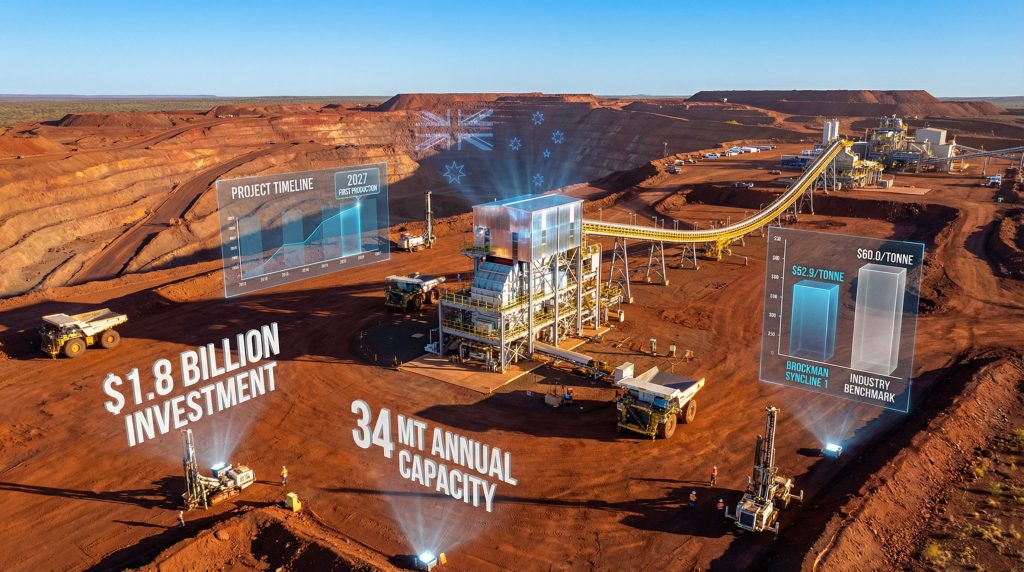
Global iron ore markets face unprecedented supply pressures as aging deposits reach depletion across established mining regions. Australia's Pilbara basin, which provides nearly half of the world's seaborne iron ore supply, requires systematic mine life extension strategies to maintain production capacity through the next decade. These replacement projects represent a fundamental shift from expansion-focused capital deployment to production maintenance investments, with profound implications for global steel industry supply chains. The Brockman Syncline 1 mine project Australia emerges as a cornerstone development within this strategic framework, demonstrating how Australian iron ore advantages position the nation to maintain its dominant market position through systematic asset renewal.
What Strategic Role Does the Brockman Syncline 1 Project Play in Australia's Iron Ore Future?
The Brockman Syncline 1 mine project Australia emerges as a critical component of Australia's iron ore production sustainability strategy. Located in Western Australia's West Pilbara region, this $1.8 billion development represents one element of a broader 130 million tonne annual capacity replacement program designed to offset depleting reserves across the Brockman mining hub.
Regional Mining Hub Expansion Strategy
Rio Tinto's systematic approach to mine life extension reflects the mature nature of Pilbara iron ore operations. The company has identified BS1 as part of an integrated portfolio strategy, where multiple replacement projects work in coordination to maintain regional production levels rather than expand them. This approach differs fundamentally from the greenfield expansion projects that characterised Pilbara development through the 2000s and 2010s.
The project's 34 million tonnes annual processing capacity positions it as a significant contributor to maintaining Australia's iron ore export competitiveness. Given that Australia supplies approximately 60% of global seaborne iron ore trade, production sustainability in the Pilbara directly impacts international steel production costs and availability. Furthermore, current iron ore price trends suggest sustained demand that justifies this substantial investment in replacement capacity.
Production Capacity Integration Within Existing Infrastructure
BS1's design emphasises infrastructure integration rather than standalone development. The project incorporates a new primary crusher and overland conveyor system that connects with existing processing facilities, demonstrating capital efficiency through asset utilisation. This integration strategy reduces per-tonne capital intensity compared to fully independent mining operations.
The technical specifications include modifications to existing plant infrastructure, suggesting that BS1 leverages established processing capabilities while upgrading material handling systems. This approach typically produces faster project payback periods and reduced operational complexity compared to greenfield developments.
Timeline Acceleration and Market Positioning Benefits
The acceleration of first ore production from 2028 to 2027 indicates either exceptional project execution efficiency or heightened market demand pressures. This one-year advancement suggests that iron ore market conditions justify expedited capital deployment, potentially reflecting concerns about future supply availability or premium pricing opportunities for high-grade hematite products.
Market positioning advantages emerge from maintaining consistent production during a period when competing operations may face depletion challenges. Early production provides Rio Tinto with sustained market share during potential supply tightening across the global iron ore sector.
When big ASX news breaks, our subscribers know first
How Does the $1.8 Billion Investment Compare to Similar Pilbara Developments?
Capital expenditure analysis reveals BS1's financial positioning within the broader context of Pilbara mining investments. The $1.8 billion total investment represents significant capital deployment for a replacement project, indicating either complex engineering requirements or premium infrastructure specifications.
Capital Expenditure Benchmarking Against Peer Projects
The project's capital intensity calculates to approximately $52.9 per tonne of annual capacity ($1.8 billion ÷ 34 million tonnes). This metric provides a framework for assessing project efficiency relative to industry standards, though direct comparisons require adjustment for ore quality, infrastructure requirements, and regulatory compliance costs.
Contemporary Pilbara projects typically demonstrate capital intensity ranging from $45 to $65 per tonne of annual capacity, placing BS1 within expected parameters for replacement mining developments. However, this range reflects significant variation based on geological complexity, environmental requirements, and integration specifications.
Return on Investment Projections for Iron Ore Replacement Mines
Replacement mine economics differ fundamentally from expansion project returns. While expansion projects target incremental production growth, replacement projects focus on production maintenance and margin optimisation through operational efficiency improvements. The Brockman Syncline 1 mine project Australia's financial attractiveness depends primarily on maintaining cash flow generation rather than achieving volume growth.
Iron ore pricing assumptions embedded within the project economics remain undisclosed, creating uncertainty about long-term project viability under various commodity price scenarios. Current iron ore pricing of approximately $100-120 per tonne provides favourable conditions for project economics, though historical volatility suggests significant downside risk potential.
Risk-Adjusted Financial Modelling for Large-Scale Mining Ventures
Large-scale mining projects face multiple risk categories that impact financial performance. Commodity price volatility represents the primary risk factor, with iron ore prices historically demonstrating significant cyclical variation. BS1's financial viability depends heavily on sustained demand from Chinese steel production, which accounts for approximately 70% of global iron ore consumption. Moreover, Rio Tinto tax strategies will play a crucial role in optimising the project's overall returns.
Key Risk Factors:
- Commodity price volatility impacting project economics
- Construction cost escalation during the 2026-2027 timeframe
- Regulatory changes affecting mining operations
- Infrastructure dependency and supply chain disruptions
- Environmental compliance costs and approval delays
| Risk Category | Impact Level | Mitigation Strategy |
|---|---|---|
| Commodity Price | High | Long-term supply contracts |
| Construction Cost | Medium | Fixed-price contractor agreements |
| Regulatory | Medium | Early stakeholder engagement |
| Environmental | Low | Comprehensive impact assessments |
What Employment and Economic Multiplier Effects Will BS1 Generate?
The project's employment profile demonstrates significant economic impact across both construction and operational phases. Construction activities will support approximately 1,000 jobs during the development period, while operational requirements sustain approximately 600 permanent positions following project completion.
Construction Phase Workforce Deployment (1,000 Jobs)
Construction employment begins immediately with project commencement, extending through the anticipated 2027 completion timeline. The workforce composition spans multiple skill categories, including heavy equipment operators, welders, electricians, engineers, and general labourers. This employment profile supports regional economic activity through accommodation, transportation, and service sector demand.
Peak construction employment typically occurs during the 12-18 month period preceding project completion, when infrastructure assembly and commissioning activities reach maximum intensity. The $1.8 billion capital expenditure translates to approximately $1.8 million per construction job, indicating capital-intensive development with significant equipment and infrastructure components.
Operational Employment Sustainability (600 Permanent Positions)
Permanent operational employment provides sustained economic benefits extending throughout the project's operational life. The 600 permanent positions encompass mining operations, processing oversight, maintenance activities, and administrative functions. These positions typically offer above-average wages compared to regional employment alternatives, contributing to household income stability and consumer spending.
Employment Categories:
- Mining equipment operators (35-40% of workforce)
- Maintenance and technical specialists (25-30%)
- Processing and quality control personnel (15-20%)
- Administrative and supervisory roles (10-15%)
- Safety and environmental compliance (5-10%)
Regional Economic Impact Through Supply Chain Integration
Beyond direct employment, BS1 generates substantial indirect economic activity through supplier relationships and service procurement. The project's supply chain extends across Western Australia's mining services sector, supporting equipment suppliers, logistics providers, and specialised contractors.
The economic multiplier effect from major mining projects typically generates 1.5 to 2.5 additional jobs in the broader economy for each direct mining position, creating ripple effects throughout regional service industries, accommodation providers, and retail sectors.
Regional economic modelling suggests that 600 permanent mining positions support an additional 900 to 1,500 indirect jobs across the West Pilbara region. These positions span accommodation services, equipment maintenance, logistics coordination, and professional services, creating sustainable economic diversification beyond direct mining activities.
How Does the Project's Technical Infrastructure Support Long-Term Operational Efficiency?
BS1's technical infrastructure emphasises integration with existing processing systems while incorporating advanced material handling technologies. The project's engineering approach prioritises operational efficiency through optimised material flow and reduced handling costs.
Primary Crusher and Conveyor System Engineering Specifications
The new primary crusher represents a critical infrastructure component designed to process 34 million tonnes annually of iron ore. Primary crushing systems typically operate with jaw or gyratory crushers capable of reducing ore from blast fragmentation size (1-2 metres) to conveyor-suitable dimensions (100-300mm).
The overland conveyor system provides continuous material transport from the crusher location to existing processing facilities. Conveyor specifications must accommodate the 34 million tonne annual capacity, requiring belt systems with substantial width and operating speed capabilities. Modern overland conveyors in Pilbara applications typically operate at speeds of 4-6 metres per second with belt widths of 1.8-2.4 metres.
Technical Infrastructure Components:
- High-capacity primary crusher with automated feed control
- Overland conveyor system with weather protection
- Material handling integration points with existing facilities
- Automated control systems for throughput optimisation
- Maintenance access infrastructure and spare parts inventory
Integration with Existing Processing Plant Networks
The project's value proposition centres on leveraging existing processing plant capacity rather than constructing independent facilities. This integration approach reduces capital requirements while maximising utilisation of established infrastructure investments.
Integration protocols must ensure seamless material flow coordination between new crusher output and existing plant input specifications. This requires precise engineering of material sizing, moisture content, and delivery scheduling to optimise overall system performance.
Non-Process Infrastructure Development for Operational Support
Supporting infrastructure includes administrative facilities, maintenance workshops, warehouse capacity, and worker accommodation during construction phases. The non-process infrastructure precinct provides operational support functions essential for sustained mining activity.
These facilities typically include equipment maintenance bays, spare parts storage, administrative offices, safety training facilities, and temporary accommodation for construction personnel. The infrastructure investment supports long-term operational efficiency through centralised support functions and optimised logistics coordination.
What Environmental and Regulatory Frameworks Govern the BS1 Development?
Environmental approval processes for major mining developments in Western Australia involve both state and federal regulatory oversight. The Brockman Syncline 1 mine project Australia requires compliance with the Environmental Protection Authority assessment procedures and native vegetation clearing approvals.
Native Vegetation Clearing Approvals and Mitigation Strategies
Mining operations in the Pilbara region require careful management of native vegetation impacts. The project involves clearing activities for infrastructure development, requiring offset strategies or rehabilitation commitments to address environmental impacts.
Vegetation clearing approvals typically include requirements for:
- Pre-clearing surveys identifying sensitive species or habitats
- Offset area designation with equivalent ecological value
- Progressive rehabilitation of disturbed areas
- Long-term monitoring of environmental outcomes
- Community consultation and stakeholder engagement
Federal and State Government Approval Processes
Large-scale mining projects undergo comprehensive regulatory assessment at multiple government levels. Federal approval may be required under the Environment Protection and Biodiversity Conservation Act if the project impacts matters of national environmental significance.
State government approvals encompass mining tenements, water allocation, infrastructure development, and workplace safety compliance. The approval process typically requires 18-36 months for complex projects, though BS1's replacement mine status may expedite certain assessments through established precedents.
Environmental Protection Authority Assessment Outcomes
The Environmental Protection Authority conducts technical assessments of environmental impact and mitigation strategies. Assessment outcomes include conditions on project implementation, ongoing monitoring requirements, and compliance reporting obligations.
Key assessment areas include air quality impacts from dust generation, water resource management, noise emissions, and biodiversity conservation. The assessment process incorporates public consultation opportunities and technical expert review to ensure comprehensive environmental consideration.
Which Key Contractors and Strategic Partnerships Drive Project Execution?
Strategic contractor selection demonstrates Rio Tinto's approach to project execution through established industry partnerships. Rio Tinto announced a $1.8 billion investment to develop the Brockman mine extension, with the company awarding major contracts to proven suppliers with relevant Pilbara experience and technical capabilities.
Monadelphous Group's $250 Million Construction Contract Scope
Monadelphous Group received a $250 million contract encompassing fabrication, earthworks, concrete, structural, mechanical, piping, and electrical instrumentation works. This contract scope covers construction of the primary crusher and overland conveyor system, representing the project's most technically complex components.
The multidisciplinary contract structure provides integrated project delivery under single contractor responsibility. Monadelphous Group's established presence in Pilbara mining projects offers operational familiarity with regional conditions, workforce availability, and logistical requirements.
Work commencement occurs immediately following contract award, with completion scheduled for 2027. This timeline aligns with the overall project schedule for first ore production, indicating critical path dependency on Monadelphous Group's execution performance.
NRW Civil & Mining Infrastructure Development Role
NRW Civil & Mining was awarded a $167 million contract for earthworks, roadworks, and drainage infrastructure associated with the primary crusher, overland conveyor, and non-process infrastructure development. The contract includes construction of haul roads, access roads, and concrete structures supporting operational requirements.
The $167 million contract value represents approximately 9% of total project capital expenditure, indicating substantial civil engineering requirements for site preparation and infrastructure development. Civil works typically precede mechanical installation, placing NRW's performance on the critical path for overall project completion.
Major Contract Comparison:
| Contractor | Contract Value | Scope | Completion Timeline |
|---|---|---|---|
| Monadelphous Group | $250 million | Primary crusher, conveyor systems | 2027 |
| NRW Civil & Mining | $167 million | Earthworks, roads, drainage | 2026-2027 |
| Other contractors | $1.383 billion | Engineering, equipment, other | 2026-2027 |
Worley's Engineering and Project Management Integration
While not explicitly detailed in available information, major mining projects typically engage engineering consultants for design optimisation and project management coordination. Engineering services encompass process design, equipment specification, and construction management oversight.
Project management integration ensures coordination between multiple contractors while maintaining schedule adherence and budget control. This function becomes particularly critical for projects involving infrastructure integration with existing facilities, requiring precise scheduling and technical compatibility verification.
The next major ASX story will hit our subscribers first
How Does BS1 Position Rio Tinto Within Global Iron Ore Market Dynamics?
The project's strategic significance extends beyond individual mine economics to encompass Rio Tinto's competitive positioning within global iron ore supply chains. BS1 represents production maintenance rather than capacity expansion, reflecting mature market dynamics and supply discipline.
Production Capacity Maintenance Strategy Through Replacement Mining
Rio Tinto's replacement mining strategy recognises the finite nature of existing ore reserves while maintaining market share through systematic asset renewal. This approach contrasts with rapid expansion strategies pursued during periods of exceptional demand growth, demonstrating disciplined capital allocation aligned with long-term supply-demand balance.
The 130 million tonne total replacement capacity across multiple projects indicates comprehensive asset portfolio management. This systematic approach ensures production continuity while avoiding oversupply conditions that could depress commodity pricing across the industry. Additionally, analysing iron ore demand insights reveals sustained demand patterns that support this strategic approach.
High-Grade Hematite Quality Advantages (60-63% Iron Content)
Iron ore quality represents a critical competitive advantage in global markets, particularly as steel producers emphasise efficiency improvements and environmental performance. High-grade hematite with 60-63% iron content commands premium pricing compared to lower-grade alternatives, providing enhanced project economics and market positioning.
Premium iron ore grades reduce steel production energy requirements and improve blast furnace productivity. These quality advantages become increasingly valuable as steel producers face carbon emission constraints and seek operational efficiency improvements through superior raw material specifications.
Supply Chain Resilience for International Steel Industry Demand
Australia's iron ore production provides critical supply chain stability for international steel producers, particularly in Asia where steel production concentration creates significant import dependency. BS1's contribution to sustained Australian export capacity supports global steel industry supply security during potential disruption periods.
Supply chain resilience gains importance as geopolitical tensions affect commodity trade flows. Australia's political stability, established infrastructure, and production reliability provide strategic advantages for steel producers seeking secure long-term supply arrangements.
What Timeline Acceleration Factors Enabled Earlier Production Start?
The advancement of first ore production from 2028 to 2027 reflects either exceptional execution efficiency or altered market conditions justifying expedited development. Understanding acceleration factors provides insights into project management capabilities and market pressures influencing investment decisions.
Engineering Optimisation and Construction Sequencing Improvements
Engineering optimisation through advanced modelling and design tools enables compressed development timelines through reduced design iterations and construction coordination improvements. Modern project management software facilitates complex scheduling optimisation and resource allocation efficiency.
Construction sequencing improvements may include parallel work streams, prefabrication strategies, and modular construction approaches that reduce on-site assembly time. These methodologies become particularly valuable for projects involving infrastructure integration, where coordination complexity traditionally extends development timelines.
Regulatory Approval Streamlining Processes
Replacement mining projects may benefit from streamlined regulatory assessment processes compared to greenfield developments. Established environmental impact precedents and operational history in the region provide regulatory familiarity that can expedite approval timelines.
Government recognition of mining industry importance to regional economic development may also contribute to expedited assessment processes, particularly for projects maintaining employment levels and export revenue generation.
Market Demand Pressures Driving Schedule Compression
Global steel industry demand patterns may create market conditions favouring accelerated iron ore production. Steel production growth in developing economies generates sustained demand for high-quality iron ore, potentially justifying expedited project development despite increased execution costs.
Iron ore market fundamentals suggest sustained demand growth through 2027-2030, driven by infrastructure development in emerging economies and steel industry modernisation requiring premium raw material specifications.
Chinese steel production, representing approximately 55% of global output, drives iron ore demand patterns that directly influence Australian mining investment decisions. Supply tightening from aging deposits worldwide creates favourable market conditions for replacement project economics.
What Risk Factors and Mitigation Strategies Apply to Large-Scale Pilbara Mining Projects?
Major mining developments face multifaceted risk profiles spanning commodity markets, operational execution, regulatory compliance, and environmental management. Comprehensive risk assessment enables informed investment decisions and appropriate mitigation strategies.
Commodity Price Volatility Impact on Project Economics
Iron ore pricing demonstrates significant historical volatility, with prices ranging from $40 to $200 per tonne over the past decade. This volatility directly impacts project economics and cash flow generation throughout operational life.
Risk Mitigation Strategies:
- Long-term supply contracts providing price stability
- Operational flexibility enabling production adjustment during price cycles
- Cost structure optimisation reducing breakeven pricing requirements
- Financial hedging instruments limiting downside price exposure
- Diversified customer base reducing single-market dependency
Infrastructure Dependency and Supply Chain Vulnerabilities
Pilbara mining operations depend heavily on shared infrastructure including rail networks, port facilities, and power generation systems. Infrastructure constraints or disruptions can significantly impact production capacity and operating costs.
Supply chain vulnerabilities include equipment availability, specialised component sourcing, and skilled labour accessibility. Remote location challenges compound these vulnerabilities through limited alternative supplier options and extended logistics timelines.
Environmental Compliance and Community Relations Management
Environmental compliance requirements continue expanding through enhanced monitoring standards, rehabilitation obligations, and carbon emission considerations. These requirements increase operational costs while creating potential disruption risks through non-compliance penalties.
Community relations management encompasses indigenous land rights, local employment expectations, and environmental impact concerns. Maintaining positive stakeholder relationships requires ongoing engagement and transparent communication about project impacts and benefits.
How Do Geological Characteristics Support Long-Term Mining Viability?
The Brockman region's geological profile provides the foundation for sustained iron ore production through favourable ore characteristics and deposit geometry. Understanding geological advantages enables assessment of long-term operational viability and resource optimisation potential.
Brockman Region Hematite Deposit Quality Assessment
Brockman region deposits consist primarily of high-grade hematite with iron content typically ranging from 58% to 65%. This quality profile places Brockman ore among the highest-grade iron ore globally, providing significant market advantages and processing efficiency benefits. Furthermore, the region ranks among the world's largest iron ore mines, demonstrating its geological endowment.
Hematite ore characteristics include low phosphorus and sulphur content, minimal alumina contamination, and favourable size distribution for processing optimisation. These quality advantages translate directly into premium pricing and enhanced customer acceptance across global steel markets.
Waste-to-Ore Ratio Optimisation for Cost-Effective Extraction
Efficient mining operations require favourable waste-to-ore ratios minimising overburden removal costs relative to ore production volumes. Brockman region deposits typically demonstrate waste-to-ore ratios between 1.5:1 and 2.5:1, considered favourable for large-scale open-pit mining operations.
Waste-to-ore ratio optimisation involves strategic mine planning coordinating blasting patterns, equipment utilisation, and material handling systems. Advanced geological modelling enables precise waste minimisation while maximising ore recovery throughout mine life.
Reserve Life Extension Through Strategic Mine Planning
Strategic mine planning optimises resource extraction sequencing to maximise total ore recovery while maintaining consistent production levels. This planning process incorporates geological variation, infrastructure constraints, and market demand patterns to optimise long-term value creation.
Reserve life extension strategies include:
- Advanced geological modelling improving resource definition accuracy
- Selective mining techniques maximising ore recovery rates
- Processing optimisation enabling utilisation of previously marginal ore grades
- Infrastructure development supporting access to deeper or more distant ore bodies
- Technology advancement reducing mining costs and expanding economic ore definitions
Frequently Asked Questions:
When will the Brockman Syncline 1 mine begin production?
First ore production is scheduled for 2027, accelerated from the original 2028 timeline due to optimised execution and favourable market conditions.
How many jobs will the project create?
The project will generate approximately 1,000 construction jobs during development and sustain 600 permanent operational positions following completion.
What is the total investment required for BS1?
Rio Tinto has committed $1.8 billion in capital expenditure for the complete development of the Brockman Syncline 1 project.
Which companies are the main contractors?
Monadelphous Group holds a $250 million contract for primary crusher and conveyor construction, while NRW Civil & Mining received a $167 million contract for earthworks and infrastructure development.
What annual production capacity will BS1 achieve?
The project is designed to process 34 million tonnes of iron ore annually through integration with existing processing facilities.
Strategic Implications for Australia's Mining Sector
BS1 represents broader strategic trends within Australia's mining industry, demonstrating disciplined capital allocation, infrastructure optimisation, and long-term supply chain sustainability. These characteristics position Australian iron ore operations advantageously within evolving global market conditions.
Long-Term Resource Security Through Replacement Mine Development
Systematic replacement mine development ensures sustained Australian iron ore export capacity despite depleting reserves at established operations. This approach maintains Australia's market share while avoiding oversupply conditions that could destabilise global pricing.
Resource security extends beyond individual mine economics to encompass national export revenue stability and regional employment sustainability. Australia's iron ore exports generate approximately $120-150 billion annually, making production continuity essential for economic stability.
Technology Integration Lessons for Future Pilbara Projects
BS1's infrastructure integration approach provides a template for future Pilbara developments facing similar replacement requirements. The project demonstrates capital efficiency benefits from leveraging existing facilities while incorporating advanced material handling technologies.
Technology integration lessons include the importance of compatibility planning, modular construction approaches, and operational flexibility enabling adaptation to changing market conditions. These lessons inform future project development strategies across the region.
Economic Diversification Benefits for Regional Western Australia
Large-scale mining projects like the Brockman Syncline 1 mine project Australia provide economic diversification opportunities for regional Western Australia through supply chain development, service sector growth, and skills development programmes. These benefits extend beyond direct mining employment to encompass broader economic activity.
Economic diversification reduces regional dependency on individual mining operations while building sustainable service industries capable of supporting multiple projects. This diversification enhances economic resilience during commodity price cycles and operational transitions.
Disclaimer: This analysis contains forward-looking projections and market assessments that involve inherent uncertainty. Commodity prices, regulatory requirements, and operational outcomes may vary significantly from current expectations. Investment decisions should incorporate comprehensive risk assessment and professional financial advice.
Want to Stay Ahead of Major ASX Mining Discoveries?
Discovery Alert's proprietary Discovery IQ model delivers instant notifications when significant mineral discoveries like the Brockman Syncline 1 project are announced, providing subscribers with critical market intelligence ahead of broader market recognition. Explore Discovery Alert's historic discoveries page to understand how major mineral finds have generated substantial returns, then begin your 30-day free trial to position yourself strategically for the next breakthrough announcement.