August 24, 2026
The Silver Consolidation Playbook: Why Combining Assets Beats Going It Alone
Across the global mining sector, a quiet but consequential restructuring is underway. Junior silver producers, long characterised by fragmented ownership, isolated asset bases, and perpetual capital constraints, are beginning to recognise that consolidation offers something no individual project can: the combination of near-term cash flow with a long runway of exploration optionality. This dynamic is reshaping how investors, operators, and capital allocators think about silver exposure in an era defined by supply chain vulnerability and industrial demand acceleration.
The decision by Bunker Hill Mining Corporation and Silver47 Exploration Corporation to merge through an all-stock arrangement is a textbook expression of this thesis. When Bunker Hill Mining merges with Silver47, the result is not simply a larger company. It is a structurally different investment proposition, one that pairs an operating mine already approaching commercial production with a geographically diversified exploration pipeline spanning three additional US states.
When big ASX news breaks, our subscribers know first
Understanding the Strategic Architecture of the Deal
The mechanics of the transaction are straightforward, but the strategic reasoning runs deeper than the exchange ratio suggests. Under the arrangement, each Silver47 common share converts into 0.1724 Bunker Hill common shares, implying a per-share value of approximately C$0.93 (roughly US$0.67) and a 38% premium to Silver47's closing price on the TSX Venture Exchange on August 20, 2026.
| Metric | Detail |
|---|---|
| Transaction Type | All-stock merger |
| Exchange Ratio | 0.1724 Bunker Hill shares per Silver47 share |
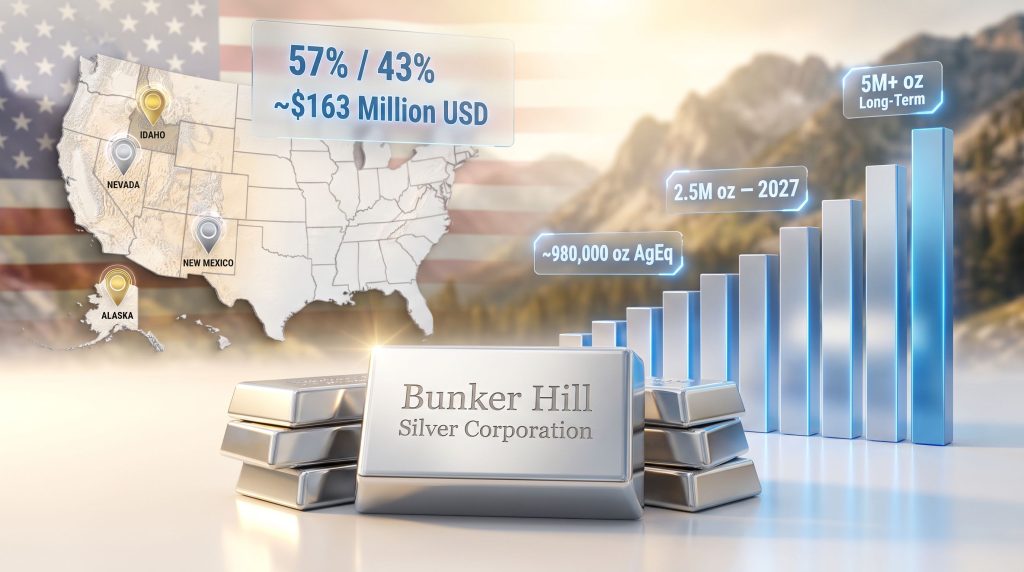
| Post-Merger Ownership | Bunker Hill: 57% / Silver47: 43% |
| Implied Silver47 Valuation | ~US$163 million |
| Premium to Prior Close | ~38% |
| New Entity Name | Bunker Hill Silver Corporation |
| Listing Exchange | TSX |
| Expected Close | ~November 2026 (subject to approvals) |
The all-stock structure carries particular significance in the current environment. Rather than deploying cash on an acquisition premium, both sets of shareholders become co-owners of a unified entity. This preserves the combined company's treasury for what matters most at this stage: accelerating production at the Idaho mine and funding the multi-state exploration pipeline simultaneously.
Why the Premium Reflects More Than Market Price
A 38% premium in an all-stock junior mining transaction is notable. For context, broad estimates of average premiums in junior silver mergers during 2025 and 2026 have clustered in the 25–35% range, suggesting this deal is priced to reflect strategic scarcity rather than a distressed seller dynamic. Silver47's exploration assets in Alaska, Nevada, and New Mexico carry optionality value that a simple net asset value calculation would likely understate, particularly given the current regulatory environment for domestic US silver production.
| Metric | Bunker Hill / Silver47 | Sector Average (Junior Silver M&A 2025–2026) |
|---|---|---|
| Premium to Prior Close | ~38% | ~25–35% (estimated range) |
| Transaction Structure | All-stock | Mixed (cash + stock common) |
| Combined Production Target (Near-Term) | ~980,000 oz AgEq/yr | Varies |
| Jurisdictional Focus | 100% US | Typically multi-national |
The Idaho Engine: Bunker Hill Mine's Role in the Combined Entity
Few silver districts in North America carry the geological pedigree of Idaho's Silver Valley. The Coeur d'Alene Mining District, within which the Bunker Hill mine sits, has produced over one billion ounces of silver over its multi-century history, making it one of the most significant silver-producing regions on the planet. This geological endowment is not merely historical; it reflects a structural mineralisation system that continues to reward systematic exploration and modern extraction techniques.
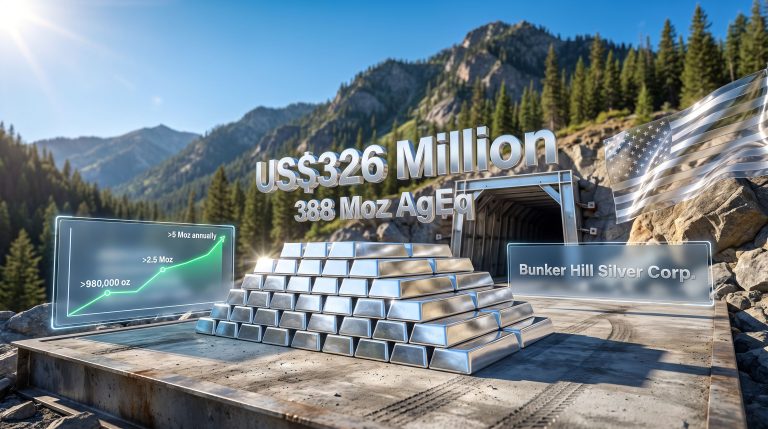
The Bunker Hill mine is currently ramping toward commercial production, with annualised output targeting approximately 980,000 silver-equivalent ounces once commercial operations commence in the fourth quarter of 2026. This figure represents Phase 1 of a multi-stage production growth plan:
- Phase 1 (Q4 2026 commencement): ~980,000 silver-equivalent ounces per annum on an annualised basis
- Phase 2 (2027 target): 2.5 million silver-equivalent ounces
- Long-term ambition: Exceeding 5 million silver-equivalent ounces annually
Important disclaimer: All production targets beyond the Q4 2026 commercial commencement represent management guidance and forward-looking projections. These figures are aspirational milestones subject to material operational, permitting, and capital risks. They should not be interpreted as guaranteed outcomes or relied upon as the basis for an investment decision.
The Idaho mine's operating cash flow is intended to serve as the primary internal funding mechanism for the broader exploration portfolio. This self-funding model reduces dependence on dilutive equity raises, a structural advantage that distinguishes this merger from pure exploration plays requiring perpetual external capital.
Silver47's Exploration Pipeline: Geographic Diversification as a Risk Management Tool
While the Bunker Hill mine provides the financial foundation, Silver47 contributes the growth architecture. The three-state exploration footprint spanning Alaska, Nevada, and New Mexico introduces a different risk-reward profile at each jurisdiction. Furthermore, the broader context of mining industry consolidation makes this kind of geographic diversification increasingly valuable for junior producers seeking to attract institutional capital.
| Asset | Type | Jurisdiction |
|---|---|---|
| Bunker Hill Mine | Operating / Ramping | Idaho (Silver Valley) |
| Silver47 Portfolio Asset 1 | Exploration / Development | Alaska |
| Silver47 Portfolio Asset 2 | Exploration / Development | Nevada |
| Silver47 Portfolio Asset 3 | Exploration / Development | New Mexico |
- Alaska offers large-scale discovery potential but carries higher logistical and environmental review complexity.
- Nevada is one of the world's most mining-friendly jurisdictions with established infrastructure and a deep talent pool, lending relative permitting predictability.
- New Mexico provides exposure to a mineral belt with established silver and polymetallic endowment, at an earlier stage of modern systematic exploration.
This geographic spread means the combined entity is not betting its exploration upside on a single geological thesis or a single regulatory environment. From a portfolio construction standpoint, that diversification within a single national jurisdiction is a meaningful differentiator.
Silver's Critical Minerals Designation: Policy Context and What It Actually Means
Silver's formal addition to the US federal critical minerals list reflects its expanding industrial role beyond traditional monetary and jewellery applications. The metal is now a core material in photovoltaic solar cells, advanced electronics, electric vehicle components, and certain defence technologies. Each solar panel contains a meaningful quantity of silver paste, and as global solar deployment accelerates, so does the structural demand base for the metal. Consequently, the growing critical minerals demand driven by the energy transition is creating a fundamentally stronger price floor for producers with domestic US assets.
It is worth being precise about what critical minerals designation does and does not mean for individual projects. The designation creates a regulatory framework that can enable faster environmental reviews and permitting pathways at the federal level. It does not automatically confer project-specific government funding, direct financial support, or guaranteed approval for any individual mine or exploration asset. Producers operating within this framework may benefit from streamlined processes, but each asset still faces its own jurisdiction-specific review requirements.
Silver47's CEO Galen McNamara has noted that federal permitting is currently moving at a pace the mining industry has rarely experienced in recent decades, attributing this to the broader national priority placed on rebuilding domestic mineral supply chains. This observation reflects a real shift in regulatory posture, though investors should distinguish between a favourable policy environment and confirmed project-level support.
Silver's Dual Identity: Monetary Metal Meets Industrial Critical Mineral
One of the less widely appreciated dynamics in silver markets is that silver's dual role means the metal serves two fundamentally different investor bases simultaneously. As a monetary metal with a centuries-long history as a store of value, silver attracts macro-oriented investors during periods of currency uncertainty or inflation concern. As an industrial critical mineral essential to clean energy infrastructure, it attracts a separate cohort of ESG-aligned and thematic investors focused on the energy transition.
This dual identity creates a broader and potentially more resilient investor base for a combined entity like Bunker Hill Silver Corporation than would be available to a single-thesis play. When monetary demand softens, industrial demand can provide a floor; when industrial sentiment cools, monetary safe-haven flows can support price. This dynamic does not eliminate silver price volatility, but it does create multiple potential demand catalysts operating on different timescales.
In addition, silver supply deficits have become a persistent structural feature of the market, reinforcing the investment case for producers with near-term output capability. Furthermore, the formal recognition of silver as a critical mineral adds a policy dimension that could accelerate capital flows toward domestically focused producers over the medium term.
Leadership Structure and Governance of the Combined Company
The post-merger governance structure reflects a deliberate division of responsibilities between operational execution and strategic capital allocation.
| Role | Individual |
|---|---|
| Executive Chairperson | Richard Williams |
| Chief Financial Officer | Bradley Barnett |
| Lead Independent Director | Mark Cruise |
| CEO | Sam Ash |
| President and Chief Investment Officer | Galen McNamara |
| Directors | Gary Thompson, Pamela Saxton, Kelli Kast |
Sam Ash continues in the CEO role with a focus on operational delivery at the Idaho mine and near-mine development. Galen McNamara steps into the President and Chief Investment Officer position, a designation that signals his primary mandate is capital allocation across the expanded exploration portfolio rather than day-to-day mine management. This dual-leadership model can be a source of organisational strength when the two roles operate with clearly delineated mandates, though it also introduces coordination demands that investors should monitor as the company scales.
The next major ASX story will hit our subscribers first
Key Risks That Investors Should Track Closely
No merger of this nature is without material risks. Understanding them is as important as understanding the upside thesis.
Ramp-Up Execution at the Idaho Mine
The entire funding model for the combined entity's exploration ambitions rests on the Bunker Hill mine achieving commercial production milestones on schedule. Silver mine ramp-ups are historically prone to delays caused by ore variability, processing plant commissioning challenges, and workforce scaling issues. Any material delay in reaching the targeted 980,000 silver-equivalent ounce annualised rate would compress the internal funding available for the exploration portfolio and could require the company to return to capital markets earlier than planned.
Simultaneous Capital Demands Across Multiple Jurisdictions
Managing an operating mine in Idaho while running exploration programmes in Alaska, Nevada, and New Mexico creates competing demands on both capital and management bandwidth. Prioritisation decisions, particularly around which exploration assets receive funding first, will be critical and will inevitably involve trade-offs between near-term results and long-term optionality.
Regulatory and Permitting Risks Remain Asset-Specific
- Exploration assets in Alaska face some of the most complex environmental review processes in the US permitting system.
- New Mexico projects carry their own state-level regulatory considerations distinct from federal timelines.
- Shareholder approval requirements for both Bunker Hill and Silver47 holders, along with court approval under the arrangement structure, represent near-term closing risk factors that could extend or complicate the anticipated November 2026 completion window.
Frequently Asked Questions: Bunker Hill Mining Merges with Silver47
What is the new company name after the merger?
The combined entity will operate as Bunker Hill Silver Corporation and will maintain its listing on the Toronto Stock Exchange.
What will Silver47 shareholders receive?
Each Silver47 common share is exchangeable for 0.1724 Bunker Hill common shares, implying approximately C$0.93 per share, representing a 38% premium to Silver47's last closing price before the announcement.
When is the merger expected to close?
Subject to shareholder votes and court approval, the transaction is anticipated to close around November 2026.
What production targets has management set?
Management guidance indicates a ramp from approximately 980,000 silver-equivalent ounces per annum at commercial commencement to 2.5 million ounces in 2027, with a long-term target exceeding 5 million silver-equivalent ounces annually. These are forward-looking projections, not guaranteed outcomes.
What assets does the combined company control?
The merged entity will hold the operating Bunker Hill mine in Idaho's Silver Valley alongside Silver47's exploration and development projects in Alaska, Nevada, and New Mexico.
Is This the Start of a Broader US Silver Consolidation Wave?
The structural forces that make this merger compelling are not unique to Bunker Hill and Silver47. Capital scarcity at the junior level, the premium now placed on companies with operating cash flow, and the policy-driven emphasis on US-domiciled mineral production are all sector-wide conditions. As reported by Mining.com, the model being established here — where an operating mine funds a diversified exploration pipeline under a unified TSX-listed structure — could become a reference template for other junior silver consolidations in the coming years.
For investors, the more important question is whether the production ramp-up at the Idaho mine delivers on its timeline and whether management can allocate the resulting cash flow effectively across a complex multi-state portfolio. The thesis is coherent, the structure is capital-efficient, and the asset base is genuinely diversified. However, whether execution matches ambition will ultimately determine whether Bunker Hill Mining merges with Silver47 to produce the US silver champion its architects envision.
Want to Know When the Next Major Silver Discovery Hits the ASX?
Discovery Alert's proprietary Discovery IQ model scans ASX announcements in real time, instantly flagging significant mineral discoveries — including silver and critical minerals — so subscribers can act before the broader market reacts. Explore how historic discoveries have generated extraordinary returns on Discovery Alert's dedicated discoveries page, and begin your 14-day free trial today to position yourself ahead of the next major find.