
July 22, 2026
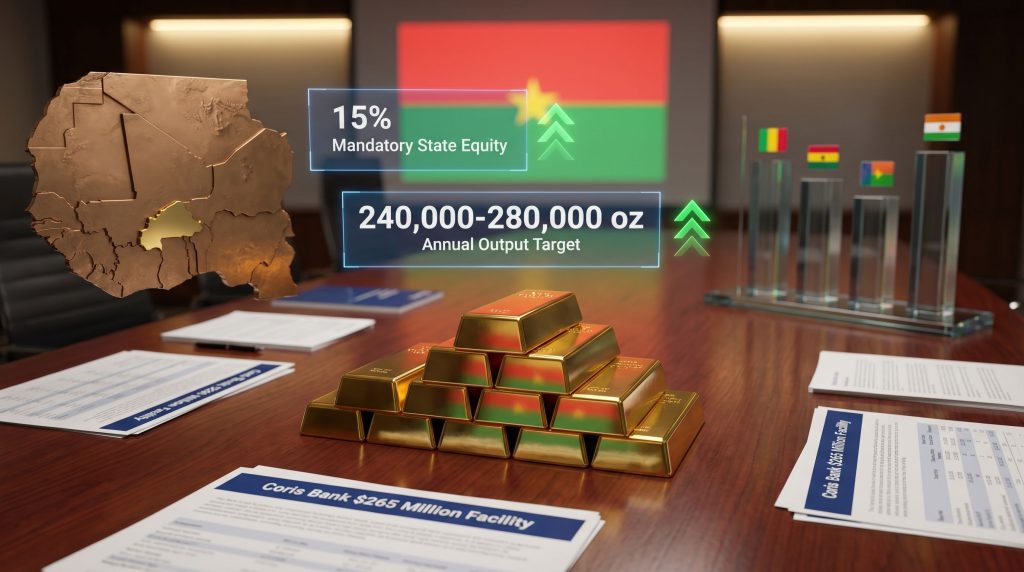
Resource nationalism has emerged as a defining force reshaping Africa's extractive industries, fundamentally altering the relationship between sovereign governments and international mining corporations. This phenomenon reflects deeper structural shifts in how resource-rich nations approach economic sovereignty, moving beyond traditional concession models toward active state participation in strategic mineral assets. The Burkina Faso gold mine stake increase represents a calculated response to decades of perceived value extraction by foreign entities, with governments increasingly viewing direct equity stakes as essential tools for capturing resource rents and ensuring long-term economic benefits remain within national borders.
Understanding Resource Nationalism in West Africa's Mining Sector
The Strategic Shift Toward State Control
The trajectory of government intervention in West African mining has accelerated dramatically over the past decade, with Burkina Faso gold mine stake increase policies exemplifying this broader transformation. Furthermore, Burkina Faso's mining sector restructuring demonstrates a systematic approach to expanding state control, with the government implementing a phased equity acquisition strategy across multiple years.
The country's approach to the Kiaka mine illustrates this evolution clearly. Initially structured with a 10% mandatory government stake, the framework expanded to 15% in 2025, before the most recent April 2026 decree signalling an increase to 40% state ownership. This progression represents approximately 15 percentage points of annual equity expansion since the implementation of updated mining legislation in 2024.
Regional comparison reveals varying approaches across the Sahel mining corridor. While Burkina Faso pursues aggressive equity acquisition, neighbouring jurisdictions have implemented different mechanisms for capturing resource value:
- Mali: Enhanced royalty structures with profit-sharing provisions
- Ghana: Development agreement renegotiations emphasising local content
- Niger: Infrastructure development obligations tied to mining permits
- Burkina Faso: Direct equity participation through ministerial decree authority
The economic drivers underlying this shift reflect fundamental changes in commodity market dynamics and government fiscal pressures. Consequently, rising gold price highs, coupled with increased infrastructure investment needs, have created compelling incentives for governments to secure direct participation in mining revenues rather than relying solely on taxation and royalty mechanisms.
Legal Framework Evolution in Burkina Faso
Burkina Faso's regulatory transformation centres on the Council of Ministers' decree authority, which enables rapid implementation of equity restructuring without lengthy legislative processes. The April 18, 2026 decree establishing the 40% government stake in the Kiaka mine demonstrates this streamlined approach to policy implementation.
The legal mechanism operates through direct modification of the operating company structure. Kiaka SA, the mine operator, has experienced progressive government equity expansion from the original 10% to 15% threshold, culminating in the proposed 40% state participation. This represents a 25 percentage point increase in government ownership within approximately 18 months.
Compensation structures remain partially defined, with the government indicating that equity acquisitions will include appropriate compensation mechanisms. However, specific valuation methodologies, payment timelines, and financial instruments have not been publicly disclosed. In addition, the $33.4 million valuation previously assigned to a 5% stake increase provides a historical benchmark, suggesting approximately $6.68 million per percentage point of ownership value.
The regulatory framework's evolution reflects broader policy objectives extending beyond individual mine operations. Mining legislation introduced in 2024 established the foundational authority for government equity expansion, with subsequent decree implementation demonstrating the practical application of these enhanced powers, aligning with Australia's own strategic reserves policy developments.
When big ASX news breaks, our subscribers know first
How Mining Code Reforms Impact Foreign Investment Flows
Risk Assessment for International Mining Companies
The implementation of progressive government equity requirements fundamentally alters risk assessment frameworks for international mining investors. Australian Securities Exchange (ASX) listed companies operating in West Africa face heightened political risk premiums, as demonstrated by the trading halt implemented following Burkina Faso's equity increase announcement.
Investment due diligence considerations now encompass multiple layers of regulatory uncertainty:
- Decree Authority Risk: Government capacity to implement equity changes through ministerial decision
- Valuation Uncertainty: Absence of standardised compensation methodologies
- Timeline Unpredictability: Rapid implementation without extended negotiation periods
- Operational Control: Implications of increased state participation on management decisions
Comparative analysis across African mining jurisdictions reveals Burkina Faso's approach as particularly aggressive in terms of implementation speed and equity percentage targets. While countries like South Africa and Ghana have implemented similar resource nationalism policies, the decree-based authority provides Burkina Faso with enhanced flexibility for rapid policy changes.
International mining companies must now incorporate political risk insurance considerations and bilateral investment treaty protections into their operational frameworks. The traditional approach of relying primarily on mining licence security has proven insufficient in the current regulatory environment.
Financial Implications of Increased State Participation
The financial impact of government equity expansion creates multiple pressure points for international mining operations. West African Resources Limited faces immediate ownership dilution from 85% to 60% under the proposed restructuring, representing a 25 percentage point reduction in project control and cash flow participation.
Revenue-sharing implications extend beyond simple ownership dilution to encompass broader operational considerations:
| Financial Impact Category | Pre-Decree Structure | Post-Decree Structure |
|---|---|---|
| Government Ownership | 15% | 40% |
| West African Resources Stake | 85% | 60% |
| Estimated Dilution Value | $33.4M (5% benchmark) | $167M (25% extrapolation) |
| Production Share (240,000-280,000 oz) | 204,000-238,000 oz | 144,000-168,000 oz |
The trading halt mechanism demonstrates market uncertainty regarding valuation impact and operational implications. Australian institutional investors must reassess portfolio allocations based on modified risk-return profiles and reduced operational control.
Project financing structures require fundamental restructuring to accommodate government equity participation. However, lender covenant arrangements, cash flow distribution mechanisms, and debt service priority must incorporate state partnership considerations that may conflict with traditional mining finance structures.
What Drives Gold Production Targets in Emerging Markets?
Production Scaling in Politically Volatile Regions
The Kiaka mine's production trajectory demonstrates the complex relationship between operational targets and political environment management. Commencing production in June 2025 amid evolving government equity requirements, the operation achieved 240,000-280,000 ounces annual capacity within approximately 10 months of initial production.
Production scaling in Burkina Faso's Centre-Est region requires sophisticated risk management across multiple operational dimensions:
Security Considerations:
- Regional stability monitoring and threat assessment protocols
- Supply chain security for equipment and personnel movement
- Contingency planning for operational suspension scenarios
Infrastructure Dependencies:
- Power supply reliability across the 54 square kilometre mine site
- Transportation corridor security for gold concentrate movement
- Communications infrastructure for operational coordination
Workforce Management:
- Local employment quota compliance under government requirements
- Expatriate staff security and evacuation planning
- Skills transfer programmes to satisfy government development objectives
The timeline from exploration to full production capacity typically spans 7-12 years in West African contexts, though the Kiaka project achieved production commencement within a compressed timeframe. This acceleration reflects both favourable geology and streamlined permitting processes during the initial development phase.
Market Positioning and Competitive Dynamics
West African Resources positions its operations within the mid-tier gold producer category, with consolidated 430,000-490,000 ounce annual production targets across the Kiaka and Sanbrado operations. For instance, this scale provides operational flexibility and geographic diversification within the regional context, reflecting broader gold market trends.
| Production Metric | Kiaka Mine | Industry Benchmark | Competitive Position |
|---|---|---|---|
| Annual Output Target | 240,000-280,000 oz | 150,000-200,000 oz | Above average |
| All-in Sustaining Costs | <$1,900/oz | $1,400-$2,100/oz | Competitive |
| Mine Life Expectancy | 10+ years | 8-12 years | Standard range |
| Government Equity | 40% (proposed) | 10-20% (regional) | Above regional norm |
The all-in sustaining cost target below $1,900 per ounce positions the operation within the competitive cost curve, providing operational margins across commodity price cycles. This cost structure becomes increasingly critical as government equity participation reduces the company's proportional cash flow capture.
Chief Executive Richard Hyde's characterisation of 2026 as a landmark year reflects management confidence in operational scale achievement despite regulatory uncertainty. The consideration of dividend distributions and share buyback programmes indicates strong projected cash generation even with reduced ownership percentages.
Why African Governments Are Renegotiating Mining Agreements
Economic Sovereignty and Revenue Optimisation
African governments' approach to mining agreement renegotiation reflects fundamental shifts in commodity market understanding and revenue capture strategies. The transition from royalty-dependent models to direct equity participation enables governments to benefit from both operational cash flows and asset appreciation over mine life cycles.
Commodity price cycle analysis reveals government motivation for equity participation timing. Consequently, gold market performance has demonstrated sustained strength above $2,000 per ounce through 2025-2026, creating compelling incentives for governments to secure direct participation in production revenues rather than fixed royalty payments.
Government revenue dependency on extractive industries varies significantly across West African jurisdictions:
- Burkina Faso: Mining sector represents approximately 15-20% of government revenues
- Ghana: Gold exports contribute 25-30% to foreign exchange earnings
- Mali: Mining activities generate 20-25% of national budget resources
Local content requirements have evolved from employment quotas to comprehensive value-addition mandates. Governments increasingly require:
- Local procurement preferences for goods and services
- Technology transfer obligations for operational capabilities
- Infrastructure development contributions beyond mine site requirements
- Community development programming with measurable impact metrics
The balance between employment generation and foreign exchange earnings reflects competing policy priorities. While direct employment in mining remains relatively limited, the foreign exchange contribution from gold exports provides critical balance of payments support.
Geopolitical Considerations in Resource Control
Regional security challenges across the Sahel have intensified government focus on strategic asset control. The presence of international military operations and regional instability creates additional incentives for governments to maintain direct oversight of major economic assets.
China's Belt and Road Initiative influence on resource nationalism manifests through alternative financing and technical partnership opportunities. African governments increasingly leverage Chinese infrastructure investment and technical capabilities as alternatives to traditional Western mining partnerships.
The evolving France-Africa relationship particularly impacts Francophone West African mining policies. Reduced French military presence and diplomatic influence has created space for more assertive government positions regarding resource control and revenue sharing.
Multilateral development institution positioning on resource nationalism remains cautiously supportive. The World Bank and African Development Bank have generally endorsed the principle of enhanced government participation while emphasising the importance of investor protection mechanisms and transparent implementation processes.
Strategic Implications for Mining Investment Portfolios
Portfolio Diversification in High-Risk Jurisdictions
International mining investors must fundamentally recalibrate portfolio construction approaches in response to accelerating resource nationalism across Africa. Geographic risk distribution strategies require enhanced sophistication beyond traditional country risk ratings to encompass regulatory trend analysis and policy implementation speed assessments.
Risk hedging mechanisms available to mining investors include:
Political Risk Insurance (PRI):
- Coverage for government expropriation or contract breach
- Premium costs typically 2-4% of insured asset value annually
- Coverage limitations for "creeping expropriation" through regulatory changes
Bilateral Investment Treaty (BIT) Protection:
- International arbitration access for investor-state disputes
- Compensation standards for government equity acquisitions
- Enforcement mechanisms through international legal frameworks
Operational Structure Optimisation:
- Multi-jurisdictional asset portfolios to reduce single-country exposure
- Joint venture partnerships with regional players to enhance political acceptance
- Staged investment approaches to limit exposure during early development phases
Exit strategy planning becomes increasingly critical in resource nationalism environments. Companies must establish clear valuation benchmarks and disposal mechanisms before regulatory changes limit strategic flexibility.
Valuation Impact of Government Equity Participation
Government equity increases create systematic valuation pressure through multiple channels beyond simple ownership dilution. Net present value (NPV) calculations must incorporate political risk premiums, operational control constraints, and cash flow distribution modifications.
Critical Insight: State equity participation reduces project valuations by approximately 15-30% depending on compensation terms, dividend obligations, and operational control retention. International mining companies must adjust investment return thresholds to account for this systematic value reduction while maintaining acceptable risk-adjusted returns.
Discounted cash flow adjustments for political risk typically incorporate:
- Risk-free rate premium: Additional 200-400 basis points for West African operations
- Operational risk factors: Government partner decision-making delays and constraints
- Currency convertibility risk: Foreign exchange transfer limitations and timing delays
- Regulatory change probability: Future policy modifications affecting cash flows
Market multiple compression affects listed mining companies with significant African exposure. Price-to-earnings ratios for Africa-focused miners typically trade at 20-40% discounts to diversified global mining companies, reflecting investor caution regarding regulatory and operational risks.
Institutional investor appetite changes create secondary market implications for mining equity valuations. ESG-focused investment mandates may favour operations with government partnerships, while traditional mining investors may reduce allocations due to operational control concerns.
Future Outlook for West African Mining Sector
Regulatory Trend Analysis Across the Region
Regional mining policy convergence suggests coordinated approaches to resource nationalism implementation across West African jurisdictions. Ghana's recent mining code revisions and Mali's enhanced royalty structures indicate systematic policy shifts rather than isolated country-specific developments.
Predicted timeline for regional policy harmonisation through 2027:
2026-2027: Enhanced government equity requirements across 3-4 additional Sahel region countries
2027-2028: Standardised compensation frameworks for government equity acquisitions
2028-2029: Regional mining investment protocols incorporating state partnership requirements
International arbitration precedent development will significantly influence policy implementation approaches. The International Centre for Settlement of Investment Disputes (ICSID) has limited case history regarding government equity acquisitions in mining, creating uncertainty regarding compensation standards and implementation procedures.
Multilateral development bank positioning evolves toward conditional support for resource nationalism policies. Furthermore, the World Bank's Private Sector Development initiatives increasingly emphasise government-private sector partnerships while maintaining investor protection advocacy.
Investment Climate Projections Through 2027
Capital allocation shifts toward lower-risk jurisdictions will accelerate through 2027 as resource nationalism policies expand. Australian and Canadian mining companies are projected to reduce West African exposure by 15-25% while increasing investments in jurisdictions with established regulatory frameworks.
Technology transfer requirements will expand beyond operational capabilities to encompass:
- Geological survey and exploration technical capabilities
- Environmental monitoring and rehabilitation technologies
- Community development and social impact management systems
- Local workforce training and capacity building programmes
ESG compliance integration with state equity participation creates both opportunities and challenges. Government partnerships may enhance community acceptance and environmental compliance while potentially constraining operational efficiency and decision-making speed.
The emergence of alternative financing partnerships with Chinese and Middle Eastern institutions provides African governments with enhanced negotiating leverage. Traditional Western mining finance may face increased competition from state-backed financing arrangements with more favourable government participation terms.
The next major ASX story will hit our subscribers first
Frequently Asked Questions About Mining Sector Nationalisation
What compensation mechanisms exist for equity dilution?
Compensation frameworks for government equity acquisitions vary significantly across jurisdictions and typically involve complex valuation methodologies. Fair market valuation standards generally reference independent geological assessments, discounted cash flow analyses, and comparable transaction benchmarks within the regional mining sector.
Payment structure options available to governments include:
- Cash payments based on agreed valuation assessments
- Government bond instruments with market-rate interest provisions
- Revenue-sharing agreements providing ongoing participation rather than upfront payments
- Infrastructure development commitments offsetting direct cash requirements
International arbitration options exist under most bilateral investment treaties, providing mining companies with recourse mechanisms for compensation disputes. However, arbitration processes typically require 18-36 months for resolution and may not prevent operational disruption during dispute periods.
How do state equity increases affect mining company valuations?
Discounted cash flow adjustments for state equity participation typically reduce project valuations by 15-30% through multiple mechanisms. Political risk premiums increase required return rates by 200-400 basis points, while operational control constraints may reduce operational efficiency assumptions by 5-15%.
Market multiple compression affects publicly traded mining companies with significant African exposure. Companies with >50% production from high-risk African jurisdictions typically trade at 20-40% discounts to diversified global mining peers, reflecting investor caution regarding regulatory uncertainty.
Analyst coverage modifications often accompany government equity increases, with research firms adjusting coverage methodologies to incorporate political risk factors and government partner decision-making processes. Investment recommendation changes typically reflect both operational risk increases and potential value realisation delays, particularly given current gold price forecast trends.
What are the long-term implications for gold supply chains?
Production continuity during ownership transitions represents a critical supply chain consideration. Government equity acquisitions may temporarily disrupt operational decision-making while partnership structures are established, potentially affecting 3-6 months of production optimisation.
Quality control and operational efficiency under joint government-private management structures require sophisticated governance frameworks. Technical oversight responsibilities, capital investment approvals, and operational procedure modifications must be clearly defined to prevent decision-making delays.
Export licensing and international marketing arrangements may require modification to accommodate government partnership interests. State participation often includes preferential marketing arrangements, local refining requirements, or domestic market supply obligations that can affect international sales flexibility.
Long-term supply reliability from government partnership operations depends significantly on political stability, technical capability maintenance, and capital investment continuity. Historical analysis suggests government-private partnerships in mining can achieve operational efficiency comparable to private operations when governance structures are well-defined and technical capabilities are maintained.
Disclaimer: This analysis contains forward-looking statements and projections based on current market conditions and regulatory trends. Actual outcomes may vary significantly due to political, economic, and operational factors beyond current assessment capabilities. Investors should conduct independent due diligence and consult qualified advisors before making investment decisions related to African mining operations or companies with significant exposure to resource nationalism policies.
Are You Positioned to Capitalise on Africa's Mining Sector Transformation?
Africa's resource nationalism wave is fundamentally reshaping investment opportunities across the continent's extractive industries, creating both challenges and prospects for astute investors. Discovery Alert's proprietary Discovery IQ model delivers real-time alerts on significant ASX mineral discoveries, instantly empowering subscribers to identify actionable opportunities as African mining companies navigate these complex regulatory shifts. Begin your 14-day free trial today and secure your market-leading advantage in this rapidly evolving sector.