May 19, 2026
Chile's mining sector operates within one of the world's most comprehensive environmental regulatory frameworks, where large-scale copper operations must navigate increasingly complex assessment protocols before receiving operational approval. The Environmental Impact Assessment System (SEIA) represents the cornerstone of this regulatory architecture, demanding extensive documentation and multi-year review processes for projects exceeding specific thresholds. Understanding mining permitting basics becomes crucial for navigating these complex regulatory requirements.
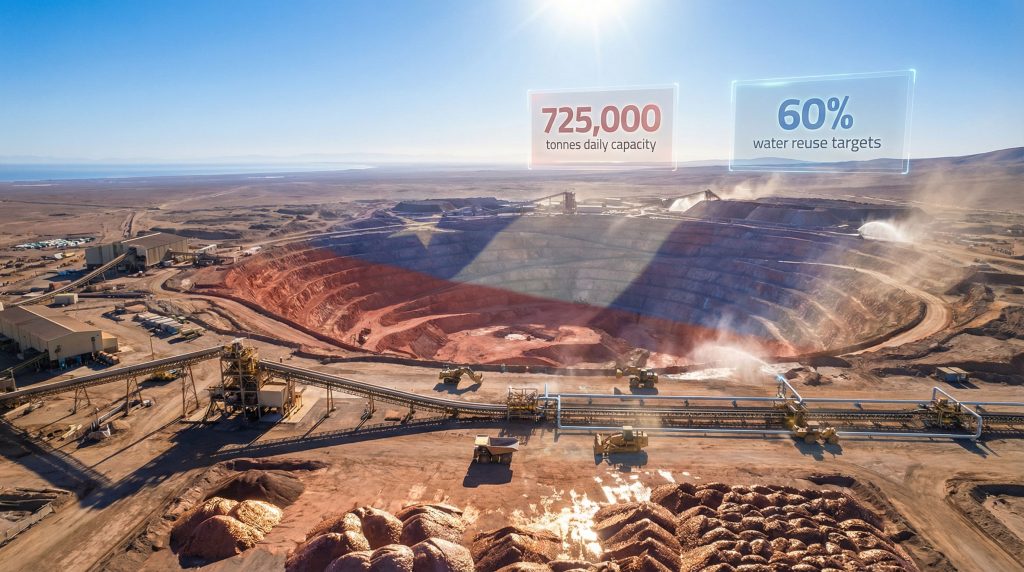
The Codelco Environmental Impact Assessment Radomiro Tomic submission exemplifies how major mining extensions require systematic environmental evaluation. Codelco's $1.3 billion investment proposal seeks to extend operations through 2058, representing a 30-year extension that will increase daily mining capacity from 675,000 to 725,000 tonnes. This substantial operational expansion, located approximately 25 kilometers north of Calama in the Antofagasta Region, demonstrates the scale factors that trigger comprehensive environmental review requirements.
Understanding Chile's Environmental Assessment Framework for Mining Operations
Regulatory Compliance Requirements in Large-Scale Mining
Chile's Environmental Impact Assessment System requires mining projects meeting specific criteria to undergo rigorous evaluation processes. Projects involving significant daily material movement, extended operational timelines, and multi-facility integration typically fall under Category A classification, necessitating full Environmental Impact Assessment rather than simplified environmental declaration processes.
The assessment framework evaluates operational parameters including pit expansion methodologies, waste management systems, and cross-divisional material transport requirements. Mining operations proposing extensions beyond current approved parameters must demonstrate compliance with national environmental standards while maintaining operational continuity.
Scale and Complexity Factors in Mining Assessment
Modern copper mining operations in Chile's Atacama Desert involve complex logistical and environmental considerations. The Codelco Environmental Impact Assessment Radomiro Tomic project's scope includes pit deepening and lateral expansion, addition of new waste dumps, and development of ore stockpiling areas to accommodate increased throughput capacity.
Processing integration represents another critical assessment factor. The project involves transporting 100,000 tonnes per day of sulfide minerals via conveyor belt systems to the Chuquicamata concentrator for 22 years, while simultaneously developing a new concentrator facility with processing capacity gradually increasing to 200,000 tonnes per day. During the initial 10-year period, supplementary truck transport will deliver 20,000 tonnes per day to Chuquicamata Division facilities.
When big ASX news breaks, our subscribers know first
Water Resource Management in Desert Mining Operations
Groundwater Protection and Control Systems
Desert mining operations face unique hydrological challenges requiring sophisticated water management approaches. The Codelco Environmental Impact Assessment Radomiro Tomic extension incorporates preventive hydraulic barrier systems consisting of extraction and injection wells designed to control historical seepage issues in industrial areas.
This hydraulic barrier methodology addresses existing groundwater contamination risks while preventing future contamination during expanded operations. The dual-well configuration allows for controlled groundwater extraction in contaminated zones while maintaining hydraulic pressure through strategic injection points.
Water Conservation and Management Strategies
Atacama Desert mining operations must optimise water usage across multiple operational phases. Water management protocols typically include:
- Groundwater monitoring: Continuous assessment of extraction rates and water quality parameters
- Industrial water recycling: Closed-loop systems for process water reuse
- Dust suppression optimisation: Targeted water application for particulate control
- Waste management integration: Coordinated water usage across mining and processing operations
The strategic location of Radomiro Tomic, approximately 225 kilometres from Antofagasta, positions the operation within reach of coastal water resources while maintaining operational efficiency through established infrastructure networks.
Environmental Risk Categories for Atacama Desert Mining
Atmospheric Impact Management and Monitoring
Mining operations in the Atacama Desert must address multiple atmospheric impact categories through comprehensive monitoring and mitigation strategies. However, waste management solutions are becoming increasingly sophisticated to address these environmental challenges:
| Impact Category | Primary Sources | Monitoring Approach | Mitigation Strategy |
|---|---|---|---|
| Dust Generation | Pit operations, material transport | Real-time particulate monitoring | Water spray systems, road maintenance |
| Combustion Emissions | Heavy equipment, explosives | Quarterly emission sampling | Equipment efficiency optimisation |
| Fugitive Emissions | Ore processing, waste handling | Continuous air quality stations | Process enclosure, ventilation systems |
Biodiversity and Habitat Protection Protocols
The Atacama Desert's extreme environment supports specialised ecosystems adapted to arid conditions. Mining operations must implement habitat disruption minimisation strategies while maintaining archaeological site preservation protocols required under Chilean cultural heritage regulations.
Flora relocation programmes typically precede major pit expansion activities, ensuring endemic plant species are transplanted to suitable alternative locations. Wildlife corridors and habitat buffer zones help maintain ecosystem connectivity despite operational expansion.
Modern Mining Extensions and Sustainability Integration
Operational Expansion and Infrastructure Development
The Radomiro Tomic extension demonstrates contemporary approaches to mining expansion that balance production optimisation with environmental stewardship. Pit expansion involves both deepening and lateral extension to access additional ore reserves while minimising surface footprint impact.
Furthermore, mining innovation trends are increasingly influencing how major projects integrate sustainability considerations. Support facility expansion includes landfill capacity increases, tyre storage area development, and infrastructure relocation to accommodate pit growth. These modifications require careful coordination to maintain operational continuity whilst meeting environmental compliance standards.
Processing Technology and Transport Optimisation
Hydrometallurgical process continuity remains central to the project's technical approach, maintaining established processing methodologies while adjusting sulfide mineral parameters previously defined in the 2016 Environmental Qualification Resolution. This regulatory continuity simplifies environmental assessment while enabling operational improvements.
The conveyor belt transport system represents a significant infrastructure investment, designed to handle 100,000 tonnes per day capacity over 22-year operational periods. This approach reduces truck transport emissions while improving material handling efficiency across the integrated mining complex.
Technology Integration in Environmental Compliance
Clean Energy and Emission Reduction Technologies
Mining operations increasingly incorporate renewable energy systems and emission reduction technologies to meet evolving environmental standards. For instance, Codelco commits to reaching net-zero emissions by 2050 with its 100% clean energy matrix. Solar power integration, electric vehicle adoption, and advanced explosive systems represent key technology categories driving environmental performance improvements.
Clean energy implementation typically follows phased approaches aligned with capital investment cycles and equipment replacement schedules. Mining operations evaluate technology adoption based on operational efficiency gains, regulatory compliance requirements, and long-term environmental performance targets.
Innovation in Environmental Monitoring
Modern mining operations deploy sophisticated monitoring technologies including:
- Digital sensor networks: Real-time environmental parameter tracking
- Predictive analytics: Environmental impact modelling and forecasting
- Automated reporting systems: Regulatory compliance documentation
- Stakeholder communication platforms: Transparent environmental performance reporting
These technological systems enable proactive environmental management while providing regulatory authorities with comprehensive operational oversight capabilities.
Multi-Decade Mining Project Structure and Implementation
Phased Development Timeline and Milestones
The Radomiro Tomic extension follows a carefully structured implementation timeline designed to maintain operational continuity whilst executing major infrastructure modifications. Construction activities are scheduled between 2029 and 2033, occurring in parallel with ongoing mining operations through 2058.
This parallel construction approach minimises production disruption while enabling systematic infrastructure upgrades. Consequently, project completion is targeted for 2059-2060, including comprehensive site rehabilitation and closure activities. Additionally, mine reclamation innovation plays a crucial role in planning long-term site restoration strategies.
Long-term Environmental Management
Multi-decade mining projects require adaptive management frameworks capable of responding to evolving environmental conditions, regulatory changes, and technological improvements. Continuous environmental performance tracking enables operational adjustments whilst maintaining compliance with assessment commitments.
Stakeholder engagement protocols ensure ongoing community consultation throughout the project lifecycle. Regular environmental monitoring reports provide transparency regarding operational impacts and mitigation effectiveness.
The next major ASX story will hit our subscribers first
Economic and Environmental Trade-offs in EIA Decision-Making
Investment Scale and Economic Impact Analysis
The $1.3 billion capital investment represents substantial economic commitment requiring careful cost-benefit analysis across multiple evaluation criteria. Investment justification includes mineral reserve optimisation, infrastructure efficiency improvements, and long-term operational sustainability considerations.
Regional economic impacts include employment generation, infrastructure development, and supply chain integration effects extending beyond direct mining operations. These economic benefits must be balanced against environmental impact mitigation costs and long-term sustainability requirements. Furthermore, production sustainability insights demonstrate how modern mining operations integrate economic and environmental objectives.
Cumulative Impact Assessment Challenges
Mining operations in established mining regions face cumulative impact evaluation requirements that consider combined effects of multiple operational facilities. Cross-project environmental assessment becomes particularly complex in regions like the Atacama Desert where multiple mining operations share infrastructure and environmental resources.
Climate change adaptation integration represents an emerging assessment consideration, requiring mining operations to demonstrate resilience to evolving environmental conditions over multi-decade operational timelines.
Comparative Analysis with Global Mining Assessment Practices
International Standard Alignment
Chilean mining environmental assessment protocols align with international best practices including World Bank environmental safeguards, International Finance Corporation performance standards, and ISO 14001 environmental management principles. This alignment facilitates international investment whilst maintaining rigorous environmental protection standards.
However, global mining assessment trends increasingly emphasise life-cycle impact evaluation, requiring comprehensive assessment from exploration through closure and post-closure monitoring phases. Codelco's expansion plans reflect this comprehensive approach to project lifecycle management.
Assessment Methodology Innovation
Contemporary environmental assessment incorporates advanced analytical tools including:
- Satellite-based monitoring: Large-scale environmental change detection
- Predictive modelling systems: Long-term impact forecasting and scenario analysis
- Stakeholder engagement platforms: Digital consultation and feedback systems
- Blockchain transparency tools: Immutable environmental performance recording
These technological capabilities enhance assessment accuracy whilst improving stakeholder access to environmental information.
Future Directions in Large-Scale Mining Environmental Assessment
Emerging Regulatory Trends and Requirements
Mining environmental assessment frameworks continue evolving toward more comprehensive sustainability evaluation criteria. Net-zero emission requirements by 2050 represent a significant regulatory trend affecting long-term operational planning and technology adoption strategies.
Enhanced biodiversity protection protocols reflect growing recognition of ecosystem service values and climate change adaptation requirements. In addition, circular economy integration mandates encourage material reuse and waste minimisation across mining value chains.
Technology-Driven Assessment Evolution
Artificial intelligence applications in environmental monitoring enable real-time impact detection and predictive analysis capabilities previously unavailable to regulatory authorities. Machine learning algorithms can identify environmental change patterns and recommend proactive mitigation measures.
Virtual reality technologies facilitate immersive stakeholder engagement, enabling community members to visualise proposed operational changes and provide informed feedback during assessment processes.
The Codelco Environmental Impact Assessment Radomiro Tomic represents a benchmark for comprehensive environmental evaluation in large-scale mining operations. This extensive assessment process demonstrates Chile's commitment to balancing economic development with environmental protection, whilst incorporating cutting-edge technologies and sustainable practices for future mining operations.
Disclaimer: This analysis is based on publicly available information regarding the Codelco Environmental Impact Assessment Radomiro Tomic project submission. Environmental assessment processes involve complex regulatory evaluation procedures that may result in project modifications or approval conditions different from initial proposals. Readers should consult official regulatory documentation and qualified environmental professionals for specific project guidance.
Want to capitalise on Chile's expanding copper sector?
Discovery Alert's proprietary Discovery IQ model delivers instant notifications on significant ASX mineral discoveries, including copper opportunities that could benefit from Chile's mining expertise and global demand trends. Explore how major mineral discoveries have historically generated substantial returns and begin your 30-day free trial today to position yourself ahead of the market.