
June 16, 2026
Energy Security Through Strategic Reserves
Global energy markets operate on intricate supply-demand dynamics where disruptions in one region can cascade across continents within hours. For nations heavily dependent on energy imports, geopolitical volatility presents fundamental challenges to economic stability and industrial competitiveness. Understanding how major energy consumers navigate these complexities reveals sophisticated risk management frameworks that extend far beyond simple procurement strategies.
China energy imports and Iran conflict dynamics create unique vulnerabilities and advantages during periods of Middle Eastern instability. The nation's comprehensive approach to energy security combines multiple layers of protection, from strategic inventory management to supply chain diversification, creating a model that other major importers increasingly study and adapt.
When big ASX news breaks, our subscribers know first
China's Strategic Petroleum Reserve System
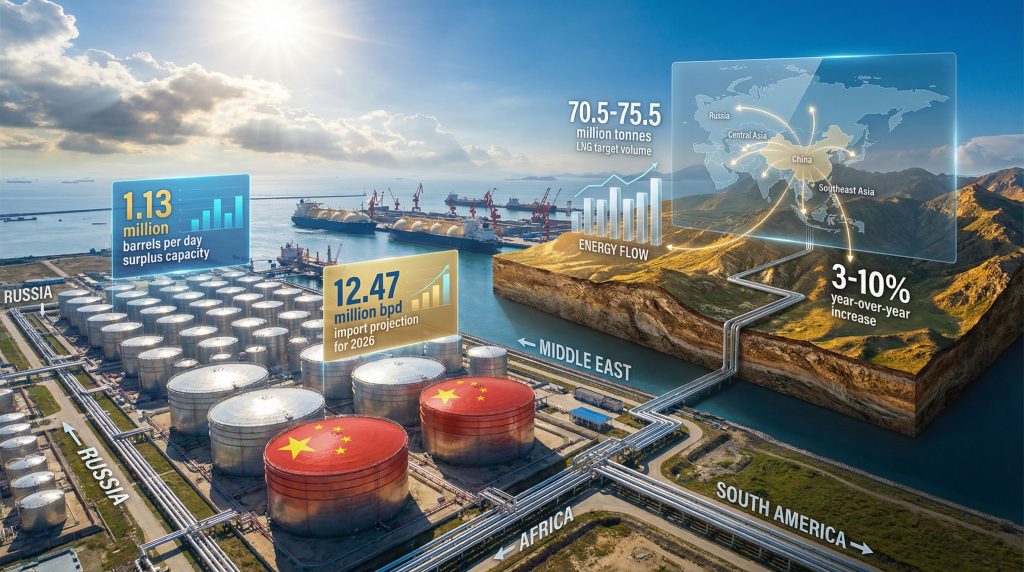
The foundation of China's energy resilience lies in its massive crude oil stockpiling program, which has accumulated approximately 1.13 million barrels per day of surplus capacity through 2025. This inventory buffer represents roughly 30-45 days of import coverage at current consumption levels, providing substantial insulation against sudden supply disruptions.
China's stockpiling strategy demonstrates sophisticated market timing, with particularly strong builds occurring during periods of discounted crude availability. The country's crude imports reached a record high of 13.18 million bpd in December 2025, as refiners capitalised on discounted Russian and Iranian barrels trading below market rates.
Key Strategic Reserve Advantages:
• Counter-cyclical purchasing during market downturns maximises cost efficiency
• Integration of commercial and strategic reserves provides operational flexibility
• Accumulated volumes from sanctioned suppliers offer price advantages
• Domestic price controls protect consumers from global volatility
For early 2026, China's crude imports are estimated at 12.47 million bpd for the first two months, according to LSEG Oil Research data. With domestic production maintaining steady levels around 4.2 million bpd and refinery throughput at approximately 14.7 million bpd, the surplus for the January-February period may reach nearly 2 million bpd.
Furthermore, the Australian strategic reserves approach provides valuable insights into how resource-rich nations develop complementary stockpiling strategies.
Supply Chain Diversification Strategies
China's energy import portfolio demonstrates sophisticated risk distribution across multiple supply corridors, reducing dependency on any single chokepoint or supplier relationship. This diversification strategy encompasses crude oil, natural gas, and coal procurement channels.
Moreover, recent developments in China energy imports and Iran conflict scenarios highlight the importance of maintaining flexible supplier relationships. According to the South China Morning Post, Iran conflict dynamics will accelerate China's push to become an energy powerhouse.
Pipeline Infrastructure Development
Russian Energy Corridors:
- Power of Siberia pipeline providing direct natural gas access
- Eastern Siberia-Pacific Ocean pipeline for crude oil transport
- Northern Sea Route development for Arctic shipping lanes
- Domestic natural gas output increases of approximately 12 billion cubic meters annually
Central Asian Networks:
- Kazakhstan crude oil pipeline connections
- Turkmenistan natural gas import agreements
- Uzbekistan energy cooperation frameworks
- Overland transport reducing maritime chokepoint exposure
LNG Market Positioning
China's liquefied natural gas strategy combines long-term contract security with opportunistic spot market participation. During previous episodes of high prices, Chinese utilities demonstrated the ability to cut spot purchases and rely primarily on fixed-price or oil-linked long-term contracts.
Additionally, natural gas trends analysis reveals how market timing influences procurement strategies across different regions.
2026 LNG Import Projections:
| Metric | Projection | Strategy |
|---|---|---|
| Volume Increase | 3-10% year-over-year | Capitalise on depressed spot prices |
| Target Volume | 70.5-75.5 million tonnes | Maintain contract security |
| Price Strategy | Long-term contracts priority | Spot market selectivity |
| Cargo Flexibility | Resale opportunities | Profit optimisation during spikes |
When benchmark Asian LNG prices jumped almost 39% during recent geopolitical tensions, Chinese buyers demonstrated their ability to reduce exposure while maintaining domestic supply security through alternative sources.
Refining Capacity and Export Opportunities
China's refining infrastructure creates unique opportunities to benefit from regional supply disruptions through strategic crude processing and product exports. The nation's excess refining capacity enables the processing of stockpiled crude for export to supply-constrained markets.
Competitive Export Positioning
During periods when Asia's export-oriented refineries in countries such as India and Singapore experience crude supply constraints, China's strategic position becomes particularly advantageous. The ability to refine stockpiled crude and export products such as diesel and gasoline allows Chinese refiners to capitalise on inevitable fuel price surges.
Strategic Export Capabilities:
• Excess refining capacity available for stockpiled crude processing
• Competitive advantages over regional refineries during crude shortages
• Ability to supply diesel and gasoline to supply-constrained Asian markets
• Windfall profit potential through refined product exports
The integration of inventory management with refining flexibility creates a dual advantage: domestic market protection combined with international profit opportunities during crisis periods. However, ongoing oil price stagnation affects strategic planning for both imports and exports.
Coal Market Flexibility and Security
As the world's largest coal producer and importer, China maintains significant flexibility in coal procurement and utilisation. This dual position provides additional energy security beyond oil and gas considerations, particularly during periods of LNG price volatility.
Domestic Production Advantages
China's ability to increase domestic coal production during energy price spikes provides crucial flexibility for power generation and industrial processes. Unlike many developed economies that have reduced coal infrastructure, China maintains operational capacity that can be activated during supply emergencies.
Coal Supply Chain Benefits:
• Domestic production scalability during import disruptions
• Indonesian thermal coal imports with lower competition from European buyers
• Power generation fuel switching capabilities
• Industrial heat and steel production continuity
China primarily imports thermal coal from Indonesia, which tends to be of lower energy content and therefore less sought by European buyers or utilities in Japan and South Korea. This market positioning provides China with continued access to coal supplies even when global prices surge due to supply constraints elsewhere.
Natural Gas Supply Diversification
China's natural gas strategy encompasses multiple supply sources and delivery methods, creating redundancy that enhances energy security during geopolitical disruptions. Pipeline imports from Russia and Central Asia complement LNG imports and growing domestic production.
Pipeline Import Capacity
Russian Gas Infrastructure:
- Multiple pipeline systems providing diverse entry points
- Long-term supply agreements reducing price volatility
- Strategic importance for both energy security and diplomatic relations
- Capacity expansion programmes increasing future supply potential
Central Asian Suppliers:
- Turkmenistan gas imports via pipeline networks
- Kazakhstan energy cooperation agreements
- Uzbekistan natural gas development projects
- Regional integration reducing dependence on maritime transport
Domestic natural gas output continues expanding, with recent increases of approximately 12 billion cubic meters annually, providing additional supply security and reducing import requirements during periods of global price volatility.
The next major ASX story will hit our subscribers first
Maritime Chokepoint Risk Mitigation
China's strategic focus on overland energy corridors reflects comprehensive vulnerability assessments regarding maritime chokepoints, particularly the Strait of Hormuz and Malacca Strait. These waterways handle significant portions of global energy transport, creating systemic risks during geopolitical tensions.
Risk Reduction Infrastructure
Northern Sea Route Development:
- Arctic shipping lanes reducing Suez Canal dependence
- Climate change creating new navigable routes
- Russian cooperation in Arctic energy transport
- Year-round shipping capability development
Pipeline Capacity Maximisation:
- Overland transport eliminating maritime vulnerabilities
- Multiple entry points reducing single-point failure risks
- Strategic petroleum reserve expansion near pipeline terminals
- Integration with domestic distribution networks
Consequently, developments in OPEC production outlook significantly influence China's strategic planning for alternative supply routes and inventory management.
Economic Advantages During Energy Volatility
China's comprehensive energy security framework creates significant economic advantages during periods of global energy price volatility. These benefits extend beyond energy cost management to encompass manufacturing competitiveness and export opportunities.
Manufacturing Cost Stability
Beijing's domestic price control systems create manufacturing advantages during global energy inflation periods. While competitors in the United States and Europe face escalating energy costs, Chinese manufacturers benefit from government-managed price stability.
Industrial Benefits:
• Cost predictability for energy-intensive industries
• Export competitiveness during global energy inflation
• Supply chain reliability for international partners
• Reduced input cost volatility for manufacturing planning
Financial Market Opportunities
China's strategic positioning creates multiple profit opportunities during energy market disruptions:
Investment Advantages:
- Refined product export profits during supply disruptions
- LNG cargo resale opportunities during price spikes
- Strategic commodity trading advantages
- Currency stability benefits from energy cost control
Critical Minerals and Energy Transition Security
Beyond traditional fossil fuels, China's energy security framework increasingly encompasses critical minerals energy security considerations essential for renewable energy infrastructure development.
The integration of rare earth elements, lithium, and other essential materials into strategic planning reflects recognition that future energy security extends beyond hydrocarbon imports. This comprehensive approach ensures China energy imports and Iran conflict impacts are balanced against long-term energy transition requirements.
Implications for Global Energy Markets
China's comprehensive approach to energy import security demonstrates how major consuming nations can build resilience against geopolitical volatility through strategic planning and infrastructure investment. The integration of traditional fossil fuel security measures with accelerated clean energy transition creates a sophisticated framework for managing both short-term risks and long-term strategic positioning.
The success of China's diversified approach offers lessons for other major energy importers seeking to reduce vulnerability to Middle Eastern supply disruptions. Key elements include strategic reserve management, supply source diversification, domestic market controls, and the integration of alternative energy sources into overall security planning.
Furthermore, recent analysis from Reuters indicates that China's position as the largest energy importer provides unique advantages during regional conflicts.
Future Energy Import Projections
China's energy import needs through 2026 reflect continued heavy reliance on foreign sources combined with strategic risk management:
Oil Consumption Trends:
- Modest 1% annual increase expected
- Import requirements approximately 12.47 million bpd for early 2026
- Emphasis on supply source diversification and strategic stockpiling
- Continued integration of sanctioned crude at discounted prices
Infrastructure Development Impact:
- New LNG import terminals increasing receiving capacity
- Enhanced pipeline infrastructure from Russia and Central Asia
- Strategic reserve facility construction and expansion
- Integration with renewable energy transition planning
China's energy security framework represents a comprehensive model for managing import vulnerabilities while maintaining economic competitiveness during periods of global instability. The combination of strategic reserves, supply diversification, domestic price controls, and infrastructure investment creates resilience that extends beyond energy security to encompass broader economic and geopolitical advantages.
In conclusion, China energy imports and Iran conflict scenarios demonstrate the critical importance of sophisticated risk management frameworks in modern energy security planning. The lessons learned from this approach will likely influence energy policy development across multiple nations facing similar import dependency challenges.
Looking to Capitalise on ASX Mining Discoveries Amid Global Energy Shifts?
While China navigates energy security through strategic reserves, Australian investors can position themselves ahead of significant mineral discoveries that often drive energy transition and resource security. Discovery Alert's proprietary Discovery IQ model delivers real-time alerts on substantial ASX mineral discoveries, enabling subscribers to identify actionable opportunities in critical minerals and energy commodities before the broader market responds. Begin your 14-day free trial today and gain the market-leading advantage needed to capitalise on Australia's resource boom.