August 21, 2026
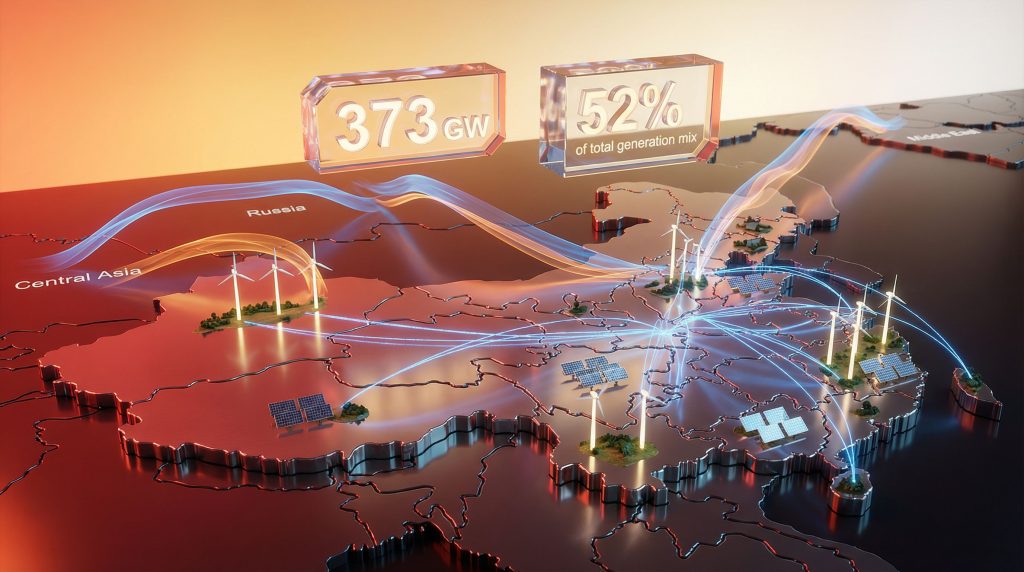
China's energy security strategy represents a complex balancing act between domestic production capabilities and international supply dependencies, particularly as geopolitical tensions reshape global energy markets. The nation's comprehensive approach to energy independence demonstrates how modern powers navigate the intricate relationship between resource security, economic growth, and strategic autonomy in an increasingly interconnected world.
Furthermore, contemporary energy transition challenges across major economies highlight the delicate balance required between maintaining energy security whilst pursuing climate objectives through renewable energy deployment.
Strategic Energy Independence vs. Import Vulnerability
China's approach to energy security demonstrates the complexity of balancing domestic production capabilities with import dependencies across different energy sectors. The nation maintains impressive self-sufficiency metrics overall, yet faces critical vulnerabilities in specific areas that could potentially compromise national security during periods of global instability.
China's Energy Security Metrics:
| Energy Source | Domestic Production | Import Dependency | Strategic Risk Level |
|---|---|---|---|
| Coal | 99%+ domestic | <1% imports | Low |
| Natural Gas | 40% domestic | 60% imports | Medium |
| Crude Oil | 27% domestic | 73% imports | High |
| Renewable Energy | 100% domestic | 0% imports | Low |
The nation's overall energy self-sufficiency of approximately 84% masks significant sectoral vulnerabilities, particularly in crude oil where import dependency reaches 73% of total consumption. This dependency becomes especially concerning given that roughly 48-50% of China's crude oil imports originate from Middle Eastern suppliers, creating exposure to regional conflicts and maritime chokepoint disruptions.
Maritime Chokepoint Dependencies
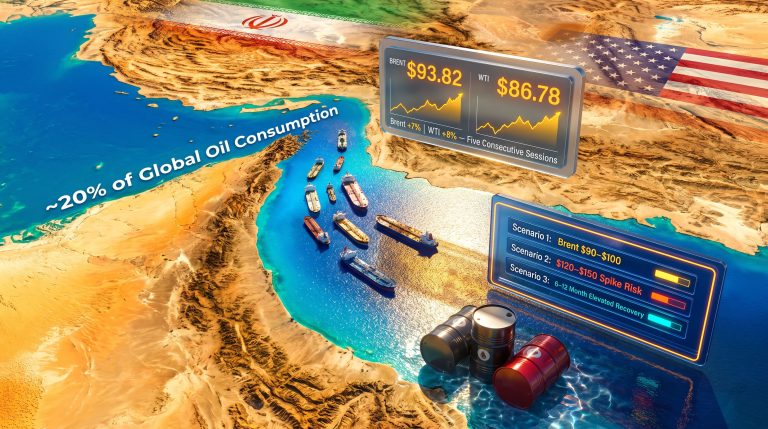
The Strait of Hormuz represents perhaps the most significant single point of failure in global energy supply chains, handling approximately 21% of worldwide crude oil shipments and 8% of liquefied natural gas flows annually. Consequently, oil market disruptions in this region can trigger immediate supply concerns for major importers worldwide.
For China specifically, this narrow waterway carries roughly 40-50% of its crude oil imports, creating a concentrated vulnerability that could trigger immediate supply disruptions during regional conflicts. Moreover, Middle Eastern oil dynamics continue to influence global pricing and supply patterns.
Alternative land-based pipeline corridors offer partial mitigation but limited capacity:
- Eastern Siberia-Pacific Ocean Pipeline: 1.5 million barrels per day
- Kazakhstan Pipeline Network: 0.4-0.5 million barrels per day
- Combined Alternative Capacity: Covers only 12-15% of total crude oil imports
These infrastructure alternatives, whilst valuable for diversification, cannot fully compensate for Middle Eastern supply disruptions, highlighting the continued strategic importance of maritime shipping routes and regional stability.
Strategic Reserve Architecture
China's strategic petroleum reserve system provides critical buffer capacity during supply disruptions, though exact reserve levels remain closely guarded state information. Available intelligence suggests the combined commercial and strategic reserves can cover approximately 90 days of import requirements, aligning with international energy security benchmarks.
The reserve deployment during crisis scenarios follows established protocols that prioritise critical sectors whilst managing market price impacts through coordinated releases with other consuming nations when possible.
When big ASX news breaks, our subscribers know first
Crisis-Driven Energy Strategy Evolution
Geopolitical tensions consistently serve as catalysts for accelerated energy strategy development, pushing nations toward greater self-sufficiency and supply chain diversification. The relationship between international crises and domestic energy policy evolution demonstrates how external pressures can drive technological innovation and infrastructure investment at unprecedented scales.
Contemporary conflict scenarios reveal the interconnected nature of global energy markets and the speed at which regional disruptions can create worldwide supply shortages and price volatility. For instance, recent developments involving major Middle Eastern producers illustrate these dynamics in real-time, as coordinated supply restrictions create immediate market impacts across all energy commodities.
Additionally, according to Reuters analysis, "China has vowed to ensure energy security following escalating tensions, highlighting the critical intersection between geopolitical stability and resource planning."
Supply Disruption Response Frameworks
Modern energy crisis response requires sophisticated coordination across multiple systems and stakeholders. China's approach integrates several complementary mechanisms:
Immediate Response Protocols:
- Strategic petroleum reserve releases (capacity: 1-2 million barrels per day)
- LNG spot market purchases from alternative suppliers
- Renewable energy dispatch optimisation
- Industrial demand management programmes
Medium-term Adaptation Strategies:
- Emergency pipeline capacity activation
- Accelerated renewable energy project deployment
- Enhanced grid flexibility and storage utilisation
- Regional cooperation framework activation
The effectiveness of these response mechanisms depends heavily on advance preparation, international coordination, and the ability to rapidly shift between different supply sources without compromising economic stability.
Security-Sustainability Integration
Energy security considerations increasingly align with sustainability objectives, creating powerful policy convergence that accelerates clean energy deployment. This alignment occurs because renewable energy sources offer both environmental benefits and strategic autonomy advantages, reducing dependence on volatile international fossil fuel markets.
Research from the Centre for Research on Energy and Clean Air indicates that policymakers now frame renewable energy and storage technologies as critical minerals energy security infrastructure rather than merely environmental initiatives. This reframing enables faster permitting, increased funding, and broader political support for clean energy projects.
"Modern energy security strategy recognises that renewable energy infrastructure serves dual purposes: reducing greenhouse gas emissions whilst simultaneously enhancing national energy independence and reducing exposure to geopolitical supply disruptions."
Renewable Energy as Strategic Infrastructure
China's renewable energy deployment represents one of history's largest infrastructure transformations, fundamentally reshaping global energy markets and establishing new paradigms for China energy security. The scale and speed of this transformation reflect both environmental commitments and strategic calculations about long-term energy independence.
Unprecedented Deployment Achievements
China's renewable energy expansion continues at remarkable pace, though precise statistics require careful interpretation due to differences between installed capacity and actual generation:
2024 Renewable Energy Statistics:
- Total renewable additions: Approximately 215-220 GW (solar: 160 GW, wind: 55-60 GW)
- Cumulative installed capacity: Exceeded 1,300 GW by end of 2024
- Global market share: 48% of worldwide renewable capacity additions
- Generation mix contribution: 36-40% of total electricity generation
The distinction between installed capacity and actual generation proves critical for understanding true energy security implications. Solar photovoltaic installations operate at 15-18% capacity factors in China, while wind installations achieve 25-35% capacity factors depending on location.
Grid Integration and Storage Scaling
Managing renewable energy intermittency requires sophisticated grid management systems and rapidly expanding energy storage capacity. China's approach integrates multiple technologies and strategies, including significant battery recycling breakthroughs that support sustainable energy storage expansion.
Energy Storage Development Trajectory:
- Current capacity (2024): 13 GW total, 8-9 GW lithium-ion battery storage
- Projected capacity (2030): 40+ GW target
- Storage requirement analysis: 4-6x conventional grid capacity needed for renewable-dominant systems
Ultra-high-voltage transmission networks enable renewable energy generated in remote western provinces to reach consumption centres in eastern China with minimal transmission losses. As of 2024, China operates 23 UHV transmission lines with combined capacity exceeding 250 million kilowatts.
Investment and Infrastructure Scaling
The financial commitment to renewable energy infrastructure reflects both the scale of transformation required and the strategic priority assigned to energy independence. China's renewable energy investment substantially exceeds global averages as a percentage of GDP and total energy investment.
2024 Investment Analysis:
- Global clean energy investment: $1.9 trillion total
- China's contribution: $570-600 billion (30% of global total)
- Grid modernisation expenditure: $138-145 billion combined
- Infrastructure focus: UHV transmission, battery storage, smart grid technologies
This investment scale enables rapid technology deployment but also creates potential overcapacity in certain sectors, requiring careful demand-supply balancing to maintain economic efficiency whilst achieving security objectives.
Strategic Diversification and Partnership Models
China's energy security strategy exemplifies sophisticated portfolio management principles applied to national resource planning, balancing domestic production development with strategic international partnerships across multiple geographic regions and energy types. This diversification reduces single-source dependencies whilst maintaining flexibility to adapt to changing geopolitical conditions.
Multi-Vector Supply Chain Architecture
Rather than pursuing complete energy independence, China's strategy optimises security through intelligent diversification across complementary supply sources and transportation corridors:
Regional Energy Partnership Portfolio:
- Russia-Central Asia corridor: Pipeline capacity 2.0+ million barrels per day
- Middle East maritime routes: 50% of crude oil imports (diversified across multiple suppliers)
- LNG import flexibility: 75 MTPA terminal capacity across 7 major facilities
- Domestic production scaling: Unconventional resources development and renewable expansion
This approach acknowledges that complete energy independence may be economically inefficient whilst providing sufficient flexibility to manage supply disruptions from any single region or supplier.
Technology Leadership and Market Control
China's dominance in renewable energy manufacturing creates strategic advantages beyond domestic energy security, establishing export capabilities and technological leadership that enhance global influence whilst reducing costs for domestic deployment.
Manufacturing and Technology Advantages:
- Solar panel production: 70%+ of global manufacturing capacity
- Battery technology: Leading lithium-ion battery production and innovation
- Wind turbine manufacturing: Major global supplier with advancing technology
- Grid integration systems: Advanced smart grid and storage technologies
This technological leadership enables rapid domestic deployment whilst creating revenue streams from technology exports, effectively subsidising domestic energy security investments through international sales.
How Does Crisis Response Shape Long-term Energy Planning?
The evolution of China energy security framework offers insights into how major powers adapt to changing geopolitical realities whilst pursuing technological and economic advantages. The integration of security, sustainability, and economic competitiveness objectives creates powerful policy alignments that accelerate transformation beyond what individual objectives might achieve separately.
Grid Resilience and System Redundancy
Modern energy security requires sophisticated system redundancy that can maintain critical functions during various disruption scenarios. China's approach integrates multiple backup systems:
- Distributed renewable generation: Reduces dependence on centralised facilities
- Energy storage networks: Provides grid stabilisation during supply fluctuations
- Cross-regional transmission: Enables resource sharing across geographic areas
- Demand response systems: Manages consumption during supply constraints
These system characteristics enhance resilience against both natural disasters and deliberate attacks whilst improving overall grid efficiency during normal operations.
Future Scenario Planning
According to expert analysis from the Center for Strategic and International Studies, "China's comprehensive energy security planning involves multiple scenario modelling exercises that account for various combinations of geopolitical developments and technological advances."
2030 Energy Mix Projections:
| Energy Source | Current Share | 2030 Target | Strategic Rationale |
|---|---|---|---|
| Coal | 55-60% | 45-50% | Gradual phase-down maintaining grid stability |
| Renewables | 36-40% | 50-55% | Primary growth driver for new capacity |
| Natural Gas | 8-10% | 10-12% | Flexible peaking power and industrial use |
| Nuclear | 3-4% | 6-8% | Baseload carbon-free generation |
These projections assume continued technological advancement in storage and grid management alongside stable international conditions. Alternative scenarios model accelerated transitions under various crisis conditions.
Global Market Impact Considerations
China's energy strategy evolution creates ripple effects throughout global energy markets, influencing pricing, technology development, and geopolitical relationships. The scale of Chinese demand and supply decisions affects worldwide energy security planning for all nations.
Key global implications include:
- Technology cost curves: Chinese manufacturing scale reduces renewable energy costs globally
- Commodity demand shifts: Reduced oil demand growth affects producer nation planning
- Infrastructure standards: Chinese grid and storage technologies influence international adoption
- Geopolitical balance: Reduced dependence on traditional energy exporters reshapes international relationships
Understanding these interconnections proves essential for analysing both Chinese energy security outcomes and broader global energy market evolution.
The next major ASX story will hit our subscribers first
What Strategic Lessons Apply to Other Nations?
China's comprehensive approach to China energy security demonstrates several principles applicable to other nations developing their own energy independence strategies. The integration of multiple pathways, technologies, and partnerships creates resilient systems capable of adapting to various disruption scenarios.
Multi-Pathway Implementation Framework
Effective energy security requires simultaneous development across multiple dimensions rather than sequential focus on individual solutions:
Parallel Development Priorities:
- Domestic resource development (conventional and renewable)
- International partnership diversification
- Strategic reserve capacity expansion
- Grid modernisation and storage deployment
- Crisis response mechanism development
The synergies between these different approaches create overall system resilience that exceeds the sum of individual components.
Technology Investment as Security Infrastructure
China's treatment of renewable energy and grid technologies as national security investments rather than solely environmental initiatives enables faster deployment and broader political support. This framing proves especially important during budget allocation processes and regulatory approval procedures.
The dual-use nature of clean energy technologies (serving both environmental and security objectives) creates powerful constituencies supporting continued investment even during periods of fiscal constraint or political transition.
Crisis Preparation and Response Capacity
Effective energy security planning requires detailed preparation for various disruption scenarios, including supply chain interruptions, price volatility, and infrastructure attacks. China's approach integrates multiple response mechanisms that can activate rapidly during crisis conditions:
- Automated market response systems: Price signals trigger reserve releases and demand adjustments
- International cooperation protocols: Coordinated responses with other consuming nations
- Alternative supply activation: Rapid sourcing from backup suppliers and transportation routes
- Public communication strategies: Managing market psychology and consumer behaviour during shortages
These preparation investments prove invaluable during actual crisis conditions, enabling more effective responses whilst minimising economic disruption.
China energy security framework represents a sophisticated integration of domestic capabilities, international partnerships, and technological innovation designed to maintain economic growth and political stability despite volatile global energy markets. The approach demonstrates how major powers can reduce vulnerabilities whilst positioning themselves advantageously in emerging energy technology markets.
The ongoing evolution of this strategy reflects both the success of existing approaches and the continuous adaptation required to address new challenges and opportunities in global energy markets. Understanding these dynamics proves essential for analysing future developments in international energy security and geopolitical stability.
Want to Capitalise on China's Strategic Energy Transition?
China's massive energy infrastructure transformation is creating unprecedented opportunities across renewable energy and critical mineral sectors on the ASX. Discovery Alert's proprietary Discovery IQ model delivers real-time alerts on significant mineral discoveries that power this global energy transition, helping subscribers identify actionable investment opportunities ahead of the broader market and secure their competitive advantage with a 14-day free trial.