July 28, 2026
Understanding the Global Economic Signals Behind China's Strategic Gold Positioning
The international financial system finds itself at a critical juncture where traditional monetary policies intersect with unprecedented geopolitical uncertainties. Within this complex landscape, precious metals allocation patterns among major economies reveal underlying structural shifts that extend far beyond conventional market dynamics. These movements reflect deeper concerns about currency stability, reserve adequacy, and the evolving architecture of global trade relationships.
China's approach to precious metals accumulation represents a calculated response to multiple economic pressures, including inflationary monetary policies across developed economies, persistent supply chain vulnerabilities, and the strategic imperative to diversify reserve holdings. The mechanics of this accumulation process, particularly through Hong Kong's established trading infrastructure, provide insights into how major economies navigate periods of heightened uncertainty.
The magnitude of recent import surges suggests a convergence of seasonal demand patterns, institutional positioning, and broader macroeconomic hedging strategies. Understanding these dynamics requires examination of the underlying mechanisms driving precious metals flows, the role of regional trading hubs, and the implications for global price discovery processes.
When big ASX news breaks, our subscribers know first
China's Gold Import Infrastructure and Strategic Channels
Hong Kong maintains its position as the primary gateway for China gold imports via Hong Kong, serving as a critical intermediary between international markets and mainland Chinese consumers. The territory's established precious metals infrastructure offers several advantages that reinforce its dominance in this trade corridor.
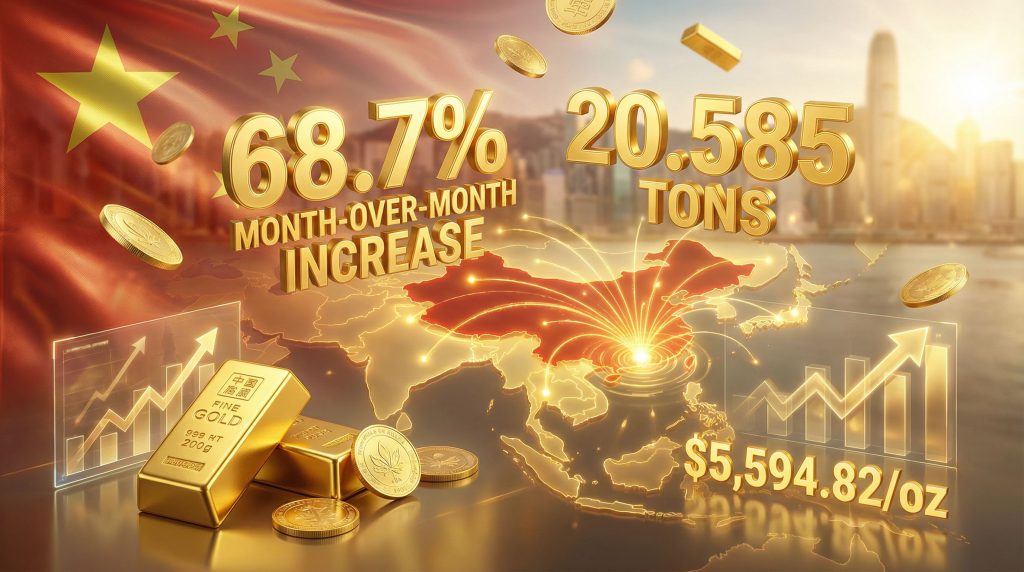
Statistical analysis reveals the scale of Hong Kong's role in facilitating China's precious metals strategy. According to CEIC Data, in January 2026, net gold imports reached 20.585 metric tons, representing a 68.7% increase from December's 12.205 tons. This surge occurred alongside gross imports of 36.544 tons, demonstrating both direct consumption and re-export activity through the Hong Kong hub.
Regional Trading Hub Dynamics
The preference for Hong Kong over alternative channels reflects several structural advantages:
- Regulatory framework: Established precious metals trading regulations that facilitate large-scale transactions
- Financial infrastructure: Deep liquidity pools and sophisticated settlement mechanisms
- Geographic positioning: Strategic location bridging international and domestic Chinese markets
- Historical precedent: Decades of experience handling precious metals flows between East and West
While Shanghai and Beijing also serve as import channels, Hong Kong's unique regulatory status and established trader networks maintain its competitive advantage. The territory processes both investment-grade bullion and jewelry-grade gold, accommodating diverse demand categories within the Chinese market.
Premium Pricing and Market Dynamics
Physical gold trading in Hong Kong during January 2026 commanded premiums of $12-$13 per ounce above international spot prices. This premium structure reflects several market realities, particularly when considering gold market performance in recent months.
The premium differential indicates robust domestic demand that exceeds readily available supply at international pricing levels, suggesting sustained confidence in physical bullion as a store of value.
These premiums encompass transportation costs, import duties, and most significantly, the safe-haven demand premium that emerges during periods of geopolitical uncertainty. The persistence of elevated premiums throughout January suggests that seasonal demand patterns merged with broader risk-management positioning among Chinese investors and institutions.
Seasonal Consumption Patterns and Cultural Demand Cycles
Chinese precious metals consumption follows predictable seasonal patterns that align with cultural traditions and wealth management practices. The January 2026 import surge coincided with Chinese New Year preparations, when traditional gifting customs drive elevated demand for gold jewelry and investment products.
Analysis by UBS commodity specialists indicates that import timing is strategically coordinated with seasonal demand cycles. Physical bullion reaches Chinese markets specifically ahead of lunar year celebrations, suggesting supply chain optimisation to meet predictable consumption peaks.
Traditional Purchasing Behaviours
The cultural significance of gold ownership during Chinese New Year extends beyond mere seasonal retail activity:
- Gifting traditions: Gold jewelry and small bullion products serve as traditional gifts symbolising prosperity
- Household reallocation: Families often reallocate wealth portfolios at year-end, increasing precious metals exposure
- Investment timing: Consumer confidence typically peaks during holiday periods, encouraging discretionary precious metals purchases
The timing of Chinese New Year 2026 on January 29 positioned the majority of seasonal purchasing activity within the reported import period. This alignment explains much of the month-over-month growth while also highlighting the sustained premiums observed in Hong Kong markets.
Regional Consumption Distribution
Urban centres demonstrate higher per-capita precious metals consumption compared to rural regions, reflecting several factors:
- Disposable income levels: Urban household wealth supports discretionary precious metals allocation
- Financial market access: Sophisticated investors in major cities utilise gold for portfolio diversification
- Cultural integration: Traditional precious metals ownership practices remain stronger in urban commercial centres
- Infrastructure availability: Better access to authorised dealers and secure storage facilities
Analysing the January 2026 Import Acceleration
The 68.7% month-over-month increase in net imports represents more than seasonal adjustment, indicating convergence of multiple demand drivers. Gross import data showing a 30.4% increase to 36.544 tons suggests both direct consumption and Hong Kong's continuing role as a regional distribution hub.
Demand Composition Analysis
The difference between gross imports (36.544 tons) and net imports (20.585 tons) reveals approximately 15.959 tons of re-export activity. This substantial re-export volume indicates:
- Hong Kong's function as a regional precious metals distribution centre
- Demand from other Asian markets accessing gold through Hong Kong's infrastructure
- Potential institutional trading and arbitrage activities between regional markets
- Strategic inventory positioning by dealers serving multiple Asian territories
Market Sentiment Indicators
The January surge occurred against a backdrop of significant global precious metals price appreciation. Furthermore, gold prices record highs have been sustained throughout this period. Gold achieved a record high of $5,594.82 per ounce on January 29, 2026, representing approximately 20% year-to-date gains following 2025's 64% annual surge.
This price trajectory reflects several converging factors:
- Geopolitical risk hedging: International tensions driving safe-haven asset allocation
- Monetary policy responses: Federal Reserve interest rate easing reducing opportunity costs of non-yielding assets
- Central bank accumulation: Coordinated reserve building among major economies
- ETF inflows: Institutional and retail investment vehicle demand supporting price momentum
Central Bank Reserve Building and Strategic Accumulation
The People's Bank of China extended its gold purchasing programme for a 15th consecutive month in January 2026, representing sustained policy commitment to precious metals reserve building. This accumulation period, spanning from approximately November 2024 through January 2026, indicates strategic rather than opportunistic positioning.
Policy Implications and Strategic Context
The duration and consistency of PBOC purchases suggest several strategic objectives:
| Strategic Objective | Implementation Method | Market Impact |
|---|---|---|
| Reserve Diversification | Systematic monthly purchases | Sustained demand floor |
| Currency Hedging | Dollar-denominated asset reduction | Reduced foreign exchange risk |
| Geopolitical Insurance | Physical asset accumulation | Enhanced monetary sovereignty |
| Inflation Protection | Real asset positioning | Portfolio value preservation |
Global Central Banking Trends
China's 15-month purchasing streak occurs within a broader context of central bank gold accumulation worldwide. This coordinated approach to reserve diversification reflects shared concerns about:
- Fiat currency stability: Debasement risks from expansionary monetary policies
- Geopolitical tensions: Need for assets outside traditional diplomatic influence
- Inflation hedging: Protection against persistent price level increases
- Financial system resilience: Diversified reserves supporting monetary stability
The systematic nature of PBOC purchases, rather than opportunistic buying during price dips, indicates policy-driven rather than tactical positioning. This approach supports sustained demand even during periods of elevated precious metals pricing.
Economic Forces Driving Precious Metals Demand
Multiple macroeconomic factors contribute to China's accelerated gold import activity beyond seasonal patterns and central bank policy. Understanding these drivers provides insight into the sustainability and trajectory of current demand levels, particularly when examining gold price forecast models.
Federal Reserve Policy Transmission Effects
The US Federal Reserve's interest rate easing cycle reduces the opportunity cost of holding non-yielding precious metals assets. Lower interest rates make gold relatively more attractive compared to yield-bearing alternatives, particularly when real interest rates (nominal rates minus inflation expectations) approach or enter negative territory.
For Chinese importers and consumers, Fed policy creates several transmission mechanisms:
- Currency dynamics: Dollar weakening increases gold's attractiveness as a dollar-alternative store of value
- Capital allocation: Lower global yields encourage alternative asset allocation including precious metals
- Inflation expectations: Accommodative monetary policy raises concerns about future purchasing power erosion
- Risk asset correlation: When traditional safe assets (government bonds) offer minimal real returns, gold demand increases
Geopolitical Risk Assessment
International tensions contribute to safe-haven demand that transcends normal seasonal or investment-driven precious metals allocation. Chinese consumers and institutions respond to global uncertainty through increased physical asset positioning, viewing gold as protection against several risk categories:
- Trade disruption: Physical assets immune to supply chain or trade policy interference
- Financial system instability: Assets outside traditional banking and payment systems
- Currency devaluation: Hedge against potential renminbi or dollar weakness
- Sovereign risk: Protection against government policy changes affecting financial assets
The premiums observed in Hong Kong markets ($12-$13 above spot) reflect this risk premium, as buyers demonstrate willingness to pay above international prices for immediate physical delivery and custody.
The next major ASX story will hit our subscribers first
Global Market Implications and Price Discovery
China gold imports via Hong Kong significantly influence international price discovery mechanisms due to China's position as the world's leading gold consumer. The January surge contributes to broader supply-demand dynamics affecting global precious metals markets.
Supply Constraint Analysis
Increased Chinese demand occurs against relatively inelastic global gold supply, creating upward pressure on international prices:
- Mining production: Limited ability to rapidly increase output in response to demand surges
- Recycling flows: Secondary supply responds slowly to price increases
- Central bank sales: Minimal dishoarding by major central banks reduces available supply
- ETF inventory: Investment vehicle demand competing with physical consumption
Regional Market Integration
China's import acceleration affects regional precious metals markets across Asia:
- Supply competition: Increased Chinese demand reduces gold availability for other regional markets
- Price arbitrage: Regional premium differentials create trading opportunities between markets
- Infrastructure utilisation: Hong Kong's processing capacity constraints during high-volume periods
- Currency effects: Regional currency movements affecting relative purchasing power
Investment Strategy Considerations and Portfolio Implications
The dynamics driving China's gold import surge offer insights for precious metals investment strategies and portfolio construction approaches. Understanding these patterns helps investors evaluate optimal precious metals exposure methods and timing considerations, particularly when considering gold investment strategies.
Physical versus Financial Gold Exposure
The premiums observed in Chinese markets highlight important distinctions between physical ownership and financial precious metals instruments:
Physical Bullion Advantages:
- Immediate possession and storage control
- Immunity to counterparty risk
- Direct exposure to premium/discount dynamics
- Ultimate liquidity during financial system stress
Financial Instrument Considerations:
- Lower transaction costs and storage requirements
- Enhanced liquidity for trading-oriented strategies
- Professional management and security services
- Potential tracking errors during extreme market conditions
Portfolio Allocation Framework
Traditional precious metals allocation recommendations often suggest 5-10% portfolio weightings. However, current market dynamics may warrant reassessment:
- Monetary policy environment: Ultra-low interest rates reduce opportunity costs of non-yielding assets
- Geopolitical tensions: Elevated uncertainty supports higher safe-haven allocations
- Inflation expectations: Persistent price level increases favour real asset positioning
- Currency debasement: Expansionary fiscal and monetary policies support alternative store-of-value demand
The sustained premiums in physical markets suggest that investors should consider the trade-offs between cost efficiency and ultimate security when implementing precious metals exposure.
Regional Trade Infrastructure and Economic Integration
Hong Kong's continuing dominance in facilitating China gold imports via Hong Kong reflects broader patterns of regional economic integration and trade infrastructure development. The territory's role extends beyond simple import facilitation to encompass sophisticated financial services supporting precious metals trading, as highlighted by comprehensive gold market technical analysis.
Competitive Positioning Among Asian Trading Centres
Hong Kong competes with Singapore, Dubai, and Tokyo as regional precious metals hubs, with each centre offering distinct advantages:
| Trading Centre | Primary Advantages | Market Focus |
|---|---|---|
| Hong Kong | China access, established infrastructure | Physical delivery, re-export |
| Singapore | Tax efficiency, regulatory clarity | Investment products, wealth management |
| Dubai | Middle East/Africa access, storage facilities | Physical trading, jewelry manufacturing |
| Tokyo | Technology integration, institutional services | Financial instruments, derivatives |
Hong Kong's regulatory framework and established dealer networks maintain competitive advantages despite growing competition from alternative regional centres.
Belt and Road Initiative Connections
China's broader economic integration initiatives create additional demand channels for precious metals:
- Infrastructure financing: Large-scale development projects requiring commodity exposure
- Cross-border payment systems: Alternative settlement mechanisms potentially utilising precious metals
- Regional currency arrangements: Bilateral trade agreements reducing dollar dependence
- Industrial demand: Manufacturing expansion in partner countries increasing gold consumption
These structural economic changes support sustained precious metals demand beyond traditional investment and jewelry consumption patterns.
Future Sustainability and Demand Trajectory Analysis
Evaluating the sustainability of China's elevated gold import levels requires assessment of demographic trends, wealth accumulation patterns, and policy framework evolution.
Demographic and Wealth Distribution Trends
Several long-term demographic factors support continued precious metals demand growth:
- Middle class expansion: Rising disposable income levels enabling discretionary precious metals allocation
- Urbanisation continuation: Migration to cities with better precious metals market access
- Generational wealth transfer: Ageing population transferring assets to younger generations
- Cultural continuity: Traditional gold ownership customs maintaining relevance among younger demographics
Urban household wealth accumulation particularly supports investment-grade precious metals demand, as sophisticated investors seek portfolio diversification beyond traditional real estate and equity allocations.
Regulatory Framework Evolution
Policy changes affecting individual precious metals ownership rights could significantly impact future import levels:
- Import quota modifications: Changes to individual or institutional import limits
- Tax policy adjustments: Value-added tax or import duty modifications affecting costs
- Storage regulations: Requirements for secure custody and reporting
- Financial market integration: Enhanced precious metals investment vehicle availability
Current regulatory frameworks generally support individual gold ownership whilst maintaining oversight of large-scale transactions. Future policy evolution will likely balance consumer access with financial system oversight requirements.
Risk Factors and Potential Import Headwinds
Despite strong fundamentals supporting precious metals demand, several risk factors could moderate future import growth rates.
Economic Growth Deceleration Impacts
Slower GDP growth could affect precious metals consumption through several channels:
- Disposable income reduction: Lower household wealth limiting discretionary precious metals purchases
- Real estate market corrections: Property value declines reducing overall household wealth
- Employment instability: Job market uncertainty affecting consumer confidence
- Credit availability: Tighter lending conditions limiting leveraged precious metals purchases
However, economic uncertainty often increases rather than decreases safe-haven asset demand, potentially offsetting consumption-driven demand reductions.
Global Trade Relationship Changes
International trade tensions could affect precious metals import logistics and costs. According to Reuters analysis on recent trade patterns:
- Tariff policy changes: Import duties potentially affecting precious metals trade economics
- Payment system restrictions: Financial infrastructure limitations complicating international transactions
- Supply chain disruptions: Transportation and logistics challenges increasing import costs
- Currency volatility: Exchange rate instability affecting import purchasing power
The strategic nature of precious metals suggests that trade policy impacts would likely result in route diversification rather than demand destruction.
Disclaimer: This analysis is for informational purposes only and should not be considered investment advice. Precious metals markets involve significant risks including price volatility, storage costs, and liquidity considerations. Past performance does not guarantee future results. Readers should conduct their own research and consult qualified financial professionals before making investment decisions.
Looking to Profit From the Next Major Mineral Discovery?
Discovery Alert's proprietary Discovery IQ model delivers real-time alerts on significant ASX mineral discoveries, instantly empowering subscribers to identify actionable opportunities ahead of the broader market. Explore why historic discoveries have generated substantial returns and begin your 14-day free trial today to secure your market-leading advantage.