
August 24, 2026
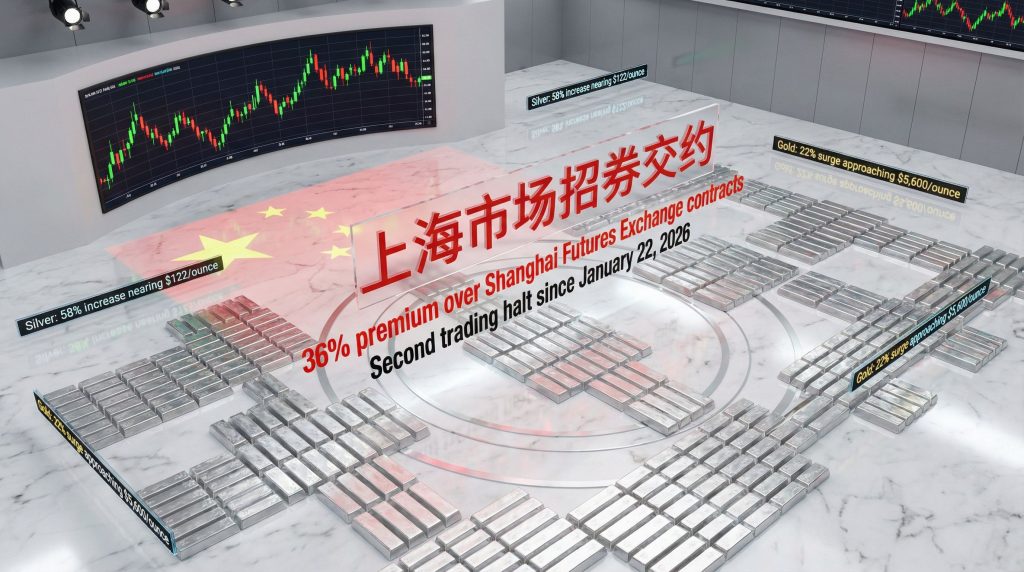
Chinese financial authorities recently implemented emergency trading suspensions across multiple commodity investment funds as extreme market volatility threatened investor capital and systemic stability. China halts trading in silver and oil funds represents the most significant regulatory intervention in Chinese commodity markets during 2025, reflecting escalating concerns about speculative positioning amid geopolitical tensions and gold prices record highs.
Strategic resource control mechanisms intensify across global markets as currency confidence shifts reshape commodity pricing structures. Industrial nations face mounting pressure to balance speculative investment flows against genuine supply chain requirements, creating regulatory challenges that extend far beyond traditional market oversight. The intersection of monetary policy uncertainty and regional conflict dynamics generates volatility patterns that threaten both retail investor protection and strategic resource allocation frameworks.
Central bank policies struggle to maintain equilibrium when precious metals and energy commodities experience unprecedented demand surges driven by safe-haven positioning and geopolitical risk premiums. These market dynamics create pricing disconnects between financial instruments and underlying physical assets, forcing regulatory authorities to implement protective measures that prioritise market stability over continuous trading access.
What Triggered China's Emergency Commodity Fund Suspensions?
Extreme Premium Disconnects in Chinese Markets
Market disruption reached critical thresholds when the UBS SDIC Silver Futures Fund trading premium expanded to 36 per cent above Shanghai Futures Exchange contracts, creating unsustainable arbitrage opportunities that threatened investor capital. This extreme valuation gap represented the most severe pricing disconnect in Chinese commodity fund history, prompting immediate regulatory intervention to prevent massive retail losses.
Furthermore, the timing coincided with broader market stress as analysts developed their gold price forecast amid unprecedented safe-haven demand patterns.
30-Day Commodity Performance Analysis:
| Asset Class | Price Movement | Peak Levels |
|---|---|---|
| Gold | 22% surge | Approaching $5,600/ounce |
| Silver | 58% increase | Nearing $122/ounce |
| Brent Crude | Five-month high | Exceeding $70/barrel |
Four oil-focused funds simultaneously experienced premium distortions requiring coordinated suspension protocols, indicating systematic rather than isolated market dysfunction. Fund managers issued multiple risk warnings before automatic circuit breakers activated, demonstrating the escalating nature of pricing anomalies across multiple commodity sectors.
Geopolitical Risk Factors Driving Market Volatility
US naval positioning near Iranian waters coincided with Brent crude oil breaking the $70 per barrel threshold for the first time in approximately five months on January 29, 2026. Maritime deployment patterns and strategic resource control intensification created immediate supply chain vulnerability concerns that amplified commodity price movements beyond normal trading ranges.
Regional conflict expansion across multiple theaters generated safe-haven demand patterns that overwhelmed traditional arbitrage mechanisms. Expert analysis from the Economist Intelligence Unit characterised these trading suspensions as regulatory responses designed to maintain capital market stability whilst preventing investor exposure to extreme losses during unprecedented volatility periods.
However, the broader impact extended beyond immediate market disruption, contributing to what experts describe as a potential silver market squeeze that could reshape global precious metals dynamics.
Currency debasement expectations weakened confidence in dollar-denominated reserves, driving capital flight toward physical commodity exposure through investment funds. This monetary policy uncertainty created feedback loops where geopolitical tensions amplified existing currency concerns, generating compound volatility effects across precious metals and energy markets.
When big ASX news breaks, our subscribers know first
How Do China's Commodity Fund Regulations Actually Work?
Listed Open-Ended Fund (LOF) Mechanism Explained
China's commodity investment vehicles operate through Listed Open-Ended Fund structures that combine real-time exchange trading with traditional mutual fund characteristics. These hybrid instruments allow continuous price discovery during market hours whilst maintaining creation and redemption mechanisms that theoretically prevent extreme premium disconnects from net asset values.
LOF Trading Structure Comparison:
| Feature | Traditional Mutual Funds | Listed Open-Ended Funds |
|---|---|---|
| Pricing Frequency | End-of-day NAV | Real-time during market hours |
| Premium/Discount Risk | Minimal | Significant during volatility |
| Arbitrage Mechanisms | Limited | Active but constrained |
| Regulatory Oversight | Standard | Enhanced circuit breakers |
Trading halt protocols activate when premium levels exceed predetermined thresholds, though specific numerical triggers remain proprietary within regulatory frameworks. The UBS SDIC Silver Futures Fund experienced its second suspension within eight days, indicating either inadequate cooling-off periods or persistent underlying market dysfunction requiring extended intervention.
Risk Management Protocols in Chinese Capital Markets
Automatic suspension systems operate through algorithmic monitoring of premium deviations, with one-hour suspension windows extending until 10:30 AM Beijing time for oil funds whilst silver fund halts encompassed full trading days. This graduated response system reflects regulatory assessment of relative risk levels across different commodity sectors.
Fund management firms bear responsibility for issuing premium risk alerts before automatic suspensions activate, creating a two-stage warning system that theoretically provides investor education opportunities prior to trading restrictions. However, the persistence of extreme premiums despite multiple warnings suggests limited effectiveness of educational approaches during market panic conditions.
Cross-market stability coordination involves Shanghai Stock Exchange monitoring systems, China Securities Regulatory Commission oversight protocols, and individual fund manager discretionary authorities. This multi-layered framework attempts to balance investor protection mandates against market access preservation, though extreme volatility periods strain these competing objectives.
Which Specific Funds Were Targeted and Why?
UBS SDIC Silver Futures Fund Analysis
Critical Market Position:
China's only public silver futures investment vehicle
Second trading halt implementation since January 22, 2026
36% premium over Shanghai Futures Exchange contracts
Full-day suspension protocol activated
The fund's monopoly position as China's only public fund investing in silver futures amplified regulatory concern about systemic risk concentration. When speculative demand concentrated through a single investment vehicle, pricing distortions threatened to cascade across broader silver markets, potentially disrupting industrial supply chains dependent on stable precious metals pricing.
Historical precedent established through the January 22 initial suspension proved insufficient to resolve underlying market imbalances, necessitating repeat intervention within the eight-day interval between systematic regulatory responses. This pattern suggests either inadequate premium cooling mechanisms or persistent speculative pressure that exceeded regulatory circuit breaker effectiveness.
Oil-Focused LOF Suspensions Breakdown
Coordinated suspension of four separate oil funds simultaneously indicated systematic rather than fund-specific dysfunction across energy commodity investment vehicles. The synchronised one-hour trading halt duration reflected regulatory assessment that oil market distortions required shorter cooling periods compared to silver market premiums.
In addition to domestic regulatory concerns, analysts noted the significant OPEC production impact on global energy markets during this volatile period.
Oil Fund Suspension Characteristics:
• Four funds halted simultaneously on January 30, 2026
• One-hour suspension duration (shorter than silver fund halt)
• Timing coordinated until 10:30 AM Beijing time
• Preceded by multiple fund manager risk warnings
• Coincided with Brent crude exceeding $70/barrel threshold
Fund manager alert protocols preceding automatic suspensions demonstrated regulatory emphasis on investor education before market access restriction. However, the necessity for coordinated halts despite warning communications suggests speculative momentum overwhelmed educational risk management approaches.
What Do Commodity Price Surges Reveal About Global Markets?
Precious Metals Performance Metrics
Silver's 58 per cent monthly increase substantially outpaced gold's 22 per cent surge, indicating significantly higher volatility characteristics and potentially greater speculative positioning concentration. This performance differential suggests silver markets experienced disproportionate investment demand relative to industrial consumption patterns, creating artificial scarcity conditions that justified regulatory intervention.
Gold prices approaching $5,600 per ounce levels represent testing of previous all-time high resistance zones established during historical monetary crisis periods. The sustained precious metals rally across both gold and silver indicates broad-based safe-haven demand rather than sector-specific supply disruptions, suggesting underlying confidence erosion in traditional reserve assets.
Safe-Haven Asset Demand Intensity:
- Currency diversification strategies driving institutional capital flows
- Industrial hedging requirements from technology manufacturers
- Retail speculation patterns amplified through social media platforms
- Central bank reserve rebalancing toward physical commodities
Energy Market Dynamics and Geopolitical Catalysts
Brent crude oil breaking five-month resistance at $70 per barrel coincided precisely with US warship positioning near Iranian territorial waters, establishing clear causal relationships between military deployment patterns and energy pricing mechanisms. This correlation demonstrates how maritime strategic positioning directly translates into commodity market premiums through supply chain vulnerability assessments.
Energy commodity volatility reflected broader geopolitical tension escalation across multiple regional theaters, with conflicts expanding beyond traditional Middle East boundaries to include European and South American diplomatic confrontations. Furthermore, these developments aligned with broader geopolitical mining insights that analysts had been tracking throughout 2025.
Strategic petroleum reserve considerations gained prominence as governments evaluated stockpile adequacy during potential supply disruption scenarios. The intersection of physical reserve planning and financial market speculation created feedback loops where government preparation activities amplified speculative investment positioning.
Why Are Chinese Regulators Prioritising Market Stability Now?
Capital Market Protection Philosophy
Regulatory authorities implemented trading halts under explicit mandates to maintain capital market stability whilst preventing investor exposure to extreme losses during volatile conditions. This protective approach prioritises downside risk mitigation over continuous market access, reflecting lessons learned from previous commodity speculation cycles that generated significant retail investor casualties.
Regulatory Response Timeline:
• January 22, 2026: Initial UBS SDIC Silver Futures Fund suspension
• January 30, 2026: Coordinated five-fund halt implementation
• 8-day interval: Between systematic regulatory interventions
• Multiple warnings: Fund manager alerts preceding automatic triggers
The eight-day recurrence pattern between silver fund suspensions indicates either insufficient cooling-off periods or persistent underlying speculative pressure requiring extended regulatory management. This suggests traditional circuit breaker mechanisms may prove inadequate during extreme geopolitical volatility periods.
Industrial Demand vs Speculative Investment Balance
Chinese manufacturing sectors depend heavily on stable precious metals supply for electric vehicle battery components and solar panel manufacturing processes, creating potential conflicts between financial speculation and industrial procurement requirements. Regulatory authorities assessed that extreme LOF premiums could divert physical silver supply from manufacturing applications toward speculative financial positioning.
Domestic silver pricing premiums of 15-20 per cent over global benchmarks represent normal import cost structures, but LOF premiums reaching 36 per cent levels exceeded even typical Chinese domestic premium ranges. This escalation threatened to create secondary shortage conditions that would impact industrial supply chain continuity.
Strategic resource allocation priorities emerged when speculative investment demand threatened to overwhelm genuine industrial consumption patterns. Regulatory intervention aimed to restore balance between legitimate investment access and manufacturing sector supply security requirements.
How Do These Measures Compare to Global Regulatory Responses?
International Commodity Fund Oversight Models
Global Regulatory Framework Comparison:
| Jurisdiction | Circuit Breaker Type | Suspension Triggers | Maximum Duration |
|---|---|---|---|
| United States | SEC commodity ETF halts | Volatility-based | 15 minutes standard |
| European Union | UCITS fund controls | Premium thresholds | Manager discretion |
| Australia | ASIC managed fund rules | Liquidity-based | 24 hours maximum |
| China | LOF premium controls | 36% threshold demonstrated | Full trading day |
Chinese regulatory frameworks demonstrate more aggressive intervention thresholds compared to US SEC volatility-based circuit breakers that typically last 15 minutes before automatic resumption. European UCITS directives provide fund manager discretion over suspension duration, whilst Chinese protocols implement predetermined full-day trading halts for extreme conditions.
Australian ASIC managed fund regulations emphasise liquidity-based suspension triggers rather than premium-based thresholds, reflecting different market structure priorities between physical commodity access and financial instrument stability. These jurisdictional differences indicate varying regulatory philosophies regarding investor protection versus market efficiency trade-offs.
Cross-Border Market Stability Coordination
Shanghai Futures Exchange investigation protocols coordinate with London Metal Exchange price correlation monitoring to identify potential cross-market manipulation patterns during volatile periods. This international coordination becomes critical when Chinese domestic premiums influence global commodity pricing through arbitrage activity disruption.
Moreover, recent analysis by FXStreet highlighted how surging gold and silver prices are creating chaos in Chinese markets, demonstrating the broader regional implications of these regulatory interventions.
International Regulatory Coordination Elements:
• Information sharing between commodity exchanges globally
• Synchronised monitoring of cross-border arbitrage flows
• Joint investigation protocols for suspected manipulation
• Harmonised reporting requirements for large position holders
Tin and silver trader ownership disclosure requirements extend beyond typical position reporting to include beneficial ownership identification during market stress periods. These enhanced transparency measures reflect regulatory recognition that traditional reporting frameworks may inadequately capture complex trading strategies during geopolitical volatility.
The next major ASX story will hit our subscribers first
What Are the Broader Implications for Commodity Investing?
Structural Changes in Chinese Commodity Access
LOF premium management protocols represent evolving standard practice that prioritises market stability over continuous trading access, fundamentally altering Chinese commodity investment characteristics. Retail investors face increased uncertainty about trading continuity during volatile periods, potentially driving demand toward alternative commodity exposure vehicles.
Emerging Investment Framework Changes:
- Enhanced premium monitoring systems become mandatory
- Professional investor thresholds may increase for commodity funds
- Alternative exposure vehicles development accelerates
- Risk disclosure requirements expand significantly
Fund managers adapt operational procedures to include more frequent investor communications and enhanced risk warning protocols. This regulatory evolution suggests Chinese commodity investing will become more institutionally oriented with greater barriers to retail participation during stressed market conditions.
Global Commodity Market Fragmentation Risks
Regional pricing disconnects increase as individual jurisdictions implement protective measures that interfere with traditional arbitrage mechanisms. Chinese domestic commodity fund suspensions create pricing isolation that prevents efficient price discovery between Shanghai futures markets and international commodity exchanges.
Currency hedging complexity escalates when fund suspensions disrupt normal arbitrage flows that typically provide natural hedging opportunities for international commodity investors. This fragmentation requires more sophisticated risk management approaches and potentially higher hedging costs for global commodity exposure strategies.
Market Fragmentation Indicators:
• Pricing disconnects between regional exchanges expanding
• Arbitrage disruption creating inefficient price discovery
• Currency hedging costs increasing due to flow interruption
• Supply chain financing complications from price uncertainty
Investment Strategy Adaptations for Volatile Commodity Markets
Risk Management Framework for Commodity Exposure
Essential Risk Controls for Commodity Investment:
- Premium monitoring systems tracking fund-to-futures spreads continuously
- Geopolitical event correlation analysis linking tensions to price movements
- Liquidity assessment protocols during market stress periods
- Diversification strategies across commodity sectors and geographic regions
Investors require sophisticated monitoring capabilities that track not only commodity price movements but also regulatory intervention probabilities based on premium threshold approaching. Traditional buy-and-hold strategies prove inadequate when government authorities can suspend trading access during optimal selling opportunities.
Professional investment management becomes increasingly valuable as regulatory complexity and suspension risks exceed individual investor monitoring capabilities. This regulatory evolution favours institutional approaches over retail direct commodity fund investing during volatile geopolitical periods.
Alternative Commodity Investment Approaches
Direct futures contract positions offer potential advantages over fund structures during regulatory intervention periods, though margin requirements and rollover complexity create barriers for smaller investors. Physical commodity storage considerations become relevant for investors seeking to avoid fund suspension risks entirely.
Alternative Investment Vehicle Analysis:
• Direct futures contracts: Higher complexity but avoid fund suspension risk
• International commodity ETFs: Geographic diversification benefits
• Physical storage options: Ultimate suspension protection with storage costs
• Mining company equity exposure: Indirect commodity exposure through stocks
Mining company equity positions provide commodity price exposure through corporate earnings leverage whilst avoiding direct commodity fund regulatory constraints. However, operational risks, management quality variations, and jurisdictional mining policy changes create additional complexity layers requiring sector expertise.
Future Outlook: Will China's Regulatory Approach Spread Globally?
Emerging Market Regulatory Trend Analysis
Protective regulatory measures demonstrate increasing adoption patterns across emerging market jurisdictions facing similar retail investor protection pressures during volatile commodity cycles. The Chinese model of proactive trading suspensions based on premium thresholds may influence regulatory framework development in other Asian markets with significant retail commodity investment participation.
Regulatory Technology Implementation:
• Automated monitoring systems tracking premium thresholds continuously
• Algorithmic suspension triggers reducing human discretion delays
• Enhanced investor communication platforms for real-time risk warnings
• Cross-market coordination technologies enabling rapid response protocols
Technology-driven speculation control methods evolve as regulatory authorities recognise that traditional oversight mechanisms prove inadequate during social media-amplified investment manias. Real-time monitoring capabilities become essential infrastructure for modern commodity market oversight during geopolitically volatile periods.
Long-term Commodity Market Structure Evolution
Digital asset integration with physical commodities creates new regulatory challenges as tokenised commodity exposure vehicles may circumvent traditional fund suspension mechanisms. Blockchain-based commodity investment platforms require entirely new oversight frameworks that current regulatory structures may not adequately address.
Cross-border trading protocol standardisation becomes essential as regional regulatory fragmentation threatens global commodity market efficiency. International coordination frameworks must evolve to balance individual jurisdiction protective measures against systemic market function preservation requirements.
Future Market Structure Elements:
- Sustainable commodity investment frameworks incorporating ESG criteria
- Enhanced regulatory coordination across major commodity exchanges
- Technology integration for real-time risk monitoring and response
- Professional investor emphasis reducing retail speculation risks
Disclaimer: This analysis involves speculation about future regulatory developments and market structure evolution. Actual implementation may differ significantly from projected scenarios. Commodity investing involves substantial risk of loss, and regulatory interventions can limit market access during both favourable and unfavourable conditions. Readers should conduct independent research and consult qualified financial professionals before making investment decisions.
The Chinese approach to commodity fund regulation during extreme volatility periods establishes precedents that may influence global regulatory evolution, particularly as geopolitical tensions continue driving unprecedented safe-haven demand patterns across precious metals and energy markets. Consequently, China halts trading in silver and oil funds demonstrates how regulatory authorities worldwide may increasingly prioritise market stability over continuous access during periods of extreme speculation and geopolitical uncertainty.
Looking to Navigate Commodity Market Volatility?
China's emergency trading suspensions demonstrate how quickly regulatory interventions can impact commodity investment access during volatile periods. Discovery Alert's proprietary Discovery IQ model delivers real-time alerts on significant ASX mineral discoveries, helping investors identify actionable opportunities whilst traditional commodity funds face trading restrictions and regulatory uncertainty.