
May 12, 2026
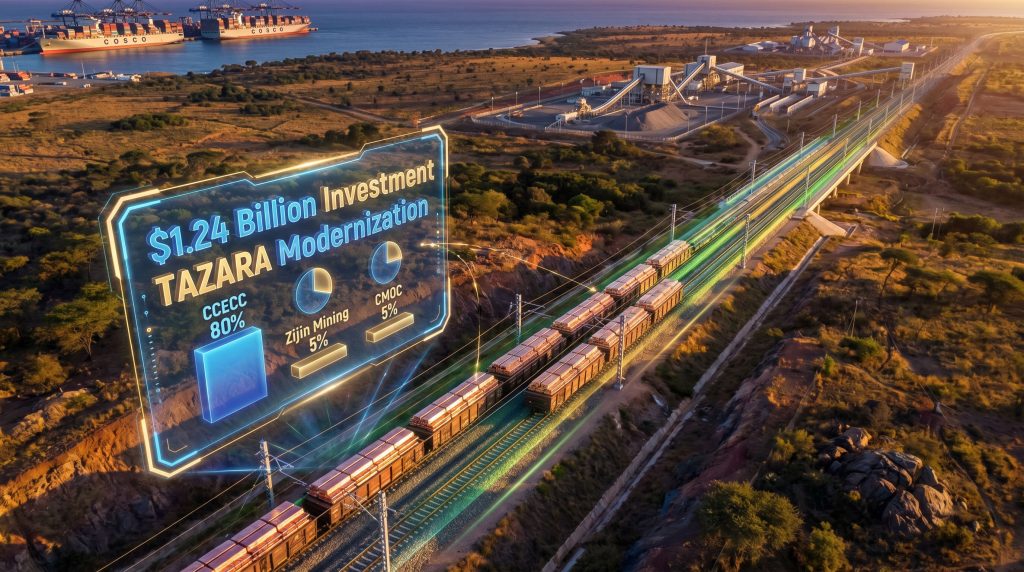
Chinese mining companies are revolutionising African resource extraction through unprecedented investments in transport infrastructure, fundamentally altering how critical minerals reach global markets. The emergence of Chinese miners back TAZARA upgrade initiatives demonstrates a strategic shift toward vertical integration that positions mining corporations as infrastructure owners rather than mere users of transport services. This approach reflects growing recognition that controlling entire supply chains from extraction to export provides competitive advantages in an increasingly complex geopolitical environment.
African mineral corridors have emerged as focal points for this integration trend, with major powers positioning transport routes as extensions of broader critical minerals strategy objectives. Furthermore, the competition between established and emerging infrastructure pathways demonstrates how mining companies now view railway shareholdings and port access as strategic assets comparable to ore reserves themselves.
Understanding Chinese Mining Integration into African Transport Networks
The emergence of Chinese miners back TAZARA upgrade initiatives represents a fundamental shift in how resource extraction companies approach supply chain control. Rather than operating as isolated extraction entities dependent on third-party logistics providers, major mining corporations are establishing equity positions in transport infrastructure to create seamlessly integrated operations.
The TAZARA modernization project, valued at $1.24 billion, exemplifies this strategic evolution through its unique ownership structure combining construction capability, mining operations, logistics coordination, and maritime transport under unified Chinese corporate management. This integration model enables unprecedented coordination between extraction schedules, rail capacity, and shipping arrangements.
Strategic Integration Benefits Include:
- Elimination of transport cost volatility through direct infrastructure control
- Coordinated production planning across multiple mining sites
- Enhanced response capability to market demand fluctuations
- Reduced dependency on external logistics providers with competing priorities
- Streamlined customs and border crossing procedures through unified management
The participation of CMOC and Zijin Mining reflects their substantial operational footprint in Central African copper production. Consequently, CMOC accounts for 21.9% of DRC's total copper exports through its Tenke Fungurume and Kisanfu operations, while Zijin controls a 39.6% stake in the Kamoa-Kakula complex, representing the country's largest copper operation.
When big ASX news breaks, our subscribers know first
Analyzing the Competitive Landscape Between TAZARA and Alternative Routes
The $1.24 billion investment in TAZARA modernization positions this corridor within a broader competition between Chinese-integrated and Western-backed transport alternatives. However, each approach offers distinct strategic advantages while facing unique operational challenges.
Infrastructure Investment Comparison:
| Route | Investment Scale | Backing | Primary Advantages | Key Challenges |
|---|---|---|---|---|
| TAZARA Modernization | $1.24 billion | Chinese corporations | Established infrastructure, unified management | Aging rail systems, capacity constraints |
| Lobito Corridor | Multi-billion (unspecified) | US/EU partnership | Atlantic Ocean access, strategic mineral focus | Economic viability, governance complexity |
| Traditional Road Networks | Ongoing maintenance | Various stakeholders | Route flexibility, immediate availability | Congestion, higher per-ton costs |
The ownership structure of the TAZARA upgrade demonstrates sophisticated vertical integration. For instance, China Civil Engineering Construction holds 80% for construction oversight, while Zijin Mining (5%), CMOC (5%), Jiayou International Logistics (5%), and COSCO Shipping Holdings (5%) each contribute specialized capabilities spanning extraction, logistics coordination, and maritime transport.
This integrated approach contrasts sharply with the Lobito Corridor's multi-stakeholder governance model. The alternative aims to connect DRC and Zambian mining zones to Angola's Atlantic port through rehabilitated rail and logistics infrastructure. Despite political backing from Washington and Brussels, this alternative faces questions regarding economic sustainability and mining operator commitment levels.
Examining the Role of Zijin Global Expansion
The strategic positioning of major Chinese mining corporations reflects broader patterns of international expansion that prioritise infrastructure control. This approach aligns with emerging industry consolidation trends that favour companies capable of managing complex multi-jurisdictional operations.
Examining Chinese Corporate Advantages in African Mining Operations
Chinese mining companies have established dominant positions in Central African copper production through strategic acquisitions and operational scale. In addition, this concentration enables coordinated supply chain management impossible under fragmented ownership structures.
Chinese Mining Footprint in DRC:
| Company | Key Operations | Market Share | Strategic Value |
|---|---|---|---|
| CMOC | Tenke Fungurume, Kisanfu | 21.9% of DRC exports | Largest single operator |
| Zijin Mining | 39.6% of Kamoa-Kakula | Major complex control | Fastest production growth |
| Combined Chinese Operations | Multiple sites | Estimated >40% | Market leadership position |
The geographic positioning of these operations creates natural cargo flows toward the TAZARA corridor. Furthermore, unified Chinese management can optimize scheduling, reduce handling inefficiencies, and minimize transport costs through economies of scale. This operational alignment provides competitive advantages unavailable to mining companies dependent on third-party transport providers.
Operational Coordination Benefits:
- Synchronized production schedules across multiple mine sites
- Consolidated rail booking and capacity allocation
- Unified quality control and shipping documentation
- Coordinated maintenance scheduling to minimize disruptions
- Integrated inventory management from mine to port
The integration of COSCO Shipping Holdings into the TAZARA ownership structure extends this coordination to maritime transport. Consequently, this creates an unbroken Chinese-controlled logistics chain from extraction through ocean delivery to end markets.
Geopolitical Implications of Competing Transport Strategies
The rivalry between Chinese-integrated and Western-backed transport corridors reflects broader competition over critical minerals energy security objectives. However, each approach embodies distinct philosophies regarding state involvement, corporate coordination, and long-term strategic planning.
Chinese Strategic Approach
The Chinese model emphasizes corporate integration across entire value chains, patient capital deployment for long-term infrastructure development, and alignment between state policy objectives and corporate interests. Furthermore, this approach leverages established diplomatic relationships, particularly China's long-standing ties with Tanzania, to create stable operational environments for integrated mining and transport operations.
Western Counter-Strategy
Western initiatives focus on creating alternative routing options to reduce Chinese supply chain dominance. For instance, they emphasise partnerships with African governments based on governance standards and transparency frameworks. The Lobito Corridor represents this approach through its emphasis on multi-stakeholder collaboration and integration with broader development assistance programs.
The December mining cooperation agreement between Washington and Kinshasa illustrates this competitive dynamic. However, it stipulates that 50% of copper, 30% of cobalt, and 90% of zinc from DRC state mining companies will transit through the Lobito Corridor over the next five years.
Evaluating Economic Viability Challenges for Alternative Routes
Despite strong political backing, the Lobito Corridor confronts significant economic and operational obstacles. Furthermore, these challenges highlight the advantages of the integrated Chinese approach to transport infrastructure development, particularly in light of broader US–China trade war impacts affecting global supply chains.
Economic Sustainability Concerns
Research from the European Centre for Development Policy Management has identified substantial risks regarding shipping costs and limited mining operator support for Lobito routing. Consequently, these concerns reflect broader challenges facing infrastructure projects that lack unified ownership and operational control.
What Makes Governance Complexity Such a Significant Issue?
Analysis from IRIS has highlighted the absence of transnational public authority responsible for governing the Lobito project across multiple national jurisdictions. This governance gap creates coordination difficulties absent from the unified Chinese management model employed in TAZARA modernization.
Comparative Operational Challenges:
| Challenge Category | TAZARA | Lobito Corridor |
|---|---|---|
| Management Structure | Unified Chinese corporate control | Multi-stakeholder coordination |
| Financing Mechanism | Direct corporate investment | Government-backed partnerships |
| Operational Integration | Vertical mining-transport alignment | Separate mining and transport entities |
| Political Risk | Bilateral China-Tanzania relationship | Multi-country diplomatic coordination |
The complexity of coordinating multiple governments, mining companies, and transport providers under the Lobito model contrasts with the streamlined decision-making possible under unified Chinese corporate ownership of TAZARA infrastructure.
Strategic Resource Security Through Vertical Integration
Chinese miners back TAZARA upgrade initiatives form part of broader national strategies for securing critical mineral supplies through comprehensive supply chain control. This approach reduces external dependencies and enhances resilience against potential disruptions.
Supply Chain Security Framework
The integration of mining operations with transport infrastructure creates predictable cost structures and scheduling reliability unavailable under fragmented logistics arrangements. Furthermore, this control enables more responsive adjustments to market demand fluctuations and reduces vulnerability to external supply chain disruptions.
Risk Mitigation Mechanisms
- Geographic diversification across multiple African mining jurisdictions
- Operational redundancy through multiple mine sites feeding single transport corridor
- Political risk reduction through established bilateral relationships
- Currency risk management through integrated Chinese corporate structure
- Regulatory risk mitigation through unified corporate compliance systems
The participation of specialized entities like Jiayou International Logistics demonstrates sophisticated approaches to supply chain optimization. In addition, these extend beyond traditional mining company capabilities.
The next major ASX story will hit our subscribers first
Market Implications for Global Copper Supply Chains
The integration of Chinese mining operations with Chinese transport infrastructure creates more cohesive and potentially resilient supply chains. Consequently, this could reshape global copper market dynamics and pricing mechanisms.
Market Structure Evolution
Enhanced Chinese control over copper production and transport infrastructure may increase pricing influence and supply availability coordination. For instance, the ability to optimize logistics costs through vertical integration provides competitive advantages that could influence global market positioning.
Competitive Response Requirements
Western mining companies may need to develop similar integrated approaches or accept higher logistics costs and reduced supply chain control. Furthermore, this dynamic could accelerate Chinese miners back TAZARA upgrade patterns as companies seek scale necessary for infrastructure investment.
Future Scenarios for African Transport Corridor Competition
The success or failure of competing corridor strategies will likely determine broader patterns of resource extraction and transport infrastructure development across Africa.
Scenario 1: Chinese Consolidation Dominance
If TAZARA modernization demonstrates clear operational and economic advantages while Lobito faces sustained viability challenges, Chinese companies may extend similar integrated approaches to additional African mineral corridors. Consequently, this could potentially reshape continental resource transport networks.
Scenario 2: Competitive Equilibrium
Both corridors could succeed by serving distinct market segments. For instance, TAZARA could be optimized for Chinese-controlled production while Lobito serves Western mining operations and governance-focused initiatives.
Scenario 3: Enhanced African Leverage
Competition between corridor options could strengthen African negotiating positions. Furthermore, this could lead to improved terms for host countries and increased investment in local infrastructure development and capacity building.
"The strategic integration of Chinese mining operations with transport infrastructure through TAZARA represents a fundamental evolution in resource extraction business models, potentially establishing new competitive benchmarks for supply chain control and operational efficiency in global commodity markets."
Investment Considerations:
Investors evaluating African mining and infrastructure opportunities should consider the operational advantages of vertically integrated supply chains. In addition, they must assess the geopolitical implications of transport route selection and the long-term sustainability of competing corridor strategies in their analysis frameworks.
Understanding these dynamics provides essential context for assessing both direct mining investments and broader exposure to African resource development through transport infrastructure, logistics services, and regional economic development themes.
Ready to Capitalise on African Mining Infrastructure Opportunities?
Discovery Alert's proprietary Discovery IQ model delivers real-time alerts on significant mineral discoveries across global markets, instantly empowering subscribers to identify actionable opportunities in rapidly evolving sectors like African resource extraction and transport infrastructure. Begin your 14-day free trial at Discovery Alert today to position yourself ahead of major market developments and secure your competitive advantage in mining and infrastructure investments.