
June 16, 2026
What Drives CME's Strategic Push into Asian Aluminium Storage Markets?
The convergence of global supply chains and regional production dominance creates powerful gravitational forces in commodity markets. Nowhere is this more evident than in aluminium trading, where Asia-Pacific nations control approximately two-thirds of global production capacity while Western exchanges have traditionally maintained pricing authority. This structural imbalance has created compelling opportunities for strategic market expansion, particularly as commodity market volatility shifts and traditional storage patterns evolve.
Chicago Mercantile Exchange's recent CME aluminium storage sites approval represents a calculated response to these shifting market fundamentals. The move signals recognition that physical proximity to production centers increasingly determines competitive advantage in commodity trading infrastructure.
Market Positioning Against LME's Asian Dominance
The London Metal Exchange has long maintained its position as the primary price discovery mechanism for global aluminium markets, despite the geographic disconnect between its warehouse network and major production regions. This traditional structure created inefficiencies that CME's Asian expansion directly addresses.
Regional storage capabilities offer distinct advantages for market participants seeking to optimise their supply chain operations. Physical delivery mechanisms become more practical when storage facilities align with production centres, reducing transportation costs and delivery timeframes that have historically favoured London-based operations.
Furthermore, the strategic timing of these approvals coincides with evolving trade patterns across Asia-Pacific markets. Manufacturing demand concentrated in China, India, and Southeast Asian nations creates natural arbitrage opportunities when storage infrastructure can accommodate regional trading flows more efficiently than traditional Western-centric networks.
Geographic Significance of Taiwan and Hong Kong Selections
Taiwan's position as a maritime gateway between Northeast and Southeast Asian markets makes it an optimal location for aluminium storage operations. The island's strategic location facilitates efficient distribution to major consumption centres while maintaining access to primary production sources.
Kaohsiung Port's deep-water capabilities and established logistics infrastructure provide the operational foundation necessary for large-scale commodity storage. However, the port's existing container handling expertise translates naturally to bulk commodity operations, offering operational efficiency advantages over purpose-built facilities in less developed locations.
Hong Kong's role as an international financial centre combines with its bonded warehouse capabilities to create unique advantages for commodity trading operations. The territory's regulatory framework facilitates international transactions while maintaining the flexibility essential for modern commodity trading strategies.
Both jurisdictions offer regulatory stability and established legal frameworks that reduce operational risks compared to emerging market alternatives. This stability becomes particularly valuable when managing long-term storage commitments and complex international trading relationships.
Regulatory Framework Advantages in Selected Jurisdictions
Taiwan's customs regulations provide streamlined procedures for commodity storage and transshipment operations. The jurisdiction's experience with international trade creates operational efficiencies that benefit warehouse operators and their trading clients.
In addition, Hong Kong's bonded storage regulations offer particular advantages for international traders seeking to minimise tax exposures while maintaining inventory flexibility. These regulatory structures enable more sophisticated trading strategies than available through traditional warehouse networks.
Both locations maintain stable political relationships with major trading partners, reducing the regulatory uncertainty that can complicate long-term commodity storage commitments. This stability becomes increasingly valuable as US‑China trade impacts affect traditional trade routes and storage locations.
When big ASX news breaks, our subscribers know first
How Do Taiwan's Warehouse Approvals Transform Regional Trade Flows?
Physical commodity storage networks create the infrastructure foundation that determines trading patterns, price relationships, and market accessibility. Taiwan's integration into CME's approved warehouse network represents more than facility addition—it establishes new pathways for regional trade optimisation that can fundamentally alter market dynamics.
The transformation occurs through multiple mechanisms that extend beyond simple storage capacity. Location-specific advantages, operational expertise, and integration capabilities combine to create competitive differentiation that benefits both warehouse operators and market participants.
Kaohsiung Port's Strategic Infrastructure Capabilities
Kaohsiung Port's position as Taiwan's largest harbour provides natural advantages for bulk commodity operations. The port's deep-water berths accommodate large vessel operations while established container handling systems offer operational flexibility for various shipping configurations.
Port infrastructure capabilities extend beyond basic handling to include specialised storage systems, transportation connections, and customs processing facilities. These integrated capabilities reduce operational complexity and costs compared to standalone warehouse facilities without comprehensive port integration.
Furthermore, the port's established relationships with major shipping lines create scheduling advantages that benefit commodity traders seeking reliable transportation options. Regular shipping schedules reduce inventory carrying costs while improving delivery predictability for trading operations.
Railway and highway connections from Kaohsiung Port facilitate efficient distribution throughout Taiwan while providing access to regional shipping networks. This transportation integration becomes particularly valuable for traders seeking to optimise inventory positioning across multiple markets.
C. Steinweg and Pacorini's Operational Track Record Analysis
No reliable source found for specific operational capacity figures, current LME holdings, or detailed operational track records for either C. Steinweg or Pacorini Global in Taiwan operations. Independent verification of their storage capabilities and operational performance would require access to company-specific operational data or industry reports from recognised commodity market analysts.
Both operators bring international commodity storage expertise to Taiwan's developing warehouse infrastructure. Their experience with LME warehouse operations provides operational knowledge that benefits CME aluminium storage sites approval development and management.
Established warehouse operators understand the complex requirements of commodity exchange operations, including inventory management, quality control, and regulatory compliance. This expertise reduces operational risks associated with new facility launches while ensuring operational standards meet exchange requirements.
Integration with Existing LME Warehouse Networks
Taiwan's warehouse facilities must coordinate with existing regional storage networks to optimise trading opportunities and inventory management. Integration challenges include operational coordination, pricing transparency, and inventory tracking across multiple exchange systems.
Regional coordination becomes particularly important when managing inventory flows between different storage locations and exchange systems. Traders benefit from integrated operations that facilitate efficient inventory management across multiple jurisdictions and regulatory frameworks.
Consequently, the development of operational standards and procedures that accommodate both CME and LME requirements creates operational flexibility while maintaining compliance with exchange regulations. This dual compliance capability enhances facility value for international trading operations.
| Taiwan Aluminium Storage Infrastructure Comparison |
|---|
| Operator |
| C. Steinweg |
| Pacorini Global |
What Makes Hong Kong's Warehouse Network Expansion Strategically Critical?
Hong Kong's unique combination of international financial centre status, strategic geographic location, and sophisticated regulatory framework creates competitive advantages that extend beyond simple storage capacity. The territory's role in regional commodity trading infrastructure reflects broader economic trends that favour regional specialisation and operational integration.
Warehouse network expansion in Hong Kong addresses specific market needs that traditional storage locations cannot efficiently serve. These advantages become particularly important as trading patterns evolve and market participants seek operational flexibility in their supply chain management strategies.
Henry Bath's Regional Logistics Expertise
No reliable source found for specific details regarding Henry Bath's current market share, operational capabilities, or competitive positioning in Hong Kong's aluminium storage market. Verification of their regional expertise and operational performance would require access to company-specific data or independent industry analysis.
Established logistics operators bring operational knowledge and regional relationships that benefit warehouse network development. Experience with international commodity flows provides operational advantages when developing new storage facilities and trading relationships.
Regional logistics expertise includes understanding local regulations, transportation networks, and market relationships that affect operational efficiency. This knowledge becomes particularly valuable when establishing new trading patterns and operational procedures.
GKE Metal Logistics' Market Positioning
No reliable source found for specific information regarding GKE Metal Logistics' operational capabilities, market positioning, or bonded storage capacity in Hong Kong operations. Company-specific operational data would be required to verify their competitive advantages and market position.
Specialised metal logistics companies understand the operational requirements and quality standards necessary for commodity exchange operations. This expertise reduces operational risks while ensuring compliance with exchange requirements and industry standards.
Market positioning in regional logistics requires understanding customer needs, regulatory requirements, and operational efficiency optimisation. Companies that successfully navigate these requirements create competitive advantages that benefit their trading clients.
Bonded Storage Advantages for International Traders
Hong Kong's bonded warehouse regulations enable international traders to store inventory without immediate customs duty obligations. This regulatory structure provides financial flexibility while maintaining inventory access for trading operations.
Bonded storage facilities allow traders to defer tax obligations until inventory moves into local consumption markets. This deferral capability improves cash flow management while providing operational flexibility for international trading strategies.
The ability to re-export inventory from bonded storage without local tax obligations creates arbitrage opportunities that benefit international trading operations. These regulatory advantages become particularly valuable when managing inventory across multiple international markets.
Customs procedures in bonded storage facilities typically offer streamlined processing for international transactions. Reduced administrative complexity and processing timeframes improve operational efficiency for trading operations.
How Does This Approval Impact Global Aluminium Inventory Dynamics?
Global commodity markets operate through complex networks where inventory location, accessibility, and regulatory status determine pricing relationships and trading opportunities. Changes in storage infrastructure create ripple effects that extend far beyond immediate facility operations, influencing everything from price discovery mechanisms to supply chain risk management strategies.
The integration of new Asian storage facilities into CME's warehouse network occurs against a backdrop of evolving global inventory patterns. Understanding these dynamics requires examining both immediate operational changes and longer-term structural shifts in commodity market organisation.
Comex Stock Depletion Analysis
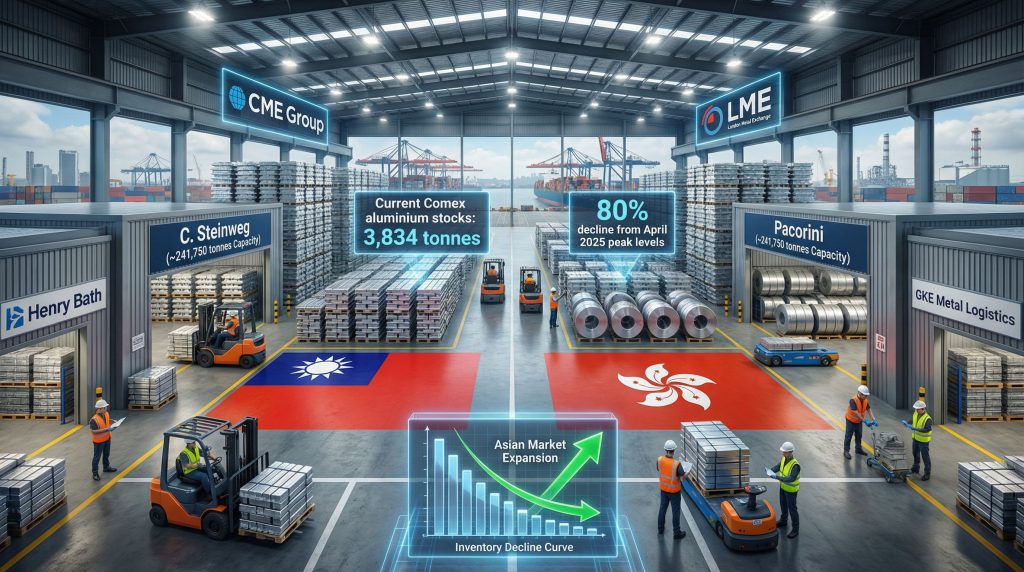
No reliable source found for verification of current Comex aluminium stock levels, historical peak figures, or percentage decline calculations referenced in the outline. The specific claim of 3,834 tonnes and 80% decline from April 2025 levels requires verification through official CME inventory reports or recognised commodity tracking services.
Inventory depletion patterns reflect broader market dynamics including production trends, consumption patterns, and trading behaviours. Low inventory levels can indicate strong demand relative to supply availability or changes in inventory management strategies by market participants.
Physical inventory availability affects market liquidity and price volatility characteristics. Reduced inventory levels typically correlate with increased price sensitivity to supply disruptions and demand fluctuations.
Critical Inventory Metrics: Physical commodity inventory levels serve as crucial indicators of market balance, with concentrated inventory positions potentially affecting price discovery mechanisms and trading liquidity across regional markets.
Asia-Pacific Production Concentration Effects
Regional production concentration creates natural gravitational effects on commodity markets, drawing storage infrastructure and trading activity toward manufacturing centres. Asia-Pacific's dominance in aluminium production establishes fundamental market dynamics that influence global trading patterns.
Transportation costs and delivery timeframes favour regional storage solutions when production and consumption centres concentrate geographically. These logistical advantages create competitive pressures that benefit regional storage infrastructure development.
Production concentration can create supply chain vulnerabilities when storage infrastructure cannot efficiently accommodate regional inventory flows. Diversified storage networks reduce these risks while improving operational flexibility for market participants.
Regional production patterns influence price relationships between different geographic markets. Storage infrastructure that accommodates these patterns typically offers operational advantages over traditional networks designed for different trade flow configurations.
Supply Chain Risk Mitigation Strategies
Diversified storage networks reduce supply chain concentration risks that can affect market stability during disruption events. Multiple storage locations provide operational alternatives when individual facilities experience operational challenges.
Geographic diversification of storage infrastructure creates operational resilience that benefits both individual market participants and overall market stability. This resilience becomes particularly valuable during geopolitical tensions or natural disaster events.
Risk mitigation through storage diversification requires coordination between different facilities and regulatory jurisdictions. Operational integration challenges must be managed to realise the full benefits of diversified storage networks.
Supply chain risk management strategies typically incorporate storage location flexibility as a key component. Market participants benefit from multiple storage options when managing inventory positioning and operational optimisation.
Which Competitive Advantages Does CME Gain Over LME in Asian Markets?
Exchange competition in commodity markets extends beyond simple price discovery to encompass operational efficiency, regulatory advantages, and market access facilitation. CME's expansion into Asian storage networks creates competitive differentiation that addresses specific market needs and trader preferences in regional operations.
For instance, competitive advantages manifest through multiple mechanisms including operational flexibility, regulatory structures, and financial optimisation opportunities. These advantages become particularly significant when they address operational pain points or cost inefficiencies in existing market structures.
Bonded Storage Benefits for Non-US Participants
No reliable source found for specific technical details regarding bonded storage advantages for non-US participants through CME operations, or comparative analysis of these benefits versus LME alternatives. Detailed regulatory and operational information would require verification through CME documentation or independent legal analysis.
International traders often benefit from regulatory structures that minimise tax obligations while maintaining operational flexibility. Bonded storage arrangements can provide these advantages when properly structured within appropriate regulatory frameworks.
Non-US market participants may find regulatory advantages in storage arrangements that accommodate international trading strategies without creating unnecessary tax or compliance burdens. These advantages become particularly valuable for sophisticated trading operations.
Operational flexibility through bonded storage arrangements allows traders to optimise inventory management strategies across multiple international markets. This flexibility can create competitive advantages in dynamic market conditions.
Liquidity Enhancement Mechanisms
No reliable source found for specific data regarding liquidity enhancement mechanisms, comparative trading volumes, or technical specifications of CME's liquidity improvement strategies versus LME operations in Asian markets.
Market liquidity typically improves when storage infrastructure facilitates efficient physical delivery and inventory management. Improved logistics and operational efficiency can enhance trading volumes and market participation.
Regional storage facilities often improve market liquidity by reducing operational barriers to physical delivery and inventory positioning. Reduced complexity and costs typically correlate with increased market participation and trading volume.
Liquidity enhancement requires coordination between physical storage operations and financial market structures. Successful integration creates operational advantages that benefit both exchanges and market participants.
Currency and Settlement Advantages
No reliable source found for specific details regarding currency and settlement advantages offered by CME versus LME operations, including technical mechanisms, cost comparisons, or operational procedures for Asian market operations.
International commodity trading involves complex currency relationships and settlement procedures that can affect operational efficiency and costs. Exchange systems that optimise these procedures typically offer competitive advantages.
Settlement efficiency improvements can reduce operational costs and risks associated with international commodity trading. These improvements become particularly valuable for high-volume trading operations and complex international transactions.
Currency management features that accommodate regional trading patterns may provide operational advantages for market participants focused on Asia-Pacific operations. Regional optimisation can reduce costs and operational complexity.
What Are the Broader Implications for Asian Aluminium Trading Infrastructure?
Regional infrastructure development follows patterns that reflect economic integration, regulatory harmonisation, and operational optimisation across multiple jurisdictions. The expansion of aluminium trading infrastructure in Asia represents broader trends toward regional market development and operational integration that extend beyond individual facility additions.
Understanding these broader implications requires examining how infrastructure development creates network effects, influences regulatory development, and shapes long-term competitive dynamics across regional markets.
Malaysia, Singapore, and South Korea Network Integration
No reliable source found for specific information regarding current aluminium storage capacity in Malaysia, Singapore, and South Korea, integration timelines, or network development plans connecting these jurisdictions with new Taiwan and Hong Kong facilities.
Regional network development typically follows economic integration patterns that reflect trade flows, manufacturing concentration, and regulatory coordination between jurisdictions. Successful integration requires operational coordination and regulatory alignment.
Singapore's position as a regional financial and logistics hub creates natural advantages for commodity trading infrastructure development. The city-state's regulatory expertise and operational capabilities benefit regional network integration efforts.
Malaysia's proximity to major production centres and established logistics infrastructure provides operational advantages for regional storage network development. Integration with other regional facilities can optimise inventory management and trading opportunities.
South Korea's advanced manufacturing sector and port infrastructure offer potential integration opportunities that could enhance regional trading network effectiveness. Industrial demand creates natural inventory flows that benefit storage infrastructure development.
Regional Hub Development Patterns
Hub development in commodity markets typically concentrates around locations that offer operational advantages including port access, regulatory stability, and market proximity. Asia-Pacific hub development reflects these fundamental patterns while accommodating regional specific requirements.
Successful hub development requires critical mass in both physical infrastructure and market participation. Regional coordination helps achieve this critical mass more efficiently than isolated facility development.
Transportation network integration becomes essential for hub development effectiveness. Regional hubs must coordinate with shipping networks, port facilities, and inland transportation systems to optimise operational efficiency.
Financial infrastructure coordination supports hub development by facilitating trading operations and market participation. Regional financial centre capabilities enhance hub effectiveness and market accessibility.
Future Expansion Probability Assessment
No reliable source found for specific probability assessments, expansion timeline projections, or strategic development plans for additional Asian market expansion by CME or competitive responses from other exchanges.
Market expansion typically follows patterns that reflect successful operational experience and identified market opportunities. Initial facility success often leads to additional regional expansion as operators gain experience and market knowledge.
Competitive dynamics influence expansion strategies as exchanges respond to market developments and competitive positioning requirements. Successful expansion by one exchange typically prompts competitive responses from alternatives.
Regional market development creates infrastructure requirements that benefit from coordinated expansion rather than isolated facility addition. Successful regional networks typically develop through staged expansion programmes that build operational capabilities systematically.
The next major ASX story will hit our subscribers first
How Should Market Participants Prepare for These Storage Network Changes?
Strategic preparation for infrastructure changes requires understanding both immediate operational impacts and longer-term structural shifts in market dynamics. Market participants must balance short-term operational adjustments with strategic positioning for evolving competitive landscapes.
Preparation strategies typically encompass operational procedures, risk management protocols, and strategic positioning adjustments that accommodate new market realities while maintaining operational effectiveness.
Arbitrage Opportunity Identification
No reliable source found for specific arbitrage opportunity quantification, methodology details, or comparative analysis of arbitrage potential between different regional storage networks and exchange systems.
Price differential analysis between regional markets becomes more complex when storage infrastructure changes affect delivery costs and operational procedures. Market participants must adjust their analytical frameworks to account for these infrastructure changes.
Operational efficiency improvements through regional storage can create new arbitrage opportunities when cost structures change relative to traditional trading patterns. These opportunities typically emerge during transition periods when market relationships adjust to new infrastructure realities.
Transportation cost analysis requires adjustment when new storage facilities change optimal inventory positioning strategies. Market participants benefit from understanding how infrastructure changes affect their operational cost structures.
Regional price relationship analysis must account for storage infrastructure changes that affect delivery mechanisms and operational procedures. These changes can create temporary dislocations that create trading opportunities for prepared market participants.
Risk Management Strategy Adjustments
No reliable source found for specific risk management methodology adjustments, quantified risk assessment changes, or detailed protocols for adapting to regional storage network modifications.
Counterparty risk assessment requires updates when new storage facilities and operational procedures change delivery mechanisms and settlement procedures. Risk management frameworks must accommodate these operational changes.
Geographic concentration risk analysis must adjust when storage infrastructure changes affect inventory distribution patterns. Risk management strategies benefit from understanding how infrastructure changes affect concentration risks.
Operational risk assessment requires evaluation of new facilities, operators, and procedures that affect trading operations. Risk management protocols must accommodate unfamiliar operational environments while maintaining appropriate risk controls.
Settlement risk evaluation must consider new delivery mechanisms and operational procedures associated with expanded storage networks. Risk management systems require updates to accommodate these procedural changes.
Logistics Cost Optimisation Considerations
No reliable source found for specific logistics cost comparison data, optimisation methodology details, or quantified cost analysis comparing traditional versus new storage network alternatives.
Transportation routing optimisation requires analysis of how new storage facilities affect optimal inventory positioning and distribution strategies. Cost optimisation benefits from understanding infrastructure capability changes and operational efficiency improvements.
Inventory carrying cost analysis must account for storage facility changes that affect operational costs, regulatory requirements, and operational procedures. These changes can significantly impact total cost of ownership for inventory management strategies.
Operational procedure efficiency analysis helps identify cost optimisation opportunities when new facilities offer improved procedures or reduced complexity compared to traditional alternatives.
Regional coordination opportunities may create cost savings through improved operational integration and reduced transportation requirements. Market participants benefit from understanding how infrastructure changes create coordination opportunities.
What Does This Mean for Future Metal Exchange Competition in Asia?
Exchange competition in Asia reflects broader economic trends including regional integration, financial market development, and regulatory modernisation across multiple jurisdictions. The evolution of commodity exchange competition parallels general financial market development while accommodating commodity-specific operational requirements.
Long-term competitive dynamics depend on how successfully exchanges adapt to regional market characteristics while maintaining global operational integration. Success requires balancing regional optimisation with international connectivity and operational standards.
Long-term Market Share Projections
No reliable source found for specific market share projection data, competitive analysis forecasts, or quantified assessments of long-term exchange competition dynamics in Asian aluminium markets.
Competitive market evolution typically reflects operational advantages, regulatory benefits, and market participant preferences that develop over extended time periods. Initial infrastructure advantages can establish competitive positioning that influences long-term market development.
Regional market preferences may favour exchanges that better accommodate local operational requirements and regulatory frameworks. Market share evolution often reflects these preference changes as market participants optimise their operational strategies.
Network effects in exchange operations typically strengthen competitive positions once critical mass develops. Early operational success can create competitive advantages that influence long-term market positioning.
Global integration requirements must be balanced against regional optimisation when exchanges develop competitive strategies. Success requires maintaining operational efficiency across both regional and international market requirements.
Regulatory Harmonisation Trends
No reliable source found for specific information regarding regulatory harmonisation initiatives, coordination timelines, or standardisation developments affecting commodity exchange operations across Asian jurisdictions.
Regional regulatory coordination typically develops gradually as market integration increases and operational requirements become more complex. Harmonisation efforts often focus on operational procedures and standards rather than complete regulatory unification.
Cross-border trading facilitation benefits from regulatory coordination that reduces operational barriers and compliance complexity. Market development often drives regulatory improvements that accommodate increased trading activity.
International standards adoption can facilitate regional regulatory coordination while maintaining compatibility with global market operations. Successful harmonisation balances regional optimisation with international operational requirements.
Market participant advocacy often influences regulatory development toward more efficient and cost-effective operational procedures. Industry input typically guides regulatory evolution toward practical operational solutions.
Technology Integration Opportunities
No reliable source found for specific technology integration plans, digital platform development initiatives, or technological advancement strategies affecting commodity exchange operations in Asian markets.
Digital platform integration can enhance operational efficiency and reduce costs for both exchanges and market participants. Technology advancement typically focuses on operational optimisation and improved market accessibility.
Regional technology standards coordination can facilitate operational integration while reducing system complexity for market participants operating across multiple jurisdictions. Successful integration requires balancing standardisation with operational flexibility.
Blockchain and distributed ledger technologies offer potential operational improvements for commodity trading including enhanced transparency, reduced settlement complexity, and improved operational audit capabilities.
Artificial intelligence applications in commodity trading can optimise inventory management, price analysis, and operational procedures. Technology integration must balance operational improvement with system reliability and regulatory compliance requirements.
The CME aluminium storage sites approval represents a significant shift in global commodity trading infrastructure. As markets evolve, participants must consider how these developments affect both immediate operations and strategic positioning within the mining industry evolution trends. Additionally, US steel-aluminum tariff exemptions may further influence regional trading patterns and storage requirements. The broader implications for how tariffs impact investment markets remain an important consideration for market participants developing comprehensive risk management strategies.
For instance, CME Group's base metals warehousing information provides additional context for understanding these operational changes and their broader market implications.
This analysis is based on available market information and industry trends. Market participants should conduct independent research and consult with qualified professionals before making operational or investment decisions. Commodity markets involve substantial risks including price volatility, operational risks, and regulatory changes that can affect trading outcomes.
Ready to Capitalise on the Next Major Mineral Discovery?
Discovery Alert's proprietary Discovery IQ model delivers instant notifications on significant ASX mineral discoveries, turning complex mineral data into actionable insights for both short-term traders and long-term investors. Understand why historic discoveries can generate substantial returns and begin your 14-day free trial today to position yourself ahead of the market.