June 12, 2026
The Chicago Mercantile Exchange has revolutionised battery materials risk management through its CME lithium carbonate futures contracts, providing essential hedging mechanisms for manufacturers, miners, and energy storage developers navigating unprecedented market volatility. These sophisticated financial instruments enable participants to secure long-term operational stability whilst managing exposure to lithium price fluctuations across global supply chains.
Understanding CME Lithium Carbonate Futures Market Structure
The Chicago Mercantile Exchange has developed a comprehensive framework for lithium carbonate price discovery through standardised futures contracts that serve multiple market participants. These instruments provide transparent, regulated access to battery-grade lithium carbonate pricing mechanisms that reflect actual physical market conditions across major Asian consumption centres.
Furthermore, the integration of these futures contracts with broader battery metals investment landscape initiatives demonstrates the growing sophistication of commodity derivatives markets. This evolution reflects industry recognition that effective risk management requires specialised tools designed for battery materials' unique characteristics.
Contract Specifications and Settlement Mechanisms
CME Lithium Carbonate Contract Details
| Specification | Value |
|---|---|
| Contract size | 1 metric tonne per lot |
| Settlement basis | Fastmarkets CIF China, Japan & Korea assessment |
| Trading platform | CME Globex electronic system |
| Launch date | 2023 |
| Contract duration | Up to 24 months forward |
The settlement methodology employs arithmetic averages of daily Fastmarkets assessments for the CIF CJK region, ensuring that pricing accurately reflects physical market dynamics in the primary Asian lithium consumption zones. This approach provides participants with exposure to the most liquid and representative pricing points for battery-grade lithium carbonate.
Price Discovery Through Forward Curve Analysis
Market structure analysis reveals distinct pricing regimes across different contract maturities. As of April 2026, the forward curve demonstrates soft backwardation through May contracts, with April settlements at $21.00 per kg compared to May settlements at $20.45 per kg. This pattern suggests immediate supply constraints or strong near-term demand pressures.
Beyond August 2026, the curve transitions into clearer contango, indicating market expectations of improved supply availability or reduced demand intensity for later delivery periods. This structural shift provides valuable insights for supply chain managers planning inventory strategies across different time horizons.
When big ASX news breaks, our subscribers know first
What Drives Record Trading Volume Growth in Lithium Futures?
Energy storage system deployment acceleration has fundamentally transformed lithium carbonate futures participation patterns. Market data reveals unprecedented growth trajectories that reflect increased industrial hedging requirements and financial participant interest in battery materials exposure.
In addition, the correlation between trading volume expansion and broader lithium industry innovations highlights how technological developments drive demand for sophisticated risk management tools. Advanced battery technologies require predictable input costs, making futures markets essential infrastructure for industry growth.
Market Participation Expansion Metrics
Trading volume progression demonstrates consistent month-over-month expansion:
- May 2025: 1,886 lots (previous monthly high)
- March 2026: 2,373 lots (+25.8% vs. May 2025)
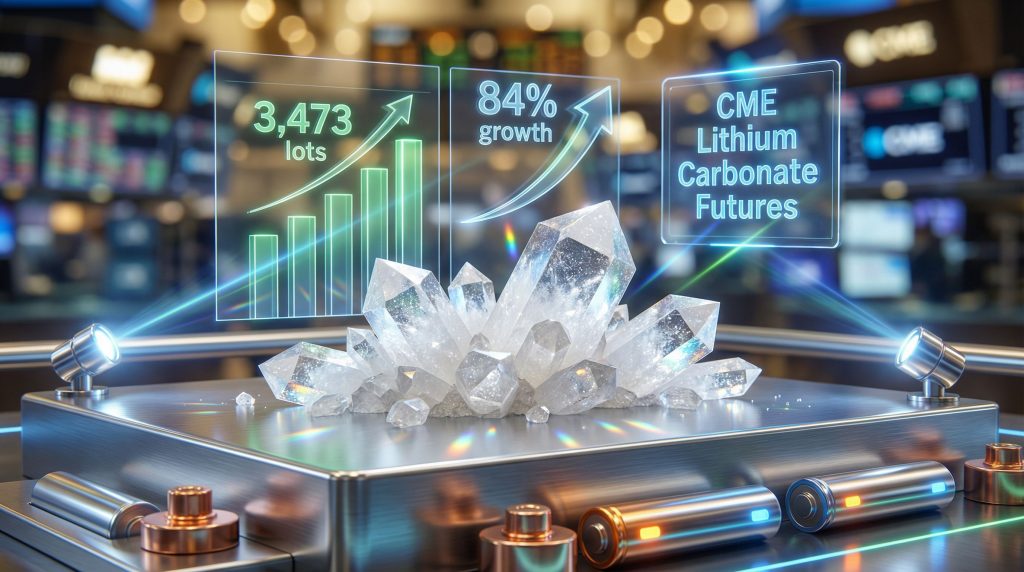
- April 2026 (through April 10): 3,473 lots (+84.0% vs. May 2025)
April 2026 trading reached 3,473 lots by mid-month, surpassing March's record 2,373 lots and representing 84% growth over May 2025's previous high of 1,886 lots, highlighting the accelerating adoption of lithium carbonate futures as essential risk management tools.
Energy Storage System Demand Correlation
Battery Energy Storage System project development has created substantial hedging requirements across the lithium supply chain. ESS deployment provides grid-scale energy storage solutions that require predictable lithium carbonate input costs for project financing and operational planning.
Lithium iron phosphate (LFP) battery adoption in electric vehicles has simultaneously increased demand volatility, as automotive manufacturers seek cost-effective energy storage solutions. This technology shift has amplified the importance of forward pricing mechanisms for supply chain participants managing inventory and procurement strategies.
Daily Trading Pattern Analysis
Record Daily Volume Performance
| Date | Volume (Lots) | Status |
|---|---|---|
| April 2, 2026 | 1,600 lots | Record daily trading volume |
| April 10, 2026 | 1,404 lots | Second-highest daily volume |
| March 25, 2026 | 1,353 lots | Previous daily record |
These volume spikes correlate with specific market events including spot price movements, supply disruption concerns, and broader base metals sentiment shifts. The concentration of high-volume trading days in Q1 2026 indicates heightened market participation during periods of price uncertainty.
How Do Battery Manufacturers Use Lithium Carbonate Futures for Hedging?
Industrial participants employ sophisticated hedging strategies that address multiple dimensions of lithium carbonate price risk. Manufacturing operations require stable input costs to maintain competitive pricing structures whilst managing inventory exposure across production cycles.
However, manufacturers must also navigate ongoing lithium market challenges that create additional complexity in hedging strategy development. These market dynamics require flexible approaches to risk management that can adapt to changing supply-demand conditions.
Supply Chain Risk Mitigation Strategies
Primary Hedging Applications:
- Raw material cost stabilisation for battery producers managing quarterly production quotas
- Inventory value protection during extended price volatility periods
- Forward procurement planning for automotive OEMs securing multi-year supply agreements
- Financial hedging for mining operations balancing revenue exposure
Battery manufacturers typically implement rolling hedge programmes that cover 6-18 months of anticipated lithium carbonate consumption. These strategies provide operational flexibility whilst maintaining cost predictability for financial planning and customer pricing commitments.
Cross-Exchange Arbitrage Opportunities
CME lithium carbonate futures trade alongside similar contracts on Singapore Exchange (SGX), Intercontinental Exchange (ICE), and London Metal Exchange (LME). Price differentials between these venues create arbitrage opportunities for sophisticated participants with multi-market access capabilities.
CIF CJK pricing advantages benefit Asian manufacturers seeking exposure to regional physical market conditions. Currency hedging considerations become critical for international participants managing USD-denominated futures positions against local currency operational costs.
What Market Factors Influence Lithium Carbonate Forward Pricing?
Forward curve dynamics reflect complex interactions between supply-side constraints, demand growth projections, and macroeconomic factors affecting battery materials markets. Understanding these drivers enables more effective hedging strategy development and market timing decisions.
Supply-Side Fundamentals Impact
Mining production capacity utilisation rates significantly influence spot pricing and forward curve structure. Geopolitical risks in major producing regions including Chile, Australia, and Argentina create supply disruption premiums that affect longer-dated contract pricing.
Processing capacity bottlenecks in battery-grade refinement operations limit available supply even when raw lithium materials remain accessible. Technical conversion yields and quality specifications create additional supply constraints that impact forward pricing relationships.
Demand-Side Growth Drivers
Sectoral Demand Distribution Estimates
| Sector | Market Share |
|---|---|
| Electric vehicle batteries | ~65% |
| Energy storage systems | ~20% |
| Consumer electronics | ~10% |
| Industrial applications | ~5% |
Disclaimer: Demand allocation percentages represent industry estimates and may vary based on regional markets and specific time periods.
Electric vehicle production scaling continues driving primary demand growth, with automotive manufacturers securing forward supply commitments that influence longer-dated futures pricing. ESS sector expansion provides additional demand support, particularly for utility-scale installations requiring substantial lithium carbonate quantities.
Seasonal Trading Patterns and Volatility
Q1 2026 demonstrated characteristic seasonal strength with spot assessments rising from $20.00-22.00 per kg to $20.50-22.50 per kg during active trading periods. These movements reflect typical year-end inventory building and Q1 production ramp-up patterns across battery manufacturing operations.
Base metals correlation effects increasingly influence lithium pricing as battery materials become more integrated with traditional commodity markets. Copper, nickel, and aluminium price movements create portfolio effects for participants with diversified metals exposure.
How Does the CME Contract Compare to Other Lithium Derivatives?
Multiple exchanges now offer lithium-related derivatives products, creating a competitive landscape for price discovery and liquidity provision. Understanding contract differences enables optimal venue selection for specific hedging requirements and trading strategies.
Global Exchange Landscape Analysis
Exchange Comparison Framework:
• CME Group: Carbonate and hydroxide contracts with global accessibility
• Singapore Exchange (SGX): Regional Asian focus serving local market participants
• Intercontinental Exchange (ICE): European market access with cross-commodity integration
• London Metal Exchange (LME): Traditional metals platform expanding into battery materials
All major exchanges utilise Fastmarkets assessments for settlement, ensuring methodological consistency across venues. This standardisation reduces basis risk for participants hedging physical positions through multiple contract specifications.
Contract Design Differences and Settlement Methods
Settlement mechanisms vary between cash-settled and physical delivery options, with most lithium futures employing cash settlement due to logistics complexity and quality standardisation challenges. Regional pricing bases reflect local market conditions and transportation cost differentials.
Liquidity concentration patterns favour CME contracts for international participants, whilst regional exchanges serve local market participants with specific geographic exposure requirements. Contract month availability and trading hours accommodate different participant preferences and operational schedules.
What Role Do Financial Participants Play in Lithium Futures Markets?
Financial market participants provide essential liquidity and price discovery functions that enable efficient hedging for industrial participants. Understanding these roles clarifies market dynamics and helps identify optimal execution strategies for commercial hedgers.
Institutional Investment Flow Patterns
Commodity trading advisors (CTAs) increasingly allocate capital to battery metals strategies as these markets demonstrate institutional-quality liquidity and volatility characteristics. Pension funds and endowments seek exposure to energy transition commodities through diversified commodity portfolios.
Hedge funds employ various strategies including trend following, mean reversion, and relative value trading across lithium futures and related battery materials. These activities enhance market efficiency whilst providing counterparty liquidity for commercial participants.
Market Making and Liquidity Provision
Electronic market makers utilise algorithms to provide continuous bid-offer quotes across multiple contract months, reducing transaction costs for all participants. Freight Investor Services and similar specialised brokers offer institutional-quality execution services for battery metals derivatives.
Cross-commodity portfolio hedging strategies enable financial participants to manage risk across related materials including nickel, copper, and cobalt. These relationships create natural hedging opportunities whilst improving overall market liquidity.
The next major ASX story will hit our subscribers first
How Do Geopolitical Factors Affect CME Lithium Carbonate Trading?
International trade policies and critical minerals security initiatives significantly influence lithium futures market dynamics. Participants must consider regulatory developments across major producing and consuming regions when developing hedging strategies.
For instance, the development of lithium brine market insights from South American operations demonstrates how regional political stability affects global supply chains. These geopolitical considerations become increasingly important as markets mature.
Trade Policy Impact Assessment
China's lithium export policies and potential quota systems affect global supply availability and pricing relationships between regional markets. US critical minerals security initiatives under the current administration focus on domestic supply chain development and strategic stockpiling programmes.
European battery supply chain regulations emphasise sustainable sourcing and processing capabilities, creating quality premiums and certification requirements that influence forward pricing relationships.
Regional Supply Chain Resilience Planning
North American lithium development projects aim to reduce import dependency whilst serving domestic battery manufacturing capacity expansion. Australian mining operations continue scaling production to serve Asian markets and emerging regional demand centres.
South American brine operations face infrastructure development challenges whilst maintaining cost advantages through natural resource quality and extraction efficiency improvements.
What Technical Analysis Patterns Emerge in Lithium Futures?
Forward curve analysis provides insights into market expectations and supply-demand balance projections across different delivery periods. Understanding these patterns enables more sophisticated hedging strategy development and market timing decisions.
Forward Curve Structure Interpretation
Backwardation patterns signal near-term supply tightness or strong immediate demand, as demonstrated in April-May 2026 contract relationships. This structure rewards holding physical inventory whilst penalising deferred consumption strategies.
Contango development beyond August 2026 suggests market expectations of improved supply availability or demand moderation. Long-term participants can utilise these patterns for strategic inventory planning and procurement timing optimisation.
Volume-Price Relationship Analysis
Open interest growth typically correlates with spot price volatility as market participants increase hedging activity during uncertain periods. Trading volume spikes during market stress periods indicate heightened risk management requirements across supply chain participants.
Basis convergence patterns at contract expiry provide insights into physical market tightness and delivery logistics efficiency. These relationships help participants optimise rolling strategies and physical settlement decisions.
How Will Energy Storage Growth Impact Future Trading Volumes?
Grid-scale battery storage deployment rates continue accelerating as renewable energy integration requirements expand globally. Utility procurement strategies increasingly rely on forward contracting mechanisms that utilise futures markets for price discovery and risk management.
ESS Market Expansion Projections
Energy storage installations require substantial lithium carbonate quantities with predictable pricing for project financing and operational planning. Utility-scale projects typically involve multi-year development timelines that benefit from forward price visibility through futures markets.
Renewable energy mandates and grid modernisation initiatives drive consistent ESS demand growth that provides stable underlying support for lithium futures market development. This demand stability contrasts with more volatile automotive sector requirements.
Electric Vehicle Production Scaling Effects
Automaker forward contracting strategies increasingly incorporate futures-based pricing mechanisms for supply agreement negotiations. Battery gigafactory capacity expansion timelines require long-term lithium carbonate cost projections that utilise forward curve information.
Supply chain localisation trends affect futures demand as regional production capabilities develop. Domestic content requirements in various jurisdictions create specific hedging needs for locally-sourced materials versus imported alternatives.
What Risk Management Tools Complement CME Lithium Carbonate Futures?
Comprehensive risk management strategies often combine futures contracts with additional derivatives instruments that address specific exposure profiles and operational requirements. Understanding these complementary tools enables more sophisticated hedging programme development.
Moreover, innovations such as battery recycling breakthrough technologies create new supply sources that may affect traditional hedging strategies. Market participants must adapt their risk management approaches to account for evolving supply dynamics.
Options and Structured Products Development
Volatility trading strategies utilise options on lithium futures to manage price uncertainty whilst maintaining operational flexibility. Collar structures enable mining companies to establish price floors whilst participating in upside potential during favourable market conditions.
Asian-style options provide continuous hedging capabilities for participants with ongoing exposure rather than discrete delivery dates. These instruments accommodate operational flexibility requirements whilst maintaining cost predictability.
Cross-Commodity Hedging Strategies
Nickel-lithium spread trading opportunities arise from battery chemistry relationships and substitution effects across different energy storage technologies. Portfolio approaches recognise correlations between battery materials whilst managing individual commodity exposures.
Copper correlation hedging addresses shared demand drivers from electric vehicle production and renewable energy infrastructure development. Currency hedging remains essential for international operations managing USD-denominated futures positions.
Strategic Implications for Battery Supply Chain Participants
Market development trajectories suggest continued growth in CME lithium carbonate futures utilisation as supply chain complexity and price volatility require sophisticated risk management approaches. New participant categories including energy storage developers and recycling operations are entering derivative markets.
Market Development Outlook
Expected volume growth through 2027 reflects expanding industrial participation and increasing financial market interest in battery materials exposure. Technology infrastructure improvements support enhanced trading capabilities and market access for diverse participant categories.
Regulatory framework development across major jurisdictions will influence market structure evolution and participant requirements. Standard-setting organisations continue refining contract specifications and settlement methodologies based on market feedback and operational experience.
Risk Management Best Practices
Portfolio approaches to battery metals hedging recognise correlations between lithium, nickel, cobalt, and other critical materials whilst managing individual commodity exposures. Basis risk considerations require careful evaluation of physical market exposure versus futures contract settlement terms.
Regulatory compliance requirements vary across jurisdictions and participant types, necessitating specialised expertise for derivatives usage in battery supply chains. Documentation standards and counterparty risk management protocols continue evolving with market development.
The CME Group's lithium carbonate futures platform represents a significant advancement in battery materials risk management infrastructure, providing essential tools for industry participants navigating volatile market conditions whilst planning long-term operational strategies.
Disclaimer: This analysis is for informational purposes only and does not constitute investment advice. Commodity futures trading involves substantial risk of loss. Past performance does not guarantee future results. Consult qualified financial professionals before implementing any hedging strategies.
Ready to Identify the Next Lithium Discovery Before Markets React?
Discovery Alert instantly alerts investors to significant ASX mineral discoveries using its proprietary Discovery IQ model, turning complex mineral data into actionable insights for battery metals opportunities. Begin your 14-day free trial today to position yourself ahead of the market as energy storage demand drives unprecedented growth in lithium and battery materials exploration across Australia's ASX-listed companies.