
June 8, 2026
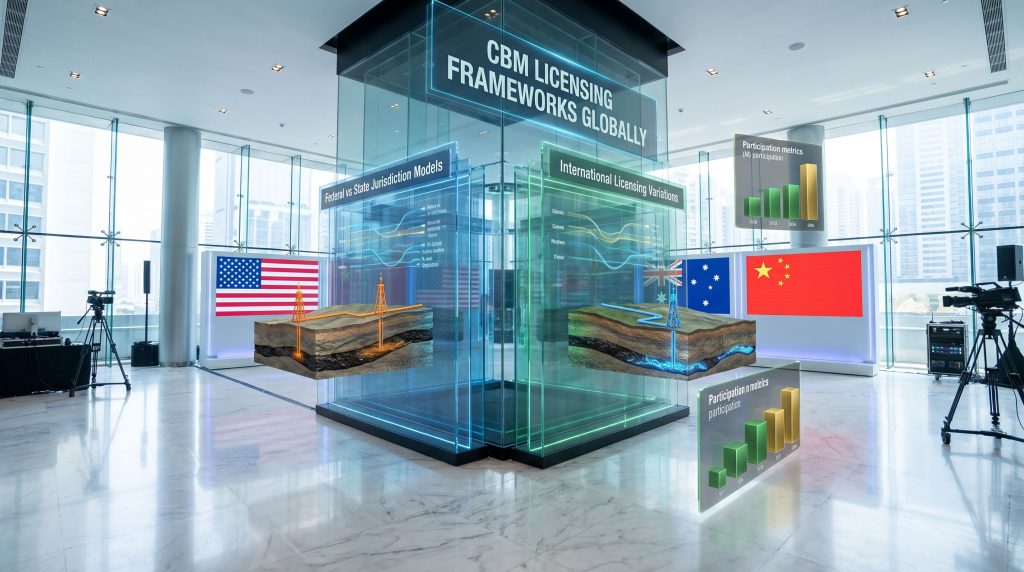
Coal bed methane licensing has emerged as a critical challenge for energy regulators worldwide, with recent licensing rounds revealing significant participation gaps that highlight fundamental misalignments between regulatory frameworks and industry priorities. Furthermore, the complex intersection of environmental regulations, technical requirements, and economic viability continues to create barriers that even liberalized licensing terms struggle to overcome.
Understanding Coal Bed Methane Licensing Frameworks Globally
Coal bed methane licensing represents a specialized segment within unconventional gas development, requiring distinct regulatory approaches that differ significantly from conventional oil and gas frameworks. Unlike traditional hydrocarbon licensing, coal bed methane licensing must address the unique geological characteristics of methane trapped within coal seams, creating regulatory complexity that spans multiple jurisdictional boundaries.
Defining CBM Rights and Regulatory Scope
The fundamental challenge in coal bed methane licensing lies in the intersection of coal mining rights and gas extraction rights. In many jurisdictions, these mineral rights operate under separate legal frameworks, creating potential conflicts between coal operators and methane developers. The regulatory scope must address not only exploration and production rights but also the coordination mechanisms necessary when multiple operators seek to develop the same geological formation for different purposes.
Water management represents another critical regulatory dimension, as coal bed methane extraction typically requires significant water removal to reduce reservoir pressure and enable gas flow. This process demands specialized environmental permitting that addresses both groundwater protection and surface water discharge requirements.
Federal vs State Jurisdiction Models
Different countries have adopted varying approaches to jurisdictional authority over coal bed methane licensing. Federal systems often struggle with overlapping authorities, where national energy policies intersect with state or provincial environmental regulations. This jurisdictional complexity can create regulatory uncertainty that affects investment decisions and project development timelines.
Some jurisdictions have attempted to streamline authority by designating a single regulatory body for all aspects of coal bed methane development. Conversely, others maintain distributed responsibility across multiple agencies. The effectiveness of these different models varies significantly based on the coordination mechanisms established between regulatory authorities.
International Licensing Variations
Global variations in coal bed methane licensing reflect different geological conditions, energy policy priorities, and regulatory traditions. These differences create challenges for international energy companies seeking to develop consistent global strategies for unconventional gas development. Understanding these variations becomes essential for companies evaluating portfolio opportunities across multiple jurisdictions, particularly as industry evolution trends continue to reshape energy sector priorities.
When big ASX news breaks, our subscribers know first
What Makes CBM Licensing Rounds Successful or Unsuccessful?
The effectiveness of coal bed methane licensing rounds depends on multiple factors that extend beyond simple regulatory design. Recent data from India's Special CBM Bid Round 2026 provides concrete evidence of participation challenges, with only three companies submitting bids across thirteen available blocks. This represents a participation failure rate of 53.8% for blocks that received no bids, indicating systematic barriers to industry engagement.
Bidder Participation Metrics and Industry Benchmarks
Measuring licensing round success requires examining both quantitative participation metrics and qualitative factors affecting bidder interest. The India 2026 round demonstrated several concerning trends:
- Total participating companies: 3 (representing approximately 5-10% of major Indian energy operators)
- Blocks with zero bids: 7 out of 13 (53.8%)
- Blocks with single bids: 4 out of 13 (30.8%)
- Blocks with competitive bidding: 2 out of 13 (15.4%)
- Total bids submitted: 8 bids across all blocks
This data reveals that 84.6% of offered blocks failed to attract competitive bidding, suggesting fundamental misalignment between regulatory offerings and market conditions. The limited participation from Reliance Industries (3 bids), Essar Oil and Gas Exploration and Production (3 bids), and Oil India (2 bids) indicates that even major domestic operators view coal bed methane opportunities with significant caution.
Block Allocation Strategies That Drive Competition
Effective block allocation requires careful consideration of geological prospectivity, infrastructure access, and operational synergies. However, the specific characteristics that drove bidding decisions in the India 2026 round remain unclear, as regulatory authorities have not disclosed the geological or geographic factors that influenced the two blocks that achieved competitive bidding.
The fact that only 15.4% of blocks attracted multiple bidders suggests that block delineation, size, or location may not align with industry preferences for economically viable development units. This low competition rate indicates potential issues with how blocks are defined, sized, or positioned within the overall energy development framework.
Liberal Terms vs Market Response Analysis
Despite regulatory authorities offering more liberal terms aimed at attracting explorers, the 2026 round produced disappointing results. This outcome suggests that regulatory incentive mechanisms may be misaligned with actual market barriers preventing coal bed methane investment. When comparing the 2026 round to the 2025 round, participation actually deteriorated, with non-participation increasing from 33.3% to 53.8%.
This trend indicates that simply modifying licensing terms may not address underlying economic, technical, or portfolio risk factors that deter major energy companies from pursuing coal bed methane opportunities. The persistence of low participation despite regulatory concessions points to deeper structural challenges within the coal bed methane sector.
Regulatory Barriers Affecting CBM Investment Decisions
While the India 2026 coal bed methane licensing round demonstrates clear evidence of regulatory barriers through low participation rates, the specific nature of these barriers requires careful analysis. The fact that 53.8% of offered blocks received no bids indicates systematic obstacles that extend beyond simple economic considerations.
Environmental Compliance Requirements
Coal bed methane development faces unique environmental challenges that distinguish it from conventional gas extraction. Water management represents the most significant environmental compliance burden, as methane production requires dewatering coal seams to reduce reservoir pressure. This process can produce substantial volumes of water that require treatment and disposal under strict environmental standards.
The intersection of coal mining and methane extraction creates additional environmental complexity, particularly in regions where active coal operations exist. Regulatory frameworks must address potential impacts on existing mining operations, groundwater systems, and surface water quality. Consequently, this creates multi-layered approval processes that can extend project development timelines significantly.
Ownership Conflict Resolution Mechanisms
One of the most complex regulatory challenges in coal bed methane development involves resolving conflicts between coal ownership rights and gas extraction rights. In many jurisdictions, these rights may be held by different parties, creating potential legal and operational conflicts that regulatory frameworks must address.
The absence of clear conflict resolution mechanisms can create significant uncertainty for potential investors. As a result, the legal framework for coordinating operations between coal miners and methane producers may be underdeveloped or untested. This uncertainty can deter investment even when geological and economic conditions appear favourable.
Permitting Timeline Challenges
Extended permitting timelines represent another significant barrier to coal bed methane investment. The multi-agency approval processes often required for coal bed methane projects can create uncertainty about project development schedules, affecting financial returns and investment decision-making.
The complexity of coordinating approvals across different regulatory authorities, particularly when environmental, mining, and energy agencies all have jurisdiction over different aspects of coal bed methane development, can create bottlenecks that discourage industry participation in licensing rounds.
How Do Leading CBM Markets Structure Their Licensing Systems?
Understanding how established coal bed methane markets structure their licensing systems provides valuable insights into regulatory best practices and potential improvement opportunities. Different jurisdictions have developed varying approaches to address the unique challenges of coal bed methane development.
United States Federal Land Management Approach
The United States operates under a complex federal and state jurisdiction model for coal bed methane licensing. On federal lands, the Bureau of Land Management (BLM) administers coal bed methane leasing through competitive bid processes. Meanwhile, state agencies maintain authority over development on private and state lands.
Federal vs State Jurisdiction Comparison:
| Jurisdiction | Authority | Lease Terms | Royalty Rates | Environmental Oversight |
|---|---|---|---|---|
| Federal Lands | Bureau of Land Management | 10-year primary term | 12.5% minimum | Federal environmental review |
| State Lands | State oil/gas commissions | Varies by state | State-determined | State environmental agencies |
| Private Lands | State regulation | Negotiated | Negotiated | State and federal coordination |
The federal framework requires compliance with the National Environmental Policy Act (NEPA), creating comprehensive environmental review processes that can extend development timelines. However, this approach provides regulatory certainty once approvals are obtained. This approach emphasizes thorough upfront analysis rather than streamlined approval processes.
Australia's Coal vs CBM Rights Framework
Australia has developed sophisticated frameworks for managing the intersection between coal mining rights and coal seam gas (equivalent to coal bed methane) development. The Australian model emphasizes coordination between coal and gas operators through mandatory consultation processes and shared infrastructure requirements.
Key Features of Australian CBM Rights:
- Onsite usage rights: Gas extracted for use in coal mining operations
- Offsite usage rights: Gas extracted for commercial sale or export
- First rights allocation: Coal operators receive preference for methane extraction within mining leases
- Coordination agreements: Required agreements between coal miners and gas developers
- Infrastructure sharing: Mandated sharing of access roads and utility corridors
The Australian approach recognises that effective coal bed methane development often requires coordination with existing coal operations. Therefore, it creates regulatory frameworks that facilitate rather than hinder such coordination. This model has enabled significant coal seam gas development while maintaining active coal mining operations.
China's Pre-Drainage Licensing Model
China has implemented unique coal bed methane licensing requirements that emphasise methane drainage prior to coal mining operations. This approach treats coal bed methane development as an integral component of safe coal mining rather than as a separate energy resource.
Mandatory CBM License Scenarios in China:
- Coal mining operations in gassy areas must obtain methane drainage permits
- Large-scale coal mines must develop methane utilisation plans
- Regional development projects require integrated coal and methane planning
- Export-oriented operations must demonstrate methane capture and utilisation
China's model integrates coal bed methane development with mining safety requirements, creating regulatory drivers for methane extraction that exist independently of energy market conditions. This approach has resulted in substantial methane utilisation rates in Chinese coal mining regions.
Why Are Major Energy Companies Avoiding CBM Opportunities?
The limited participation in coal bed methane licensing rounds reflects broader industry trends that extend beyond regulatory design issues. The India 2026 round, with only three participating companies, provides concrete evidence of systematic factors deterring major energy operators from coal bed methane investments.
Economic Viability Thresholds
Coal bed methane development faces unique economic challenges that distinguish it from conventional gas projects. The requirement for extensive dewatering operations creates ongoing operational costs that continue throughout the production life of the project. These water management costs can represent 15-25% of total project operating expenses, significantly affecting project economics compared to conventional gas development.
Additionally, coal bed methane production profiles typically require longer development periods to reach peak production, affecting project net present values and internal rates of return. The combination of extended development timelines and ongoing water management costs creates economic hurdles that may not be addressed through regulatory concessions alone.
Technical Risk Assessment Factors
Technical risks in coal bed methane development include reservoir heterogeneity, water production variability, and potential interference with existing coal mining operations. These technical factors create uncertainty in production forecasting and project planning that can deter investment even when economic conditions appear favourable.
The geological complexity of coal seams, particularly regarding permeability and gas content variability, requires specialised expertise and technology that many conventional oil and gas operators may lack. This technical barrier can limit the pool of qualified bidders for coal bed methane licensing rounds.
Portfolio Prioritisation Trends
Major energy companies increasingly prioritise investments that align with global energy transition trends and environmental, social, and governance (ESG) criteria. Coal bed methane development, due to its association with coal resources, may face portfolio prioritisation challenges even when project economics are favourable.
The shift toward renewable energy investments and natural gas projects with lower carbon intensities may relegate coal bed methane opportunities to lower priority status within company portfolios. This portfolio prioritisation trend helps explain why even liberalised licensing terms fail to attract broad industry participation.
Environmental and Discharge Licensing Requirements
Environmental compliance represents one of the most complex aspects of coal bed methane development, requiring coordination across multiple regulatory frameworks and environmental protection standards. The unique environmental challenges of coal bed methane extraction create licensing requirements that extend far beyond conventional gas development.
Water Management and Discharge Standards
Coal bed methane production generates substantial volumes of produced water that require treatment and disposal under strict environmental standards. Water production rates can range from 10-100 barrels per thousand cubic feet of gas, creating significant waste management challenges that must be addressed through environmental licensing processes.
State-by-State Water Discharge Variations:
| Regulatory Approach | Discharge Standards | Treatment Requirements | Monitoring Frequency |
|---|---|---|---|
| Zero Discharge | No surface water release | Full treatment and reuse | Monthly reporting |
| Limited Discharge | Permit-based release | Secondary treatment minimum | Weekly monitoring |
| Conditional Discharge | Seasonal restrictions | Best available technology | Continuous monitoring |
These varying standards create regulatory complexity for companies operating across multiple jurisdictions. As a result, treatment systems and monitoring protocols must be adapted to different regulatory requirements.
Best Professional Judgement Standards
Environmental regulators often apply Best Professional Judgement (BPJ) standards when establishing discharge permits for coal bed methane operations. This approach requires case-by-case evaluation of environmental conditions and treatment requirements, creating uncertainty in permitting timelines and compliance costs.
BPJ standards require operators to demonstrate that water treatment and discharge plans represent the best available technology economically achievable for the specific site conditions and environmental sensitivities of each project location.
This individualised approach to environmental permitting can extend approval timelines and increase compliance costs. Consequently, it contributes to the regulatory barriers that deter industry participation in coal bed methane licensing rounds.
Federal Bonding and Reclamation Standards
Coal bed methane operations must provide financial assurance for environmental reclamation and site restoration. Bonding requirements vary significantly based on project size, environmental sensitivity, and regulatory jurisdiction. However, they typically range from $10,000-$50,000 per well plus additional coverage for water treatment facilities and access infrastructure.
These financial assurance requirements represent additional upfront costs that affect project economics and may deter smaller operators from participating in licensing rounds. The uncertainty regarding final reclamation costs can create challenges in determining appropriate bonding levels. Therefore, this leads to conservative estimates that increase project costs, particularly when considering mine reclamation innovation advances.
The next major ASX story will hit our subscribers first
What Can Regulators Learn from Low Participation Rates?
The dramatic participation shortfalls in recent coal bed methane licensing rounds provide valuable insights into regulatory effectiveness and market response mechanisms. The India 2026 round results offer concrete data points that regulators can analyse to improve future licensing design.
Participation Trend Analysis
Quantitative Evidence of Declining Interest:
- 2026 Round: 53.8% of blocks received no bids (7 of 13 blocks)
- 2025 Round: 33.3% of blocks received no bids (1 of 3 blocks)
- Participation Rate: Only 3 companies submitted bids in 2026
- Competitive Bidding: 15.4% of blocks attracted multiple bidders
This declining trend indicates that regulatory modifications implemented between rounds failed to address fundamental barriers preventing industry participation. The worsening participation rates suggest that regulatory adjustments may have been insufficient or misdirected relative to actual market concerns.
Incentive Structure Redesign Options
The persistence of low participation despite more liberal terms indicates that traditional incentive mechanisms may not address the primary barriers to coal bed methane investment. Regulators may need to consider fundamentally different approaches to incentive design, including:
Alternative Incentive Mechanisms:
- Risk-sharing arrangements between government and operators
- Infrastructure development support for access roads and utilities
- Streamlined environmental permitting with predetermined approval timelines
- Technical assistance programs for geological assessment and development planning
- Market development initiatives to establish gas purchase agreements
These alternative approaches recognise that regulatory concessions alone may not address the technical, economic, and market development challenges that deter coal bed methane investment.
Block Size and Geographic Optimisation
The low competitive bidding rate (15.4%) suggests potential issues with how blocks are defined, sized, or positioned. Effective block design requires consideration of geological continuity, infrastructure access, operational synergies, and economic development thresholds.
Regulators may need to conduct comprehensive analysis of geological data, infrastructure conditions, and industry feedback to optimise block configurations. This analysis should consider whether current block sizes provide sufficient scale for economic development while maintaining competitive bidding opportunities.
Conflict Resolution Improvements
The complexity of coal bed methane development, particularly regarding coordination with coal mining operations, requires robust conflict resolution mechanisms. Current regulatory frameworks may not provide sufficient clarity or enforcement mechanisms to address disputes between coal operators and methane developers.
Developing clear precedent-setting decisions and standardised coordination agreements could reduce regulatory uncertainty. Furthermore, these measures could encourage greater industry participation in future licensing rounds, especially when integrated with data-driven operations planning.
Future of CBM Licensing: Policy Recommendations
The evidence from recent coal bed methane licensing rounds indicates a need for comprehensive regulatory reform that addresses both immediate participation barriers and long-term sector development goals. Policy recommendations must consider the unique technical, economic, and environmental challenges of coal bed methane development.
Streamlined Approval Processes
Regulatory complexity represents a significant barrier to coal bed methane development, particularly when multiple agencies maintain overlapping jurisdiction over different aspects of project approval. Streamlining these processes could involve:
Process Optimisation Strategies:
- Single-window approval systems that coordinate multiple agency requirements
- Predetermined approval timelines with regulatory performance standards
- Parallel processing of environmental and technical approvals
- Standardised documentation requirements across agencies
- Digital submission platforms that reduce administrative burden
These improvements could reduce regulatory uncertainty and accelerate project development timelines. In addition, they could potentially improve the economic attractiveness of coal bed methane opportunities.
Technology Integration Opportunities
Advanced technologies for geological assessment, environmental monitoring, and production optimisation could address some of the technical risks that deter coal bed methane investment. Regulatory frameworks should consider how to encourage technology adoption through:
- Regulatory sandboxes for testing innovative development approaches
- Technology demonstration programs that share development costs
- Data sharing initiatives that improve geological understanding
- Monitoring technology standards that reduce compliance costs
- Remote sensing applications for environmental compliance verification
Technology integration could reduce both development risks and regulatory compliance costs. Moreover, it could potentially improve industry participation in future licensing rounds.
International Best Practice Adoption
Learning from successful coal bed methane regulatory frameworks in other jurisdictions could provide insights for improving licensing effectiveness. This analysis should consider how different regulatory approaches address technical, environmental, and economic challenges while maintaining industry engagement.
International coordination could also facilitate technology transfer, best practice sharing, and development of standardised approaches to coal bed methane regulation that reduce barriers for international energy companies considering multi-jurisdiction investments.
Investment Implications of CBM Licensing Trends
The low participation rates in recent coal bed methane licensing rounds have significant implications for energy investors, providing insights into both immediate investment risks and long-term sector development prospects.
Risk Assessment for Energy Investors
Investment Risk Indicators:
- Regulatory uncertainty: Changing licensing terms without improved participation
- Market development challenges: Limited competitive bidding indicating weak demand
- Technical complexity: Specialised requirements that limit operator participation
- Environmental compliance: Extensive permitting and monitoring requirements
- Economic viability: Unclear project economics despite regulatory concessions
The persistence of low participation despite more liberal terms suggests that fundamental sector challenges extend beyond regulatory design issues. Investors should consider these systemic factors when evaluating coal bed methane investment opportunities, particularly in relation to critical minerals strategy considerations.
Long-term Supply Security Considerations
The declining participation in coal bed methane licensing raises questions about long-term natural gas supply security, particularly in jurisdictions where coal bed methane represents a significant potential resource. The failure to develop these resources could create supply gaps that affect energy security and price stability.
However, the low industry interest also suggests that alternative energy resources may provide more attractive development opportunities. Consequently, this potentially reduces the strategic importance of coal bed methane resources in overall energy portfolio planning.
Regulatory Stability Indicators
The repeated modifications to licensing terms without corresponding improvements in participation rates indicate potential regulatory instability that could deter long-term investment planning. Regulatory stability requires consistent policy approaches that address genuine market barriers rather than repeated adjustments that fail to achieve participation objectives.
Investors should monitor regulatory trends for evidence of systematic policy learning and improvement. This is preferable to reactive adjustments that may not address fundamental sector challenges.
Key Investment Considerations:
- Policy consistency: Evidence of learning from previous licensing rounds
- Market development: Integration with broader energy sector planning
- Technology support: Regulatory encouragement of innovation and risk mitigation
- Environmental integration: Clear standards that provide compliance certainty
- Economic incentives: Alignment between regulatory terms and actual market conditions
Disclaimer: This analysis is based on publicly available information and should not be considered as investment advice. Energy sector investments involve significant risks, including regulatory changes, commodity price volatility, and technical uncertainties. Prospective investors should conduct thorough due diligence and consult with qualified financial advisors before making investment decisions related to coal bed methane or other energy sector opportunities.
Ready to Capitalise on Energy Sector Discoveries?
Discovery Alert's proprietary Discovery IQ model delivers real-time alerts on significant ASX mineral discoveries, including those in the evolving energy and critical minerals sectors. Stay ahead of complex regulatory developments and identify actionable opportunities before they reach mainstream attention by beginning your 14-day free trial today.