
June 15, 2026
What Makes Long-Term Coal Supply Agreements Critical for Energy Security?
The recent Exxaro and Eskom long-term coal supply agreement exemplifies how strategic partnerships between mining companies and utilities create foundation layers for national energy independence. In South Africa's evolving energy landscape, coal continues to serve as a cornerstone for grid stability and economic security. Unlike spot market transactions that fluctuate with global commodity cycles, multi-decade supply contracts provide operational predictability that enables both infrastructure investment and energy transition planning.
The Strategic Foundation of Baseload Power Generation
Modern power grids require consistent baseload capacity to maintain frequency stability and manage demand variations. Coal-fired power stations deliver this reliability through continuous generation capabilities that complement intermittent renewable sources. Furthermore, long-term supply agreements ensure fuel consistency, allowing power plant operators to optimise combustion parameters and maintain thermal efficiency across extended operational periods.
The 17.7-year term of the Matla arrangement demonstrates how extended contracts support capital investment planning. When utilities secure coal supplies through 2043, they can justify infrastructure modernisation programs and emissions control upgrades with confidence in fuel availability. This predictability becomes essential during energy transition insights, where coal provides grid stabilisation while renewable capacity scales up progressively.
Risk Mitigation Through Multi-Decade Partnerships
Supply chain disruptions can destabilise entire electrical grids, making fuel security a national priority. Long-term agreements transfer price volatility risks from utilities to mining companies while providing revenue certainty that supports mine life extensions and community investment programs. The Cost Optimisation and Revenue Enhancement (CORE) programme framework shows how structured procurement delivers 15-20% savings versus spot market purchasing during volatile periods.
Operational continuity benefits extend beyond pricing mechanisms. However, the challenges associated with coal supply challenges require careful consideration in contract design. Multi-decade partnerships enable:
- Integrated logistics planning between mine and power station operations
- Quality specification consistency that optimises plant maintenance schedules
- Coordinated capital investment in transportation and handling infrastructure
- Regulatory compliance coordination for emissions standards and environmental targets
When big ASX news breaks, our subscribers know first
How Do Coal Quality Specifications Drive Power Plant Efficiency?
Power generation efficiency depends fundamentally on fuel quality consistency. The Matla partnership incorporates stringent coal quality specifications that directly impact combustion performance, maintenance requirements, and environmental compliance. These technical standards represent contractual mechanisms for optimising thermal efficiency while reducing operational costs.
Technical Requirements for Optimal Combustion Performance
Coal quality parameters determine power plant thermal efficiency through multiple pathways. Calorific value standards typically range from 19-26 MJ/kg for South African thermal coal, with higher values delivering greater energy output per ton of fuel consumed. In addition, consistent calorific content enables power plant operators to maintain stable steam generation rates and optimise turbine performance across varying load conditions.
Ash content limitations protect equipment from excessive wear and reduce maintenance downtime. Lower ash percentages minimise slag formation in boilers, extending equipment lifespan and reducing cleaning frequency. This quality control translates directly into improved capacity factors and reduced maintenance costs for utilities managing aging power station fleets.
Moisture content specifications affect both transportation costs and combustion efficiency. Excessive moisture reduces effective calorific value while increasing handling weights. Consequently, long-term agreements typically specify maximum moisture levels to ensure consistent energy density and transportation economics.
Environmental Performance Optimisation Through Contract Design
Modern coal supply agreements integrate environmental performance targets through quality specifications. Sulphur content regulations directly impact SO2 emissions, with lower sulphur coal reducing both environmental impact and compliance costs for utilities. For instance, the Matla agreement's emphasis on reducing the power station's overall carbon footprint demonstrates how quality specifications support broader emissions reduction strategies.
Progressive emissions standards drive technology integration requirements within supply contracts. These may include:
- Coal beneficiation technologies that improve quality before delivery
- Blending specifications that optimise combustion characteristics
- Ash composition standards that support beneficial reuse applications
- Trace element controls that minimise environmental releases
What Economic Impact Do Mining Partnerships Generate in Regional Communities?
Long-term coal supply agreements create economic multiplier effects that extend far beyond direct mining employment. The Matla partnership serves as a vital economic anchor in Mpumalanga, demonstrating how strategic resource development supports regional stability and community investment programs. Furthermore, these partnerships contribute significantly to the broader resources sector impact across mining regions.
Employment Stability and Skills Development Programs
Direct employment figures reveal the immediate economic impact of sustained mining operations. Large-scale coal mining typically generates:
| Impact Category | Direct Benefits | Indirect Benefits | Long-term Multipliers |
|---|---|---|---|
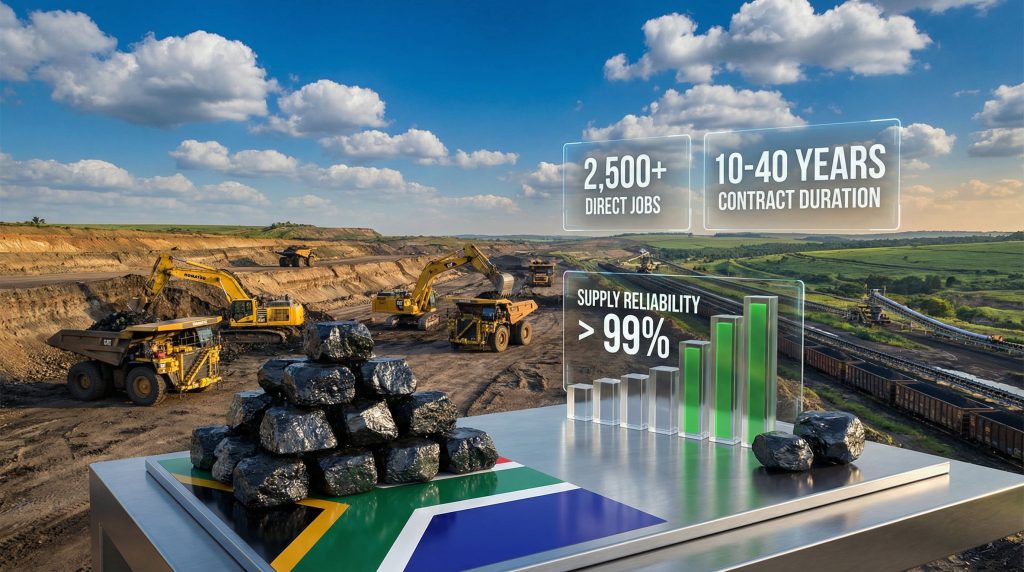
| Employment | 2,500+ direct jobs | 7,500+ indirect positions | Skills transfer programs |
| Infrastructure | Rail/road upgrades | Community facilities | Regional connectivity |
| Education | Training centres | Scholarship programs | Technical skill development |
The 40-year track record of the original Matla partnership illustrates employment continuity benefits. When mining operations secure multi-decade contracts, workers can develop specialised skills and advance through career progression programs. This stability enables families to invest in education and housing within host communities, creating permanent economic foundations.
Skills development extends beyond immediate mining operations. However, effective programs must address the challenges of energy exports challenges that affect the broader industry. Long-term partnerships support:
- Technical training programs for equipment maintenance and operation
- Safety certification courses that transfer to other industrial sectors
- Management development initiatives that build local leadership capacity
- Entrepreneurship programs that foster small business development
Infrastructure Development and Community Investment
Mining partnerships drive infrastructure investment that benefits entire regions. Transportation network improvements include rail upgrades, road maintenance programs, and logistics optimisation that supports broader economic development. These infrastructure investments create lasting value beyond mine life cycles.
Educational facility investments demonstrate long-term community commitment. Training centres established through mining partnerships often evolve into regional technical colleges that serve multiple industries. In addition, scholarship programs provide educational opportunities that enable community members to pursue careers across various sectors.
Land-use management programs integrate mining operations with broader community development goals. These initiatives include:
- Agricultural development projects on reclaimed mining land
- Water management systems that support community needs
- Environmental rehabilitation programs that create recreational areas
- Cultural heritage preservation initiatives that protect community identity
How Do Life-of-Mine Extensions Influence Investment Decisions?
Mine longevity directly impacts capital allocation decisions across the mining value chain. The Matla Life of Mine (MLoM) expansion project demonstrates how supply agreement extensions trigger substantial infrastructure investments that strengthen operational capabilities and extend economic benefits.
Capital Allocation Strategies for Mine Longevity
Life-of-mine extensions require coordinated investment strategies between mining companies and utility customers. The MLoM expansion project shows how Eskom's infrastructure investment supports mine capability enhancement while securing long-term fuel supplies. This collaborative approach distributes capital requirements while maximising operational benefits for both parties.
Infrastructure investment categories include:
- Mining equipment upgrades that improve extraction efficiency
- Processing plant modernisation that enhances coal quality consistency
- Transportation system expansion that increases handling capacity
- Environmental control systems that meet evolving regulatory standards
Technology modernisation programs become economically viable when supported by long-term supply contracts. Advanced mining technologies, including automated equipment and digital monitoring systems, require substantial capital investments that can only be justified through extended operational horizons.
Market Positioning Through Operational Certainty
Long-term supply agreements provide competitive advantages that extend beyond immediate operational benefits. Mining companies with secured offtake contracts can negotiate better financing terms for expansion projects and attract institutional investment capital. This financial stability enables strategic positioning during industry consolidation periods, particularly when implementing volatility hedging strategies.
Operational certainty supports strategic planning across multiple time horizons:
- Short-term optimisation of production schedules and quality control
- Medium-term capacity expansion planning and equipment procurement
- Long-term resource development and community investment strategies
- Transition planning for post-mining land use and economic development
What Role Do Cost Optimisation Programs Play in Utility Recovery?
State-owned utilities face complex financial recovery challenges that require comprehensive cost management strategies. The CORE programme framework demonstrates how structured supply agreements support broader organisational transformation while maintaining service reliability and community benefits.
Procurement Efficiency Through Structured Agreements
Long-term contracts eliminate recurring procurement cycles that consume administrative resources and create pricing uncertainty. Streamlined supply chain management enables utilities to focus operational attention on plant efficiency improvements and grid optimisation programs. These efficiency gains compound over extended contract periods, delivering substantial cost savings.
Bulk purchasing advantages through long-term agreements include:
- Volume pricing discounts that reflect supply certainty premiums
- Transportation optimisation through dedicated logistics arrangements
- Quality assurance programs that reduce fuel handling and processing costs
- Administrative cost reductions through simplified contract management
Financial Recovery Strategies for State-Owned Utilities
Predictable fuel costs enable improved financial planning and cash flow management. When utilities secure coal supplies at known pricing parameters, they can develop accurate revenue projections and debt service schedules. Furthermore, this financial predictability supports credit rating improvements that reduce borrowing costs for infrastructure investment programs.
Supply security provides operational benefits that translate into financial performance:
- Improved capacity factors through reliable fuel availability
- Reduced unplanned outages caused by fuel quality issues
- Lower maintenance costs through consistent combustion conditions
- Enhanced grid stability that supports industrial customer retention
"Strategic coal supply partnerships provide essential grid stability during energy transition periods, with proven track records delivering 15-20% cost savings versus spot market procurement while maintaining operational excellence and community development commitments."
How Do Energy Transition Strategies Incorporate Baseload Coal Generation?
Energy transition planning requires balanced approaches that maintain grid reliability while progressively increasing renewable capacity. Coal-fired generation provides essential grid services during transition periods, including frequency regulation, voltage support, and backup capacity for variable renewable sources.
Grid Stability Requirements During Renewable Integration
Electrical grids require continuous balance between generation and demand, with frequency deviations potentially causing widespread blackouts. Coal plants provide dispatchable capacity that can respond quickly to demand changes and renewable output variations. This operational flexibility becomes increasingly valuable as solar and wind penetration increases across power systems.
Intermittency management strategies utilise coal generation for:
- Load following to match generation with demand variations
- Spinning reserve to provide immediate response to supply disruptions
- Black start capability to restore grid operations after system failures
- Voltage support to maintain power quality across transmission networks
Phased Transition Planning and Coal's Interim Role
Responsible energy transition requires coordinated investment in renewable capacity, grid infrastructure, and energy storage systems. Coal generation provides operational continuity during these investment cycles, ensuring energy security while new technologies achieve commercial scale and grid integration. However, the Exxaro and Eskom coal supply agreement demonstrates how traditional partnerships adapt to evolving energy landscapes.
Timeline considerations include:
- Renewable capacity scaling that matches retiring coal plant capacity
- Grid infrastructure investment to accommodate distributed generation
- Energy storage deployment to provide grid services currently supplied by coal
- Workforce transition programs that support employment continuity
The next major ASX story will hit our subscribers first
What Contractual Innovations Support Sustainable Mining Practices?
Modern mining agreements integrate environmental stewardship requirements and community engagement protocols that extend beyond traditional commercial terms. The Matla partnership demonstrates how contractual frameworks can support responsible resource development while maintaining operational efficiency.
Environmental Stewardship Clauses in Modern Agreements
Progressive rehabilitation requirements ensure ongoing restoration of mined land throughout operational periods rather than deferred closure activities. Funding mechanisms for environmental programs provide financial assurance for restoration work while distributing costs across contract terms. These approaches reduce long-term liability exposure for both mining companies and surrounding communities.
Water management standards reflect growing awareness of hydrological impacts from mining operations. Contractual provisions may specify:
- Water quality monitoring protocols and reporting requirements
- Groundwater protection measures and impact mitigation strategies
- Surface water management systems and flood protection infrastructure
- Water recycling targets that reduce overall consumption demands
Biodiversity protection measures integrate conservation requirements with operational planning. Consequently, these may include habitat restoration programs, species protection protocols, and ecological offset arrangements that provide net positive environmental outcomes.
Social Licence Maintenance Through Community Engagement
Stakeholder consultation requirements ensure ongoing dialogue between mining operations and host communities. These processes provide forums for addressing concerns, sharing benefits, and adapting operational practices based on community feedback. Transparent communication supports long-term social acceptance of mining activities.
Cultural heritage protection protocols recognise the historical significance of mining areas and integrate traditional knowledge into operational planning. These approaches support indigenous rights while preserving cultural resources for future generations.
How Do Geopolitical Factors Influence Domestic Energy Supply Strategies?
National energy security considerations drive preference for domestic resource development over import dependence. The Matla partnership reflects strategic autonomy benefits that reduce exposure to international supply disruptions and currency fluctuations while supporting local economic development.
Energy Independence Through Local Resource Utilisation
Domestic coal resources provide supply chain resilience against geopolitical disruptions that can affect international energy markets. Local fuel sources eliminate shipping risks, currency exposure, and trade relationship dependencies that create vulnerabilities for import-dependent power systems.
Strategic autonomy benefits include:
- Supply security independent of international market conditions
- Price stability through domestic cost structures and currency alignment
- Logistics control over transportation and delivery schedules
- Quality assurance through direct operational oversight
Regional Economic Development Through Resource Partnerships
Cross-border collaboration opportunities within Southern Africa demonstrate how domestic resource development can support broader regional integration goals. Technology transfer initiatives and skills development programs create capabilities that benefit multiple countries while strengthening economic ties.
Regional energy security frameworks may include:
- Coordinated infrastructure investment that supports cross-border trade
- Technical standards harmonisation that facilitates equipment and expertise sharing
- Joint training programs that develop regional technical capabilities
- Environmental cooperation that addresses shared water and air quality concerns
How long do typical coal supply agreements last in the mining industry?
Long-term coal supply agreements typically range from 10-40 years, with many extending beyond 20 years to justify infrastructure investments and provide operational certainty for both parties.
What factors determine coal pricing in long-term supply contracts?
Pricing mechanisms often include base rates adjusted for inflation, quality premiums/discounts, transportation costs, and market escalation clauses tied to energy indices or commodity benchmarks.
How do environmental regulations affect coal supply agreement terms?
Modern agreements increasingly include environmental performance standards, emissions reduction targets, rehabilitation requirements, and compliance monitoring provisions to meet evolving regulatory frameworks.
Investment Disclaimer: This analysis is for informational purposes only and does not constitute investment advice. Mining and energy sector investments involve substantial risks including commodity price volatility, regulatory changes, and operational uncertainties. Readers should conduct independent research and consult qualified financial advisors before making investment decisions.
Looking for Investment Opportunities in ASX Energy and Mining Stocks?
Discovery Alert's proprietary Discovery IQ model delivers instant notifications on significant ASX mineral discoveries, helping investors identify actionable opportunities across the energy and resources sectors before broader market awareness develops. Start your 14-day free trial with Discovery Alert today and gain the market edge needed to capitalise on major discoveries as they're announced.