June 4, 2026
When Governance Fails at Scale: The Forces Reshaping Codelco's Leadership
State-owned mining enterprises occupy a uniquely precarious position in the global economy. Unlike their private sector counterparts, they carry the dual burden of commercial performance and national identity, making any governance failure a matter of both financial consequence and political symbolism. When production data integrity breaks down at a company that supplies roughly a quarter of the world's copper, the ripple effects extend far beyond a single balance sheet.
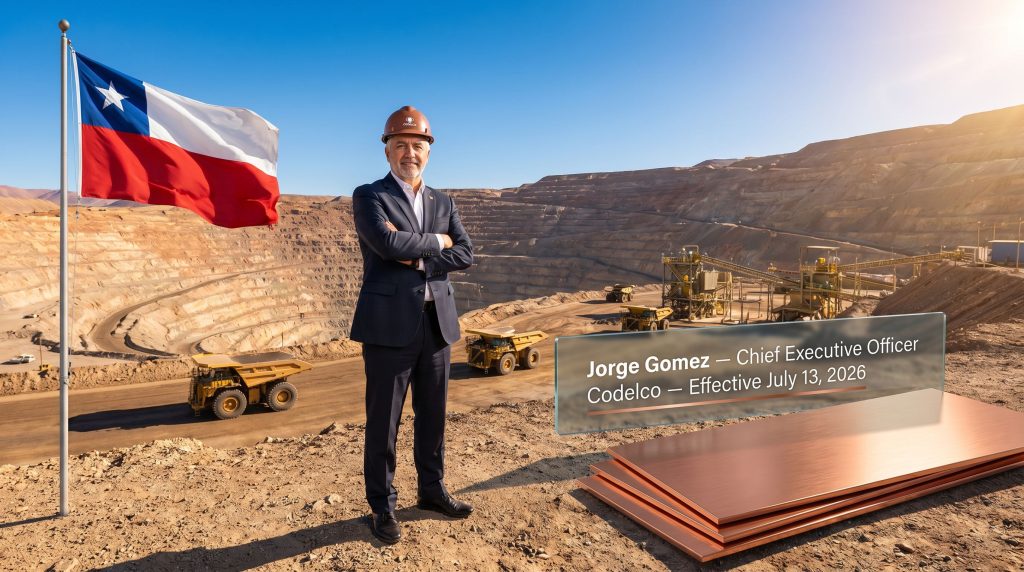
That is precisely the backdrop against which Codelco names Jorge Gomez as new CEO, with the announcement made on 4 June 2026 confirming that Gomez would assume the chief executive role on 13 July 2026. The appointment follows a cascading series of governance events that began with suspicious production anomalies in late 2025 and escalated into one of the most significant institutional crises in the company's modern history.
When big ASX news breaks, our subscribers know first
Why Codelco's Leadership Was Under Pressure Long Before the Scandal
Chile's copper sector has faced a structural productivity challenge for well over a decade. Ore grades at ageing porphyry copper deposits across the Atacama and central Andean regions have been declining gradually, a geological reality that increases the volume of rock that must be processed to yield the same tonnage of refined metal. This phenomenon, known within the industry as grade dilution, places upward pressure on energy consumption, water usage, and unit production costs simultaneously.
Codelco has been particularly exposed to this dynamic because its asset portfolio, while vast, skews heavily toward mature operations rather than greenfield developments. Mines such as El Teniente, the world's largest underground copper mine, and Chuquicamata, one of the deepest open-pit operations on the planet, have been producing copper for over a century. Sustaining output from such assets requires increasingly sophisticated and capital-intensive engineering solutions, including block caving expansions and underground conversion projects that demand both technical precision and consistent operational execution.
Furthermore, against this structural backdrop, any distortion of production reporting does not merely misrepresent a quarterly figure. It fundamentally undermines the financial models that justify billions of dollars in sustaining copper capital allocation, making accurate data not just a compliance matter but an existential operational requirement.
The Production Reporting Scandal: A Timeline of Accountability
The sequence of events that triggered Codelco's leadership overhaul began with anomalies identified in December 2025 production data, figures that raised sufficient internal concern to prompt a formal investigation. By March 2026, Reuters had reported publicly on suspicious production spikes surrounding that December period, transforming an internal governance matter into an international news event scrutinised by copper traders, bondholders, and sovereign credit analysts worldwide.
The internal audit that followed confirmed what the data anomalies had suggested: production figures for 2025 had been improperly reported. In late May 2026, Codelco confirmed it had dismissed one executive and implemented disciplinary measures against additional employees found responsible for the irregularities. The specific quantum of the discrepancy has not been fully disclosed, however the market implications of inflated production figures at a producer of Codelco's scale are significant, given that its reported output feeds directly into global copper supply forecasts used by commodity traders and industrial buyers.
The significance of this scandal extends beyond internal management. Codelco's production data informs Chile's national GDP calculations, trade balance statistics, and the sovereign credit metrics assessed by international rating agencies. A state enterprise found to be reporting inaccurate output figures creates uncertainty that touches the entire Chilean economic framework.
President Kast's Governance Restructuring Agenda
The political response to Codelco's operational difficulties predates the production scandal itself. President José Antonio Kast, whose far-right administration took office with a mandate to improve efficiency across Chile's state enterprise sector, had publicly criticised Codelco's production performance and workplace safety record before the reporting irregularities became public knowledge. The governance changes announced throughout the first half of 2026 therefore represent both a reaction to the specific crisis and the continuation of a pre-existing restructuring philosophy.
The first major governance move came in May 2026, when Kast appointed economist Bernardo Fontaine as board chairperson, replacing Máximo Pacheco. Two additional board members were replaced simultaneously, creating a new majority on the board with a clear mandate from the outset. Mining Minister Daniel Mas, himself a Kast appointee, publicly described this new board configuration as carrying a special mandate to oversee an independent investigation and commission an external audit of the production reporting failures.
This deliberate sequencing — board restructuring first, CEO appointment second — reflects an understanding within the administration that lasting governance reform requires alignment between supervisory and executive leadership. Installing a new CEO into a board structure carrying institutional legacy from the previous era would risk precisely the kind of cultural continuity that had allowed reporting irregularities to persist undetected.
Who Is Jorge Gomez? Building a Profile From Career Evidence
The credibility of any leadership appointment ultimately rests on the specificity of the incoming executive's relevant experience. In Gomez's case, that experience is unusually well-matched to Codelco's particular combination of operational scale, institutional complexity, and political sensitivity.
A Career Built Across Chile's Copper Landscape
| Period | Role | Organisation |
|---|---|---|
| 1997 to 2006 | General Manager | Minera Los Pelambres |
| 2006 to 2010 | Operations Vice President | Antofagasta Minerals |
| 2012 to 2026 | Chief Executive Officer | Collahuasi Copper Mine |
| From 13 July 2026 | Chief Executive Officer | Codelco |
Gomez's nearly decade-long tenure as General Manager of Minera Los Pelambres provided foundational experience managing a high-grade, large-scale open-pit porphyry copper-molybdenum operation in the Coquimbo Region of Chile. Los Pelambres is a flagship asset of Antofagasta Minerals and consistently operates at production levels exceeding 300,000 tonnes of copper per annum, making it one of the most significant single copper-producing mines in South America.
Managing this operation required not only technical expertise in large-scale flotation processing and tailings management but also sophisticated community relations capabilities, given the mine's location in a water-stressed region where indigenous and agricultural communities maintain historical water rights.
His subsequent move to Antofagasta Minerals in an operations vice president capacity broadened his exposure across multiple asset types within a diversified copper portfolio, giving him a systems-level perspective on multi-mine operational management that proves particularly relevant to Codelco's challenge of coordinating output across dozens of distinct operations.
The most instructive credential, however, is his 14-year leadership of Collahuasi, a high-altitude open-pit operation in the Tarapacá Region that consistently ranks among the world's two or three largest copper mines by annual output, typically producing in excess of 500,000 tonnes of copper in concentrate per year. Collahuasi operates at elevations exceeding 4,400 metres above sea level, introducing physiological and logistical challenges that demand exceptional operational discipline.
The Dual-Sector Profile: Why It Matters
One aspect of Gomez's background that receives insufficient attention is the fact that he previously served in a senior executive capacity within Codelco itself, overseeing mining operations in central Chile. This prior stint inside the organisation gives him a familiarity with Codelco's institutional culture, internal political dynamics, and bureaucratic architecture that an outsider executive would require years to develop.
His combined experience spanning both private sector copper companies and the state enterprise environment of Codelco represents a rare dual-sector profile. Consequently, this positions him uniquely to bridge the commercial performance expectations of private capital markets with the public accountability requirements of a nationally owned enterprise. This distinction matters because Codelco's challenges are fundamentally bifurcated: it must simultaneously satisfy the Chilean government's dividend requirements, restore credibility with international bondholders, and compete operationally against increasingly efficient private sector producers.
Chairperson Bernardo Fontaine described Gomez as "one of the most recognised and respected executives in Chilean mining," noting that his management and mining experience "will be critical to navigating the challenges of this new period for the company."
The Four-Pillar Mandate: Decoding Gomez's Strategic Priorities
The priorities articulated at the time of Gomez's appointment are not merely aspirational talking points. Each represents a measurable operational domain where Codelco's recent performance has been found wanting, and each carries specific financial and reputational implications that the new CEO must address within a compressed timeframe.
Safety: The Non-Negotiable Foundation
Safety occupies the first position in Gomez's stated mandate for reasons that extend beyond ethical obligation. Codelco's safety record had drawn specific public criticism from President Kast prior to the governance changes, reflecting a pattern of workplace fatalities and serious injuries that exceeded acceptable benchmarks for a world-class mining operation.
Poor safety performance creates a compounding set of problems for a major producer: it increases regulatory scrutiny, reduces operational continuity through incident-related stoppages, elevates insurance costs, and damages the social licence to operate that is increasingly monitored by institutional investors applying environmental, social, and governance (ESG) criteria to their investment decisions.
Profitability and State Contributions: The Financial Imperative
Codelco's financial performance has direct implications for Chile's national budget, with the company's dividend payments to the Chilean treasury representing a material portion of government revenue. Declining production efficiency, rising operational costs associated with lower ore grades, and capital expenditure overruns on major development projects have collectively compressed the company's margins in recent years.
Restoring profitability therefore requires simultaneously addressing operational efficiency, capital allocation discipline, and cost control across an enterprise operating dozens of mines, processing facilities, and infrastructure assets. The Chile copper price outlook will also play a significant role in determining the headroom available for Gomez to pursue these financial improvements.
Management Control and the Governance Restoration Challenge
The most immediate priority, and arguably the most consequential for market confidence, is the restoration of robust management control systems capable of preventing the kind of production reporting irregularities that triggered the current crisis. This challenge is fundamentally one of institutional redesign rather than simple personnel replacement.
Production reporting failures in large mining organisations typically reflect one of two systemic conditions: either the internal control environment is insufficiently robust to detect manipulation, or there exists a cultural pressure within the organisation that creates incentives for personnel to present performance in the most favourable possible light.
The external audit commissioned under the new board's special mandate will be critical in diagnosing the specific nature of the control failures, providing Gomez with an evidence base for the governance reforms he will need to implement in the early months of his tenure.
Operational, Environmental, and Social Sustainability
The fourth pillar of Gomez's mandate reflects the evolving expectations of global copper consumers and institutional investors who are applying increasingly stringent sustainability criteria to their supply chain and portfolio decisions. Major end-users of copper, particularly in the electric vehicle and renewable energy sectors, are implementing supply chain verification requirements that extend to water usage, carbon emissions, community impact, and biodiversity considerations at producing mines.
Codelco's operations span some of Chile's most ecologically sensitive and water-scarce environments, including the Atacama Desert, where competition for water resources between mining, agriculture, and indigenous communities creates persistent regulatory and reputational exposure. Positioning Codelco as a leading practitioner of sustainable copper production is therefore not merely an ethical exercise but a commercial strategy that protects market access and premium pricing.
How the Leadership Transition Affects Global Copper Supply Dynamics
Codelco's position in the global copper supply chain is without parallel among state-owned producers. The company accounts for approximately 10% of global mined copper output and operates as the world's largest single-country copper producing entity, giving its operational performance an outsized influence on global supply projections and pricing dynamics that cascades through multiple industrial sectors. In addition, the global copper supply crunch means that any disruption at Codelco carries amplified consequences for downstream industries worldwide.
Near-Term Production Scenarios Under New Leadership
| Scenario | Assessment | Production Implication |
|---|---|---|
| Rapid governance stabilisation | Moderate to high probability if audit findings are contained | Output targets restored within 12 to 18 months |
| Extended audit disruption | Lower probability but operationally plausible | Further production revisions and sustained investor uncertainty |
| Capital investment delays | Possible if financing costs rise on credibility concerns | Medium-term output growth constrained |
| Successful operational reset under Gomez | Contingent on board-CEO alignment | Potential for above-trend production recovery by 2028 |
The transition period between Ruben Alvarado's departure and Gomez's formal assumption of the CEO role on 13 July represents a window of particular operational sensitivity. Decisions made or deferred during handover periods can create momentum problems in large mining organisations, where operational continuity requires sustained decision-making authority at the executive level.
Institutional investors and copper traders will be watching closely for early signals from the new leadership, particularly around the external audit findings and any revisions to production guidance for the remainder of 2026. The market's interpretation of these signals will influence both Codelco's borrowing costs and the broader sentiment toward Chilean copper as a reliable supply source.
Downstream Industries Watching the Transition
The industries most directly exposed to Codelco's production trajectory include electric vehicle manufacturers, renewable energy infrastructure developers, and electronics producers, all of whom face structurally growing copper demand as the global energy transition accelerates. Copper's unique combination of electrical conductivity, thermal properties, and recyclability makes it irreplaceable in the applications driving the fastest demand growth.
The longer-term copper supply outlook for Chile depends significantly on Codelco's ability to successfully execute its portfolio of major development projects. Codelco's production recovery from prior operational setbacks offers some historical context for how the enterprise can stabilise output when the right leadership and governance conditions are in place.
Governance Lessons for State-Owned Mining Enterprises
The Codelco production scandal offers a case study in the systemic vulnerabilities inherent in state-owned enterprise governance models that rely too heavily on political alignment rather than technical oversight capacity. The lessons extend well beyond Chile.
Why Production Data Integrity Is a Structural Challenge
State-owned mining enterprises operate in environments where multiple competing pressures can compromise production data integrity. Political stakeholders often favour positive performance narratives, creating subtle but persistent pressure on operational managers to present results in the most favourable light.
The corrective mechanisms that best practice governance frameworks employ against this risk include:
- Independent internal audit functions with direct reporting lines to board audit committees
- External auditors with specific expertise in large-scale mining operations
- Whistleblower protection frameworks that create safe channels for employees to raise concerns without career consequences
The special mandate assigned to Codelco's new board members to commission an independent investigation and external audit represents precisely the kind of corrective mechanism that such frameworks prescribe.
The Technical Leadership Trend in Resource Sector Governance
Codelco's copper strategy under the new leadership reflects a broader trend across major resource-producing countries toward prioritising technical expertise over political loyalty in state enterprise executive selection. This shift is driven partly by the increasing technical complexity of modern large-scale mining operations, and partly by the growing influence of institutional investors who apply governance quality criteria to their assessment of sovereign-linked entities.
The precedent set by Codelco's leadership transition sends a signal to other state-owned mining enterprises in copper-producing nations, including those in the Democratic Republic of Congo, Zambia, and Peru, that governance credibility increasingly requires demonstrated technical leadership. Whether this signal proves durable will depend on whether Gomez's tenure delivers the operational and financial improvements that justified the argument for technical leadership in the first place.
Mining Minister Daniel Mas reinforced this perspective clearly, stating that "Codelco urgently requires technical leadership of this calibre to reclaim its position as a source of national pride for Chilean citizens."
The next major ASX story will hit our subscribers first
Frequently Asked Questions: Codelco's New CEO Jorge Gomez
Who is replacing Ruben Alvarado at Codelco?
Jorge Gomez has been confirmed as Codelco's incoming CEO, with his tenure officially beginning on 13 July 2026.
Why did Codelco change its CEO in 2026?
The change follows a governance crisis stemming from an internal audit that identified improper reporting of Codelco's 2025 production figures, combined with President José Antonio Kast's broader restructuring programme for the state copper enterprise.
What is Jorge Gomez's mining background?
Gomez brings close to three decades of senior experience in Chile's copper industry, spanning roles as General Manager of Minera Los Pelambres, Operations Vice President at Antofagasta Minerals, and most recently a 14-year tenure as CEO of Collahuasi, one of the world's largest copper operations.
What are Jorge Gomez's priorities as Codelco CEO?
His mandate encompasses four areas:
- Rebuilding operational safety culture
- Generating profitability and maximising financial contributions to the Chilean state
- Strengthening management control and reporting integrity
- Advancing operational, environmental, and social sustainability
What happened in the Codelco production reporting scandal?
An internal audit confirmed that 2025 production figures had been improperly reported, with anomalies first identified in December 2025 data. Following the audit's conclusions, one executive was dismissed and disciplinary action was taken against additional employees.
When does Jorge Gomez officially start as Codelco CEO?
Gomez assumes the CEO position on 13 July 2026, succeeding Ruben Alvarado.
Key Transition Facts at a Glance
| Factor | Detail |
|---|---|
| Incoming CEO | Jorge Gomez |
| Outgoing CEO | Ruben Alvarado |
| Effective Date | 13 July 2026 |
| Trigger for Change | 2025 production reporting scandal and government restructuring |
| Board Chairperson | Bernardo Fontaine (appointed May 2026) |
| Political Context | President José Antonio Kast's Codelco reform agenda |
| Gomez's Most Recent Role | CEO, Collahuasi Copper Mine (2012 to 2026) |
| Stated Priorities | Safety, profitability, governance control, sustainability |
This article is based on publicly available information and reported facts as of June 2026. Forward-looking assessments regarding production outcomes, governance trajectories, and market implications represent analytical perspectives only and should not be construed as investment advice. Investors and market participants should conduct independent due diligence before making decisions related to copper markets or entities discussed in this article.
Want to Capitalise on Major Copper Discoveries Before the Broader Market?
Discovery Alert's proprietary Discovery IQ model delivers real-time alerts on significant ASX mineral discoveries, instantly translating complex geological data into actionable investment insights for both short-term traders and long-term investors. Explore how historic copper discoveries have generated substantial returns on Discovery Alert's dedicated discoveries page, and begin your 14-day free trial today to position yourself ahead of the market.