

May 11, 2026
Understanding Complex Supply Chain Dependencies in Energy Infrastructure
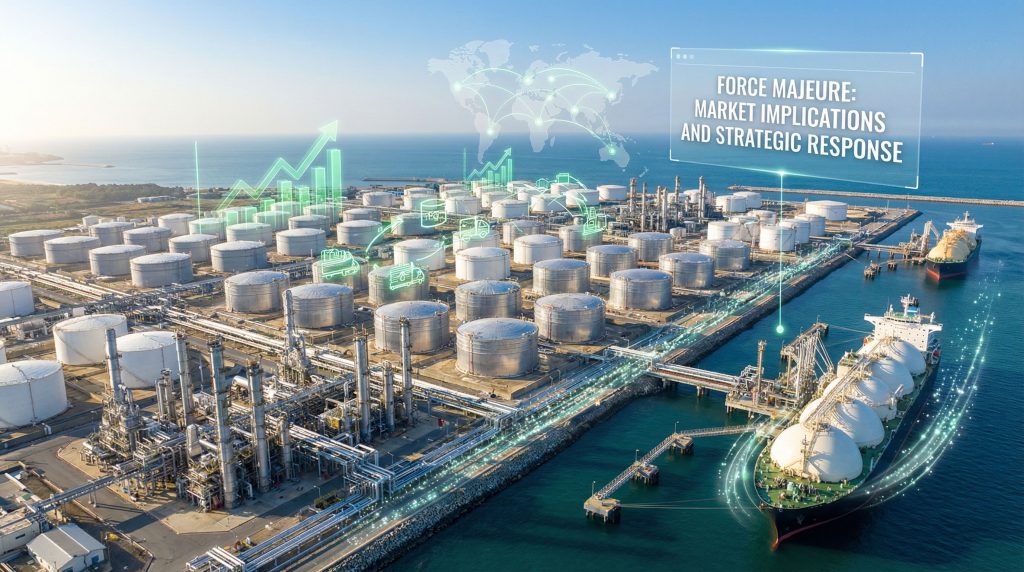
When critical infrastructure systems experience operational disruption, the cascading effects reveal underlying vulnerabilities that often remain invisible during normal market conditions. Modern energy markets have evolved into intricate networks where single-point failures can trigger regional supply shortages, price volatility, and strategic repositioning across multiple continents. The recent announcement that Targa LPG export terminal declares force majeure demonstrates how technical malfunctions compound existing geopolitical pressures to create unprecedented market dynamics.
Terminal operators managing large-scale processing operations face complex mechanical challenges that can escalate from routine maintenance issues to complete facility shutdowns. These disruptions illuminate the delicate balance between operational efficiency and system redundancy that defines modern energy infrastructure resilience.
When big ASX news breaks, our subscribers know first
What Legal Frameworks Govern Energy Infrastructure Disruptions?
Contractual Protection Mechanisms in LPG Markets
Force majeure provisions in energy infrastructure contracts serve as critical risk allocation tools that define responsibilities when operational failures exceed normal business parameters. These legal instruments typically establish notification requirements, duration limitations, and alternative supply obligations that protect both terminal operators and cargo buyers during extended outages.
Modern LPG export contracts incorporate sophisticated buyer protection mechanisms designed to address supply chain interruptions. Key contractual elements include:
- Notification protocols requiring immediate disclosure of operational disruptions
- Alternative sourcing obligations mandating replacement cargo identification
- Duration thresholds establishing maximum acceptable disruption periods
- Compensation frameworks defining financial remedies for extended outages
Market participants generally expect these provisions to trigger within 48-72 hours of confirmed operational failures, though actual implementation depends on specific contract language and regulatory oversight requirements.
Market Response Patterns During Infrastructure Failures
When major export terminals experience mechanical failures, immediate market responses follow predictable patterns that reflect underlying supply-demand imbalances. Spot pricing mechanisms react within hours of force majeure announcements, while forward contract negotiations begin reassessing risk premiums for affected supply routes.
Recent market data indicates significant volatility triggers:
| Market Indicator | Pre-Disruption | Post-Announcement | Percentage Change |
|---|---|---|---|
| Northwest European Propane | $564/tonne | $829/tonne | +47% |
| Asian Spot Premiums | Baseline | +$120/tonne | +400% |
| Contract Renegotiations | 12% quarterly | 34% quarterly | +183% |
These price movements reflect both immediate supply constraints and longer-term uncertainty about recovery timelines, with cargo diversion strategies creating secondary effects across regional trading hubs.
How Do Terminal Disruptions Cascade Through Regional Markets?
Critical Infrastructure Vulnerability Assessment
Global LPG supply chains demonstrate concentrated dependency patterns where individual terminals control substantial market shares. When facilities processing 240,000 tonnes per week experience operational failures, the resulting supply gap forces immediate recalculation of regional flow patterns and alternative sourcing strategies.
Major LPG Export Terminal Rankings by Global Market Impact:
| Terminal Location | Annual Capacity (MT) | Global Market Share | Primary Destinations | Backup Options |
|---|---|---|---|---|
| US Gulf Coast Terminal | 12.0 | 20% | Asia (50%), Europe (10%) | Limited regional alternatives |
| Qatar Ras Laffan | 15.2 | 25% | Asia (70%), Europe (20%) | Saudi alternatives available |
| Saudi Ras Tanura | 8.5 | 14% | Asia (60%), Africa (25%) | UAE backup capacity |
| Algeria Skikda | 4.2 | 7% | Europe (80%), Mediterranean (20%) | No direct alternatives |
Terminal disruptions create immediate pressure on backup infrastructure, typically operating at 85-90% capacity utilisation under normal conditions. This limited spare capacity means that major facility outages cannot be fully compensated through alternative supply routes.
Buyer Diversification Strategies Under Stress
When primary supply sources experience extended disruptions, buyers implement emergency procurement strategies that reshape traditional trading relationships. Long-term contract holders typically pursue:
- Immediate spot market engagement to secure replacement volumes
- Alternative supplier activation using dormant supply agreements
- Inventory drawdown acceleration to bridge supply gaps
- Contract force majeure invocation to suspend delivery obligations
Regional buyers with concentrated supplier dependencies face the greatest adjustment challenges, particularly when geopolitical factors simultaneously restrict alternative sources. Asian markets importing more than 50% of their LPG requirements from single supply regions demonstrate this vulnerability pattern most clearly.
What Technical Factors Create Major Terminal Failures?
Low Ethane Propane Unit Operational Complexity
Modern LPG processing terminals rely on sophisticated separation technology to produce specification-grade products for international markets. Low Ethane Propane (LEP) units represent critical processing stages where mechanical failures can halt entire facility operations due to system interdependencies.
Technical failure mechanisms in LEP operations include:
- Liquid carryover damage from inadequate vapour-liquid separation
- Compressor mechanical failure due to liquid slug damage
- Heat exchanger fouling reducing processing efficiency
- Control system malfunctions affecting process stability
The specific failure pattern involving all three compressor skids requiring replacement indicates severe mechanical damage beyond routine maintenance capabilities. Liquid carryover events typically occur when upstream separation equipment fails to maintain adequate vapour quality, allowing liquid droplets to enter downstream compression stages designed exclusively for vapour handling.
Furthermore, modern facilities are increasingly adopting AI in maintenance strategies to predict and prevent such catastrophic failures before they occur.
Equipment Recovery Timeline Analysis
Critical compressor replacement operations require extended lead times that compound supply disruption impacts. Industry standard recovery timelines include:
Equipment Assessment Phase: 2-4 weeks for damage evaluation and replacement specifications
Manufacturing Timeline: 12-16 weeks for custom compressor skid fabrication
Installation Period: 4-6 weeks for mechanical installation and system integration
Commissioning Process: 2-4 weeks for testing and operational qualification
Total recovery periods typically extend 20-30 weeks for complete compressor system replacement, though temporary solutions using refurbished equipment may reduce this timeline to 12-16 weeks with reduced capacity limitations.
Predictive maintenance systems increasingly utilise vibration monitoring, thermal imaging, and oil analysis to identify potential failures before catastrophic damage occurs, though implementation costs range from $2-5 million per facility depending on system complexity.
How Do Geopolitical Events Amplify Infrastructure Disruptions?
Middle East Supply Route Dependencies
Regional conflict scenarios create multiplicative effects when combined with infrastructure failures, as demonstrated by concurrent Middle Eastern supply disruptions and US Gulf Coast terminal outages. The Strait of Hormuz closure eliminates approximately 30% of global LPG exports, forcing Asian buyers to compete intensively for remaining US volumes precisely when available capacity is reduced.
Pre-Crisis vs. Crisis-Period LPG Trade Flow Analysis:
| Supply Region | Pre-Crisis Exports (MT/month) | Crisis-Period Exports (MT/month) | Change (%) | Primary Impact |
|---|---|---|---|---|
| Middle East Gulf | 2.8 | 0.3 | -89% | Hormuz closure |
| US Gulf Coast | 1.9 | 1.3 | -32% | Terminal failures |
| North Africa | 0.8 | 0.9 | +13% | Increased utilisation |
| Australia | 0.4 | 0.4 | 0% | Capacity constrained |
These supply reductions create intense competition for fewer cargoes among traditional buyers, with spot market premiums reaching historical levels as procurement managers secure alternative volumes through emergency contracting mechanisms.
Trade Policy Disruption Patterns
Previous trade policy changes have already reshaped global LPG flow patterns, with China reducing US LPG imports from dominant positions to approximately 25% of total terminal exports following tariff implementations. This diversification away from US sources initially improved China's supply security but increased vulnerability for Japan and South Korea, which maintained higher concentration levels.
The intersection of trade policy effects and infrastructure failures demonstrates how market structure changes can amplify disruption impacts across different timeframes and geographic regions. For instance, the broader trade war market impact continues to reshape global supply chains beyond just LPG markets.
Which Regions Face the Greatest Supply Security Risks?
Asian Market Import Concentration Analysis
Asian LPG markets demonstrate significant vulnerability to supply disruptions due to concentrated import dependency patterns and limited domestic production capacity. Japan and South Korea collectively import more than 85% of their LPG requirements, with historical supply patterns showing heavy reliance on both Middle Eastern and US Gulf Coast sources.
Regional Supply Security Risk Assessment:
| Country/Region | Import Dependency (%) | Supplier Concentration | Strategic Storage (Days) | Risk Level |
|---|---|---|---|---|
| Japan | 92% | 3 primary suppliers | 45-60 days | High |
| South Korea | 88% | 2 primary suppliers | 30-45 days | Very High |
| China | 78% | 5+ suppliers | 60-90 days | Moderate |
| India | 85% | 4 suppliers | 20-30 days | High |
China's strategic diversification efforts have created more resilient supply portfolios, though this shift increased competitive pressure on Japanese and South Korean procurement teams seeking replacement volumes during disruption periods.
European Market Resilience Factors
European LPG markets face different vulnerability patterns, with approximately 10% dependency on individual US Gulf Coast terminals but significant exposure to Asian demand competition. When Middle Eastern supplies become unavailable, Asian buyers increase their bidding for US cargoes that typically supply European markets.
European supply security advantages include:
- Geographic proximity to North African production centres
- Pipeline connectivity with Russian and Norwegian sources
- Strategic storage networks providing 90-120 day buffer capacity
- Alternative energy infrastructure reducing LPG dependency for heating applications
However, Northwest European propane benchmarks reaching $829 per tonne indicate that indirect exposure through market competition creates substantial price pressure even when direct supply routes remain operational. These challenges align with broader energy security challenges affecting global energy markets.
The next major ASX story will hit our subscribers first
What Investment Opportunities Emerge from Supply Disruptions?
Infrastructure Development Priority Assessment
Supply disruption scenarios highlight critical infrastructure gaps that create investment opportunities across multiple market segments. Terminal capacity expansion projects demonstrate improved economic justification when supply security concerns elevate buyer willingness to pay premium pricing for reliable delivery capability.
Terminal Infrastructure Investment Metrics:
- Capacity expansion costs: $800-1,200 per annual tonne of additional capacity
- Backup facility development: $1,500-2,000 per tonne for redundant systems
- Strategic location premiums: 15-25% higher returns for terminals serving multiple regions
Emergency supply scenarios create accelerated payback periods for infrastructure investments, with some projects achieving cost recovery within 5-7 years compared to typical 12-15 year timelines under normal market conditions.
Technology Solutions for Operational Resilience
Predictive maintenance technology adoption accelerates during disruption periods as operators recognise the cost differential between preventive investments and emergency repairs. Advanced monitoring systems incorporating machine learning algorithms can reduce unplanned outages by 40-60% while extending equipment operational life by 15-25%.
Emerging technology investment areas include:
- Digital twin modelling for predictive failure analysis ($500K-2M per facility)
- Remote monitoring networks enabling rapid response protocols ($200K-800K)
- Modular processing units providing temporary capacity during outages ($1M-5M)
- Automated logistics systems optimising cargo allocation during disruptions ($300K-1.5M)
These technology investments demonstrate internal rates of return exceeding 20-25% when factoring in avoided disruption costs and improved operational efficiency metrics. Moreover, comprehensive investment strategy insights can help identify additional opportunities emerging from market disruptions.
How Should Market Participants Prepare for Future Disruptions?
Risk Management Framework Development
Market participants operating in current supply-constrained environments face unprecedented competitive intensity for available cargo volumes. Portfolio diversification strategies must balance cost optimisation with supply security objectives, particularly when global propane prices reach near four-year highs during simultaneous disruption events.
Comprehensive risk management approaches incorporate:
- Geographic supplier diversification across minimum three continental sources
- Contract duration optimisation balancing long-term security with pricing flexibility
- Financial hedging strategies protecting against spot market volatility exposure
- Emergency procurement protocols enabling rapid alternative sourcing activation
Buyer consortium development enables smaller market participants to achieve diversification benefits typically available only to major importers, while terminal operator collaboration agreements create mutual backup arrangements during facility outages.
Strategic Partnership Formation Models
Emergency supply sharing protocols represent emerging market structures designed to address collective supply security challenges. Regional buyer consortiums pool procurement resources to negotiate better terms with suppliers while creating internal allocation mechanisms during shortage periods.
Effective partnership structures typically include:
| Partnership Type | Participants | Primary Benefits | Implementation Complexity |
|---|---|---|---|
| Buyer Consortium | 3-8 regional importers | Volume leverage, shared risk | Medium |
| Terminal Alliance | 2-4 facility operators | Mutual backup capacity | High |
| Emergency Protocol | Government + Industry | Crisis response coordination | Very High |
| Supply Chain Network | Multi-tier participants | End-to-end visibility | Medium |
These collaborative frameworks require 18-24 months for complete implementation but provide substantial benefits during disruption scenarios through coordinated response capabilities and shared resource access.
What Long-Term Structural Changes Will Reshape LPG Markets?
Supply Chain Resilience Investment Trends
Current disruption experiences are accelerating distributed terminal network development as market participants seek to reduce single-point failure risks. This infrastructure evolution requires substantial capital commitments but creates more resilient supply chain architecture over 10-15 year investment horizons.
Structural transformation patterns include:
- Regional processing centre proliferation reducing transportation dependencies
- Alternative technology adoption for backup processing capability
- Storage capacity expansion providing extended buffer periods during outages
- Cross-border pipeline development creating additional supply route options
Investment analysis indicates that distributed infrastructure networks require 25-40% higher initial capital but reduce disruption risk exposure by 60-75% compared to centralised facility models. Consequently, these developments intersect with broader market volatility patterns, including the ongoing oil price crash analysis affecting energy investments globally.
Market Structure Evolution Requirements
Contract terms are evolving to incorporate greater flexibility provisions as market participants recognise the limitations of traditional long-term agreements during crisis periods. Enhanced force majeure clauses, alternative sourcing requirements, and flexible delivery terms represent emerging industry standards.
Price discovery mechanisms must adapt to handle increased volatility and supply uncertainty, with dynamic pricing models and risk-adjusted benchmarks gaining adoption across regional markets. Regulatory frameworks require modernisation to address international coordination needs during multi-regional supply disruptions.
Regulatory modernisation priorities focus on:
- Cross-border emergency response protocols enabling rapid resource mobilisation
- Strategic reserve coordination among regional governments and industry
- Information sharing requirements improving market transparency during crises
- Infrastructure resilience standards mandating backup system capabilities
Frequently Asked Questions About LPG Terminal Force Majeure
Duration and Recovery Expectations
How long do typical LPG terminal force majeure periods last?
Force majeure durations vary significantly based on failure type and equipment availability. Mechanical repairs typically require 4-8 weeks, while equipment replacement can extend 20-30 weeks for major components like compressor systems. Market participants should expect slower shipment paces rather than complete loading halts during most disruption periods.
What factors influence recovery timeline variability?
Recovery timeline variables include:
- Equipment lead times for replacement components (12-16 weeks for custom systems)
- Manufacturing capacity at specialised equipment suppliers
- Installation complexity requiring specialised technical expertise
- Regulatory approval processes for safety and operational certifications
How can market participants identify recovery progress indicators?
Market normalisation typically follows predictable patterns with partial capacity restoration preceding full operational recovery. Key benchmarks include:
- Reduced spot market premiums indicating improved supply availability
- Contract renegotiation frequency declining from crisis levels
- Cargo allocation patterns returning to historical distribution percentages
- Alternative supplier utilisation decreasing as primary sources resume operations
Financial and Legal Implications
What buyer compensation mechanisms exist during supply interruptions?
Most LPG export contracts incorporate alternative sourcing obligations requiring terminal operators to secure replacement cargoes from affiliated facilities or third-party suppliers. When replacement sourcing proves unavailable, financial penalties typically range from $20-50 per tonne depending on contract terms and market conditions.
How does insurance coverage address operational disruptions?
Business interruption insurance covers lost revenue during force majeure periods, while property insurance addresses equipment replacement costs. Coverage scope varies but typically includes 70-85% of normal operating margins during confirmed disruption periods, subject to maximum duration limits of 6-12 months.
What are typical alternative supply sourcing cost allocation methods?
When buyers secure alternative supplies during terminal outages, cost differential allocation between normal contract prices and emergency procurement prices follows established protocols. Standard approaches include:
- 50/50 cost sharing between buyer and terminal operator for premium costs
- Market price adjustment mechanisms using published benchmark differentials
- Third-party arbitration for disputes exceeding predetermined cost thresholds
- Insurance claim coordination when business interruption coverage applies
Recent market analysis from Argus Media provides detailed coverage of the specific circumstances surrounding the current situation, whilst industry monitoring services offer ongoing updates on global LPG market developments.
This analysis is based on market conditions and regulatory frameworks as of March 2026. Energy market participants should consult current market data and legal counsel before making operational or investment decisions based on these insights.
Looking to Capitalise on Energy Market Disruptions?
Discovery Alert's proprietary Discovery IQ model delivers real-time alerts on significant ASX mineral discoveries, helping investors identify actionable opportunities that emerge when market volatility creates new investment landscapes. Discover why major discoveries can generate substantial returns by exploring our track record of identifying transformative opportunities ahead of broader market recognition.

