
August 22, 2026
Understanding the Scale of Global Copper Development Challenges
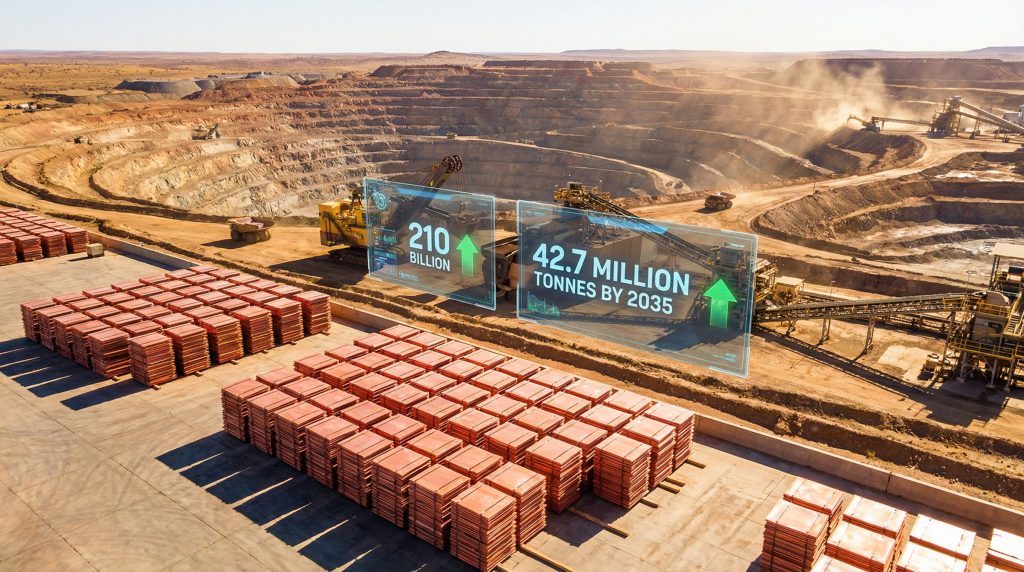
The fundamental mathematics of copper supply present an unprecedented challenge for global mining companies. Industry analysts project that $210 billion in new investment will be required over the next decade to bridge the growing gap between consumption and production capacity. This massive capital requirement reflects not just the scale of demand growth, but the increasingly complex technical and regulatory environment that defines modern copper mine development challenges.
The $210 Billion Investment Gap Reality
Wood Mackenzie's October 2025 analysis reveals the magnitude of investment needed to address copper market fundamentals. The consultancy projects that global copper demand will surge 24% to 42.7 million tonnes per annum by 2035, driven primarily by electrification initiatives and continued economic development in emerging markets. Meeting this demand requires developing 8 million tonnes per annum of new capacity from greenfield and brownfield mining projects, supplemented by an additional 3.5 million tonnes from enhanced scrap copper utilisation.
Furthermore, this investment requirement becomes more significant when viewed against recent market conditions. As Máximo Pacheco, President of Codelco, noted at LME Week in October 2025, industry predictions from the previous year anticipated a copper surplus in 2025. Instead, the market faces shortage conditions, highlighting the persistent gap between projected supply additions and actual production increases.
Demand Surge Fundamentals Driving Pressure
The projected demand increase to 42.7 million tonnes represents a fundamental shift in copper consumption patterns. Electrification projects, including electric vehicle manufacturing and renewable energy infrastructure, create sustained demand growth beyond traditional construction and industrial applications. This demand profile differs significantly from historical copper cycles, where economic downturns typically provided relief for supply development.
The absence of cyclical demand destruction means copper mining companies cannot rely on temporary demand reductions to provide development breathing room. Instead, the industry faces a supply crisis with continuous pressure to accelerate project timelines while managing increasingly complex operational challenges.
When big ASX news breaks, our subscribers know first
What Technical Barriers Slow Copper Mine Development?
Technical complexity represents the primary constraint limiting copper mine development speed, according to Ernst & Young's 2026 mining risk survey. Operational complexity ranks as the number one risk factor identified by mining companies, reflecting fundamental changes in ore body characteristics and extraction requirements that have evolved significantly over the past three decades.
Declining Ore Grade Economics
The average grade of copper ore extracted worldwide has declined approximately 40% since 1991, according to Paul Mitchell, Global Mining & Metals Leader at EY. This degradation creates compounding economic pressures that extend far beyond simple processing volume increases. Lower-grade deposits require exponentially more energy per tonne of copper produced, as mining companies must process larger volumes of ore through grinding, flotation, and leaching operations.
The grade decline also multiplies waste management requirements, with proportionally larger tailings and waste rock generation relative to valuable copper output. These factors combine to increase both capital and operating costs per unit of production, making project economics more sensitive to copper price fluctuations and regulatory compliance costs.
Underground Mining Complexity Escalation
The transition from open-pit to underground extraction methods introduces specialised technical requirements that many mining companies lack. Deeper mines demand specialist knowledge in geotechnics, hydrology, and underground logistics that differs substantially from surface mining expertise. This capability gap creates both safety risks and operational delays as companies acquire necessary technical knowledge.
Codelco's Chuquicamata operation exemplifies these challenges, with underground extraction ramp-up delayed a full decade to 2040 due to engineering setbacks, geological complications, and pandemic-related maintenance disruptions. The project represents the world's largest open-pit copper mine transitioning to underground methods, requiring integration of new technologies while maintaining ongoing operations.
Recent safety incidents at major operations including Grasberg in Indonesia, Kamoa-Kakula in the Democratic Republic of Congo, and El Teniente in Chile demonstrate the systemic risks associated with deeper, more complex underground operations. These incidents highlight industry-wide knowledge gaps rather than operator-specific failures, suggesting that safety concerns will continue generating operational modifications and timeline extensions.
How Do Environmental Regulations Impact Development Timelines?
Environmental permitting represents one of three primary constraint categories that Wood Mackenzie identifies as putting copper projects on ice, alongside social opposition and technical hurdles. The regulatory approval process has become increasingly complex as governments implement more stringent environmental protection requirements and extend public consultation periods.
Permitting Process Bottlenecks
Environmental impact assessments typically require 2-4 years for completion, involving extensive baseline data collection and multi-stakeholder review processes. Water use permits add another 1-3 years to project timelines, requiring detailed aquifer impact studies and long-term monitoring commitments. Tailings storage facility approvals represent the most time-intensive component, often requiring 2-5 years for approval due to long-term stability modelling requirements and community safety concerns.
Air quality permits, while typically completed within 1-2 years, require ongoing monitoring infrastructure and compliance reporting that adds operational complexity throughout mine life. These sequential approval requirements create cumulative delays that can extend project development timelines by 5-10 years beyond technical construction schedules.
Biodiversity and Land Use Constraints
Protected area restrictions increasingly limit site access for new mining projects, particularly as governments expand conservation designations in response to climate change commitments. Habitat restoration bonding requirements create additional capital obligations that mining companies must secure before commencing operations, effectively increasing project financing requirements.
Carbon footprint reduction mandates introduce operational constraints that affect mine design and equipment selection. Companies must now incorporate emissions reduction technologies and renewable energy systems into project economics, adding complexity to already challenging feasibility calculations.
What Social and Community Factors Delay Copper Projects?
Social licence to operate has evolved from a secondary consideration to a primary development constraint for copper mining projects. Community consultation processes now require extensive engagement timelines and benefit-sharing negotiations that can add years to project development schedules.
Social Licence to Operate Challenges
Indigenous rights recognition and compensation negotiations represent particularly complex aspects of social licensing, often involving multiple community groups with different interests and legal frameworks. Local employment and training commitments require detailed workforce development plans that must be implemented before project construction begins.
Community agreement processes have become more sophisticated, with local groups increasingly demanding equity participation or revenue-sharing arrangements rather than simple compensation payments. These negotiations require legal and financial complexity that extends well beyond traditional mining company capabilities.
Opposition Movement Coordination
Environmental activist campaigns have become increasingly coordinated across multiple jurisdictions, utilising legal challenge mechanisms and media strategies to delay project approvals. These campaigns often target multiple approval stages simultaneously, creating parallel legal proceedings that compound timeline uncertainty.
Public opinion influence tactics have evolved to include social media campaigns and international pressure that can affect government policy decisions even after permits are granted. Mining companies must now manage reputation risks throughout project development rather than only during operational phases.
Which Financial Barriers Constrain New Mine Development?
Despite growing copper demand and acknowledged supply deficits, investor appetite for new mine development remains muted according to Wood Mackenzie analysis. The combination of capital intensity, extended development timelines, and regulatory uncertainty creates risk profiles that many institutional investors find unattractive compared to alternative investment opportunities.
Capital Intensity and Risk Assessment
New copper mine development requires average capital investments of $2-5 billion, with development timelines extending 10-20 years from discovery to production. These extended payback periods create significant exposure to commodity price volatility, regulatory changes, and technical complications that can substantially affect project returns.
Multi-billion dollar upfront investment requirements limit the pool of potential investors to large institutional funds and sovereign wealth entities. Even these investors increasingly prefer brownfield expansions over greenfield developments due to reduced technical and regulatory risks.
Investor Appetite Limitations
ESG compliance costs now represent substantial portions of project budgets, affecting return calculations and adding operational complexity that many investors struggle to evaluate. Environmental monitoring, community benefit programs, and carbon reduction initiatives create ongoing operational expenses that must be incorporated into long-term financial projections.
Competition from technology sector investments offering shorter payback periods and higher growth potential draws institutional capital away from mining projects. The technology sector's ability to scale without physical infrastructure requirements presents attractive alternatives for investors seeking growth without commodity price exposure.
How Do Operational Continuity Issues Affect Supply Chains?
Operational continuity has emerged as the primary concern for the copper industry in 2025, according to Codelco's Máximo Pacheco. This shift from previous years' focus on geopolitical risks reflects the industry's struggle to maintain consistent production levels amid aging infrastructure, skilled workforce shortages, and increasingly complex operational requirements.
Aging Asset Maintenance Challenges
Equipment lifecycle management in harsh mining environments requires specialised maintenance capabilities that become more expensive and complex as operations move underground. Skilled workforce retention has become critical as older, experienced workers retire while training requirements for underground operations extend significantly beyond surface mining preparation.
Infrastructure upgrades for deeper operations require substantial capital investments that must be made during ongoing production, creating operational disruptions and safety complications. These upgrades often reveal additional technical challenges that require design modifications and extended implementation timelines.
Supply Chain Disruption Vulnerabilities
Remote location logistics present increasing challenges as mining operations move to less accessible deposits. Energy supply reliability in developing regions creates operational risks that can shut down entire operations for extended periods, particularly as mines require more consistent power for underground ventilation and pumping systems.
Transportation bottleneck risks during extreme weather events have increased as climate change intensifies storm patterns and temperature extremes. These disruptions affect not only immediate production but also equipment delivery schedules for maintenance and expansion projects.
The next major ASX story will hit our subscribers first
What Innovation Solutions Address Development Obstacles?
Technology integration represents the primary pathway for addressing copper mine development challenges according to industry leaders. Codelco's $50 million investment in Robert Friedland's I-Pulse technology exemplifies the scale of innovation investment required to maintain competitiveness in increasingly difficult operating environments.
Technology Integration Opportunities
Automation systems reduce labour dependency while improving safety in underground operations. Advanced geological modelling capabilities enhance resource estimation accuracy, reducing technical risk in project development phases. Remote monitoring systems enable real-time operational adjustments that optimise efficiency and reduce equipment downtime.
These technologies require substantial upfront investment and specialised technical capabilities that many mining companies must acquire through partnerships or acquisitions. Implementation timelines often extend 2-3 years beyond equipment installation as operators develop proficiency with new systems.
Processing Efficiency Improvements
Heap leaching and solvent extraction-electrowinning (SX-EW) technologies enable economic extraction from lower-grade deposits that would be uneconomical using traditional processing methods. Concentrate grade optimisation techniques reduce transportation costs and smelting charges, improving project economics for remote operations.
Energy consumption reduction methodologies become increasingly important as underground operations require more power for ventilation, pumping, and materials handling. Integration of renewable energy systems can reduce operating costs while addressing carbon footprint concerns, though initial capital requirements are substantial.
Which Regions Face the Greatest Development Challenges?
Regional variations in regulatory frameworks, infrastructure availability, and political stability create different development challenge profiles across major copper-producing regions. Understanding these regional differences becomes critical for investors evaluating project development timelines and risk profiles.
South American Regulatory Landscapes
Chile maintains the world's largest copper reserves but faces increasing operational complexity as easily accessible deposits become depleted. The country's environmental assessment processes have become more stringent while community consultation requirements extend project timelines significantly.
For instance, the Argentina copper system presents unique opportunities that complement Chile's established mining sector. Peru's permitting procedures involve multiple government agencies with overlapping jurisdictions, creating coordination challenges that can delay approvals for years. Social acceptance hurdles have intensified as communities demand greater participation in project benefits and environmental protection.
African Development Constraints
The Democratic Republic of Congo presents operational security challenges that require substantial additional investment in safety and logistics infrastructure. Power supply limitations affect both existing operations and new project development, requiring investment in dedicated power generation facilities.
Zambia's transportation infrastructure limitations constrain both equipment delivery and copper concentrate shipment, affecting project economics for inland deposits. Labor relations complexity requires extensive workforce development programs and ongoing community engagement.
How Can the Industry Accelerate Project Development?
Industry collaboration and regulatory process optimisation represent the most promising pathways for accelerating copper project development. Streamlined permitting through digital submission systems and parallel review processes could reduce sequential approval delays that currently add years to development timelines.
Regulatory Process Optimisation
Pre-approved site designation programmes could eliminate repetitive environmental assessments for multiple projects in suitable areas. Digital submission systems enable more efficient review processes while creating permanent records that reduce bureaucratic delays.
Parallel review processes allow multiple approval stages to proceed simultaneously rather than sequentially, potentially reducing total approval timelines by 2-3 years. These reforms require coordination between multiple government agencies and may require legislative changes in some jurisdictions.
Public-Private Partnership Models
Government infrastructure investment sharing could reduce project capital requirements while improving access for multiple developments. Risk guarantee mechanisms for strategic projects could attract institutional investment by providing downside protection for development phases.
Tax incentive structures supporting development could improve project economics while generating long-term government revenue through production taxes and employment. These partnerships require careful structuring to balance public benefit with private investment returns.
What Does the Future Hold for Copper Mine Development?
The convergence of supply constraints, demand growth, and development challenges creates unprecedented conditions for copper markets. Supply gap implications extend beyond simple price pressure to include strategic metal stockpiling considerations and accelerated research into alternative materials.
Supply Gap Implications
Market price pressure from constrained supply could trigger substitution research that reduces long-term copper demand, though current substitutes remain limited for many electrical applications. Strategic metal stockpiling by governments may create additional demand spikes that further tighten already constrained supply conditions.
Alternative material development focuses on aluminium conductors and advanced composite materials, though performance limitations restrict applications in many high-current electrical systems. Research investment in copper recycling technologies offers near-term supply augmentation potential without requiring new mine development.
Investment Pattern Evolution
Institutional investor ESG integration requirements will continue constraining investment in projects that cannot demonstrate environmental and social compliance. Furthermore, mineral exploration in copper becomes increasingly important as traditional deposit types become scarce.
Sovereign wealth fund participation may increase as governments recognise copper's strategic importance for energy transition goals. Private equity involvement in development financing could accelerate project timelines by providing flexible capital structures, though higher return requirements may affect project economics. These investors often bring operational expertise that can address technical and regulatory challenges more efficiently than traditional mining finance.
Moreover, understanding the global copper supply forecast becomes essential for investors seeking to capitalise on market opportunities. In addition, developing effective copper investment strategies requires comprehensive analysis of both short-term market dynamics and long-term structural changes.
Consequently, successful copper investment insights demonstrate that addressing these copper mine development challenges will determine whether supply can meet the demands of global electrification and economic development goals. The copper industry faces a critical decade where development challenges must be resolved through coordinated effort across multiple stakeholders, including innovative financing models, regulatory reform, and technological advancement.
Want to Capitalise on Copper Development Opportunities?
Discovery Alert's proprietary Discovery IQ model delivers instant alerts on significant copper discoveries across the ASX, empowering investors to identify actionable opportunities before the broader market recognises their potential. With the copper industry facing unprecedented development challenges and supply constraints, positioning yourself ahead of major mineral discoveries becomes critical for both short-term trading gains and long-term investment success—begin your 30-day free trial today to secure your market-leading advantage.