July 20, 2026
Strategic Implications of Copper Mining Optimization in Global Markets
The evolution of copper mining efficiency represents a complex intersection of geological understanding, technological advancement, and operational excellence. As global copper production continues rising, driven by renewable energy infrastructure and electrification trends, mining operations face intensifying pressure to maximize production while maintaining cost competitiveness. Furthermore, southern peru cuajone copper mine optimization has transformed how large-scale copper producers approach asset optimization, moving beyond traditional expansion models toward sophisticated efficiency enhancement strategies.
When big ASX news breaks, our subscribers know first
Understanding the Strategic Importance of Major Copper Production Centers
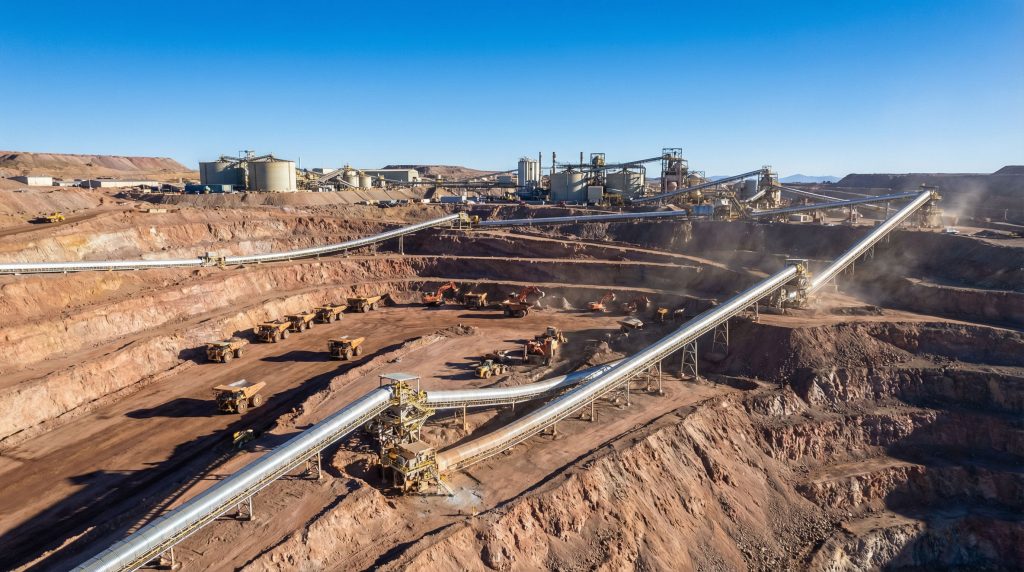
Peru's southern mineral corridor stands as one of the world's most significant copper-producing regions, containing operations that collectively generate over 1.35 million tons of copper annually. Within this corridor, the Cuajone Mine operates as a cornerstone facility, processing approximately 140,000 tons of ore daily through its large-scale open-pit mining operations.
The facility's strategic value extends beyond raw production metrics. Located in Peru's Moquegua Region, approximately 140 kilometres inland from the Pacific coast, Cuajone benefits from established infrastructure networks and proximity to integrated processing facilities. This geographical positioning enables the operation to function as part of a vertically integrated system, where mined ore flows through a coordinated supply chain to downstream smelting and refining operations.
However, the mine's geological characteristics support sustained large-scale extraction through porphyry copper deposit mining, with molybdenum as a significant by-product. This dual-commodity approach enhances operational economics, as molybdenum pricing provides additional revenue streams that can offset copper price volatility periods.
| Production Metrics | Current Capacity | Regional Context |
|---|---|---|
| Daily Ore Processing | 140,000 tons | Part of integrated corridor |
| Annual Copper Output | ~350,000 tons | 13-14% of Peru's production |
| Workforce Impact | Major regional employer | Significant tax contributor |
| Integration Benefits | Pipeline transport to Ilo | Reduced logistics costs |
The operational scale creates substantial economic ripple effects throughout southern Peru. As one of the region's largest private employers, the facility supports thousands of direct jobs while generating significant tax revenue for local and national governments. Consequently, this economic integration makes operational optimisation strategies particularly important, as efficiency improvements translate directly into enhanced regional economic stability.
Addressing Complex Operational Challenges in Large-Scale Mining
Modern copper mining operations confront a web of interconnected technical challenges that become more pronounced as operations scale upward. Equipment availability represents a critical constraint, with best-practice mining operations targeting 85-92% equipment availability rates. Even minor deviations from these targets create cascading effects throughout the production system.
Maintenance scheduling complexity increases exponentially in large operations. Typical mining facilities allocate 15-25% of operational time to preventative and corrective maintenance activities, but coordinating these activities across multiple shovel units, truck fleets, and processing equipment requires sophisticated planning systems.
A single shovel breakdown can reduce daily ore movement by 500-2,000 tons, directly impacting concentrator feed consistency and daily copper concentrate production. In addition, the integration of data-driven mining operations has become essential for predictive maintenance scheduling.
Critical Challenge: Equipment maintenance complexity increases substantially with pit depth due to extended haul distances and more demanding operating conditions, requiring increasingly sophisticated coordination between mining and processing operations.
Processing plant constraints add another layer of complexity. Modern concentrators typically operate at 75-95% of theoretical maximum throughput due to optimisation trade-offs between capacity and concentrate grade quality. This operational envelope requires constant adjustment as ore characteristics change with mining progression, demanding real-time process control capabilities.
Geotechnical risk management becomes increasingly critical as open-pit operations deepen. Large porphyry copper deposits often require pit depths exceeding 400-600 metres, creating significant slope stability challenges. Progressive pit deepening results in cumulative ground movements that require continuous reassessment through:
• Slope inclinometer installations for detecting ground movement patterns
• Periodic laser scanning surveys documenting pit wall geometry changes
• Pore pressure monitoring in potentially unstable zones
• Acoustic emission monitoring detecting precursor signals of slope instability
For instance, the integration of real-time monitoring data with predictive analytical systems has become essential for identifying emerging geotechnical issues before they translate into operational disruptions. This proactive approach helps mining operations maintain production schedules while ensuring worker safety in increasingly complex pit environments.
Advanced Conveyor System Technologies for Enhanced Throughput
Conveyor belt optimisation represents one of the most impactful efficiency enhancement strategies available to modern copper mining operations. Traditional copper mining conveyor systems typically operate at 3.0-4.5 m/s, but advanced high-performance systems now achieve 5.5-7.0 m/s, increasing throughput capacity by 35-55% without requiring proportional increases in conveyor system count.
This performance improvement requires sophisticated cleaning and stabilisation technologies. Southern Peru's investment in Cuajone Mine optimisation demonstrates the potential for significant throughput enhancements. Advanced cleaning systems incorporate multiple stages of material removal, achieving 60-75% reduction in material spillage compared to conventional systems operating at similar speeds.
Primary Cleaning Systems:
• Mechanical scrapers removing bulk adhered material
• Heavy-duty brush systems designed for high-speed operations
• Automated pressure adjustment responding to material load variations
Secondary and Tertiary Systems:
• Advanced wiping systems optimised for elevated belt speeds
• Optional additional cleaning stages achieving enhanced dust reduction
• Integration with automated belt tracking systems preventing edge spillage
| Performance Parameter | Conventional System | Optimised System | Improvement |
|---|---|---|---|
| Operating Speed | 4.0 m/s | 6.0+ m/s | +50% throughput |
| Dust Emissions | Baseline level | Advanced control | 65-70% reduction |
| Maintenance Intervals | Weekly scheduling | Synchronised cycles | 30-45% reduction |
| Water Consumption | Standard suppression | Optimised systems | 20-30% decrease |
Sealed housing and funnel system designs eliminate open exposure at transfer points, creating completely enclosed material flow paths. These systems incorporate pressurised enclosures with negative pressure capture, directing residual dust to collection systems while maintaining high-speed material transfer capabilities.
The energy efficiency relationship between belt speed and system performance has improved significantly through engineering advances. Furthermore, maintenance optimisation solutions have demonstrated substantial reductions in downtime while increasing operational efficiency.
Implementation of advanced conveyor systems typically delivers:
• 40-50% increase in daily tonnage capacity without additional belt installations
• 65-70% reduction in dust emissions at critical transfer points
• 30-45% reduction in scheduled maintenance intervals
• 20-30% improvement in water use efficiency for dust suppression
What Role Does AI Play in Modern Mining Operations?
The integration of AI in mining has revolutionised traditional optimisation approaches. Machine learning algorithms now analyse vast datasets from sensors throughout mining operations, enabling predictive maintenance and real-time process adjustments.
Artificial intelligence applications specifically target:
• Predictive equipment failure analysis reducing unplanned downtime by 25-40%
• Automated ore grade control optimising processing plant feed quality
• Dynamic scheduling systems adapting to changing operational conditions
• Real-time energy consumption optimisation reducing costs by 8-15%
Geotechnical Excellence and Slope Stability Optimisation
Slope stability management has evolved from deterministic safety factor calculations to sophisticated probabilistic frameworks incorporating uncertainty quantification. Modern mining operations employ three-dimensional finite element models with 50,000-500,000+ elements to assess slope stability across multiple operational scenarios.
The integration of historical failure analysis provides empirically grounded calibration of rock mass properties, improving predictive model reliability. Back-analysis of previous slope movements typically reduces uncertainty in rock mass property estimates by 40-60%, enabling more precise optimisation of pit wall designs.
Geotechnical Assessment Components:
Rock Mass Characterisation:
• Detailed lithological mapping incorporating rock type variations
• Joint and discontinuity surveys quantifying fracture spacing and orientation
• Laboratory strength testing of samples from different geological units
• In-situ stress measurements determining current stress states
• Hydrogeological assessment of pore pressure distributions
Optimisation Strategy Development:
• Incremental pit outline optimisation balancing ore recovery against stability risk
• Stage-based expansion plans enabling 5-10 year incremental deepening
• Risk-based decision frameworks incorporating probability distributions
• Adaptive management incorporating real-time monitoring feedback
The economic impact of geotechnical optimisation extends far beyond immediate safety considerations. Steeper slope angles enabled by improved geotechnical understanding can extend mine life by 5-15 years through enhanced recovery of ore previously left in protective pillar barriers.
For deep porphyry copper deposits, a 2-3 degree steeper average slope angle across a 500-metre-deep pit can recover an additional 50-100 million tons of ore. In addition, underground copper sensor technologies provide real-time monitoring capabilities for enhanced safety and operational control.
Acceptable safety factors for pit slopes typically range from 1.3-1.6 for static conditions, with dynamic factors including seismic events and rapid drawdown conditions analysed separately. This multi-scenario approach enables mining operations to optimise pit wall designs while maintaining appropriate safety margins across all anticipated operating conditions.
The transition from 42-degree average pit slopes to 45-degree slopes, informed by improved geotechnical understanding, typically extends mine life by 8-15%. For mining operations with 20-year remaining reserves, this represents 1.6-3 additional years of production, significantly enhancing project economics and return on optimisation investments.
The next major ASX story will hit our subscribers first
Processing Plant Integration and Efficiency Enhancement
Concentrator optimisation strategies focus on three interconnected objectives: increasing mass throughput without compromising concentrate grade quality, improving recovery rates for marginal ore components, and reducing energy and water consumption. Modern flotation concentrators processing 100,000-200,000 tons of ore daily target 5-15% capacity increases through systematic optimisation programs.
Grade recovery improvements typically deliver 1-3 percentage point gains, such as advancing from 87% to 89-90% copper recovery rates. These improvements, while appearing modest, generate substantial value given the large tonnage processed. For operations processing 140,000 tons daily, a 2% recovery improvement yields an additional 840 tons of copper annually.
Concentrator Enhancement Technologies:
Flotation System Improvements:
• Advanced cell designs with enhanced bubble-particle contact efficiency
• Optimal grinding targets balancing liberation against over-grinding energy waste
• Chemometric approaches to collector and frother optimisation
• Real-time process control incorporating automated feedback mechanisms
Classification and Separation:
• Improved hydrocyclone designs reducing misclassification losses
• Optimal size distribution control (typically 75% passing 200 mesh)
• Enhanced cyclone operating parameters improving separation efficiency
• Integration of advanced analytics for automated process adjustment
Energy consumption represents a significant operational cost, with flotation concentrators typically consuming 15-25 kWh per ton of ore processed. Optimisation strategies targeting 5-12% energy reduction through improved sizing and classification systems deliver substantial cost savings while reducing environmental impact.
Water efficiency improvements enable modern concentrators to recycle 85-95% of process water, with optimisation strategies reducing freshwater demand by 10-20%. This water conservation becomes particularly valuable in arid mining regions where freshwater availability constrains operational capacity.
| Optimisation Category | Typical Improvement | Economic Impact | Implementation Timeline |
|---|---|---|---|
| Throughput Capacity | 5-15% increase | High value | 6-12 months |
| Recovery Rate | 1-3 percentage points | Very high value | 3-6 months |
| Energy Efficiency | 5-12% reduction | Medium value | 3-9 months |
| Water Conservation | 10-20% freshwater reduction | Regional significance | 6-18 months |
Integration with downstream smelting operations creates additional optimisation opportunities through concentrate blending capabilities. Direct concentrate feed to integrated smelting operations improves gross margins by $8-15 per ton of copper content compared to third-party processing arrangements, while enabling quality control adjustments optimised for specific smelter requirements.
How Can Environmental Optimisation Support Operational Efficiency?
Modern copper mining operations increasingly integrate environmental performance optimisation with production efficiency enhancement. Water management systems represent a critical optimisation target, particularly in regions experiencing periodic drought conditions. Advanced industrial water efficiency improvements enable operations to reduce freshwater consumption while maintaining production levels.
Tailings management optimisation addresses both environmental compliance and operational efficiency objectives. Modern tailings facilities incorporate:
• Enhanced settling pond designs maximising water recovery
• Improved thickening technologies reducing water content in tailings
• Advanced monitoring systems ensuring structural stability
• Integration with mine closure planning for long-term environmental stewardship
Dust control and air quality management systems have evolved beyond regulatory compliance to become operational efficiency enhancers. Advanced suppression system implementations reduce material losses while improving working conditions and community relations. These systems typically achieve:
• 60-75% reduction in fugitive dust emissions at material transfer points
• 30-40% reduction in water consumption for dust suppression
• Improved equipment reliability through reduced abrasive dust exposure
• Enhanced community acceptance supporting operational continuity
The integration of environmental optimisation with production efficiency creates synergistic benefits. Water recycling improvements reduce operational costs while supporting environmental compliance, dust suppression enhancements improve equipment reliability while reducing community impact, and energy efficiency gains lower operational costs while reducing carbon footprint.
Investment Strategy Framework for Mining Optimisation
Capital allocation for mining optimisation projects requires sophisticated analysis balancing immediate production gains against long-term operational sustainability. The broader mining industry evolution demonstrates increasing focus on technology-driven efficiency improvements.
Investment categories typically distribute across equipment upgrades, process optimisation, infrastructure development, and technology system implementations.
| Investment Category | Allocation % | Expected ROI | Risk Profile | Value Driver |
|---|---|---|---|---|
| Equipment Upgrades | 40% | 2-3 years | Medium | Capacity & reliability |
| Process Optimisation | 25% | 1-2 years | Low | Immediate efficiency |
| Infrastructure Systems | 20% | 3-5 years | Medium | Long-term capability |
| Technology Integration | 15% | 1-3 years | High | Operational intelligence |
Risk management frameworks incorporate technical risk assessment methodologies alongside financial exposure mitigation strategies. Technical risks include equipment performance uncertainties, process optimisation complexities, and integration challenges with existing systems. Financial risks encompass commodity price volatility impacts on optimisation project returns and regulatory compliance cost variations.
The $318 million investment program announced for southern Peru cuajone copper mine optimisation represents a significant commitment to operational excellence, targeting multiple efficiency enhancement categories simultaneously. Such comprehensive optimisation programs typically deliver:
• 15-25% improvement in overall operational efficiency
• 8-12% reduction in unit operating costs
• 3-5 year extension of mine life through enhanced recovery
• 20-30% improvement in environmental performance metrics
Investment timing considerations incorporate commodity price cycle positioning, regulatory approval timelines, and operational disruption minimisation strategies. Phased implementation approaches enable mining operations to capture optimisation benefits progressively while managing implementation risks.
Performance Measurement and Optimisation Success Metrics
Successful mining optimisation programs require comprehensive performance measurement systems tracking production efficiency, cost reduction, safety performance, and environmental compliance metrics. Production efficiency indicators focus on tons per day processing capacity, equipment availability percentages, and energy consumption per ton of copper produced.
Key Performance Indicators:
Operational Excellence Metrics:
• Equipment availability targeting 90%+ for critical systems
• Processing plant utilisation rates exceeding 85% of design capacity
• Unit energy consumption trending toward 18-22 kWh per ton processed
• Maintenance cost optimisation achieving 10-15% annual reductions
Quality and Recovery Performance:
• Copper recovery rates consistently above 88-90%
• Concentrate grade quality meeting smelter specifications
• Molybdenum by-product recovery optimisation
• Metallurgical performance consistency across varying ore grades
Cost reduction achievements typically target operating cost per pound of copper produced, maintenance cost optimisation, and labour productivity improvements. Best-practice operations achieve $0.05-0.15 per pound reduction in unit costs through comprehensive optimisation programs.
Safety and environmental performance metrics include lost-time injury frequency rates, environmental compliance scores, and community relations indicators. These metrics increasingly influence operational licence to operate, making their optimisation critical for long-term operational sustainability.
The integration of predictive analytics and real-time monitoring systems enables mining operations to track optimisation performance continuously, identifying emerging issues before they impact production or safety. This proactive approach supports continuous improvement methodologies that maintain optimisation gains over extended periods.
Future Expansion Planning and Technology Integration
Long-term optimisation strategies require integration with resource assessment and reserve development planning. Geological modelling updates incorporating optimisation-enhanced recovery rates can substantially extend mine life projections, supporting additional capital investment justification for advanced optimisation technologies.
Technology roadmap planning encompasses automation and digitalisation strategies that build upon current optimisation investments. Predictive maintenance system implementations, process control optimisation pathways, and integrated operational intelligence systems represent the next evolution in mining efficiency enhancement.
Technology Integration Priorities:
Immediate Implementation (1-2 years):
• Real-time process monitoring and automated adjustment systems
• Predictive maintenance algorithms for critical equipment
• Enhanced data analytics for operational decision support
• Integrated safety monitoring and emergency response systems
Medium-term Development (3-5 years):
• Autonomous equipment operation in selected applications
• Advanced metallurgical process control using machine learning
• Integrated supply chain optimisation across mine-to-market
• Enhanced environmental monitoring and automated compliance reporting
The convergence of optimisation strategies with broader industry digitalisation trends creates opportunities for step-change efficiency improvements beyond traditional optimisation approaches. Mining operations implementing comprehensive optimisation programs position themselves advantageously for integration of emerging technologies as they mature.
Resource assessment updates incorporating optimisation-enhanced recovery capabilities often reveal additional reserves previously considered uneconomic. This reserve growth supports extended mine life planning, creating positive feedback loops that justify continued optimisation investment.
Industry Best Practices and Knowledge Transfer
The implementation of large-scale mining optimisation programs generates valuable lessons applicable across the copper mining industry. Phased optimisation program development, emphasising systematic approach over simultaneous implementation, reduces execution risk while enabling continuous learning integration.
Cross-functional team coordination proves essential for optimisation success, requiring integration across mining, processing, maintenance, environmental, and safety disciplines. Successful programs establish dedicated optimisation teams with clear accountability for program delivery and performance measurement.
Continuous improvement methodologies ensure optimisation gains persist beyond initial implementation periods. These systems incorporate:
• Regular performance review cycles identifying optimisation opportunities
• Employee engagement programs capturing operational insights
• Technology upgrade pathways maintaining competitiveness
• Best practice sharing across operational units
Implementation Timeline Framework:
- Planning Phase (6-12 months): Detailed engineering, environmental assessment, regulatory approval
- Construction Phase (12-18 months): Equipment installation, system integration, testing
- Commissioning Phase (3-6 months): Performance optimisation, staff training, procedure development
- Stabilisation Phase (6-12 months): Performance monitoring, adjustment, full optimisation realisation
Technology transfer opportunities enable mining operations to adapt successful optimisation approaches to their specific operational contexts. Equipment modification adaptations, process optimisation techniques, and safety management system improvements developed through optimisation programs often find application across multiple mining operations.
The southern peru cuajone copper mine optimisation represents a comprehensive approach to operational excellence that balances immediate efficiency gains with long-term sustainability objectives, providing a framework for industry-wide optimisation strategy development.
Disclaimer: This analysis is based on publicly available information and industry best practices. Specific operational details and financial projections should be verified through official company communications and regulatory filings. Mining investments involve significant risks including commodity price volatility, operational challenges, and regulatory changes that may affect project outcomes.
Looking to Capitalise on Copper Market Opportunities?
Discovery Alert's proprietary Discovery IQ model delivers instant notifications on significant ASX copper discoveries, empowering subscribers to identify actionable opportunities ahead of the broader market. Begin your 14-day free trial today at Discovery Alert and position yourself to capture the next major copper breakthrough before it moves the market.