
May 15, 2026
The Tin Supply Paradox Driving a New Era of Western Mining Finance
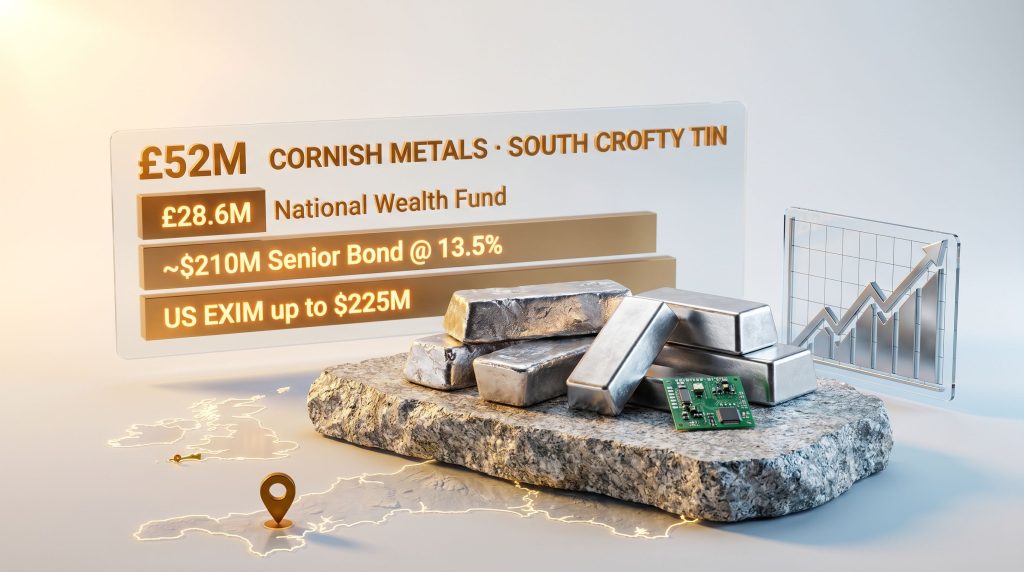
Few metals carry as much invisible strategic weight as tin. It holds together the circuits inside every smartphone, server rack, and semiconductor package manufactured today, yet its global supply chain remains alarmingly concentrated. Across Western industrial economies, procurement teams and policymakers have long accepted this concentration as a structural given. That assumption is now being challenged, and the financing architecture assembled around the Cornish Metals Cornwall tin project funding milestone offers one of the clearest blueprints yet for how the West intends to build its way out of this vulnerability.
Understanding why this moment matters requires stepping back from the headline figures and examining the deeper mechanics of tin's strategic position in the global economy. Furthermore, the critical mineral benefits of securing domestic supply chains extend well beyond tin alone, reinforcing why this project has captured such broad institutional attention.
When big ASX news breaks, our subscribers know first
Why Tin's Supply Geography Creates Systemic Risk
Tin is not a commodity that attracts the same public attention as lithium or cobalt, but its role in modern manufacturing is arguably more pervasive. Every printed circuit board requires tin-based solder. Every semiconductor package relies on tin alloys for interconnection. Every data centre expansion, including the accelerating wave of AI infrastructure build-out, translates directly into additional tin demand through the billions of solder joints required in server hardware.
The supply side of this equation presents a structural problem for Western manufacturers:
- China and Southeast Asia collectively account for more than 70% of the world's refined tin output, with China alone dominating smelting and refining capacity
- Indonesia, Myanmar, and Bolivia represent the other major producing regions, none of which offer the geopolitical reliability that Western manufacturers increasingly require
- No significant new tin mine has entered production in a Western jurisdiction in several decades, meaning supply-side diversification has been entirely absent during the period when electronics demand accelerated most dramatically
- The London Metal Exchange tin price has experienced considerable volatility, reflecting the tightness of a market with limited elasticity on the supply side
This is the macro environment into which the South Crofty restart project steps, and it explains why its financing structure has attracted attention well beyond the mining industry.
South Crofty: History, Geology, and Strategic Positioning
Cornwall as a Hard-Rock Tin Jurisdiction
Cornwall's mining heritage stretches back millennia, and South Crofty stands as one of its most historically significant operations. Located near Redruth in west Cornwall, the mine was among the last operating tin mines in the United Kingdom before its closure in 1998, a casualty of depressed tin prices following the 1985 collapse of the International Tin Council buffer stock scheme.
What makes Cornwall geologically distinctive is the nature of its tin mineralisation. The region sits atop a series of granite intrusions that created the hydrothermal conditions conducive to cassiterite deposition, the primary tin ore mineral. Unlike alluvial tin deposits common in Southeast Asia, Cornwall's hard-rock cassiterite tends to occur in well-defined lode structures that, while requiring underground mining methods, can deliver consistent ore grades over extended depths. This geological predictability is a meaningful advantage when constructing a long-term project finance case.
Current mineral resource estimates for South Crofty, as disclosed by Cornish Metals in publicly available regulatory filings, indicate a substantial resource base capable of supporting multi-decade mine life scenarios, though the precise figures remain subject to ongoing resource definition work and should be assessed against the company's most recent published technical reports.
The Convergence of Factors Making Now the Right Moment
Three distinct forces have aligned to bring South Crofty to the threshold of a final investment decision:
- Tin price recovery from multi-year lows has materially improved project economics, expanding the margin between operating costs and revenue projections
- Critical minerals policy momentum across the UK, US, and EU has created a receptive institutional environment for Western mining finance
- Advanced permitting status reduces the development-stage risk that typically makes junior mining projects unattractive to institutional debt investors
The combination of these three factors, rather than any single catalyst, explains why capital has been willing to engage with what is inherently a complex and capital-intensive underground mine restart.
Breaking Down the Cornish Metals Cornwall Tin Project Funding Structure
The financing assembled for the South Crofty restart is notable not just for its scale but for its architectural sophistication. Rather than relying on a single capital source, the structure layers multiple instruments across the risk spectrum, a design that reflects both the complexity of the project and the need to distribute risk across different investor classes.
| Funding Component | Amount | Instrument Type | Counterparty Profile |
|---|---|---|---|
| Public Equity Raise | £57 million | Equity | Market + National Wealth Fund co-investment |
| National Wealth Fund Contribution | £28.6 million | Public Equity Co-Investment | UK National Wealth Fund |
| Senior Secured Bond | ~$210 million (approx. £166M) | Fixed-Rate Bond at 13.5% coupon, 6-year term | International Institutional Investors |
| US EXIM Bank Letter of Interest | Up to $225 million | Potential Export Credit Facility (non-binding) | U.S. Export-Import Bank |
Why a 13.5% Fixed Coupon Bond Was Selected
The decision to structure the senior debt as a fixed-rate bond rather than traditional project finance debt is analytically significant. Conventional project finance, often called limited recourse lending, typically involves a syndicate of banks providing loans secured against project cash flows, with covenants tied to debt service coverage ratios and construction milestones.
A fixed-rate bond structure offers different trade-offs:
- It provides certainty of debt service cost regardless of central bank rate movements, which matters for long-term project modelling
- It accesses a broader universe of institutional fixed-income investors, including pension funds and insurance companies seeking higher-yielding infrastructure-adjacent assets
- The 13.5% coupon reflects the risk premium demanded by investors for a pre-production mining asset, a rate that signals genuine market appetite but also the perceived execution risk embedded in an underground mine restart
- Oversubscription of the bond raise, with participation from European, North American, and international institutions, validates the investment thesis at that price point
The oversubscription of the bond is arguably the most important signal in the entire financing package. It demonstrates that sophisticated fixed-income investors, not just equity speculators, have underwritten the project's economic case.
The National Wealth Fund's £28.6 Million Anchor Role
The UK National Wealth Fund's participation as an equity co-investor deserves particular attention. The NWF's mandate centres on catalysing private investment into strategically important sectors by deploying public capital as a first-mover anchor, thereby de-risking the broader raise for other investors.
Its £28.6 million contribution into the £57 million equity raise served precisely this function. By committing public capital alongside private investors, the NWF effectively provided a confidence signal that reduced the perceived risk premium for other equity participants. This crowding-in mechanism is increasingly recognised as one of the most capital-efficient tools available to governments seeking to accelerate domestic resource development without taking on full project ownership.
Comparable public co-investment models have been deployed in Canada through Natural Resources Canada's Critical Minerals Infrastructure Fund, in Australia through various state-level financing vehicles, and across the EU through European critical raw materials funding programmes administered by the European Investment Bank.
The US EXIM Bank's Non-Binding Letter of Interest
Perhaps the most geopolitically layered element of the capital structure is the US Export-Import Bank's non-binding letter of interest for up to $225 million in potential export credit financing. This approach mirrors how US EXIM-backed financing has been structured for other critical minerals projects across allied nations.
The US EXIM Bank's involvement in a UK mining project requires explanation. Its mandate is to support American exporters and, increasingly, to secure supply chains for materials considered strategically critical to US national and economic security. Tin concentrate exported from South Crofty to American semiconductor manufacturers or tin refiners would qualify as precisely the kind of trade flow the EXIM Bank is mandated to facilitate.
Several conditions would need to be satisfied before this letter of interest converts into a binding committed facility:
- Confirmation of qualifying US content in project equipment or services procurement
- Satisfactory environmental and social due diligence under EXIM's own standards
- Identification of specific US-based off-takers or buyers for the tin concentrate
- Formal application and credit committee approval processes
The non-binding nature of the letter must be emphasised. It represents intent and eligibility assessment, not committed capital. However, its presence in the financing narrative meaningfully broadens the potential capital stack available to the project and signals transatlantic alignment on critical minerals supply chain security.
The Demand Drivers: AI Infrastructure and Electronics Manufacturing
Tin's Role in the AI Hardware Buildout
The connection between artificial intelligence and tin demand is less intuitive than the link between AI and rare earth elements or lithium, but it is arguably more immediate. AI server infrastructure requires dense, high-performance printed circuit boards. Each board contains thousands of solder joints. Advanced chip packaging technologies, including multi-chip modules and high-bandwidth memory stacks, require even greater quantities of high-purity tin-based solder alloys.
As hyperscaler data centre investment continues to accelerate, driven by demand for AI model training and inference capacity, the cumulative tin demand from this sector alone is adding a meaningful increment to global consumption that was not modelled in supply forecasts produced even five years ago.
Scenario Modelling: Project Economics Under Different Tin Price Assumptions
The following scenarios are illustrative analytical frameworks and should not be construed as financial forecasts or investment advice. Actual project outcomes will depend on numerous variables beyond tin price alone.
| Scenario | Tin Price Assumption | Debt Service Outlook | Equity Return Implication |
|---|---|---|---|
| Base Case | Current elevated levels sustained | 13.5% coupon serviced comfortably | Payback within 6-year bond term achievable |
| Downside | Reversion toward 5-year average lows | Coverage ratio pressure; covenant monitoring required | Extended payback; equity dilution risk |
| Upside | AI demand drives prices to historical highs | Early bond repayment becomes viable | Materially enhanced equity returns |
Key operating cost variables that will determine real-world margins at South Crofty include:
- Underground mining depth and the associated haulage, ventilation, and ground support costs
- Ore processing recovery rates for cassiterite, which in Cornwall's hard-rock context depend heavily on the efficiency of gravity separation and flotation circuits
- Cornwall's energy cost environment, which, while benefiting from the UK's renewable energy transition, remains subject to industrial electricity pricing pressures
- Dewatering costs during the mine restart phase, given that underground workings that have been idle for decades typically require substantial pumping investment before ore production can commence
Key Risks Investors and Stakeholders Should Monitor
Project Execution Risk
Restarting an underground mine that has been dormant for nearly three decades is a substantially different engineering challenge from developing a greenfield project. Specific risks include:
- Shaft and infrastructure rehabilitation: Headframes, hoisting systems, and underground airways require thorough inspection and likely significant reinstatement before safe operations can commence
- Dewatering timelines: Flooded workings must be pumped out systematically, a process that can take considerably longer than initial estimates if ground conditions have deteriorated
- Labour and skills: The UK's hard-rock underground mining workforce has contracted significantly since the 1990s closures, creating potential constraints on qualified personnel availability
In addition, the processing bottlenecks observed across other critical minerals projects serve as a useful cautionary parallel for what South Crofty's operational team may need to navigate during commissioning.
Financial and Market Risk
- The 13.5% fixed coupon represents a substantial annual cash obligation that must be met from production revenue or liquidity reserves, regardless of commodity price movements during early production years
- Currency exposure is a material consideration, given that the bond is denominated in US dollars while the majority of operating costs will be incurred in British pounds, creating ongoing FX risk requiring active hedging
- The absence of confirmed long-term off-take agreements would leave tin price exposure unhedged at a critical phase of the project's financial life
Geopolitical and Structural Risk
- The conversion of the US EXIM Bank letter of interest into a binding facility is not guaranteed, and a failure to secure this additional capital layer would require alternative financing sources to be identified
- Chinese tin producers have demonstrated strategic pricing discipline in the past and could theoretically respond to Western supply diversification efforts in ways that pressure new entrant economics
- However, emerging supply alternatives from non-traditional sources may ultimately play a complementary role in broadening the overall tin supply base available to Western manufacturers
The next major ASX story will hit our subscribers first
Frequently Asked Questions: Cornish Metals Cornwall Tin Project Funding
What is the total funding secured by Cornish Metals for the South Crofty tin project?
The committed capital raised for the South Crofty restart encompasses a £57 million equity raise, which includes a £28.6 million co-investment from the UK National Wealth Fund, alongside a senior secured bond of approximately $210 million carrying a 13.5% fixed coupon over a six-year term. A non-binding letter of interest from the US Export-Import Bank for up to $225 million represents a potential additional capital layer that has not yet been formally committed.
What is the South Crofty tin mine and where is it located?
South Crofty is a historically significant hard-rock tin mine located near Redruth in Cornwall, southwest England. Operating within the same Cornubian granite belt that made Cornwall one of Europe's premier tin and copper producing regions for centuries, the mine closed in 1998 and has been the subject of restart efforts by Cornish Metals, which holds the relevant mining and exploration licences. Reporting from the BBC has highlighted the broader economic significance of this revival for the local Cornish economy.
Why is the US Export-Import Bank involved in a UK mining project?
The US EXIM Bank's stated mandate includes supporting American export competitiveness and, increasingly, securing supply chains for materials critical to US industrial and national security. Tin concentrate from South Crofty could be exported to US-based semiconductor manufacturers or tin processors, creating a qualifying trade flow that falls within EXIM's financing mandate.
When is Cornish Metals expected to make a final investment decision?
Based on publicly disclosed project development timelines, a final investment decision has been referenced in the context of a summer 2026 target, contingent on the completion of financing arrangements and satisfaction of project development milestones.
What is the significance of the National Wealth Fund's investment in Cornish Metals?
The NWF's equity co-investment represents a meaningful precedent: the deployment of UK public capital as an anchor in a domestic mining equity raise. This crowding-in function, where public capital de-risks a transaction sufficiently to attract private institutional participation, mirrors models used in critical minerals financing across Canada, Australia, and the EU and may signal a broader shift in how the UK approaches domestic resource development.
South Crofty as a Replicable Financing Template
What This Capital Structure Could Mean for Future UK and European Mining Projects
The multi-instrument architecture assembled for the Cornish Metals Cornwall tin project funding represents something more significant than a single project milestone. It constitutes a proof-of-concept for a financing model that could be replicated across other critical minerals projects in the UK and Europe.
The key structural elements that make this model replicable are:
- A public equity anchor from a national wealth or strategic investment vehicle that provides confidence signalling without requiring full state ownership
- A private institutional bond at a yield premium sufficient to attract fixed-income investors to a pre-production mining asset
- A potential export credit overlay that links the project's output to allied nation supply chain security objectives, adding a further layer of non-dilutive financing capacity
Cornwall itself may stand to benefit from this precedent beyond South Crofty alone. The region hosts prospective lithium mineralisation within the same granites that contain tin, as well as historical tungsten occurrences. The infrastructure investment, regulatory learning, and investor familiarity generated by South Crofty's restart could meaningfully reduce the risk premium attached to subsequent Cornish mineral projects.
Comparative Financing Context
| Project | Country | Commodity | Public Capital Component | Private Debt Instrument | Export Credit Dimension |
|---|---|---|---|---|---|
| South Crofty | UK | Tin | £28.6M National Wealth Fund equity | ~$210M bond at 13.5% coupon | US EXIM up to $225M (non-binding) |
| Thacker Pass | USA | Lithium | DOE loan guarantee support | Project finance debt | Domestic focus; DFC involvement |
| Norra Kärr | Sweden | Rare Earths | EIB lending discussions | Equity-led structure | EU strategic raw materials framework |
| Whabouchi | Canada | Lithium | Quebec government equity stake | Project finance + bond hybrid | Export Development Canada involvement |
Note: Comparative project details are included for illustrative analytical context. Readers should verify current financing arrangements directly with the respective companies and official sources, as structures evolve over time.
The deeper strategic lesson from the Cornish Metals financing is that critical minerals project finance in Western jurisdictions is no longer purely a private sector exercise. The most credible structures now blend public anchor capital, institutional private debt, and export credit agency involvement into an integrated stack, each layer performing a distinct risk-mitigation function.
For investors tracking the critical minerals financing landscape, the South Crofty transaction establishes a reference point. Consequently, the demonstrated willingness of international institutional fixed-income investors to absorb a $210 million bond for a pre-production UK tin mine, even at a premium coupon reflecting genuine execution risk, suggests that the asset class is maturing. Whether this appetite persists through the construction phase and into the early production years will depend heavily on how disciplined project delivery proves to be, and on whether the tin price environment remains supportive of the debt service obligations embedded in the capital structure.
This article is intended for informational purposes only and does not constitute financial, investment, or legal advice. Forward-looking statements and scenario analyses reflect illustrative analytical frameworks and are subject to material uncertainty. Readers should conduct their own due diligence and consult qualified advisers before making any investment decisions.
Want to Know Which ASX Tin and Critical Mineral Discoveries Are Emerging Right Now?
Discovery Alert's proprietary Discovery IQ model scans ASX announcements in real time, instantly identifying significant mineral discoveries across tin, lithium, rare earths, and more than 30 other commodities — delivering actionable insights to subscribers before the broader market reacts. Explore historic discoveries and their remarkable returns on Discovery Alert's dedicated discoveries page, and begin your 14-day free trial today to position yourself at the forefront of the next major find.