
July 17, 2026
Navigating Critical Energy Chokepoints Amid Regional Tensions
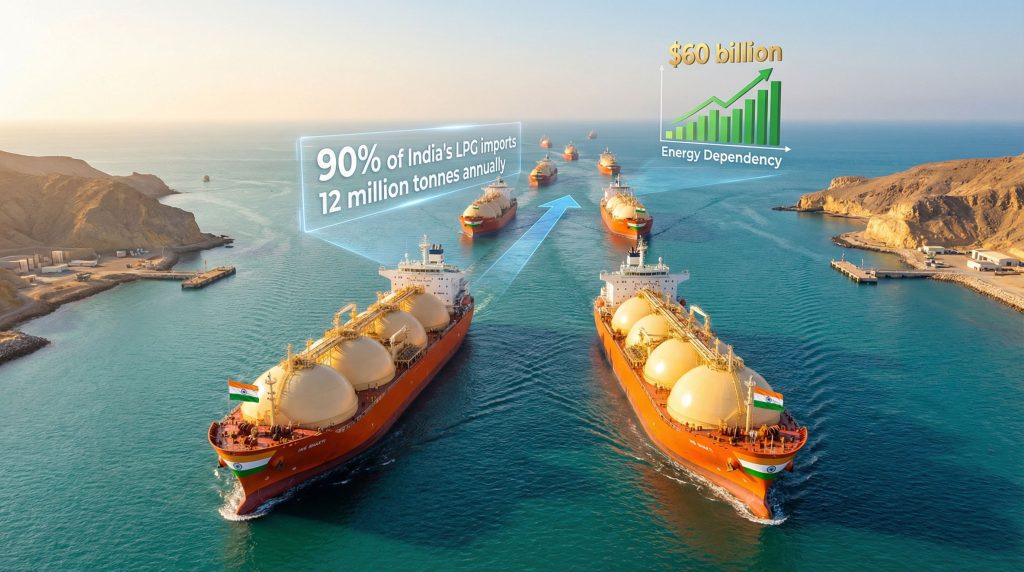
The geopolitical landscape surrounding critical maritime chokepoints has fundamentally altered how energy importing nations assess supply chain resilience. Regional tensions can transform routine commercial shipping into complex strategic calculations, where traditional logistics planning intersects with diplomatic coordination and financial risk management. These dynamics have become particularly evident in recent developments affecting India's liquefied petroleum gas imports, as India-flagged LPG tanker crossing Strait of Hormuz operations illustrate how modern energy transition security depends on adaptive operational frameworks rather than static supply arrangements.
When big ASX news breaks, our subscribers know first
Understanding Maritime Energy Chokepoint Vulnerabilities
The concentration of global energy flows through narrow maritime passages creates systemic vulnerabilities that extend far beyond immediate geographic constraints. The Strait of Hormuz exemplifies this challenge, handling approximately one-third of seaborne traded oil globally and roughly one-quarter of traded natural gas according to U.S. Energy Information Administration data.
For India specifically, this geographic bottleneck represents a critical pressure point in energy security architecture. The nation imports approximately 85-90 million tonnes of crude oil annually, with roughly 40% transiting through the Strait of Hormuz. This concentration creates immediate supply chain exposure to regional geopolitical developments, particularly when oil price movements become volatile.
India's Energy Import Dependency Analysis
Crude Oil Dependency: 40% via Hormuz (85 million tonnes annually) – High concentration risk
LPG Dependency: 60-70% via Hormuz (18-20 million tonnes annually) – Critical dependency
Natural Gas: Minimal Hormuz exposure – Limited risk through alternative LNG routes
The technical constraints of the strait compound these vulnerabilities. At its narrowest point, shipping lanes measure only 21 nautical miles wide, with designated traffic channels restricted to 2 nautical miles in each direction. This physical geography eliminates alternative routing options during transit.
India's annual energy import value through Hormuz reaches approximately $60-70 billion, encompassing crude oil, natural gas, and LPG combined. This substantial economic exposure explains why regional disruptions at this chokepoint generate immediate policy responses and operational adaptations across India's energy sector.
Successful Navigation Strategies During Regional Tensions
Recent operational data demonstrates that seven India-flagged LPG tankers have successfully crossed the Strait of Hormuz despite heightened regional tensions. Six of these vessels have already reached Indian ports, with the most recent successful crossing involving the Green Sanvi on April 3, 2026.
Earlier coordinated transits included the BW TYR and BW ELM on March 28, illustrating systematic approach to navigation planning during elevated security periods. These successful crossings demonstrate several adaptive strategies including route diversification away from standard shipping lanes and coordinated timing with regional maritime authorities.
Navigation Adaptation Techniques
• Route diversification away from standard shipping lanes during security alerts
• Alternative passages utilising waters north of Larak Island
• Coordinated timing with regional maritime authorities
• Real-time communication protocols with naval coordination centres
The Indian Navy's involvement in transit coordination represents established maritime security practice, though specific operational protocols remain classified. Historical precedent indicates that naval guidance for merchant vessel transits during elevated security situations follows standardised international maritime procedures.
Technical Navigation Considerations
LPG carriers face unique operational constraints during transit delays. These vessels require temperature-controlled storage systems maintaining cargo between -48°C to +20°C depending on vessel design. Tank design pressures typically operate at 18-20 bar for semi-refrigerated vessels.
Transit time through the Strait of Hormuz normally requires 12-18 hours depending on vessel speed and traffic conditions. Extended queuing periods indicate heightened security screening protocols affecting normal commercial shipping schedules, similar to how tariffs impact markets by creating operational delays and cost pressures.
Current Operational Challenges and Stranded Fleet Status
Despite successful transits, 17 Indian-flagged vessels remain west of the Strait of Hormuz as of April 4, 2026. This stranded fleet includes two critical LPG carriers: Green Asha and Jag Vikram, both carrying essential energy supplies for Indian domestic markets.
The economic impact extends beyond immediate cargo value. Typical operational costs for idle LPG carriers range $20,000-50,000 per day depending on vessel size, creating accumulating financial pressure on operators and charterers. Extended delays also generate crew welfare concerns and potential cargo degradation risks.
Stranded Fleet Analysis
• Total Indian vessels: 17 ships across various cargo categories
• LPG carriers specifically: 2 vessels with combined capacity exceeding 90,000 metric tonnes
• Affected crew: Approximately 485 Indian seafarers
• Economic exposure: Estimated $150 million in delayed cargo value
Previous positioning data indicated three LPG carriers were drifting northeast of Abu Musa Island in the Persian Gulf, following instructions from Indian Navy coordination and awaiting transit authorisation. This positioning suggests systematic approach to queue management during security screening periods.
Commercial Payment Mechanisms Reshaping Energy Trade Flows
A significant parallel development involves the mid-voyage destination change of Iranian crude shipments originally bound for India. The Ping Shun, an Eswatini-flagged crude tanker carrying 600,000 barrels of Iranian crude oil, diverted from its original destination of Vadinar facility at Deendayal Port, Gujarat, to Dongying, China.
This diversion represents broader shifts in energy trade financing mechanisms. According to industry analytics, the cargo redirection appears payment-related, reflecting tightened commercial terms in Iranian energy exports. The shift demonstrates how the India-flagged LPG tanker crossing Strait of Hormuz situation connects to broader trade flow disruptions affecting regional energy security.
Payment Terms Evolution
• Previous standard: 30-60 day credit window arrangements
• Current trend: Upfront or near-term settlement requirements
• Risk assessment: Enhanced counterparty due diligence
• Commercial impact: Payment terms becoming primary determinants of trade destinations
The Iranian crude diversion would have represented the first Iranian crude shipment to India in six years if delivery had proceeded as originally planned. The mid-voyage destination change illustrates how commercial financing terms now function as critical determinants of energy trade flows.
Iranian crude exporters demonstrate reduced credit exposure tolerance, demanding faster payment settlement cycles. This shift suggests heightened concerns about payment reliability or sanctions-related financial complications affecting energy trade financing, particularly as US‑China trade war dynamics continue reshaping global commercial relationships.
Strategic Implications for India's Energy Security Framework
These developments accelerate existing trends toward supply chain diversification and enhanced domestic energy infrastructure. The successful transit of seven LPG tankers demonstrates operational resilience, while ongoing challenges highlight structural vulnerabilities requiring long-term strategic responses.
Furthermore, the situation emphasises how India-flagged LPG tanker crossing Strait of Hormuz operations must adapt to evolving geopolitical realities. Traditional energy security planning must now incorporate real-time risk assessment and diplomatic coordination mechanisms.
Immediate Adaptation Strategies
• Enhanced naval escort capabilities for merchant vessel coordination
• Diplomatic engagement protocols with regional maritime authorities
• Alternative sourcing arrangements reducing Hormuz dependency concentration
• Strategic petroleum reserve utilisation during supply disruptions
Long-term Strategic Adjustments
• Geographic diversification: Increased sourcing from non-Hormuz supply routes
• Modal diversification: Enhanced pipeline connectivity projects reducing maritime dependency
• Domestic capacity expansion: Accelerated LPG production infrastructure development
• Strategic reserve enhancement: Expanded emergency stockpiling capabilities
The intersection with broader global energy market shifts, including Saudi exploration impact on regional supply dynamics, requires integrated strategic planning approaches.
The next major ASX story will hit our subscribers first
Risk Management Evolution in Energy Import Operations
The current situation demonstrates how modern energy security requires integrated risk management approaches combining operational, commercial, and diplomatic elements. Traditional logistics planning must now incorporate real-time geopolitical assessment and adaptive financial structures.
Operational Risk Mitigation Frameworks
• Multi-vessel coordination: Systematic approach to transit timing and routing
• Alternative route identification: Backup navigation options during security disruptions
• Communication system integration: Real-time coordination with naval and maritime authorities
• Emergency response protocols: Standardised procedures for transit delays or diversions
Commercial Risk Adaptation
• Flexible payment mechanisms: Adaptive financing structures for varying risk environments
• Enhanced insurance coverage: Expanded protection against geopolitical disruptions
• Counterparty risk diversification: Multiple supplier arrangements reducing concentration
• Contract flexibility enhancement: Terms accommodating operational uncertainty
Regional Energy Security Coordination Mechanisms
The successful navigation of India-flagged LPG tanker crossing Strait of Hormuz operations demonstrates the effectiveness of coordinated regional security arrangements. Multi-national cooperation frameworks enable continued energy flows despite localised tensions.
Moreover, diplomatic engagement channels and commercial term standardisation create industry-wide risk management practices. These coordination protocols enable rapid response mechanisms for supply disruptions whilst maintaining operational efficiency.
Coordination Protocol Elements
• Naval cooperation arrangements: Joint security coordination for merchant vessel protection
• Diplomatic engagement channels: Government-to-government communication protocols
• Commercial term standardisation: Industry-wide risk management practices
• Emergency response coordination: Rapid response mechanisms for supply disruptions
According to recent maritime security reports, successful coordination between naval authorities and commercial operators has enabled continued energy flows despite regional security challenges.
Technology Integration in Maritime Energy Security
Modern maritime energy security increasingly depends on sophisticated tracking and communication technologies. Vessel tracking through Automatic Identification System (AIS) enables real-time monitoring of cargo movements and destination changes, as demonstrated in the Iranian crude diversion case.
Maritime Technology Applications
• Real-time vessel tracking: AIS and satellite-based monitoring systems
• Communication protocol integration: Secure channels for naval and commercial coordination
• Predictive routing analysis: AI-enhanced navigation planning during disruptions
• Risk assessment automation: Integrated geopolitical and commercial risk evaluation
These technological capabilities enable more sophisticated response strategies, allowing operators to adapt to changing conditions whilst maintaining operational efficiency and cargo security.
Market Psychology and Investment Strategy Implications
The current Strait of Hormuz situation illustrates how geopolitical events translate into immediate market psychology shifts affecting energy security investments and policy priorities. Successful navigation demonstrates operational resilience, whilst payment term evolution reflects broader risk assessment recalibration.
Investment Strategy Considerations
• Infrastructure diversification: Investment in alternative supply route development
• Technology enhancement: Advanced maritime security and tracking capabilities
• Strategic reserve expansion: Enhanced domestic storage and emergency supply capacity
• Supply chain redundancy: Multiple supplier arrangements reducing geographic concentration
For energy security planners, these developments highlight the importance of comprehensive risk management frameworks that integrate operational capabilities with adaptive commercial structures and diplomatic coordination mechanisms.
The ongoing situation demonstrates that modern energy security depends less on static infrastructure arrangements and more on dynamic coordination capabilities combining commercial flexibility, operational expertise, and strategic diplomatic engagement. The India-flagged LPG tanker crossing Strait of Hormuz case study provides valuable insights for developing resilient energy import frameworks capable of adapting to evolving geopolitical landscapes.
This analysis is based on publicly available information and industry reporting. Energy market developments involve significant uncertainty, and actual outcomes may vary from current projections. Investors and policy planners should conduct independent due diligence before making strategic decisions based on these developments.
Ready to Identify Energy Security Investment Opportunities?
Discovery Alert's proprietary Discovery IQ model delivers real-time alerts on significant energy and critical minerals discoveries across the ASX, helping investors capitalise on opportunities in Australia's resource sector before broader market recognition. Explore how major mineral discoveries can generate substantial returns by visiting Discovery Alert's dedicated discoveries page, then begin your 14-day free trial to secure your competitive advantage in energy transition investments.