May 15, 2026
The Global Shift Toward Critical Metals Independence
Supply chain vulnerabilities in strategic materials have become a defining characteristic of modern geopolitical competition. Nations across the developed world face unprecedented dependencies on single-source suppliers for metals essential to defense critical materials, renewable energy infrastructure, and advanced electronics manufacturing. These dependencies create systemic risks that extend far beyond traditional commodity price volatility.
The concentration of critical metals production in specific geographic regions has forced governments and corporations to reassess their strategic sourcing approaches. Furthermore, alternative processing technologies and domestic recovery capabilities now represent core elements of national security planning, driving investment toward innovative solutions that can operate independently of traditional mining and refining networks.
When big ASX news breaks, our subscribers know first
How Technology Innovation Reshapes Critical Metals Recovery
Advanced Processing Capabilities Transform E-Waste Into Strategic Assets
Electronic waste contains remarkable concentrations of strategic metals, often exceeding the grades found in traditional ore deposits. Modern smartphones, computers, and industrial electronics accumulate precious metals during manufacturing, creating secondary resources that can be recovered through specialized processing techniques.
Key E-Waste Metal Concentrations:
• Gold: 300-400 grams per tonne of circuit boards
• Silver: 3,000-4,000 grams per tonne of electronic components
• Palladium: 200-300 grams per tonne of electronic assemblies
• Rare earth elements: Variable concentrations in display screens and magnets
The economic viability of e-waste processing depends significantly on recovery efficiency rates and the ability to process diverse feedstock materials simultaneously. Traditional smelting operations struggle with the complex material compositions found in modern electronics, requiring specialized approaches that can handle mixed metal streams without extensive pre-sorting requirements.
Flash Joule Heating: Rapid Thermal Processing Revolution
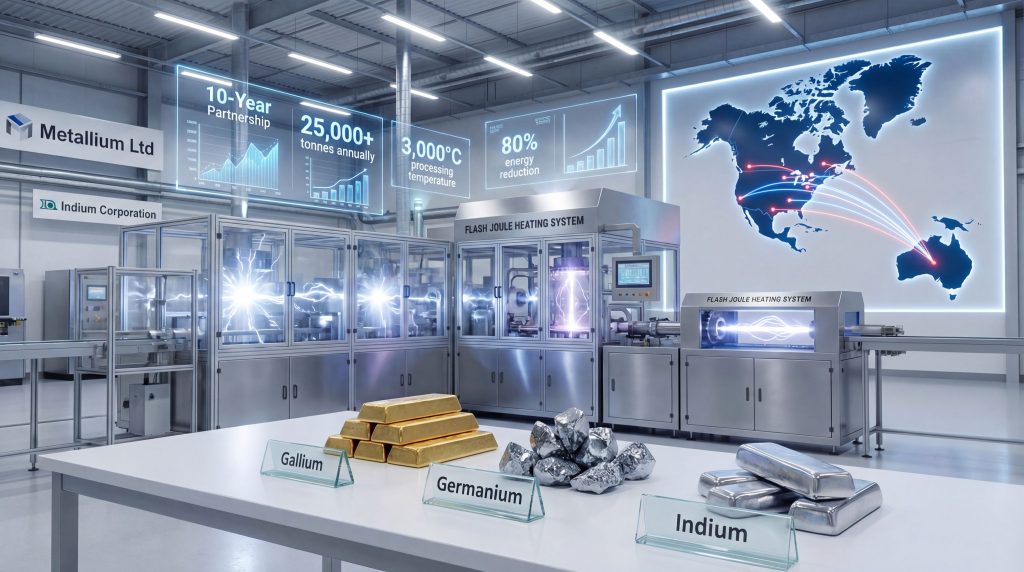
Flash joule heating represents a paradigm shift from conventional thermal processing methods. This technology applies intense electrical pulses to achieve temperatures exceeding 3,000°C within milliseconds, enabling metal recovery from materials that would be difficult or impossible to process through traditional smelting approaches.
The process offers several advantages over conventional methods:
• Energy efficiency: Reduces overall energy consumption by up to 80% compared to continuous high-temperature operations
• Processing flexibility: Handles diverse feedstock compositions without extensive pre-treatment
• Speed advantage: Completes recovery cycles in seconds rather than hours
• Environmental benefits: Minimises emissions through reduced processing time and lower energy requirements
Technical implementation requires sophisticated control systems to manage the rapid temperature changes and ensure consistent recovery rates across different material types. However, the technology's commercial viability depends on achieving reliable performance metrics while maintaining cost advantages over established processing alternatives.
Strategic Partnerships Drive Market Access and Scale
The Metallium 10-year US metals deal Structure and Implications
Metallium Ltd's comprehensive supply agreement with Indium Corporation establishes a framework for long-term critical metals recovery and distribution. This Metallium 10-year US metals deal covers gallium, germanium, indium, copper, tin, and gold recovery operations, creating diversified revenue streams while addressing multiple market segments simultaneously.
The partnership structure incorporates several strategic elements:
"Market-linked pricing mechanisms provide revenue predictability while maintaining competitive positioning, enabling both parties to benefit from commodity appreciation while sharing downside protection during market volatility."
Partnership Benefits Analysis:
| Element | Metallium Advantage | Indium Corporation Benefit |
|---|---|---|
| Supply security | Revenue visibility over 10-year period | Reliable feedstock for critical metals |
| Pricing flexibility | Market upside participation | Cost predictability for planning |
| Technology access | Commercialisation support | Advanced recovery capabilities |
| Market positioning | Established customer base entry | Diversified supply sources |
Texas Facility Development Timeline and Production Scaling
The Gator Point Technology Campus represents a multi-phase approach to commercial scaling, designed to minimise capital risk while demonstrating technology effectiveness at increasing scales. According to recent market analysis, this strategic development approach positions the company for sustained growth.
Phase 1 Implementation (Q4 2025):
• Initial processing capacity of 8,000 tonnes annually
• Focus on gold, silver, and copper recovery from high-grade feedstock
• Technology validation and process optimisation
• Customer relationship development and quality verification
Phase 2 Expansion (2026):
• Addition of rare earth elements processing capabilities
• Semiconductor feedstock recovery lines
• Capacity expansion to 15,000 tonnes annually
• Integration with broader supply chain partners
Phase 3 Full-Scale Operations (2027-2028):
• Target capacity exceeding 25,000 tonnes annually
• Complete critical metals recovery portfolio
• Multiple customer relationships and market channels
• Technology licensing and franchising opportunities
The phased approach allows for technological refinement and market development while building operational expertise. Consequently, each phase provides cash flow generation opportunities that can fund subsequent expansion without requiring extensive external capital.
Critical Metals Supply Chain Vulnerabilities and Market Dynamics
Global Concentration Risks in Strategic Materials
The concentration of critical metals production creates systemic vulnerabilities that extend beyond normal commodity market risks. Single-source dependencies for essential materials expose entire industries to supply disruption from geopolitical events, natural disasters, or policy changes.
Supply Concentration Analysis:
| Metal | Primary Producer | Production Share | Strategic Applications | Substitution Difficulty |
|---|---|---|---|---|
| Gallium | China | 80%+ | 5G infrastructure, LEDs | Limited alternatives |
| Germanium | China | 60%+ | Fibre optics, defence | High substitution costs |
| Indium | China/Japan | 70%+ | Touch screens, solar | Moderate alternatives |
| Rare Earths | China | 85%+ | Magnets, electronics | Very limited options |
These concentration levels create strategic vulnerabilities that governments and corporations are actively working to address through diversification initiatives. In addition, critical minerals energy security initiatives and alternative supply development projects are gaining momentum globally.
Market Pricing Mechanisms and Revenue Predictability
Critical metals markets operate differently from traditional commodity markets due to limited trading volumes, specialised applications, and concentrated supply sources. Price formation mechanisms often involve long-term contracts with formula-based adjustments rather than spot market transactions.
Pricing Structure Characteristics:
• Base prices: Established through quarterly or annual negotiations
• Quality premiums: Adjustments for purity levels and specifications
• Market adjustments: Periodic revisions based on published indices or benchmark pricing
• Volume discounts: Incentives for long-term purchase commitments
The Metallium 10-year US metals deal structure provides revenue visibility for Metallium while allowing participation in market appreciation. This approach balances risk management with growth potential, essential for technology-driven operations requiring significant capital investment.
Investment Analysis Framework for Technology-Driven Resources Companies
Valuation Considerations Beyond Traditional Mining Metrics
Technology-enabled resources processing requires different analytical approaches compared to traditional mining operations. Asset valuation must consider processing capabilities, technology intellectual property, customer relationships, and operational scalability rather than focusing primarily on resource reserves.
Key Performance Indicators:
• Processing efficiency: Metal recovery rates by feedstock type
• Throughput capacity: Volume processing capabilities and utilisation rates
• Revenue per tonne: Processing margins and value-added recovery
• Customer diversification: Revenue concentration and contract duration
• Technology advancement: Process improvements and competitive positioning
What Are the Main Risks for Emerging Processing Technologies?
Technology commercialisation involves distinct risk profiles that require careful evaluation. Industry reports highlight these challenges for companies transitioning from development to commercial scale.
Technical Risks:
• Scale-up challenges from laboratory to industrial processing volumes
• Feedstock variability affecting consistent recovery performance
• Equipment reliability and maintenance requirements
• Process optimisation and efficiency improvements
Market Risks:
• Customer adoption rates for alternative processing approaches
• Competitive responses from established smelting operations
• Regulatory changes affecting e-waste processing requirements
• Feedstock availability and supply chain development
Financial Risks:
• Capital requirements for scaling operations
• Working capital needs for inventory and customer financing
• Revenue timing and customer payment terms
• Technology licensing and intellectual property protection
Strategic Implications for North American Critical Minerals Independence
Policy Framework Support for Domestic Processing Development
The United States has implemented various policy mechanisms to encourage domestic critical minerals processing capabilities. These initiatives include research funding, tax incentives, procurement preferences, and strategic stockpiling programs designed to reduce import dependencies.
Policy Support Mechanisms:
• Defense Production Act funding for critical materials projects
• Tax credits for domestic processing facility development
• Government procurement preferences for domestically sourced materials
• Strategic stockpiling initiatives for supply security
• Research and development grants for innovative processing technologies
These policy tailwinds create favourable operating environments for companies developing domestic processing capabilities. However, specific project support requires individual qualification and approval processes.
Australia-U.S. Strategic Cooperation in Critical Minerals
The broader context of AUKUS and Quad partnerships includes significant cooperation on critical minerals supply chain development. Australia's role as a reliable supplier of raw materials combined with advanced processing technologies creates opportunities for mutually beneficial partnerships, particularly given the nation's critical minerals reserve initiatives.
Strategic Cooperation Elements:
• Technology sharing agreements for advanced processing methods
• Joint venture development for processing facilities
• Supply chain integration for defence and technology applications
• Research collaboration on emerging recovery technologies
These partnerships provide geopolitical stability for long-term investment planning while creating market access opportunities for Australian companies developing innovative processing capabilities.
The next major ASX story will hit our subscribers first
Market Psychology and Investment Sentiment Drivers
Volatility Patterns in Technology-Driven Resources Stocks
Metallium's stock performance illustrates typical patterns for companies transitioning from technology development to commercial operations. The 270% annual gain followed by a 47% decline in early 2026 reflects investor sentiment shifts as market focus moves from potential to execution.
Sentiment Drivers:
• Technology milestone achievements and commercial validation
• Partnership announcements and customer relationship development
• Production scaling progress and operational efficiency improvements
• Market conditions for critical metals and processing demand
• Geopolitical events affecting supply chain security priorities
Understanding these sentiment drivers helps investors evaluate appropriate position sizing and timing considerations for technology-driven resources investments.
Long-Term Investment Thesis Evaluation
The investment case for Metallium and similar companies depends on several converging trends within the broader mining industry evolution.
Secular Growth Drivers:
• Increasing electronics production and consumption globally
• Government initiatives promoting supply chain independence
• Environmental regulations favouring circular economy approaches
• Technology advancement improving processing economics
• Geopolitical instability driving diversification initiatives
Execution Requirements:
• Successful technology scaling to commercial production levels
• Customer relationship development and market penetration
• Operational efficiency achievement and cost optimisation
• Capital management and financing for growth investments
• Competitive positioning against established processing alternatives
The convergence of technological capability with market demand and policy support creates favourable conditions for companies that can execute effectively on commercial scaling.
Future Outlook and Strategic Considerations
Technology Scaling Challenges and Opportunities
The transition from laboratory-scale technology demonstration to industrial-scale commercial operations involves significant technical and operational challenges. Success requires careful management of scale-up processes while maintaining recovery efficiency and economic viability.
Critical Success Factors:
• Equipment design and manufacturing for reliable industrial operation
• Process control systems for consistent performance across varying feedstock
• Maintenance protocols and operational procedures for sustained performance
• Quality assurance systems for customer specifications compliance
• Continuous improvement programmes for efficiency optimisation
Companies that successfully navigate these scaling challenges can establish competitive advantages through operational expertise and customer relationship development.
Market Development and Customer Diversification
The critical metals market requires ongoing customer development across multiple application segments. Success depends on building relationships with electronics manufacturers, defence contractors, renewable energy companies, and other strategic materials users.
Market Segments:
• Electronics manufacturing: Smartphones, computers, and consumer electronics
• Defence applications: Advanced electronics, communications equipment, and specialised systems
• Renewable energy: Solar panels, wind turbines, and energy storage systems
• Automotive industry: Electric vehicles, sensors, and advanced driver assistance systems
• Industrial applications: Catalysts, specialised alloys, and high-performance materials
Diversification across these segments provides revenue stability while creating opportunities for premium pricing based on customer specifications and quality requirements. Furthermore, the Metallium 10-year US metals deal demonstrates how strategic partnerships can facilitate market entry across multiple segments simultaneously.
Important Disclaimer: This analysis is based on publicly available information and should not be considered personalised investment advice. Investing in emerging technology companies involves significant risks, including the possibility of total loss. Market conditions, technology performance, and business execution can vary significantly from expectations. Readers should conduct their own research and consult with qualified financial advisors before making investment decisions. Past performance does not guarantee future results, and forward-looking statements involve uncertainties that may cause actual outcomes to differ materially from projections.
Ready to Invest in the Next Major Mineral Discovery?
Discovery Alert instantly alerts investors to significant ASX mineral discoveries using its proprietary Discovery IQ model, turning complex mineral data into actionable insights. Understand why historic discoveries can generate substantial returns by visiting Discovery Alert's dedicated discoveries page and begin your 14-day free trial today to position yourself ahead of the market.