May 16, 2026
Critical Mineral Dependencies Drive Supply Chain Vulnerability
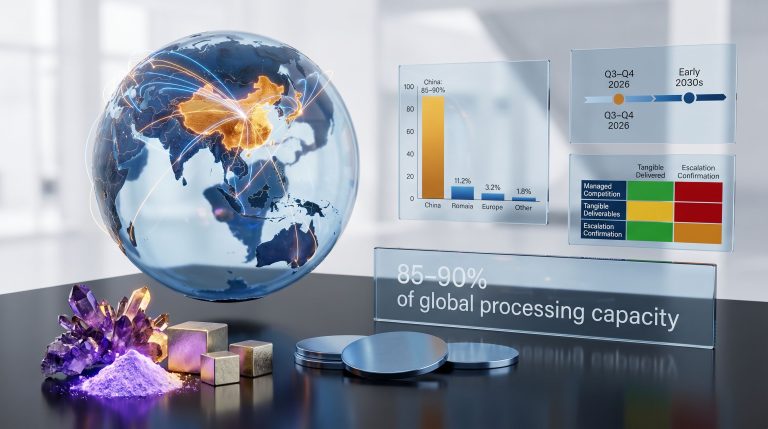
Global technology manufacturing faces unprecedented exposure to supply chain disruptions as critical materials become increasingly concentrated in politically unstable regions. The semiconductor industry's reliance on specialised metals for advanced electronics creates systemic vulnerabilities that extend far beyond individual mining operations. Understanding these dependencies requires examining both the unique properties that make certain materials irreplaceable and the geographic concentration of their production sources. Moreover, the Rubaya mine collapse exemplifies how geopolitical instability can severely impact global supply chains for critical minerals.
Tantalum exemplifies this challenge through its exceptional combination of chemical stability, high melting point, and electrical conductivity properties. These characteristics make it essential for manufacturing capacitors in smartphones, aerospace electronics, and high-performance computing systems where no viable substitutes exist at current technology levels.
When big ASX news breaks, our subscribers know first
Tantalum's Irreplaceable Role in Modern Electronics
The strategic importance of tantalum stems from its unique metallurgical properties that enable miniaturisation and reliability in electronic components. With a melting point of 3,017°C and exceptional corrosion resistance, tantalum capacitors can operate in extreme environments whilst maintaining stable electrical characteristics across wide temperature ranges.
Semiconductor manufacturers depend on tantalum for producing high-capacity capacitors that store electrical charge in compact spaces. Furthermore, these components are critical for:
- Advanced smartphone processors requiring stable power delivery
- Aerospace guidance systems operating in extreme conditions
- Medical implantable devices needing long-term reliability
- Automotive electronics managing complex electrical systems
- High-frequency trading servers demanding minimal signal interference
The electronics industry consumes approximately 60-65% of global tantalum production, with capacitor manufacturing representing the largest single application. Despite ongoing research into alternative materials, tantalum's combination of properties remains unmatched for high-performance applications requiring both miniaturisation and reliability.
Geological Complexity and Mining Challenges in Central Africa
The Democratic Republic of Congo's mineral wealth results from unique geological conditions that concentrate tantalum-bearing pegmatites across the eastern provinces. These formations contain columbite-tantalite (coltan) deposits that have supported both industrial and artisanal mining operations for decades. However, recent developments have highlighted significant challenges in the region's supply chain stability.
Artisanal Mining Structure and Economic Impact
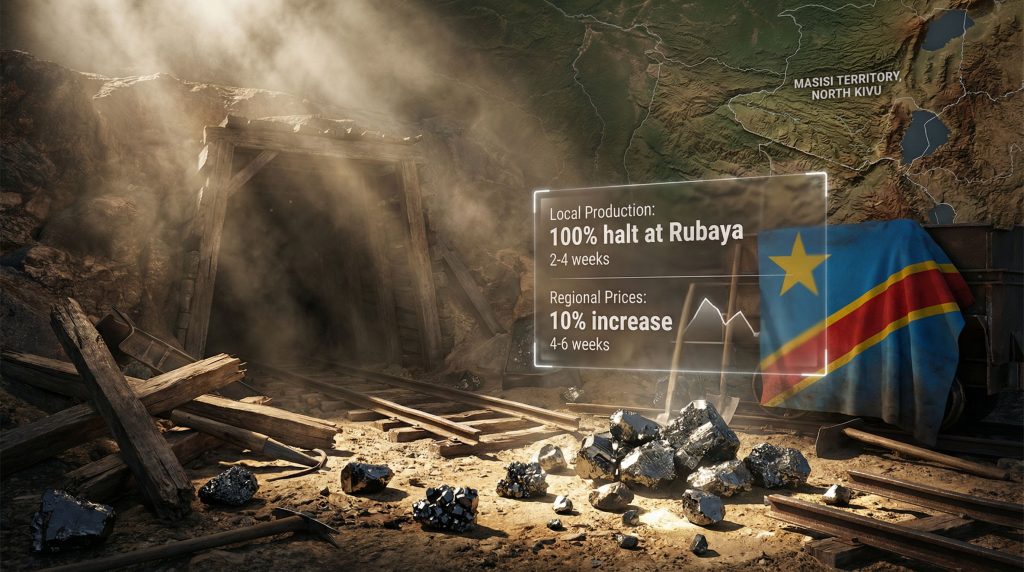
Artisanal mining in North Kivu province operates through complex networks of individual miners, local cooperatives, and trading intermediaries. The Rubaya mine collapse on January 28, 2026, which killed more than 200 people, highlights the dangerous conditions under which much of the world's tantalum supply is extracted.
Before the collapse, Rubaya represented a significant source of coltan production under the control of the Rwanda-backed M23 rebel group since April 2024. The operation generated an estimated $800,000 monthly in revenue through taxation and direct sales, according to UN Group of Experts reporting.
The immediate market response demonstrated the supply chain's sensitivity to disruptions. Tantalum prices increased 10% within seven days following the collapse, reaching $128-132 per pound by February 5, 2026, as material flows from Rubaya ceased during funeral observances for victims.
Technical Failures and Safety Infrastructure Gaps
Mining disasters in artisanal operations typically result from multiple compounding factors rather than single point failures. The Rubaya mine collapse occurred during seasonal rainfall patterns that saturate soil conditions and destabilise underground workings lacking proper engineering support. Consequently, this disaster has drawn attention to broader critical minerals demand patterns and their impact on mining operations.
Critical safety infrastructure absent from most artisanal sites includes:
- Ventilation systems for air circulation and gas management
- Emergency exits providing multiple evacuation routes
- Ground support structures preventing tunnel collapse
- Water drainage systems managing groundwater infiltration
- Early warning sensors detecting geological instability
International mining safety standards require comprehensive geological surveys, structural engineering assessments, and continuous monitoring systems that are economically unfeasible for small-scale artisanal operations. This creates an inherent tension between safety requirements and economic accessibility for local mining communities.
Geopolitical Control and Resource Extraction Dynamics
Armed group control over mineral resources in eastern DRC represents a calculated strategy for funding military operations whilst disrupting government authority. M23's capture of Rubaya and surrounding Masisi territory provides access to valuable tantalum concentrates that generate sustainable revenue streams.
The group's territorial expansion accelerated following their January 2025 offensive that seized Goma and Bukavu, major cities controlling strategic export routes. This expansion enabled direct control over border crossings with Rwanda, facilitating systematic smuggling operations.
Washington Accords and Diplomatic Limitations
The December 5, 2025 Washington Accords between DRC and Rwanda included provisions for ending support to non-state armed groups, but M23 was not a signatory to the agreement. This legal gap undermined enforcement mechanisms, as demonstrated by M23's capture of Uvira in mid-December 2025, shortly after the accords' signing.
Separate negotiations in Qatar have proceeded slowly, highlighting the complexity of achieving sustainable peace agreements when armed groups derive substantial revenue from resource control. M23's estimated $800,000 monthly income from tantalum operations provides strong economic incentives to maintain territorial control regardless of diplomatic pressure. In addition, these challenges reflect broader mining governance challenges facing the global mining industry.
Global Supply Chain Reconfiguration and Market Response
The tantalum market's response to Central African supply disruptions reveals both the system's vulnerability and its adaptive capacity. Major consuming nations have pursued different strategies for managing supply security risks, particularly in light of the Rubaya mine collapse implications for global supply chains.
Trade Pattern Shifts and Strategic Positioning
United States imports of tantalum concentrates from DRC and Rwanda have dropped to zero over the past two years as companies seek to avoid conflict mineral compliance violations. This represents a dramatic shift from historical sourcing patterns and reflects downstream pressure from technology companies implementing stricter due diligence requirements.
Simultaneously, China's imports from Rwanda increased 82% between 2023 and 2025, rising from 1,571 tonnes to 2,865 tonnes. This makes China the largest global importer of tantalite, positioning Chinese processors to capture market share as Western companies withdraw from Central African sourcing.
| Region | 2023 Imports (tonnes) | 2025 Imports (tonnes) | Change |
|---|---|---|---|
| United States | Limited data available | 0 | -100% |
| China | 1,571 | 2,865 | +82% |
| European Union | Data not specified | Data not specified | Declining trend |
Alternative Supply Development and Production Scaling
Mining companies outside Central Africa have responded to supply chain uncertainty by expanding tantalum production capacity, though scaling presents both technical and economic challenges. For instance, the European CRM supply initiatives have gained momentum following recent disruptions.
Australian By-Product Operations
Australia's tantalum production operates primarily as a by-product of lithium mining, creating unique economic dynamics where tantalum profitability depends on lithium market conditions. Global Advanced Metals has established reliable supply relationships with the Greenbushes and Wodgina mines, providing diversified sourcing options for US smelting operations.
Liontown Resources demonstrated significant production scaling capability, increasing tantalite output from 246 dry metric tonnes in the first half of 2025 to 591 dry metric tonnes in the corresponding 2026 period. This 140% increase illustrates the potential for rapid capacity expansion when market conditions support investment.
Brazilian Capacity Expansion Under Chinese Investment
China Non-ferrous Metals Mining Group's (CNMC) acquisition of 100% of Mineracao Taboca from Peruvian owners Minsur SA in November 2024 represents strategic vertical integration in tantalum supply chains. The $100 million investment commitment aims to double production capacity by 2028, providing CNMC's subsidiary Ningxia Orient with direct access to Brazilian tantalum, niobium, and tin production.
This acquisition pattern reflects Chinese companies' strategy of securing long-term supply through direct ownership rather than market purchases, potentially reducing global tantalum availability for other consuming regions.
The next major ASX story will hit our subscribers first
Corporate Due Diligence and Compliance Challenges
OECD due diligence requirements for conflict minerals create complex compliance obligations that extend throughout global supply chains. Companies must trace material origins and verify that purchases do not fund armed conflict, but verification becomes increasingly difficult as material flows through multiple intermediaries and processing stages. Furthermore, the deadly mine disaster has intensified scrutiny of supply chain practices.
Material Traceability in Mixed-Origin Shipments
The systematic smuggling of DRC tantalum into Rwanda creates contamination risks for companies sourcing Rwandan material. Market sources indicate that M23-controlled material is mixed with legitimate Rwandan production before international sale, making origin verification extremely challenging using standard documentation methods.
Technology companies including Apple have responded by urging supply chain partners to avoid Central African sourcing entirely, creating market pressure for geographic diversification. This approach prioritises compliance certainty over supply security, potentially creating different types of vulnerabilities as sourcing concentrates in alternative regions.
Investment Opportunities in Supply Chain Restructuring
Supply chain disruptions create investment opportunities across multiple segments of the tantalum value chain, from primary production through advanced processing and recycling technologies. However, these opportunities must be considered within the context of ongoing industry evolution trends that are reshaping the global mining landscape.
What Potential Do Junior Mining Companies Hold?
Companies with tantalum by-product potential from lithium or other primary operations may benefit from higher tantalum prices and supply security concerns. Investment in upgraded processing equipment can improve recovery rates from low-grade concentrates, effectively expanding supply without new mining operations. Consequently, junior mining strategies have become increasingly important for investors seeking exposure to critical minerals.
Processing Technology and Recycling Development
Advanced separation technologies that can process lower-grade concentrates or extract tantalum from electronic waste represent growth opportunities as primary supply becomes more expensive or uncertain. Urban mining from discarded electronics could provide alternative feedstock for tantalum production, though current recycling rates remain extremely low.
Disclaimer: This analysis is based on publicly available market information and should not be considered investment advice. Tantalum market investments carry significant risks related to geopolitical instability, regulatory changes, and demand volatility. Readers should conduct independent research and consult qualified financial advisors before making investment decisions.
Regulatory Evolution and Market Structure Changes
Enhanced enforcement of conflict mineral regulations could reshape global tantalum trade patterns by creating higher compliance costs and stricter verification requirements. Potential sanctions on material from conflict-linked sources might accelerate supply chain regionalisation as companies prioritise legal certainty over cost optimisation.
International certification schemes under development aim to provide greater transparency in mineral supply chains, but implementation complexity and cost considerations may limit adoption to larger operators. Smaller artisanal operations that provide significant portions of global tantalum supply may lack resources to participate in formal certification programs.
Long-Term Implications for Mining Communities
Economic transitions away from artisanal tantalum mining face substantial challenges in regions where few alternative economic activities exist. Infrastructure development required for safer industrial mining operations would require massive capital investments that current market economics may not support.
Social impact assessments suggest that rapid supply chain disengagement could worsen humanitarian conditions in mining-dependent communities without concurrent development of alternative livelihoods. Sustainable transitions require coordinated approaches that address both supply chain security concerns and local economic development needs.
The path forward requires balancing multiple objectives: ensuring supply chain security for critical technologies, maintaining compliance with conflict mineral regulations, and supporting economic development in mining regions. The Rubaya mine collapse serves as a stark reminder of the human cost of our global technology supply chains. Success will depend on innovative approaches that address technical, economic, and social challenges simultaneously rather than treating them as separate problems requiring individual solutions.
Want to Position Yourself Ahead of Critical Mineral Market Movements?
Discovery Alert's proprietary Discovery IQ model delivers real-time alerts on significant ASX mineral discoveries, including critical minerals essential for global supply chains, instantly empowering subscribers to identify actionable opportunities ahead of the broader market. Understand why historic discoveries can generate substantial returns by exploring proven examples of exceptional market outcomes, then begin your 14-day free trial today to secure your market-leading advantage.