July 16, 2026
The Geological Knowledge Gap That Keeps Africa's Critical Minerals Out of Reach
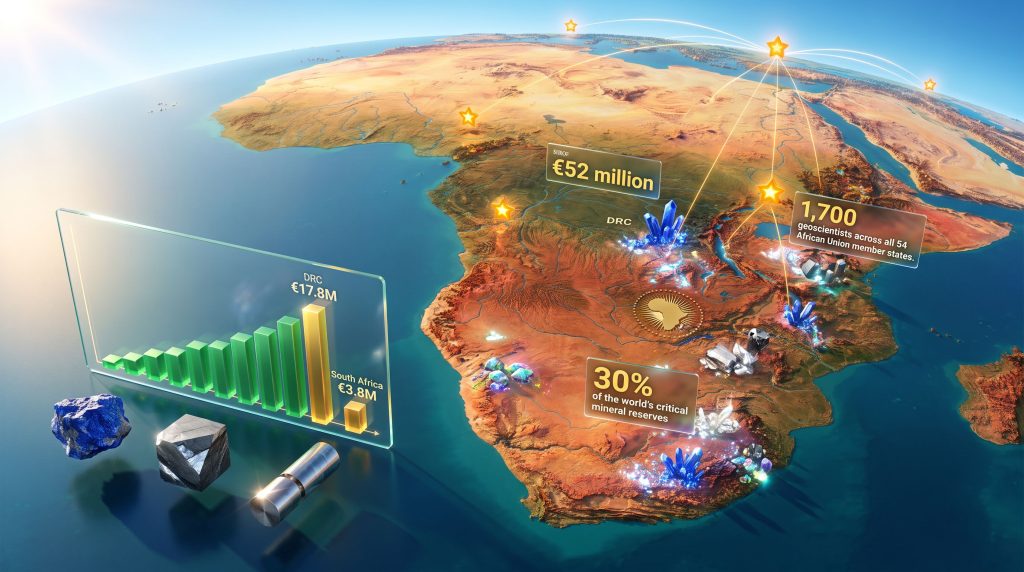
Every major resource boom in modern history has shared one prerequisite: someone had to map the ground first. Before copper flowed from Chile's Atacama, before iron ore shaped Western Australia's economy, governments invested in the foundational geological surveys that made private capital feel safe enough to commit. Across much of Africa, that foundational work simply has not happened at the scale the continent's mineral endowment demands. The result is a paradox that shapes global supply chain strategy, European industrial policy, and African development trajectories all at once: a continent estimated to hold approximately 30% of the world's critical mineral reserves remains, in large parts, geologically unmapped at the resolution that modern investors require.
Understanding why this gap exists, who is responsible for closing it, and what the emerging PanAfGeo+ and Africa mineral investment framework looks like in practice requires moving beyond headlines about mining deals and into the structural mechanics of how mineral exploration importance actually works.
When big ASX news breaks, our subscribers know first
Why Exploration Capital Avoids Africa's Frontier Territories
The disparity in exploration spending between Africa and mature mining jurisdictions is not a consequence of geological inferiority. It reflects an information asymmetry so severe that risk-modelling becomes nearly impossible. According to Jean-Claude Guillaneau, coordinator of PanAfGeo+ at the French Geological Survey (BRGM), speaking to Ecofin Agency on the sidelines of the Mining On Top Africa conference in Paris, exploration spending per square kilometre in countries such as Canada and Australia runs at roughly 100 times the level seen across Africa. That is not a marginal gap. It is a structural chasm.
This spending disparity compounds over time. Mature jurisdictions attract more capital because they have more data. More data produces better-defined targets. Better targets attract more capital. Africa, locked out of this virtuous cycle, is left with a geological knowledge base that in many cases predates the satellite era, let alone modern airborne geophysical techniques.
What Outdated Geological Data Actually Looks Like on the Ground
The practical consequences of this knowledge deficit are concrete. Malawi's national geological maps, prior to recent intervention, dated to the 1960s and had been originally produced under British colonial administration. In the Democratic Republic of Congo, significant volumes of geological survey data collected during the Belgian colonial period had never been formally transferred to the DRC's own geological survey institutions, let alone digitised into modern, queryable formats.
This is not merely an archival inconvenience. Guillaneau's account of current BRGM work in the DRC involves digitising Belgian government geological records and converting them into accessible formats precisely because those records, which could inform the most capital-intensive mineral territory on the continent, have been sitting in European archives rather than serving the national geological surveys that need them.
Geological data is not an academic output. It is the first document any serious investor requests before committing capital to a jurisdiction. Without it, even prospective mineral-rich territories cannot attract early-stage exploration funding.
The implication for investors is significant. When a fund manager or corporate development team evaluates an African mining opportunity, the absence of reliable baseline geological data forces them to absorb a layer of uncertainty that simply does not exist in Canada, Australia, or Scandinavia. That uncertainty premium is enough to redirect capital to safer jurisdictions, regardless of the underlying geological prospectivity.
PanAfGeo+: A Decade of Foundation-Building, Now With an Investment Engine
The PanAfGeo programme launched roughly a decade ago with a straightforward but ambitious mandate: build the human capacity within African geological surveys that would allow the continent to understand and communicate its own subsurface. Over its first phase, the programme trained more than 1,700 geoscientists drawn from all 54 African Union member states, working through national geological surveys and academic institutions alike.
PanAfGeo+ extends and deepens that work through 2029, but adds a dimension that the original programme lacked: a structured pathway from geological knowledge to bankable investment projects. The programme's total budget of approximately €52 million (roughly USD $59.6 million) makes it the largest geoscience initiative ever deployed across the African continent. Furthermore, the critical minerals demand driving this investment reflects a broader global urgency around energy transition supply chains.
| Programme Phase | Core Function | Operational Period |
|---|---|---|
| PanAfGeo (Phase 1) | Geoscientist capacity building across AU member states | Approx. 2014 to 2024 |
| PanAfGeo+ | Training continuation plus investment facilitation | 2025 to 2029 |
| PanAfGeo+ Invest | Translating geological intelligence into investable projects | Launched March 2026 |
The governance architecture of PanAfGeo+ reflects the scale of ambition. The programme operates in close coordination with the African Union through the African Minerals Development Centre (AMDC), the AU body responsible for implementing the Africa Mining Vision, as well as the Organisation of African Geological Surveys and the Geological Society of Africa. This is not a bilateral donor-recipient arrangement. It is a multilateral framework designed to embed geoscientific capacity permanently within African institutions.
The AfricaMaVal Pipeline: From Prospectivity to Strategic Designation
A predecessor initiative called AfricaMaVal served as the investment intelligence precursor to PanAfGeo+ Invest. Through that programme, coordinators identified approximately 100 investment opportunities across Africa spanning the full mineral value chain, from exploration through to recycling. The work was not merely prospectivity mapping. It was investment advocacy, demonstrating to European institutions and industrial buyers that viable, structured opportunities existed across a range of African jurisdictions.
The results of that advocacy are now visible in a striking statistic. The European Union has formally designated only 13 strategic raw materials projects outside its own borders. Of those 13, five are located in Africa, representing close to 40% of all globally recognised EU strategic designations. According to Guillaneau, this outcome is a direct result of the identification and advocacy work carried out under the AfricaMaVal framework.
Who Pays for the Work That Makes Investment Possible?
One of the most important and least publicly understood questions in African mineral development concerns the financing of pre-competitive geological work. The economics here are counterintuitive to those unfamiliar with the exploration industry.
Mining companies, regardless of their nationality or balance sheet strength, will pursue known mineral deposits with defined resource estimates. They will not fund the speculative upstream work required to generate that knowledge in the first place. This is not a failure of corporate responsibility. It reflects a rational economic calculus: the probability of discovering a commercially viable deposit when systematic exploration commences in a new area is approximately 1 in 100. No private company can sustainably absorb that risk across the frontier territories of an entire continent.
Even when exploration succeeds and a discovery is made, the timeline from discovery to production is formidable. Guillaneau estimates an average development period of approximately 17 years, with significant commodity-specific variation:
- Gold deposits tend to follow a faster development cycle with comparatively lower capital intensity
- Large-scale copper deposits demand enormous capital commitments and therefore typically require extended development timelines
- Battery metal projects such as lithium and cobalt often face additional complexity from processing requirements and evolving offtake structures
This 17-year horizon means that the return on pre-competitive geological investment is measured in decades, not quarters. That is why governments, not private explorers, must bear the cost of this foundational phase.
Country-Level Approaches: A Continent of Divergent Strategies
Africa's 54 sovereign states have approached the financing of geological knowledge in fundamentally different ways, shaped by revenue availability, governance capacity, and historical relationships with international development institutions. In addition, African mining finance trends reveal how these divergent approaches continue to evolve across the continent.
| Country or Group | Funding Mechanism | Focus Area |
|---|---|---|
| Morocco | Self-funded incremental national programme | Systematic territorial remapping |
| Botswana | Diamond revenue reinvested into diversification strategy | Non-diamond mineral exploration |
| Gabon and Chad | Oil revenue-backed geological programmes | Broader mineral territory inventory |
| Malawi | French government bilateral funding via BRGM | Complete national geological remapping |
| DRC | World Bank, EU, and PanAfGeo coordinated funding | Belgian colonial archive digitisation and modern survey integration |
| Cameroon, Guinea, Senegal | World Bank-funded BRGM partnerships | Geological data modernisation and survey strengthening |
The contrast between Morocco and the DRC illustrates the range of conditions across the continent. Morocco has the institutional capacity and fiscal headroom to fund geological knowledge-building incrementally from domestic resources. The DRC, despite hosting some of the world's most significant deposits of cobalt, coltan, and copper, is only now able to access its own colonial-era geological records through internationally funded digitisation programmes. The World Bank's assessment of Africa's mineral resources underscores just how significant these untapped reserves remain.
How PanAfGeo+ Invest Bridges the Gap Between Data and Capital
PanAfGeo+ Invest operates across three distinct operational pillars, each targeting a different bottleneck in the pathway from geological prospectivity to deployed private capital.
- Investment Facilitation: Creating direct connectivity between European industrial capital, off-takers, and African project developers to accelerate deal flow that would otherwise stall in the absence of trusted intermediaries
- Strategic Risk Intelligence: Producing structured analysis of political, regulatory, environmental, and social risk contexts that allows EU-aligned investors to evaluate opportunities with greater confidence
- Project Development Support: Identifying and advancing emerging critical mineral projects across the value chain, including processing and value-added manufacturing rather than raw ore extraction alone
The programme's budget allocation across its pilot country windows reflects a deliberate prioritisation of the DRC, which receives €17.8 million, nearly 4.7 times the €3.8 million allocated to South Africa. This ratio reflects the DRC's position as a globally critical source of cobalt and copper, combined with the depth of its geological data deficit. Namibia is also included within the broader €21 million total committed to the Invest Component and Country Windows combined.
The Offtake Agreement as the Dominant Deal Mechanism
European industrial engagement with African mining projects is increasingly structured around offtake agreements rather than direct equity participation. Understanding the mechanics of this instrument is essential to understanding how PanAfGeo+ Invest expects capital to flow.
An offtake agreement is a contractual commitment by a buyer to purchase a defined volume of future mineral production at an agreed or market-indexed price, before a mine enters production. For metals traded on commodity exchanges, the pricing is typically indexed to prevailing market rates.
What makes offtake agreements particularly powerful in the current environment is how they have evolved beyond simple purchase commitments. Guillaneau describes a structural shift now underway: offtake agreements are increasingly bundled with direct capital contributions from the buyer, where a company may provide tens or hundreds of millions of euros to help a project reach production readiness. The purchase commitment then functions as a credit enhancement tool, because lenders can model revenue certainty from the first day of production, making project finance lending substantially more accessible.
This hybrid structure aligns with the EU's broader Global Gateway co-development strategy, which promotes partnerships that support not only extraction but also downstream processing and, where technically and economically feasible, finished goods manufacturing. The active support for a graphite processing facility in Tanzania illustrates this approach in practice, demonstrating a deliberate commitment to value addition within African jurisdictions rather than exporting unprocessed ore.
The European Industry Network: Few Mining Companies, Many Mineral Consumers
A structural reality shapes PanAfGeo+ Invest's engagement strategy: the EU has a comparatively small base of mining companies with active African operations. Eramet, which operates in Gabon and Senegal and is evaluating projects in Mauritania and Malawi among other jurisdictions, represents the type of mid-sized European mining company with direct African exposure. However, such companies are the exception.
What the EU has in abundance is industrial mineral consumption. Organisations including EIT RawMaterials and the European Raw Materials Alliance (ERMA) provide the institutional bridge between this consumer base and African project developers. Companies across aerospace, automotive, defence, and battery supply chain sectors, including names such as Airbus and Renault, carry significant direct or indirect mineral dependencies. ERMA's network gives PanAfGeo+ Invest access to this industrial base at scale.
Building African Geoscience Capacity That Outlasts the Programme
The most strategically significant aspect of PanAfGeo+ may be the least commercially visible: the effort to build African geoscience infrastructure that functions independently after the programme concludes.
Over the 2025 to 2028 period, PanAfGeo+ will produce a comprehensive reference compendium on African geology, the first of its kind authored predominantly by African experts. Between 200 and 250 contributors drawn from national geological surveys and academic institutions across AU member states are expected to participate. The editorial model is explicitly African-led: each country's sections will be authored by domestic experts, not European consultants working on their behalf. The Geological Society of Africa will serve as the primary institutional anchor.
Alongside the compendium, PanAfGeo+ is establishing permanent thematic expert networks across the continent, modelled on the expert group architecture used by EuroGeoSurveys. Focus areas include:
- Critical minerals identification and characterisation
- Geophysics and modern survey methodology
- Geoparks and geotourism development
- Geoheritage documentation and protection
These networks are deliberately designed to require minimal ongoing funding. The objective is professional connectivity and collaborative research capacity, not the creation of new bureaucratic structures that require sustained external financing to survive.
The next major ASX story will hit our subscribers first
The Geopolitical Dimension: Africa's Minerals in a Multipolar World
The PanAfGeo+ and Africa mineral investment framework cannot be fully understood without situating it within the broader competition for critical mineral access. The EU's engagement through PanAfGeo+ Invest represents an explicitly co-development oriented model, structured to differentiate European partnership from purely extractive arrangements associated with other external actors operating across the continent. Consequently, the broader picture of metals and mining geopolitics makes this distinction increasingly consequential for all parties involved.
Africa's approximate 30% share of global critical mineral reserves positions the continent as a central variable in supply chain strategies for electric vehicle batteries, renewable energy infrastructure, and defence manufacturing systems. The concentration of these minerals in African geology means that the competition between the EU, United States, Japan, and China for long-term raw material security will increasingly play out through the terms and structures of African mineral partnerships.
PanAfGeo+'s alignment with the Africa Mining Vision through the AMDC gives the programme a meaningful institutional legitimacy that purely bilateral arrangements lack. The AMV framework prioritises transparent, equitable, and development-oriented mineral governance, making PanAfGeo+ a natural institutional partner rather than an externally imposed programme. Furthermore, Europe's critical minerals supply chain strategy increasingly depends on precisely these kinds of structured, long-term African partnerships to reduce its exposure to single-source dependencies.
Disclaimer: This article contains references to programme budgets, exploration statistics, and geological timelines drawn from publicly available sources including Ecofin Agency reporting. Figures related to discovery probabilities, development timelines, and investment allocations are illustrative and subject to project-specific and jurisdiction-specific variation. Nothing in this article constitutes investment advice. Readers should conduct independent due diligence before making any investment decisions related to African mining or mineral sectors.
Frequently Asked Questions: PanAfGeo+ Invest and African Mineral Development
What is PanAfGeo+ Invest and when did it launch?
PanAfGeo+ Invest is the investment-facilitation component of the broader PanAfGeo+ programme, formally launched in March 2026. Its purpose is to convert geological knowledge built up over a decade of capacity-building work into bankable mining projects by connecting African project developers with European investors and industrial off-takers.
How much total funding does the PanAfGeo+ programme represent?
The EU has committed €21 million specifically to the Invest Component and its associated Country Windows, within the broader €52 million (approximately USD $59.6 million) PanAfGeo+ programme budget. The DRC is the single largest beneficiary, receiving €17.8 million of that country-level allocation.
Why is pre-competitive geological work considered a government responsibility rather than a private sector function?
The economics of early-stage mineral exploration make private sector participation in pre-competitive geological surveys financially irrational. With approximately a 1 in 100 chance of discovering a commercially viable deposit and an average development timeline of roughly 17 years from discovery to production, no private company can sustain the cost of generating baseline geological knowledge across frontier territories at the scale required. This is why geological survey work is universally treated as a public good, funded by governments either directly or through international development partnerships.
How do European companies typically engage with African mining projects?
Rather than acquiring direct equity stakes in mining companies, European industrial players predominantly engage through offtake agreements, which are contractual commitments to purchase defined volumes of future mineral production. These arrangements are increasingly bundled with direct capital contributions from the buyer, creating hybrid financing structures that also facilitate access to conventional project finance lending. The BRGM's cooperative framework with African nations offers a detailed overview of how these partnerships are being structured in practice.
Which African countries are the primary focus of PanAfGeo+ Invest?
The programme currently operates three showcase pilot countries: the Democratic Republic of Congo, Namibia, and South Africa. The DRC receives the largest single country allocation, reflecting its critical role in global cobalt and copper supply chains.
Want to Know When the Next Major African Mineral Discovery Hits the ASX?
Discovery Alert's proprietary Discovery IQ model delivers real-time alerts the moment significant mineral discoveries are announced on the ASX, transforming complex geological data into actionable investment intelligence — exactly the kind of edge that matters when frontier mineral opportunities emerge. Explore historic discoveries and their remarkable returns, then begin your 14-day free trial to position yourself ahead of the broader market.