June 19, 2026
The Geopolitics of Ground: Why Critical Minerals Have Become the New Oil
For most of the twentieth century, the global scramble for resources centred on hydrocarbons. Nations built foreign policy architectures, military alliances, and trade relationships around access to oil and gas. That logic has not disappeared, but it is now being overtaken by something more structurally complex: the race to control the minerals that power the technologies defining the next century.
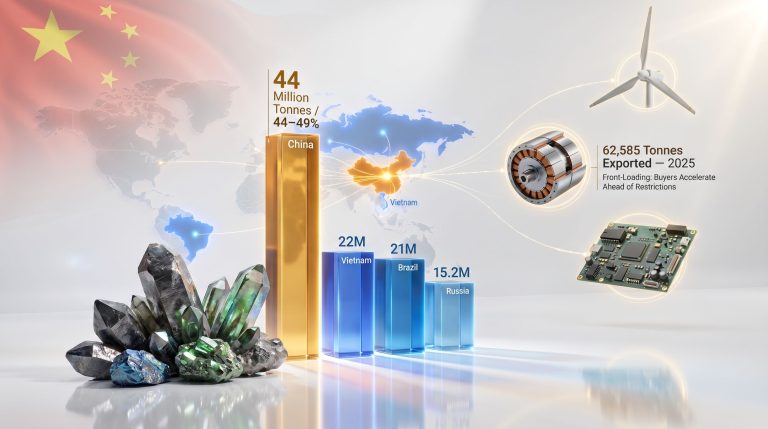
Electric vehicle motors require neodymium and dysprosium. Wind turbines depend on praseodymium. Missile guidance systems and radar arrays consume terbium and europium. The batteries storing energy from solar panels need lithium, graphite, nickel, and cobalt. Every one of these elements shares a common vulnerability: their mining, refining, and processing is concentrated in a dangerously small number of jurisdictions, with China sitting at the centre of nearly every supply chain.
It is within this structural reality that the preliminary US Kenya rare earth deal must be understood. Announced on the sidelines of the G7 summit in France by Kenyan President William Ruto, the agreement covering the Mrima Hill deposit in Kwale County represents far more than a bilateral trade arrangement. It is a calculated move in a long-running geopolitical contest over who controls the mineral foundations of the clean energy economy. Furthermore, understanding rare earth supply chains is essential to appreciating the full significance of what this agreement represents.
When big ASX news breaks, our subscribers know first
Inside Mrima Hill: One of Africa's Most Consequential Untapped Deposits
What Makes This Site Geologically Significant?
The Mrima Hill carbonatite complex, situated on Kenya's southern coast in Kwale County, is not a newly discovered resource. Geological surveys have documented the deposit's existence for decades. What has changed is the geopolitical calculus that now makes exploiting it an urgent priority for Washington.
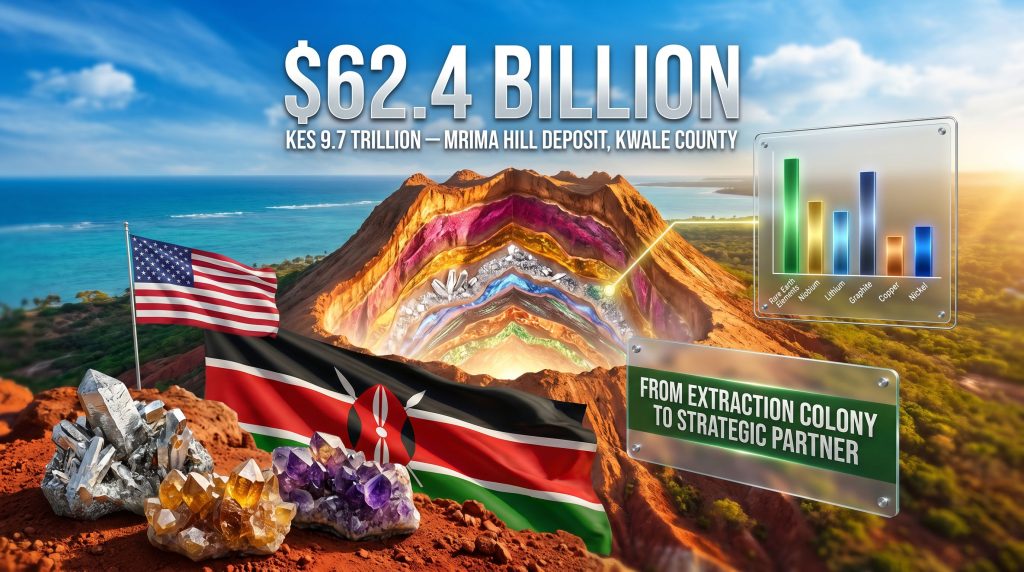
Geological assessments place the deposit's estimated in-ground mineral value at approximately $62.4 billion (KES 9.7 trillion), making it one of the most significant untapped critical mineral concentrations anywhere in East Africa. According to reporting from Standard Media, the US has moved decisively to secure this agreement ahead of competing interests.
The deposit's mineralogy is notably diverse:
| Mineral | Primary Industrial Application | Strategic Significance |
|---|---|---|
| Rare Earth Elements | EV motors, wind turbines, defence electronics | Extremely high; Chinese refining dominates globally |
| Niobium | High-strength steel, superconductors, aerospace alloys | Very high; near-monopoly global supply |
| Lithium | Battery cells, EV storage | Central to clean energy transition |
| Graphite | Battery anodes, industrial lubricants | China controls roughly 65% of world supply |
| Copper | Electrical grid, wiring infrastructure | Foundational to all electrification |
| Nickel | Battery cathodes, stainless steel production | Critical EV input facing supply constraints |
The carbonatite geology at Mrima Hill is particularly relevant from a technical standpoint. Carbonatites are igneous rocks derived from carbonate-rich magmas and are the world's primary source of niobium and light rare earth elements such as lanthanum, cerium, and neodymium. The mineralisation style typically produces high-grade concentrations relative to other geological settings, which is why deposits of this type attract intense commercial interest despite their relative rarity globally.
Niobium: The Mineral Most Investors Overlook
Among all the minerals present at Mrima Hill, niobium may carry the most underappreciated strategic weight. Global supply is extraordinarily concentrated: Brazil's Companhia Brasileira de Metalurgia e Mineração (CBMM) accounts for roughly 85% of world production, with the remainder split between a handful of smaller operations. This level of supply concentration exceeds even that of rare earths, yet niobium receives a fraction of the policy attention.
Why does this matter? Niobium's primary application is in high-strength low-alloy steel, where adding just 0.1% niobium can increase steel strength by up to 30%, reducing the amount of steel needed in construction, automotive manufacturing, and pipeline infrastructure. Beyond steel, niobium is being actively researched for use in superconducting applications, quantum computing components, and next-generation battery chemistries.
Kenya's Mrima Hill deposit representing a credible non-Brazilian niobium source is, from a supply diversification perspective, arguably the single most strategically significant aspect of the entire US Kenya rare earth deal.
The Architecture of Washington's African Minerals Strategy
A Deliberate Multi-Country Framework, Not an Isolated Transaction
The Kenya agreement does not exist in isolation. Washington has been systematically assembling a network of bilateral mineral partnerships across the African continent, each targeting a different mineral basket and each incorporating varying degrees of processing conditionality. In addition, the broader critical minerals demand driving the energy transition is accelerating the urgency behind each of these arrangements.
| Country | Mineral Focus | Approximate Deal Scope | Status |
|---|---|---|---|
| Kenya (Mrima Hill) | REEs, niobium, lithium, graphite | ~$62.4B deposit value | Preliminary |
| Democratic Republic of Congo | Cobalt, copper | Undisclosed | Active discussions |
| Zambia | Copper, critical minerals | $491M grant scope | Expanding |
| Greenland | Rare earths | Arctic strategic access | Active |
| Nigeria | Rare earths | ~$400M project | Advancing |
The pattern is consistent: the United States is targeting countries with significant mineral endowments, offering trade relationships, technical partnerships, and financing access in exchange for preferential supply arrangements. What distinguishes the current wave of agreements from earlier resource diplomacy is the processing conditionality embedded in nearly every deal.
Understanding the In-Country Processing Requirement
The requirement that all strategic minerals from Mrima Hill be processed domestically within Kenya before export is simultaneously a Kenyan policy demand and a US supply chain objective.
From Kenya's perspective, processing minerals domestically rather than exporting raw ore means:
- Capturing the value-added premium that transforms low-margin raw materials into higher-priced industrial inputs
- Generating skilled industrial employment that extraction alone does not create
- Building technical and engineering capacity through exposure to processing technology
- Maximising government revenue through taxation of higher-value export products
From Washington's perspective, in-country processing within a US-aligned partner nation achieves something strategically vital: it creates a refining node outside Chinese processing infrastructure. Even if Chinese companies retain some involvement at the mining stage, the refining and separation of rare earth elements occurring within a US-partner country reduces Beijing's ability to leverage its processing monopoly as a geopolitical tool.
This is not hypothetical leverage. In 2010, China temporarily restricted rare earth exports to Japan during a territorial dispute, causing immediate disruptions to Japanese electronics manufacturing. The episode demonstrated that control over refining, not just mining, is where genuine supply chain power resides. Consequently, the critical minerals coalition being assembled by Washington is designed precisely to counter this kind of leveraged disruption.
Why Displacing China in African Minerals Is Harder Than It Looks
China's Structural Advantages Are Deeply Embedded
Understanding the US Kenya rare earth deal requires an honest assessment of what Washington is competing against. China's position in African mineral supply chains was not built overnight, and it will not be dismantled through bilateral agreements alone.
Beijing's advantages span multiple dimensions:
- Processing infrastructure dominance: China controls an estimated 60 to 80% of global rare earth refining capacity, built over decades through deliberate industrial policy
- Financing speed: Chinese state-backed institutions can approve and disburse capital for mining projects far faster than Western alternatives, which are subject to environmental, social, and governance due diligence requirements
- Belt and Road interdependencies: Infrastructure financing packages embedded mineral access agreements within broader port, road, and rail development deals, creating economic relationships that are difficult to unpick
- Long-term offtake contracts: Chinese firms hold legally binding purchase agreements for mineral output from operations across the DRC, Zimbabwe, Mozambique, and beyond
- Technical relationships: Decades of Chinese mining engineers, geologists, and technicians working in African countries have built institutional familiarity and trust that is hard for newcomers to replicate quickly
The critical analytical point here is that the US is not competing on a level playing field. Washington is entering markets where Chinese relationships are already mature, financing is already committed, and processing agreements are already in place. The competitive advantage Washington can offer lies in technology transfer, transparent governance frameworks, and access to US and European end markets.
Russia's Parallel Model: Security for Resources
Russia has pursued a structurally different approach in Africa, embedding mineral access within security cooperation arrangements. In Mali, the Central African Republic, and Sudan, entities linked to Russian private military contractors have secured mining concessions as part of agreements providing military protection to fragile regimes.
This model is less applicable to Kenya, which has stable governance structures and democratic institutions. However, it shapes the broader competitive landscape because it demonstrates that multiple actors are willing to offer African governments very different value propositions in exchange for mineral access. Washington must compete not just with Chinese financing but with Russian security guarantees in contexts where governance is more fragile.
Kenya's Negotiating Position: Sovereignty, Revenue, and Industrial Ambition
President Ruto's Resource Nationalism Framework
Kenya's engagement with Washington reflects a broader ideological shift across African governance: the explicit rejection of the colonial-era model in which African countries export raw materials at low prices while industrialised nations capture the manufacturing value.
President Ruto's announcement at the G7 summit in France framed the agreement specifically around the principle of domestic value addition. The Kenyan government's position was that strategic minerals extracted from Kenyan soil would be processed within Kenya, not shipped abroad as unrefined ore. This is consistent with a continental trend: similar processing conditionality clauses now appear in mineral agreements involving Tanzania, Zimbabwe, Namibia, and Nigeria.
The economic logic is compelling. Raw rare earth concentrate typically sells for a fraction of the price of separated rare earth oxides, which in turn sell for less than refined rare earth metals. The value multiplication across the processing chain can be substantial, meaning that in-country processing could transform Kenya's mineral revenue from hundreds of millions of dollars annually to a multiple of that figure over a sustained period. This dynamic is central to the evolving landscape of critical minerals trade that countries worldwide are now seeking to reshape on more favourable terms.
Unresolved Community and Environmental Concerns
It would be analytically incomplete to discuss this agreement without acknowledging the concerns raised by civil society groups and environmental advocates regarding the Mrima Hill site. The deposit sits in a coastal ecosystem, and questions around environmental impact assessments, community benefit-sharing arrangements, and the degree of public participation in negotiations remain unresolved as of the preliminary agreement stage.
Business and Human Rights Resource Centre reporting highlights significant concerns about insufficient public participation in the process so far. Key issues that require transparent resolution before the deal progresses include:
- The adequacy and independence of environmental impact assessment processes for a large-scale processing operation
- Revenue-sharing arrangements between Kenya's national government and Kwale County communities
- The extent of public consultation conducted with communities in the immediate vicinity of the Mrima Hill site
- Long-term ecological risk management for coastal ecosystems potentially affected by processing operations
These are not peripheral concerns. Environmental opposition and community legal challenges have derailed or significantly delayed major mining projects across Africa in recent years, and investors and policymakers monitoring this agreement should treat unresolved community issues as a material risk factor.
The G7 Announcement: Why Forum Selection Matters in Minerals Diplomacy
Announcing the agreement on the sidelines of the G7 summit in France was a deliberate strategic choice that carries implications beyond the bilateral relationship. The G7 forum provides international visibility and creates reputational accountability: both parties are now publicly committed to a course of action that would be diplomatically costly to abandon without explanation.
The timing also positions Kenya explicitly within the US-led Minerals Security Partnership framework, signalling to Beijing that Washington is actively and publicly competing for East African mineral relationships at the highest diplomatic level. For China, the message is unambiguous: Kenya is no longer a passive target in Africa's mineral landscape but an active strategic partner pursuing alignment with Western supply chains.
The word preliminary carries genuine weight in this context. The agreement has not been executed as a binding treaty. Key structural elements including investment architecture, processing facility financing, offtake pricing mechanisms, and environmental compliance frameworks remain under negotiation. Historically, preliminary agreements in African mineral deals have faced delays ranging from regulatory complications to financing gaps to shifts in political leadership on either side. Observers should treat the G7 announcement as a statement of intent, not a completed transaction.
The next major ASX story will hit our subscribers first
Five Risks That Could Slow or Derail the US-Kenya Rare Earth Agreement
Informed analysis requires identifying the structural vulnerabilities that could prevent this preliminary agreement from reaching implementation:
- Processing infrastructure financing gap: Building domestic rare earth separation and refining capacity requires capital investment in the hundreds of millions to billions of dollars. Neither party has publicly confirmed the financing structure, and this remains the most significant practical obstacle.
- Regulatory and permitting complexity: Kenya's mining regulatory environment will need substantial adaptation to accommodate large-scale rare earth processing operations, and permitting timelines for facilities of this type are typically measured in years.
- Chinese counter-engagement: Beijing has both the financial tools and the established relationships to approach Kenya with a competing offer. The outcome would depend on Kenya's assessment of which partnership offers superior long-term economic returns.
- Political transition risk: Government changes or policy reprioritisation on either side could redirect or delay negotiations that are still in their preliminary phase.
- Community and environmental legal challenges: Unresolved local concerns at Mrima Hill could generate legal injunctions or regulatory delays that add years to project timelines.
Africa's Mineral Moment: From Passive Resource to Active Geopolitical Capital
The Continental Shift Reshaping Mineral Diplomacy
The US Kenya rare earth deal encapsulates a transformation that extends far beyond a single bilateral agreement. Across the African continent, governments are increasingly treating mineral endowments as active instruments of geopolitical leverage rather than passive sources of export revenue. The critical minerals geopolitics playing out in Greenland and elsewhere underscore that this is a global contest, not merely an African one.
Several structural dynamics are reinforcing this shift simultaneously:
- Processing conditionality has become a standard negotiating demand across multiple African jurisdictions, fundamentally changing the economics of foreign mineral investment on the continent
- Competitive bidding between US, Chinese, European, and Gulf state investors is giving host nations more negotiating leverage than they have held at any point in the post-colonial era
- Regional integration frameworks such as the African Continental Free Trade Area create the theoretical possibility of continent-wide mineral processing value chains that transcend individual bilateral agreements
- Domestic industrial policy in leading African economies is increasingly being built around mineral value chains rather than extraction royalties, signalling a generational shift in economic development strategy
If Kenya successfully builds and operates domestic rare earth processing capacity under this agreement, the implications extend well beyond its borders. East Africa would possess a functioning rare earth supply node operating entirely outside Chinese refining infrastructure and within a US-aligned supply chain architecture. That outcome would represent a meaningful shift in the global rare earth market structure, not just a bilateral trade success.
The competitive dynamics shaping this agreement will determine whether Washington can transform a preliminary deal into a durable supply chain anchor, or whether structural obstacles allow China to reassert its position in one of Africa's most strategically valuable mineral deposits.
Disclaimer: This article contains forward-looking statements and analytical projections based on publicly available information. It does not constitute financial or investment advice. Readers should conduct independent due diligence before making any investment decisions related to companies or projects discussed in this analysis.
Want to Identify the Next Major Critical Minerals Discovery Before the Market Does?
Discovery Alert's proprietary Discovery IQ model delivers real-time alerts on significant ASX mineral discoveries — instantly transforming complex geological data into actionable investment insights across rare earths, niobium, lithium, and beyond. Explore historic discoveries and the returns they generated, then begin your 14-day free trial at Discovery Alert to position yourself ahead of the market.