
May 19, 2026
Critical Process Dependencies in Modern Metallurgy
Global metallurgical operations depend on intricate chemical process chains where seemingly minor input disruptions can cascade into significant operational challenges. Sulphuric acid represents one of these critical process inputs, serving as the backbone for hydrometallurgical extraction across multiple metal production pathways. Furthermore, the evolution of mining trends demonstrates how record sulphur prices impacting mining industry operations have become a pivotal concern for modern metallurgical facilities. This dependency creates a vulnerability matrix where supply disruptions or price volatility in sulphur markets can fundamentally alter the economics of mining operations worldwide.
The technical specifications for metallurgical-grade sulphuric acid demand consistent quality and reliable supply chains. High-pressure acid leaching (HPAL) facilities, particularly those processing nickel laterites, operate under precise chemical parameters where acid concentration, purity levels, and delivery timing directly impact extraction efficiency rates.
When big ASX news breaks, our subscribers know first
Understanding Industrial Acid Consumption Patterns
Metal-Specific Process Requirements
Different metallurgical processes exhibit varying degrees of sulphuric acid intensity, creating a hierarchy of vulnerability to supply disruptions. Copper oxide leaching operations typically consume between 2,000-4,000 kilograms of acid per tonne of refined copper, while nickel HPAL processing requires 150-300 kilograms per tonne of nickel metal produced.
Primary Acid-Dependent Processing Routes:
- Copper solvent extraction: Oxide ore leaching for cathode production
- Nickel laterite processing: HPAL technology for Class 1 nickel
- Cobalt hydrometallurgy: Intermediate processing for battery-grade materials
- Zinc electrowinning: Electrolytic refining from sulphide concentrates
- In-situ leach uranium: Solution mining applications
The technical complexity of these processes means that acid quality specifications cannot be easily substituted. Technical-grade sulphur requiring 99.5% minimum purity becomes essential for preventing contamination in downstream metal products, particularly for battery material applications where trace impurities can significantly impact performance.
Regional Processing Concentration Risks
Indonesia's nickel processing sector exemplifies how geographic clustering of acid-intensive operations creates systemic vulnerabilities. The country's HPAL facilities, primarily located in Sulawesi and other eastern islands, collectively represent significant global nickel production capacity while relying heavily on imported sulphur and sulphuric acid.
Indonesian HPAL Operational Challenges:
- Logistics complexity: Remote facility locations requiring specialised shipping
- Inventory management: Storage infrastructure limitations in tropical climates
- Quality control: Maintaining acid specifications during extended storage periods
- Alternative sourcing: Limited regional supplier diversity
Similarly, African copper mining regions demonstrate concentrated acid dependency, with facilities in Zambia's Copperbelt and Democratic Republic of Congo's mining provinces requiring consistent acid supplies for oxide ore processing.
Supply Chain Architecture and Vulnerability Points
Middle Eastern Production Dominance
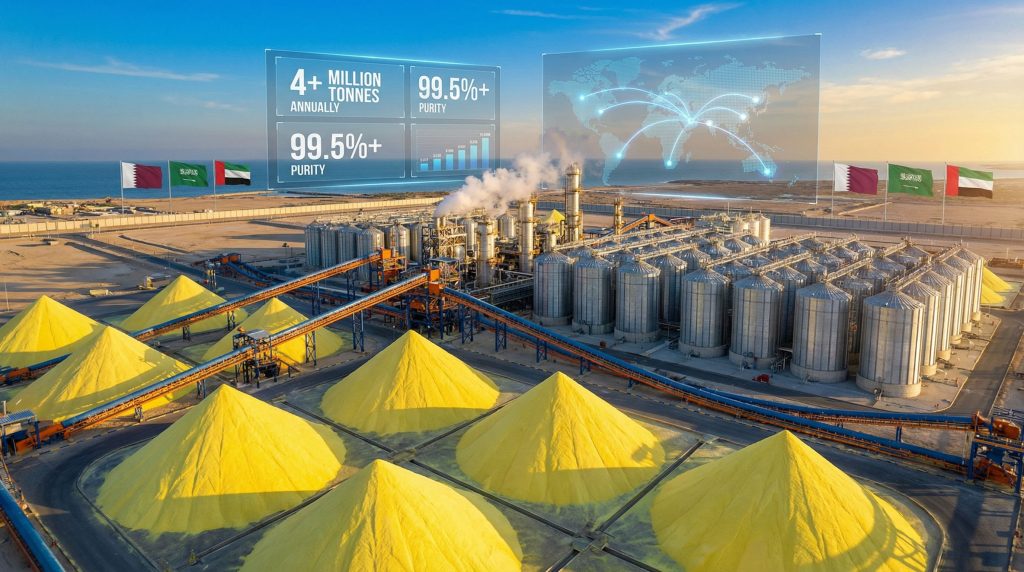
The global sulphur supply structure reflects the hydrocarbon processing industry's geographic distribution, with Middle Eastern facilities generating substantial sulphur volumes as byproducts of natural gas sweetening and oil refining operations. Qatar's North Field gas processing facilities alone contribute over 1.2 million tonnes annually to global sulphur markets.
Saudi Arabian integrated petrochemical complexes produce more than 4 million tonnes of sulphur annually, representing a significant portion of globally traded sulphur. This production concentration creates inherent supply chain risks when geopolitical tensions affect regional operations or transportation routes. Additionally, these global trade disruptions can significantly amplify price volatility.
Critical Transportation Bottlenecks:
| Route | Capacity Constraints | Alternative Options | Risk Premium |
|---|---|---|---|
| Strait of Hormuz | 25% of global sulphur exports | Cape of Good Hope routing | $50-80/tonne |
| Suez Canal | 15% of sulphur shipments | Red Sea alternatives | $30-50/tonne |
| Bab el-Mandeb | Regional distribution hub | East African ports | $40-60/tonne |
| Singapore Strait | Asian transhipment | Northern Australia ports | $20-30/tonne |
Maritime Logistics Complexities
Specialised sulphur carriers require dedicated handling equipment and storage facilities, limiting port options and creating potential congestion points. These vessels, typically ranging from 25,000-40,000 deadweight tonnes, must maintain sulphur in solid form during transport, requiring temperature-controlled cargo holds.
Port infrastructure for sulphur handling remains concentrated in specific regional hubs, creating potential bottlenecks when demand surges or facility maintenance disrupts operations. Storage economics at these facilities balance inventory carrying costs against supply security, with most facilities maintaining 30-45 day coverage under normal market conditions.
Current Market Dynamics and Price Formation
Record Sulphur Prices Impacting Mining Industry Operations
Recent geopolitical tensions have driven sulphur pricing to unprecedented levels, with delivered prices to Indonesian nickel facilities reaching $600-700 per tonne, representing 15-20% of total HPAL processing costs. This pricing environment fundamentally alters project economics for acid-intensive mining operations and contributes to broader energy transition risks facing the industry.
Southern African copper mining regions face even more severe price pressures, with delivered sulphuric acid costs reaching $715 per tonne, representing a 37% increase from pre-conflict levels. Small-quantity procurement from warehouse stocks has reached $1,000 per tonne, creating severe margin pressure for smaller mining operations.
Regional Price Differential Analysis:
- Indonesia delivery: $600-700/tonne (20% increase from baseline)
- Southern Africa: $715/tonne (37% increase)
- Warehouse spot sales: $1,000/tonne (66% premium)
- Chinese domestic: $400-500/tonne (regional supply advantage)
Contract Structure Evolution
Traditional fixed-price sulphur supply agreements are being replaced by more sophisticated pricing mechanisms that account for supply volatility and geopolitical risk factors. These new contract structures include price escalation clauses linked to hydrocarbon indices and volume flexibility provisions allowing 10-15% quantity adjustments.
Force majeure protections have expanded to cover broader geopolitical disruptions, while regional price differentials now systematically reflect transportation risk premiums. Asia-Pacific markets consistently command $100-150 per tonne premiums over Middle East FOB pricing.
Operational Impact Assessment Across Mining Sectors
Indonesian Nickel Processing Adaptations
HPAL facilities in Indonesia are implementing multiple operational adjustments to manage acid cost inflation. These include feed grade optimisation strategies focusing on higher-grade laterite ores to reduce acid consumption per unit of nickel production, and process parameter adjustments involving temperature and pressure optimisation to improve acid utilisation efficiency.
Inventory Management Strategies:
- Extended storage periods: Increasing from 30-45 days to 60-90 days coverage
- Strategic supplier relationships: Developing partnerships with Chinese and Japanese acid producers
- Byproduct optimisation: Enhanced cobalt and scandium recovery to offset acid costs
- Process efficiency improvements: Advanced leaching technology implementation
Some facilities are evaluating captive acid production through on-site sulphur burning facilities, though these projects require substantial capital investment and regulatory approvals for emissions management. These challenges align with the broader supply chain vulnerabilities affecting critical minerals processing.
African Copper Mining Cost Pressures
Zambian copper operations are experiencing additional production costs of $0.08-0.12 per pound of copper due to acid price inflation. Democratic Republic of Congo mining complexes have faced temporary production curtailments due to sulphuric acid shortages, while South African facilities benefit from integrated smelter operations providing captive acid production.
Strategic Response Mechanisms:
- Regional procurement hubs: Establishing acid storage facilities in Durban and Dar es Salaam
- Processing route flexibility: Shifting from leaching to flotation where ore characteristics permit
- Captive acid development: Large operations evaluating on-site production facilities
- Supply chain diversification: Multi-source procurement across regional suppliers
The Copperbelt region's mining operations are particularly vulnerable due to landlocked geography requiring overland transportation from coastal ports, adding logistical complexity and cost to acid procurement.
Alternative Supply Source Development
Non-Traditional Sulphur Recovery Initiatives
Rising sulphur prices are driving renewed interest in alternative production sources previously considered economically marginal. Pyrite processing, historically uneconomical due to environmental and processing costs, is gaining viability at current price levels.
Emerging Supply Sources:
- Enhanced refinery recovery: North American and European capacity expansions
- Hydrogen sulphide treatment: Improved extraction from natural gas processing
- Spent acid regeneration: Circular economy approaches becoming economically viable
- Byproduct optimisation: Increased recovery from industrial processes
These alternative sources typically require higher capital investment and more complex processing technology, but current pricing levels support their economic development. However, the implementation of tariff market impact policies could further complicate the economics of these initiatives.
Regional Production Capacity Development
Several regions are pursuing sulphur production capacity development to reduce import dependence. These projects focus on capturing sulphur from existing industrial processes that previously released sulphur compounds as waste products.
Regional acid production facilities are being planned near major mining clusters, though these projects face permitting challenges related to emissions standards and environmental impact assessments.
The next major ASX story will hit our subscribers first
Investment and Strategic Planning Frameworks
Risk Assessment Methodologies for Mining Investors
Mining investment evaluation now requires sophisticated analysis of sulphuric acid exposure risks. This assessment framework examines acid consumption ratios per unit of metal production, supply contract structures and pricing mechanisms, feasibility of alternative processing technologies, and geographic exposure to supply disruption risks.
Due Diligence Framework Components:
- Quantitative consumption analysis: Acid requirements per production unit
- Supply security assessment: Contract terms and supplier diversification
- Process flexibility evaluation: Capability to reduce acid dependence
- Regional risk profiling: Geopolitical stability of supply sources
Companies with integrated smelting operations maintaining captive acid production demonstrate significantly lower exposure to market volatility. Vertical integration strategies involving backwards integration into sulphur production or processing provide competitive advantages in high-price environments.
Technology Investment Priorities
Mining companies are prioritising technology investments that reduce sulphuric acid consumption or enable alternative processing routes. Advanced leaching technologies that improve acid utilisation efficiency are receiving increased capital allocation.
Research into acid-free processing technologies, while still in early development stages, is attracting venture capital investment as companies seek to eliminate acid dependency entirely for certain metal extraction applications.
Regulatory and Environmental Considerations
Environmental Compliance Drivers
Stricter sulphur recovery requirements from oil and gas operations are affecting global supply patterns. Enhanced emissions standards mandate higher recovery rates from hydrocarbon processing facilities, potentially increasing sulphur availability but also raising production costs.
Environmental permitting for new acid production facilities faces increased regulatory scrutiny, with air quality standards and waste management requirements adding complexity to project development timelines.
Regulatory Impact Factors:
- Emissions standards: Enhanced sulphur recovery mandates
- Transportation regulations: Maritime shipping safety requirements
- Waste management: Spent acid disposal and regeneration standards
- Permitting complexity: Extended approval timelines for new facilities
Circular Economy Integration
Waste acid recovery and regeneration systems are becoming economically attractive as primary acid costs rise. These systems require substantial capital investment but offer long-term cost stability and reduced environmental impact.
Government policies supporting circular economy initiatives may provide additional economic incentives for acid regeneration technologies, though specific regulatory frameworks remain under development in most jurisdictions.
Future Market Evolution Scenarios
Long-Term Structural Transformation
Supply chain regionalisation trends are driving development of regional sulphur production capabilities, reducing dependence on Middle Eastern exports. Strategic inventory building programmes by both governments and corporate entities are creating buffer capacity against future supply disruptions.
Scenario Planning Framework:
Baseline Scenario (60% probability):
- Gradual price normalisation to $400-500/tonne by 2027
- Moderate supply chain diversification reducing import dependence
- Incremental technology improvements in acid utilisation efficiency
High Price Persistence (25% probability):
- Sustained pricing above $600/tonne through 2028
- Accelerated alternative technology development and deployment
- Significant mining project deferrals in high-cost regions
Rapid Normalisation (15% probability):
- Swift price correction below $350/tonne due to oversupply
- New Middle East capacity additions creating market surplus
- Demand destruction from broader economic slowdown
Technology Substitution Pathways
Research into acid-free processing technologies is advancing across multiple technological pathways, including direct electrochemical extraction, bioleaching applications, and alternative hydrometallurgical solvents. While these technologies remain in development phases, sustained high acid prices accelerate commercial deployment timelines.
Mining companies are evaluating process portfolio diversification strategies that reduce overall acid dependency through hybrid processing approaches combining multiple extraction technologies based on ore characteristics and market conditions.
Risk Management and Operational Resilience
Financial Hedging Strategies
Limited sulphur derivatives markets restrict traditional hedging options, though institutional interest in sulphur price swaps is growing. Proxy hedging using oil and gas derivatives provides partial correlation-based price protection, while supply contract optimisation balances fixed-price and index-linked agreement structures.
Available Risk Management Tools:
- Sulphur price swaps: Limited liquidity but developing institutional markets
- Proxy hedging instruments: Oil and gas derivatives for correlation exposure
- Contract structure optimisation: Mixed fixed-price and index mechanisms
- Operational hedging: Process flexibility reducing input dependencies
Supply Chain Resilience Building
Strategic resilience frameworks emphasise supplier diversification across geographic regions, inventory optimisation balancing carrying costs against supply security, and process flexibility enabling switching between different extraction technologies based on input availability and cost.
Partnership development with acid producers and trading companies provides preferential access during supply constraints, while long-term relationship building creates competitive advantages in procurement negotiations. Furthermore, comprehensive understanding of the straits of Hormuz chokepoint becomes essential for strategic planning.
Mining companies implementing comprehensive supply chain resilience strategies demonstrate superior operational performance during market stress periods, justifying the additional complexity and cost of diversified procurement approaches. Consequently, record sulphur prices impacting mining industry operations necessitate a fundamental reassessment of traditional procurement and processing strategies across the global mining sector.
Disclaimer: This analysis contains forward-looking statements and market projections that involve inherent risks and uncertainties. Actual market developments may differ significantly from scenarios presented. Investors should conduct independent due diligence and consult qualified professionals before making investment decisions. Commodity price forecasts and supply chain assessments reflect current market conditions and may not predict future performance.
Ready to Capitalise on Mining Sector Opportunities Amid Supply Chain Disruptions?
Discovery Alert's proprietary Discovery IQ model delivers instant notifications on significant ASX mineral discoveries, empowering subscribers to identify actionable opportunities as companies navigate complex operational challenges like sulphur price volatility. Explore Discovery Alert's dedicated discoveries page to understand how major mineral discoveries have generated substantial market returns, then begin your 14-day free trial to position yourself ahead of market movements.