July 22, 2026
Understanding Currency Devaluation's Impact on Emerging Market Price Dynamics
When emerging market currencies weaken against major reserve currencies, the economic consequences ripple through domestic pricing structures with mathematical precision. This fundamental relationship between exchange rate depreciation and domestic price inflation represents one of the most predictable transmission mechanisms in international macroeconomics, yet its full complexity remains underappreciated by many market participants. Understanding imported inflation in India becomes particularly crucial as the rupee faces continued pressure from global economic uncertainties.
The mechanical relationship between currency weakness and rising prices operates through multiple interconnected channels, each amplifying the others in a cascading effect that can persist for months or even years. Understanding these transmission pathways becomes essential for policymakers, investors, and businesses operating in currency-vulnerable economies.
When big ASX news breaks, our subscribers know first
The Mathematical Relationship Between Exchange Rates and Import Costs
Economic theory and empirical evidence demonstrate that currency depreciation translates directly into higher import costs through a relatively straightforward calculation. When a domestic currency loses 5% of its value against the US dollar, imported goods denominated in dollars become approximately 5.26% more expensive in local currency terms.
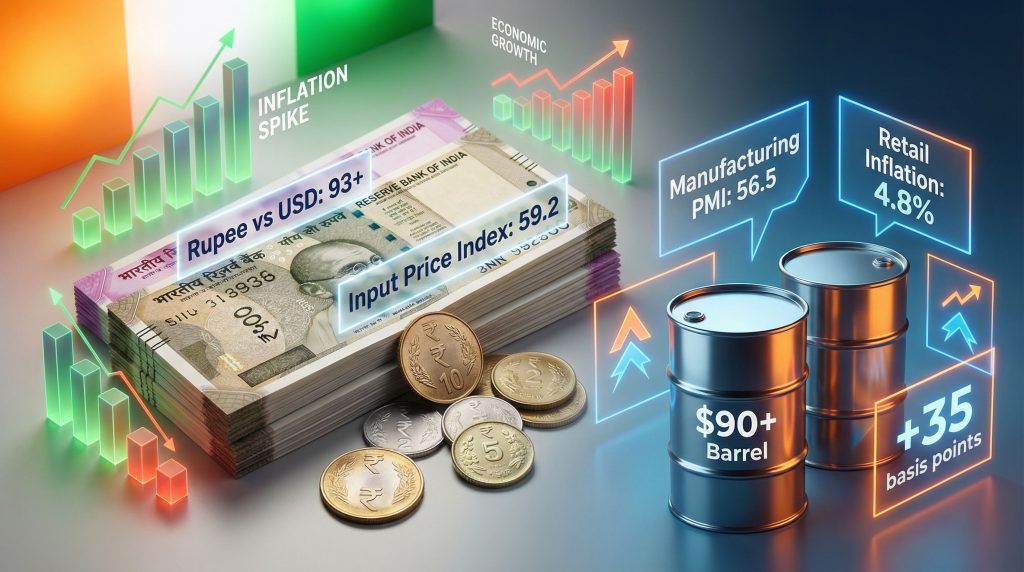
However, the actual inflation transmission proves more nuanced than this simple calculation suggests. Central bank research indicates that a 5% currency depreciation typically generates approximately 35 basis points of additional inflation pressure, reflecting the complex interplay between direct import costs and secondary economic effects.
This transmission coefficient varies significantly across economies based on several critical factors:
- Import dependency ratios across different sectors
- Exchange rate pass-through elasticity in various industries
- Competitive market structures that may absorb or amplify cost pressures
- Central bank credibility in maintaining price stability expectations
Why Energy-Dependent Economies Face Amplified Price Pressures
Energy import dependence creates particularly acute vulnerability to currency-driven inflation because petroleum products serve as both direct consumption items and critical production inputs across the entire economy. When crude oil prices rise due to currency weakness, the inflationary impact multiplies through transportation costs, manufacturing inputs, and electricity generation.
Furthermore, the energy sector's role as a foundational economic input means that oil price increases propagate through virtually every consumer and industrial price index. Manufacturing facilities face higher energy costs for production processes, while logistics companies pass through increased fuel expenses to end consumers through delivery charges and transportation fees.
Recent economic analysis suggests that when crude oil averages around $90 per barrel, combined with currency depreciation effects, retail inflation could reach approximately 4.8% in import-dependent economies. This projection incorporates both direct fuel cost impacts and the secondary effects that ripple through supply chains and consumer spending patterns.
Central Bank Calculations: Quantifying Currency Impact on Consumer Prices
Monetary authorities develop sophisticated models to quantify how exchange rate movements translate into domestic price pressures. These calculations typically incorporate multiple variables including import composition, competitive market dynamics, and historical pass-through relationships.
The lag structure of currency transmission represents a critical component of these models. Empirical research indicates that businesses typically begin incorporating higher input costs into consumer prices within 1-2 months of currency depreciation, with full transmission occurring over 3-6 months depending on competitive market conditions.
Central banks must also account for second-round effects, where initial price increases trigger wage demands and broader inflationary expectations that become self-reinforcing. This dynamic explains why currency-driven inflation episodes often prove more persistent than initially anticipated by monetary policymakers, particularly when considering the macro environment uncertainty affecting global markets.
Primary Channels of Imported Inflation in Currency-Vulnerable Economies
The transmission of external price pressures through domestic economic systems operates via multiple distinct yet interconnected channels. Each pathway exhibits different characteristics in terms of speed, magnitude, and persistence, requiring tailored analytical frameworks for accurate assessment.
Energy Sector Vulnerabilities
Crude Oil Import Dependency and Wholesale Price Index Sensitivity
Energy import dependence creates systematic vulnerability to external price shocks that extend far beyond direct fuel costs. Countries importing significant portions of their energy requirements face immediate wholesale price pressures when global commodity markets experience volatility.
The wholesale price index typically responds more rapidly and dramatically to energy cost changes than consumer price measures because industrial users have limited ability to absorb sudden input cost increases. Manufacturing facilities, power generation companies, and transportation operators must quickly adjust their pricing structures to maintain operational viability.
Key transmission mechanisms include:
- Direct import cost increases from currency depreciation
- Inventory revaluation effects as existing stocks are repriced
- Forward contract repricing for future energy deliveries
- Hedging cost increases as currency volatility rises
Power Generation Costs and Industrial Input Price Escalation
Electricity generation represents a critical vulnerability point because power costs affect virtually every economic sector. When fuel import costs rise due to currency weakness, utilities face immediate margin pressure that typically gets passed through to industrial and residential customers within billing cycles.
Industrial electricity users often operate under contracts with fuel cost adjustment mechanisms that automatically translate energy price increases into higher power bills. This automatic transmission ensures that currency-driven energy cost inflation propagates rapidly through manufacturing supply chains.
Consequently, the manufacturing sector's response to higher energy costs creates additional inflationary pressure through industrial input price escalation. Recent data indicates input price indices reaching four-year highs, with month-over-month increases of 4.5 points signaling significant cost pressures building throughout industrial supply chains.
Manufacturing and Raw Material Cost Pressures
Industrial Input Price Index Surge: Current Market Analysis
Manufacturing sectors face dual pressures from currency depreciation: higher costs for imported raw materials and increased energy expenses for production processes. This combination creates a cost-squeeze dynamic that forces businesses to choose between margin compression and consumer price increases.
Current market intelligence data reveals concerning trends in industrial pricing:
| Indicator | Current Level | Previous Month | Trend Signal |
|---|---|---|---|
| Input Price Index | 59.2 | 54.7 | Rising Pressure |
| Output Price Index | 54.9 | — | Margin Squeeze |
| Price Gap | 4.3 points | — | Absorption Phase |
The significant gap between input and output price indices indicates that manufacturers are currently absorbing substantial cost increases rather than immediately passing them through to consumers. This absorption phase typically proves unsustainable, leading to delayed but more pronounced consumer price adjustments.
Aluminum, Steel, and Base Metal Import Cost Dynamics
Base metal markets exhibit particular sensitivity to currency fluctuations because these commodities trade globally in US dollar terms while serving as essential inputs for domestic manufacturing. The combination of currency weakness and geopolitical supply disruptions can create severe cost pressures for metal-intensive industries.
Recent market analysis indicates that Middle East conflicts have elevated prices across diverse materials including aluminum and oil, while companies face reluctance to fully pass increases to customers. This dynamic results in margin compression that often proves unsustainable over extended periods.
Industries particularly vulnerable to base metal cost inflation include:
- Automotive manufacturing (steel, aluminum for body panels)
- Construction materials (rebar, structural steel, aluminum fixtures)
- Electronics production (copper, aluminum for components)
- Infrastructure development (steel, concrete reinforcement materials)
How Geopolitical Tensions Accelerate Imported Inflation Risks
Regional conflicts and international tensions create additional layers of complexity in the transmission of external price pressures to domestic economies. These geopolitical factors often amplify currency-driven inflation through supply chain disruptions, risk premiums, and market volatility that extends beyond fundamental economic relationships. The US-China trade war impact demonstrates how geopolitical tensions can create lasting inflationary pressures.
Middle East Conflict Impact Assessment
Gulf Shipping Route Disruptions and Logistics Cost Inflation
Maritime shipping routes through Middle Eastern waterways carry substantial portions of global energy and commodity flows, making these channels critical vulnerability points during regional conflicts. Disruptions to shipping operations typically manifest as increased insurance costs, extended delivery times, and higher freight rates that ultimately translate into consumer price increases.
The current regional conflict has already contributed to a 3% currency depreciation since hostilities commenced, demonstrating how geopolitical events can accelerate existing economic pressures. When combined with elevated commodity prices, this dual shock creates compounding inflationary pressures that challenge monetary policy effectiveness.
Logistics cost inflation operates through several channels:
- Marine insurance premiums increase due to conflict zone designations
- Alternative routing costs as ships avoid affected waterways
- Port congestion delays create inventory carrying costs
- Fuel surcharges rise due to longer journey distances
Regional Risk Premium in Global Commodity Markets
Financial markets typically price geopolitical risks into commodity futures through risk premiums that reflect potential supply disruptions. These premiums create immediate cost increases even when actual supply flows remain unaffected, as buyers must pay higher prices to secure future deliveries.
The risk premium mechanism operates independently of fundamental supply-demand dynamics, meaning that commodity prices can remain elevated even when physical supplies continue flowing normally. This creates persistent cost pressures for importing economies that extend beyond the immediate conflict period.
Market participants incorporate several factors when pricing geopolitical risk:
- Probability assessments of supply route closures
- Duration expectations for conflict resolution
- Alternative supply availability and switching costs
- Strategic reserve adequacy in key importing regions
Global Commodity Market Volatility
Oil Price Scenarios: $90+ Barrel Impact on Retail Inflation
Sustained oil prices above $90 per barrel create significant inflationary pressures for energy-importing economies, particularly when combined with currency depreciation. Economic modelling suggests that this price level, when maintained over several quarters, could push retail inflation toward concerning levels that challenge central bank targets.
The transmission from crude oil prices to retail inflation operates through multiple pathways with varying time lags. Transportation fuel prices typically adjust within days of crude price movements, while secondary effects through manufacturing costs and service prices may take several months to fully materialise.
Economic research indicates that oil price increases above certain threshold levels can trigger non-linear inflationary responses, where the magnitude of price transmission accelerates due to expectation effects and supply chain bottlenecks.
Agricultural Commodity Import Dependencies and Food Security
Food price inflation represents a particularly sensitive component of overall price indices due to its direct impact on household budgets and political stability. When currency depreciation combines with volatile agricultural commodity markets, the resulting food price increases can trigger broader inflationary expectations that become self-reinforcing.
Agricultural commodity markets exhibit distinct characteristics that amplify currency-driven inflation:
- Weather-dependent supply volatility creates price spikes
- Limited short-term substitutability among food items
- Income-inelastic demand means consumption continues despite higher prices
- Government intervention potential through subsidies or trade restrictions
Countries with significant food import dependencies face particular vulnerability during periods of currency weakness and global commodity market stress. The combination of higher import costs and potential supply disruptions can create food security concerns that influence broader economic policy decisions.
Economic Indicators Signalling Rising Imported Inflation Pressures
Monitoring imported inflation in India risks requires comprehensive analysis of leading indicators that signal building cost pressures before they fully translate into consumer prices. These early warning systems enable policymakers and businesses to anticipate and prepare for inflationary episodes.
Corporate Pricing Behaviour Analysis
Manufacturing PMI Cost Components and Margin Compression
Purchasing Managers' Index surveys provide real-time insights into how businesses respond to changing cost structures and competitive pressures. The relationship between input and output price indices within PMI data reveals whether companies are absorbing cost increases or passing them through to customers.
Current market intelligence shows input price indices reaching 59.2, representing the highest level in approximately four years. This dramatic month-over-month increase of 4.5 points from 54.7 indicates that cost pressures are accelerating rapidly across manufacturing sectors.
Simultaneously, output price indices reached 54.9, representing a seven-month high but still significantly below input cost increases. This divergence suggests that companies are experiencing severe margin compression as they absorb higher costs rather than immediately raising prices.
The corporate pricing behaviour analysis reveals several critical patterns:
- Initial absorption phase where companies maintain prices despite higher costs
- Selective price adjustments in less competitive market segments
- Contract renegotiation strategies for longer-term supply agreements
- Volume preservation tactics that prioritise market share over margins
Retail Price Adjustment Patterns Across Sectors
Different industry sectors exhibit varying patterns in their response to cost pressures based on competitive dynamics, consumer price sensitivity, and regulatory constraints. Understanding these sectoral differences provides insights into where inflation pressures are most likely to emerge first and with greatest intensity.
Consumer goods sectors with strong brand loyalty and differentiated products typically demonstrate greater ability to pass through cost increases compared to commodity-like products where consumers can easily substitute between suppliers. This dynamic creates uneven inflation patterns across consumer spending categories.
Industries facing the most immediate pricing pressure include:
- Energy-intensive manufacturing (chemicals, metals, glass)
- Transportation services (logistics, delivery, public transit)
- Food processing (packaged goods, restaurant chains)
- Construction materials (cement, steel, lumber)
Sectors with greater pricing flexibility include:
- Premium consumer brands (luxury goods, speciality products)
- Professional services (consulting, legal, financial)
- Healthcare services (private medical care, pharmaceuticals)
- Technology products (software, electronics with strong differentiation)
Central Bank Responses to Imported Inflation Challenges
Monetary authorities face complex trade-offs when imported inflation emerges from external supply shocks rather than domestic demand pressures. Traditional policy tools may prove less effective or potentially counterproductive when price increases originate from currency depreciation and global commodity markets.
Reserve Bank Policy Framework
Monetary Policy Transmission Limitations During Supply Shocks
Central banks confronting imported inflation face the fundamental challenge that raising interest rates may worsen currency depreciation effects while failing to address the underlying cost pressures driving price increases. This dynamic creates policy dilemmas where traditional inflation-fighting tools may prove ineffective or even counterproductive.
When inflation originates from external supply shocks rather than domestic demand pressures, monetary tightening risks creating economic contraction without meaningfully addressing the root causes of price increases. Currency-driven inflation often exhibits limited responsiveness to interest rate adjustments, particularly in the short term.
The Reserve Bank's analytical framework incorporates several key considerations when evaluating policy responses to imported inflation:
- Temporary versus persistent cost shock assessment
- Second-round effects on wage negotiations and inflation expectations
- Economic growth impacts from monetary policy tightening
- Financial stability implications of rapid interest rate adjustments
Foreign Exchange Intervention Strategies and Currency Stabilisation
Direct foreign exchange market intervention represents an alternative policy tool that can address imported inflation at its source by stabilising currency values. However, intervention strategies require substantial foreign exchange reserves and may conflict with other monetary policy objectives.
Currency stabilisation efforts typically involve coordinated actions across multiple policy domains:
- Spot market intervention to support currency values during volatility
- Forward market operations to influence future exchange rate expectations
- Reserve requirement adjustments to manage domestic liquidity conditions
- Capital flow management measures to reduce speculative pressures
The effectiveness of foreign exchange intervention depends heavily on market conditions, reserve adequacy, and the underlying economic factors driving currency weakness. Intervention may provide temporary stabilisation but cannot address fundamental economic imbalances that contribute to currency depreciation pressures. For instance, understanding US tariffs and inflation trends helps policymakers assess global trade impacts on currency stability.
International Coordination and Policy Tools
Bilateral Currency Swap Arrangements and Trade Finance
International cooperation mechanisms can provide important support during periods of currency stress and imported inflation pressure. Bilateral currency swap agreements with major central banks offer access to foreign currency liquidity that can help stabilise exchange rates during market volatility.
These arrangements typically include:
- Emergency liquidity provisions during currency crises
- Trade financing support to maintain import capabilities
- Technical cooperation on monetary policy coordination
- Information sharing regarding market developments and policy responses
Regional financial cooperation mechanisms, including multilateral development bank facilities and regional monetary funds, provide additional layers of support during external economic shocks. These institutions can offer both financial resources and policy coordination frameworks that enhance individual country responses to imported inflation pressures.
Strategic Petroleum Reserve Utilisation During Price Spikes
Strategic commodity reserves represent important policy tools for managing imported inflation during supply disruptions or price spikes. Coordinated reserve releases can provide temporary price relief while markets adjust to changing supply conditions.
The effectiveness of strategic reserve utilisation depends on several factors:
- Reserve size relative to domestic consumption requirements
- Coordination with other major consuming nations to maximise market impact
- Timing considerations to avoid market manipulation perceptions
- Replenishment strategies to maintain strategic capabilities
Strategic reserve policies must balance immediate price relief objectives with long-term energy security considerations. Excessive reserve utilisation during temporary price spikes may compromise strategic capabilities during more severe supply disruptions.
The next major ASX story will hit our subscribers first
Sectoral Implications of Sustained Imported Inflation
Different economic sectors experience varying degrees of vulnerability to imported inflation in India based on their input cost structures, competitive dynamics, and ability to pass costs through to end consumers. Understanding these sectoral differences enables more targeted analysis of inflation's economic impacts.
Consumer Goods and Retail Impact
FMCG Pricing Strategies and Market Share Dynamics
Fast-moving consumer goods companies face particular challenges during imported inflation episodes because their products exhibit high price visibility and frequent purchase patterns that make consumers especially sensitive to price increases. These dynamics force FMCG manufacturers to develop sophisticated pricing strategies that balance margin protection with market share preservation.
The current environment of rising input costs creates several strategic options for FMCG companies:
- Gradual price increases spread over multiple quarters to reduce consumer shock
- Package size reductions that maintain shelf prices while improving unit economics
- Product mix optimisation toward higher-margin items within existing portfolios
- Promotional strategy adjustments to maintain volume while protecting margins
Market research indicates that consumers exhibit different price sensitivities across product categories, with essential items (food, personal care) showing lower elasticity than discretionary purchases (snacks, premium variants). This differentiation enables companies to implement category-specific pricing strategies that optimise overall portfolio profitability.
Automotive Sector Raw Material Cost Pressures
The automotive industry faces severe challenges from imported inflation due to its high content of steel, aluminium, and other base metals that trade globally in dollar terms. Vehicle manufacturers typically operate with thin margins that leave limited room to absorb significant raw material cost increases without passing them through to consumers.
Current market conditions create multiple cost pressures for automotive manufacturers:
- Steel and aluminium price volatility from geopolitical supply concerns
- Electronic component costs due to semiconductor supply constraints
- Energy-intensive production processes affected by rising power costs
- Logistics expenses from shipping disruptions and fuel price increases
The industry's response strategies typically involve:
- Supply chain diversification to reduce dependence on volatile suppliers
- Long-term contracting to provide cost predictability
- Product design optimisation to reduce material intensity
- Pricing strategy coordination across model ranges and market segments
Industrial and Infrastructure Consequences
Construction Material Cost Inflation and Project Viability
Construction and infrastructure projects exhibit particular vulnerability to imported inflation because they involve long-term contracts with fixed pricing that cannot easily accommodate rapid cost increases. When steel, cement, and other building materials experience significant price inflation, project economics can deteriorate rapidly.
The construction sector faces several structural challenges during imported inflation episodes:
- Fixed-price contract limitations that prevent cost recovery
- Long project duration exposure to sustained cost increases
- Limited substitution possibilities for essential building materials
- Financing cost impacts from potential interest rate responses to inflation
Government infrastructure projects may require contract renegotiation or cost escalation provisions to maintain project viability during periods of rapid material cost inflation. Private sector construction may experience delays or cancellations as project economics become unfavourable.
Chemical and Pharmaceutical Input Cost Management
Chemical and pharmaceutical industries depend heavily on imported raw materials and energy inputs that make them particularly susceptible to currency-driven cost inflation. These sectors often operate under regulatory constraints that limit pricing flexibility, creating additional challenges during cost inflation episodes.
Key vulnerabilities include:
- Energy-intensive production processes sensitive to fuel cost increases
- Imported raw material dependence for specialised chemical inputs
- Regulatory pricing constraints in pharmaceutical markets
- Long product development cycles that delay cost recovery timing
Companies in these sectors typically respond through:
- Inventory management optimisation to reduce exposure to price volatility
- Supply agreement restructuring with cost adjustment mechanisms
- Production process efficiency improvements to offset higher input costs
- Product portfolio adjustments toward higher-margin offerings
Business and Investment Navigation During Imported Inflation
Companies and investors operating in environments with elevated imported inflation risks must develop comprehensive strategies that address both operational challenges and portfolio positioning considerations. These approaches require understanding how different asset classes and business models respond to currency-driven cost pressures.
Corporate Risk Management Strategies
Currency Hedging Mechanisms for Import-Dependent Companies
Businesses with significant import exposures can utilise various financial instruments to manage currency risk and reduce the impact of exchange rate volatility on their cost structures. However, hedging strategies involve costs and complexity that require careful evaluation against potential benefits.
Effective hedging programmes typically incorporate multiple instruments:
- Forward contracts to lock in future exchange rates for planned imports
- Currency options to provide downside protection while retaining upside participation
- Natural hedging through export revenue or foreign currency assets
- Supply chain hedging via long-term contracts with currency adjustment mechanisms
The optimal hedging approach depends on several company-specific factors:
- Import volume predictability and seasonal patterns
- Competitive positioning and ability to pass through cost increases
- Financial resources available for hedging programme implementation
- Risk tolerance and volatility acceptance levels
Companies must also consider the opportunity costs of hedging programmes, as currency protection reduces potential benefits from favourable exchange rate movements while requiring upfront premium payments or margin commitments.
Supply Chain Diversification and Localisation Initiatives
Long-term strategies for reducing imported inflation vulnerability often focus on supply chain restructuring that decreases dependence on foreign suppliers and volatile global commodity markets. These initiatives require substantial investment and time but can provide sustained competitive advantages.
Supply chain diversification strategies include:
- Geographic supplier distribution across multiple countries and regions
- Local supplier development programmes to build domestic alternatives
- Inventory strategy adjustments to optimise between cost and supply security
- Technology investments in production efficiency and alternative materials
Government policy initiatives may support localisation efforts through:
- Production incentive schemes that reduce manufacturing costs
- Infrastructure development that improves domestic supply capabilities
- Trade policy adjustments that favour local suppliers
- Research and development support for domestic technology advancement
Investment Portfolio Considerations
Inflation-Protected Securities and Real Asset Allocation
Investment portfolios require strategic adjustments during periods of elevated imported inflation risk to preserve purchasing power and potentially benefit from changing economic conditions. Different asset classes exhibit varying relationships with inflation that investors must understand and incorporate into allocation decisions.
Asset classes that typically perform well during inflation episodes include:
- Inflation-linked bonds that provide explicit protection against price increases
- Real estate investments that benefit from rising property values and rental income
- Commodity exposure through direct investment or resource company equity
- Infrastructure assets with inflation-adjusted revenue mechanisms
Furthermore, understanding gold as an inflation hedge becomes particularly relevant during periods of imported inflation, as precious metals often provide portfolio protection against currency devaluation effects.
Conversely, assets that may underperform during inflation include:
- Fixed-rate bonds that lose purchasing power from their coupon payments
- Growth stocks that suffer from higher discount rates and input cost pressure
- Cash holdings that experience direct purchasing power erosion
- Long-duration assets sensitive to interest rate increases
Export-Oriented Equity Positioning During Currency Weakness
Currency depreciation creates both challenges and opportunities for different types of businesses, making sector selection crucial during periods of exchange rate volatility. Export-oriented companies may actually benefit from currency weakness as their foreign earnings translate into more valuable domestic currency revenue.
Industries that typically benefit from currency depreciation include:
- Export manufacturing with global customer bases
- Tourism and hospitality attracting foreign visitors
- Technology services providing capabilities to international clients
- Agricultural producers competing in global commodity markets
Investors may consider overweighting these sectors during periods of currency weakness while underweighting import-dependent industries that face margin compression from higher input costs. This tactical allocation approach requires careful timing and risk management to avoid excessive concentration in currency-sensitive positions.
Long-Term Structural Changes to Reduce Import Vulnerability
Economies seeking to reduce their susceptibility to imported inflation must implement comprehensive structural reforms that address fundamental dependencies on foreign suppliers and volatile global markets. These changes require sustained policy commitment and substantial investment over multiple years.
Economic Diversification Pathways
Manufacturing Self-Sufficiency Targets and Production Incentive Effectiveness
Government-led initiatives to build domestic manufacturing capabilities represent one approach to reducing import dependencies and associated inflation vulnerabilities. Production Linked Incentive schemes and similar programmes aim to attract investment in strategic sectors while building local supply chain capabilities.
Effective manufacturing development programmes typically include:
- Targeted sector selection based on strategic importance and competitive potential
- Comprehensive support packages including financial incentives, infrastructure, and regulatory streamlining
- Technology transfer facilitation to accelerate capability development
- Market access assurance through government procurement and export promotion
The success of these initiatives depends on several critical factors:
- Global competitiveness of domestic production costs
- Technology access and intellectual property considerations
- Infrastructure adequacy for efficient manufacturing operations
- Skills availability and workforce development programmes
Long-term effectiveness requires balancing protection for emerging domestic industries with maintaining competitive pressures that drive efficiency improvements and innovation.
Renewable Energy Transition and Energy Import Reduction
Energy independence represents a particularly high-impact strategy for reducing imported inflation vulnerability given energy's role as both direct consumer expense and critical production input across the economy. Renewable energy development can provide long-term cost stability while reducing exposure to volatile fossil fuel markets.
Renewable energy transition benefits include:
- Domestic resource utilisation of solar, wind, and other local energy sources
- Price stability from fuel-free generation technologies
- Technology sector development in manufacturing and installation capabilities
- Environmental benefits that support sustainable development objectives
However, the transition requires substantial upfront investment and may initially increase imported inflation exposure through renewable energy equipment imports before domestic manufacturing capabilities develop. Additionally, considering US natural gas forecasts helps policymakers understand global energy market trends that could affect import costs during the transition period.
Regional Integration and Trade Policy
Regional Trade Agreement Optimisation and Supply Chain Integration
Regional economic integration can reduce imported inflation vulnerability by diversifying supply sources away from global markets toward more stable regional partners. Trade agreements that facilitate investment flows and technology transfer can accelerate domestic capability development.
Regional integration strategies may include:
- Preferential trade arrangements that favour regional suppliers
- Investment promotion frameworks encouraging cross-border manufacturing investment
- Infrastructure coordination to improve regional logistics capabilities
- Currency cooperation mechanisms to reduce exchange rate volatility impacts
The effectiveness of regional approaches depends on the complementarity of regional economies and their ability to provide alternatives to global supply chains during periods of market stress.
Critical Supply Chain Regionalisation Strategies
Strategic sectors requiring special attention for supply chain regionalisation include energy, food security, healthcare supplies, and technology inputs that are essential for economic functioning. Regional cooperation in these areas can provide mutual benefits while reducing individual country vulnerabilities.
Critical supply chain cooperation may involve:
- Strategic reserve coordination to provide mutual support during supply disruptions
- Joint procurement programmes to leverage collective bargaining power
- Investment coordination to avoid duplication while ensuring adequate capacity
- Emergency support mechanisms for supply chain crisis management
These initiatives require careful balance between regional cooperation benefits and maintaining access to efficient global supply chains that provide cost advantages and technological advancement.
According to research from the Economic Times on rupee impact, currency depreciation continues to present significant challenges for controlling imported inflation, highlighting the importance of these structural reforms.
Moreover, Trading Economics inflation data provides ongoing tracking of how these inflationary pressures manifest across different sectors and time periods, helping policymakers and businesses make informed decisions about risk management strategies.
Investment decisions should always incorporate comprehensive risk assessment and professional financial advice, particularly during periods of elevated economic uncertainty and volatile market conditions.
This analysis is for informational purposes and should not be considered as specific investment or policy recommendations.
Ready to Capitalise on Currency-Driven Market Opportunities?
Discovery Alert's proprietary Discovery IQ model delivers real-time alerts on significant ASX mineral discoveries, helping subscribers identify actionable opportunities that emerge when currency fluctuations and commodity price volatility create market inefficiencies. Explore historic examples of how major discoveries have generated substantial returns during periods of economic uncertainty, then begin your 14-day free trial to position yourself ahead of the market.