
July 25, 2026
The Dangote Refinery RFCC near capacity operations represent a pivotal moment in African refining capabilities, demonstrating how advanced catalytic cracking technology can transform regional energy independence. Modern refining technologies serve as the cornerstone of global energy transformation, yet few technical achievements match the complexity of managing residue fluid catalytic cracking units at industrial scale. Within Africa's petroleum processing landscape, operational efficiency metrics reveal distinct patterns that challenge conventional wisdom about mega-refinery performance standards. The integration of advanced catalytic conversion systems with tropical operating environments creates unique engineering demands that reshape traditional refinery economics, particularly as commodity market volatility influences operational strategies.
Understanding Residue Fluid Catalytic Cracking in Modern Refineries
The Critical Role of RFCC Units in Gasoline Production
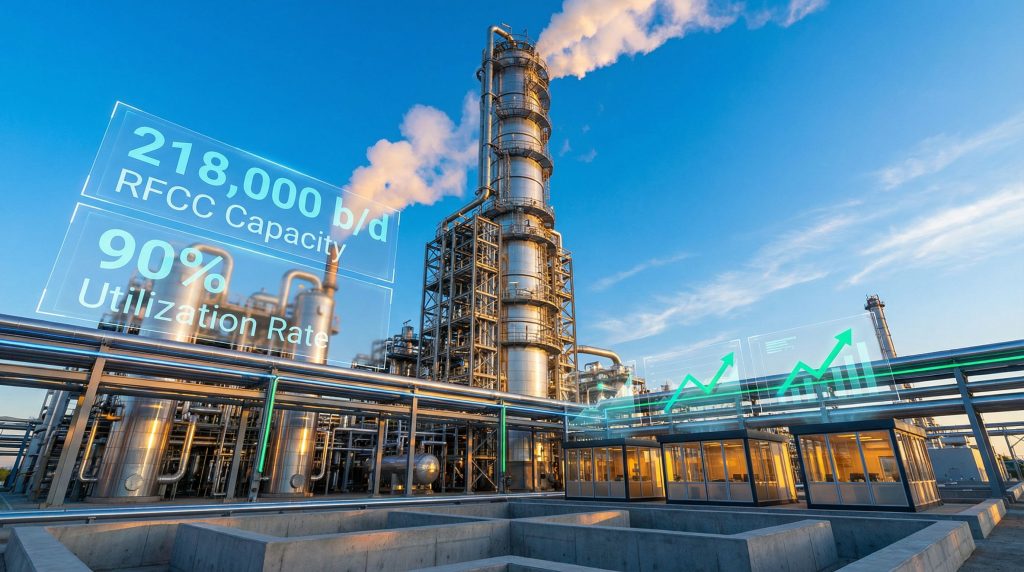
Residue fluid catalytic cracking serves as the backbone of modern gasoline production, converting heavy bottom-of-barrel fractions into high-value light products through sophisticated catalytic processes. The Dangote Refinery RFCC near capacity operations demonstrate this principle at unprecedented scale, with the unit's 218,000 barrels per day capacity representing one of Africa's most significant conversion technologies.
The technical specifications reveal remarkable engineering achievements:
• Design capacity: 218,000 b/d within the broader 650,000 b/d facility framework
• Current operational performance: Approximately 196,000 b/d at 90% capacity utilisation
• Process integration: Seamless connection with downstream motor spirit processing units
• Feed flexibility: Optimised for West African crude characteristics and residue quality
According to the U.S. Energy Information Administration, RFCC units typically represent 40-50% of global refining capacity while producing approximately 50-60% of gasoline yields globally. This productivity ratio underscores why the Dangote Refinery RFCC near capacity achievement represents a significant milestone for African energy independence.
The distinction between conventional FCC units and residue-capable RFCC systems lies in their ability to process heavier feedstocks with higher metals content and sulphur levels. RFCC technology employs specialised catalyst formulations and regeneration systems designed specifically for the challenging characteristics of vacuum residues derived from West African crude processing.
Design Challenges in Mega-Scale African Refining Operations
Engineering mega-refineries in tropical climates presents unique operational complexities that distinguish African facilities from their Middle Eastern or North American counterparts. The Dangote Refinery RFCC near capacity performance reflects successful adaptation to these challenging conditions.
Infrastructure Considerations for Nigerian Crude Processing:
| Parameter | Nigerian Crude Characteristics | Impact on RFCC Design |
|---|---|---|
| API Gravity | 32-35° (Bonny Light, Qua Iboe) | Medium crude optimisation |
| Sulphur Content | 0.1-0.2% by weight | Moderate desulphurisation requirements |
| Vacuum Residue Yield | 18-22% of crude input | Higher RFCC feed availability |
| Metals Content | 50-80 ppm Ni+V in residue | Enhanced catalyst management systems |
The facility's achievement of 90% capacity utilisation within three months of restart surpasses typical African regional averages of 75-90% during ramp-up phases. This performance positions the facility competitively with global best-in-class operations, where Middle Eastern mega-refineries achieve 88-95% utilisation rates and Asian integrated complexes maintain 82-92% efficiency levels.
Tropical climate operational challenges require sophisticated engineering solutions:
• Cooling water management: Dry season constraints necessitate enhanced heat recovery systems
• Catalyst performance: Higher ambient temperatures demand specialised regeneration protocols
• Corrosion protection: Humidity and temperature variations require advanced metallurgy
• Process control systems: Environmental fluctuations demand robust automation technologies
When big ASX news breaks, our subscribers know first
What Factors Drive RFCC Operational Efficiency?
Maintenance Scheduling and Turnaround Management
The Dangote Refinery RFCC near capacity restart following its December 2025 to February 2026 maintenance window exemplifies strategic turnaround planning in tropical refining operations. This approximately 2-3 month offline period aligns with industry-standard maintenance intervals for large RFCC units, which typically require planned overhauls every 24-36 months.
Strategic Timing Analysis:
The December-February maintenance window represents optimal scheduling for West African operations due to several convergent factors:
• Seasonal demand patterns: Lower gasoline consumption during harmattan season transitions
• Cooling water availability: Reduced constraints during dry season periods
• Market dynamics: Minimised economic exposure during traditionally lower-margin periods
• Logistics optimisation: Enhanced access for maintenance crews and equipment delivery
Industry data indicates that unplanned RFCC downtime costs range from $15,000-$25,000 per hour in lost margin contribution for 200,000+ barrel per day facilities during high-margin periods. The strategic planning evident in the Dangote Refinery RFCC near capacity restart minimises such exposure through predictive maintenance protocols, particularly as the oil price rally 2025 creates enhanced margin opportunities.
Maintenance Scope and Technical Requirements:
Standard RFCC turnaround procedures encompass comprehensive system overhauls:
• Catalyst management: Unloading and disposal of 300-400 tons of spent catalyst
• Refractory maintenance: Inspection and repair of regenerator and riser refractory systems
• Heat exchanger service: Bundle replacement and cleaning protocols
• Control system certification: Valve rebuild and pneumatic system testing
• Instrumentation calibration: Advanced process control system verification
Feed Quality and Processing Optimisation
The Dangote Refinery RFCC near capacity performance reflects sophisticated feed quality management tailored to Nigerian crude characteristics. Vacuum residues from local crude processing exhibit distinct properties that directly impact operational efficiency and product yields.
Feed Quality Impact on Performance:
Nigerian crude blends, particularly Bonny Light and similar grades, produce vacuum gas oil and residue fractions with specific characteristics:
• Conradson carbon residue: 6-8% in residue fractions versus 4-5% for North Sea crudes
• Metals content: Elevated nickel and vanadium levels requiring enhanced catalyst circulation
• Sediment levels: Higher particulate content demanding advanced separation technologies
• Yield distribution: 22% vacuum gas oil and 20% residue by volume from crude input
These characteristics necessitate specialised operational parameters to maintain the 90% capacity utilisation achieved by the facility. Higher Conradson carbon residue directly correlates with increased coke yield (8-12% versus 6-9% for lower-CCR feeds), demanding more aggressive regeneration cycles and enhanced catalyst inventory management.
Process Optimisation Strategies:
The integration of advanced process control systems enables real-time optimisation of catalyst-to-oil ratios, reactor temperatures, and regeneration efficiency to maximise gasoline yield while maintaining operational stability.
Temperature and pressure optimisation protocols maintain reactor conditions at 700-750°C with catalyst-to-oil ratios of 3-8:1, ensuring optimal conversion efficiency. Residence time in the riser reactor is precisely controlled at 5-10 seconds to maximise desired reactions while minimising overcracking and coke formation.
Production Metrics and Capacity Utilisation Analysis
Current Output Performance vs. Design Specifications
The Dangote Refinery RFCC near capacity achievement represents a remarkable technical milestone, with current operations reaching approximately 196,000 barrels per day against the unit's 218,000 b/d design capacity. This 90% utilisation rate significantly exceeds typical performance metrics for newly restarted units in the African refining sector.
| Performance Metric | Design Target | Current Achievement | Utilisation Efficiency |
|---|---|---|---|
| RFCC Throughput | 218,000 b/d | ~196,000 b/d | 90% |
| Gasoline Production | ~110,000 b/d | ~88,000-98,000 b/d | 85-90% |
| Motor Spirit Block | Integrated capacity | Ramping phase | 75-85% |
| Overall Refinery CDU | 650,000 b/d | Variable operation | 45-50% |
The disparity between the 90% RFCC utilisation and the 45-50% overall refinery capacity indicates strategic operational prioritisation. This approach maximises high-value gasoline production while optimising crude slate utilisation and market timing considerations.
Gasoline Yield Optimisation:
RFCC gasoline (catgas) production at current utilisation levels generates approximately 88,000-98,000 barrels per day based on typical yield patterns of 45-50% gasoline from RFCC feed. This production volume represents substantial progress toward meeting regional gasoline demand while reducing import dependence.
The facility's motor spirit block integration enables further processing enhancement:
• Naphtha hydrotreater: Removes sulphur and nitrogen compounds for specification compliance
• Isomerisation unit: Converts low-octane components to higher-octane blending stocks
• Catalytic reformer: Produces high-octane aromatics and hydrogen for various processes
• Blending optimisation: Creates finished gasoline meeting local and export specifications
Product Slate Distribution and Market Integration
The Dangote Refinery RFCC near capacity operations generate a complex product slate that extends beyond gasoline to include valuable petrochemical feedstocks and intermediate products. Understanding this distribution reveals the facility's strategic positioning within regional and global markets.
Primary Product Streams from RFCC Operations:
• Gasoline (C5-C11 fraction): 45-50% of feed input, primary revenue generator
• Light olefins: Propylene and ethylene for petrochemical integration
• Light cycle oil: Diesel blending component and petrochemical feedstock
• Fuel gas: Internal energy integration and hydrogen production
• Petroleum coke: Solid fuel product for industrial applications
Recent market developments indicate strategic flexibility in product distribution. Reports of naphtha and catgas imports from European terminals suggest sophisticated blending strategies to optimise final product specifications while maximising facility utilisation rates.
The facility's integration with broader petrochemical operations creates synergistic value streams that enhance overall project economics beyond simple refining margins.
How Do Global Supply Disruptions Impact Refinery Operations?
Strategic Import Dependencies During Ramp-Up Phase
The Dangote Refinery RFCC near capacity operations demonstrate sophisticated supply chain management amid global market volatility. Recent geopolitical tensions, particularly affecting Middle Eastern shipping routes, have reshaped global petroleum product flows and created both challenges and opportunities for African refining operations. Furthermore, trade war oil impacts continue to influence global supply chain dynamics.
Import Strategy and Logistics Optimisation:
Strategic imports of naphtha and catgas from European terminals, particularly through Lavera-Nigeria shipping routes, illustrate adaptive supply chain management during capacity ramp-up phases. These imports serve multiple operational purposes:
• Blending stock optimisation: Enhancing final gasoline specifications through selective component sourcing
• Production timing flexibility: Managing seasonal demand variations while maintaining operational efficiency
• Quality assurance: Ensuring consistent product specifications during process optimisation phases
• Market arbitrage: Capturing favourable pricing differentials between regional markets
The facility's strategic positioning enables capitalising on supply chain disruptions that have constrained traditional Middle Eastern export routes. With the Strait of Hormuz experiencing transit restrictions, alternative supply sources become increasingly valuable for regional market stability.
Regional Market Dynamics and Pricing Strategies
Market pricing evolution reflects the Dangote Refinery RFCC near capacity impact on regional supply-demand dynamics. Local gasoline pricing increased from N750 per litre on February 17, 2026, to N875 per litre by March 3, 2026, representing a 16.7% price increase over just 14 days.
Comparative Pricing Analysis:
| Market Benchmark | February 17, 2026 | March 3, 2026 | Price Change |
|---|---|---|---|
| Local Gasoline | N750/litre | N875/litre | +16.7% |
| International Non-oxy | $634.15/tonne | $728.75/tonne | +12.0% |
| Regional Premium | Baseline | Enhanced | Variable |
This pricing trajectory demonstrates several market dynamics:
• Local demand strength: Robust consumption despite price increases
• Import competition: Continued European gasoline cargo arrivals despite higher local production
• Quality premiums: Differentiated pricing for various gasoline specifications
• Arbitrage opportunities: Persistent economic incentives for strategic trading activities
The persistence of European gasoline imports despite the Dangote Refinery RFCC near capacity operations indicates sophisticated market segmentation and potential quality or specification differences that create distinct market niches.
Technical Challenges in African Refinery Scale-Up
Integration of Secondary Processing Units
The Dangote Refinery RFCC near capacity achievement required seamless integration with multiple secondary processing units collectively known as the "motor spirit block." This integration represents one of the most technically demanding aspects of mega-refinery operations in tropical environments.
Motor Spirit Block Performance Metrics:
The naphtha hydrotreater, isomerisation unit, and catalytic reformer were operational in early February but had not yet reached full capacity following January maintenance activities. This phased ramp-up strategy reflects prudent operational management that prioritises system stability over rapid capacity achievement.
Technical Integration Challenges:
• Feed quality matching: Ensuring RFCC product specifications align with downstream unit requirements
• Hydrogen balance: Managing hydrogen production and consumption across integrated units
• Heat integration: Optimising energy recovery and utility consumption across process units
• Product quality control: Maintaining consistent specifications throughout integrated operations
The naphtha hydrotreater serves as a critical intermediate step, removing sulphur and nitrogen compounds from RFCC gasoline to meet environmental specifications. Operating parameters typically maintain:
• Temperature range: 300-400°C for optimal desulphurisation
• Pressure levels: 25-45 bar to ensure adequate hydrogen solubility
• Catalyst performance: Periodic regeneration to maintain activity levels
• Product specifications: Less than 10 ppm sulphur content for finished gasoline
Operational Reliability and Process Control Systems
Advanced process control implementation for Dangote Refinery RFCC near capacity operations incorporates sophisticated monitoring and optimisation technologies specifically adapted for West African operating conditions, reflecting broader industry innovation trends.
Process Control System Architecture:
Real-time monitoring systems track critical performance indicators:
• Catalyst circulation rates: Continuous monitoring of 4-6 tons per minute flow rates
• Temperature profiles: Precise control of reactor and regenerator temperature distributions
• Pressure management: Optimisation of pressure drops across cyclone systems
• Feed quality analysis: Continuous monitoring of metals content and other contaminants
Predictive maintenance technologies enable anticipating equipment failures before they impact operations. Catalyst activity monitoring through real-time conversion tracking allows optimisation of catalyst inventory and regeneration cycles.
Quality Control Laboratory Capabilities:
Product specification compliance requires comprehensive analytical capabilities:
• Octane rating analysis: Research and motor octane number determination
• Distillation curves: Volatility characteristic measurement and control
• Sulphur content: Compliance with environmental and performance specifications
• Aromatics content: Benzene and total aromatics monitoring for regulatory compliance
Investment Implications and Expansion Outlook
Capital Deployment and ROI Considerations
The Dangote Refinery RFCC near capacity achievement represents substantial capital deployment optimisation, with RFCC restart costs and maintenance capital requirements demonstrating the economic scale of mega-refinery operations in Africa.
Capital Investment Framework:
RFCC maintenance and restart investments typically encompass:
• Catalyst replacement: 300-400 tons at approximately $3,000-5,000 per ton
• Refractory maintenance: $15-25 million for comprehensive regenerator and riser work
• Equipment overhaul: $20-40 million for mechanical and instrumentation systems
• Performance optimisation: $5-10 million for advanced control system upgrades
The facility's expansion potential includes capacity increases from the current 650,000 b/d to 700,000 b/d through crude distillation unit optimisation, with longer-term plans targeting 1.4 million b/d processing capacity. These expansion economics require careful evaluation of:
• Marginal capital efficiency: Cost per barrel of additional capacity
• Market demand growth: Regional consumption trends and export opportunities
• Feedstock availability: Crude supply security and quality consistency
• Environmental compliance: Emissions control and sustainability requirements
Strategic Partnerships and Technology Transfer
The Dangote Refinery RFCC near capacity operations benefit from strategic partnerships that enhance technical expertise and operational reliability. Collaboration with Engineers India provides specialised technical support for process optimisation and troubleshooting.
Technology Transfer Programs:
International technology licensing arrangements encompass:
• Process technology: Advanced RFCC design and optimisation techniques
• Catalyst technology: Specialised formulations for residue processing applications
• Control systems: State-of-the-art process control and optimisation software
• Maintenance practices: Predictive maintenance and reliability engineering methodologies
Knowledge transfer programs for local technical workforce development create sustainable operational capabilities while reducing dependence on external technical support. These programs typically include:
• Technical training: Comprehensive education on RFCC operations and maintenance
• Safety protocols: Advanced safety management and emergency response procedures
• Environmental compliance: Emissions monitoring and waste management techniques
• Quality assurance: Product testing and specification compliance procedures
The next major ASX story will hit our subscribers first
Competitive Analysis: Global Refinery Benchmarking
RFCC Performance Standards Across Major Refineries
The Dangote Refinery RFCC near capacity performance can be evaluated against global best practices through comprehensive benchmarking analysis. Utilisation rates of 90% position the facility favourably within international performance standards.
Global RFCC Utilisation Benchmarks:
| Regional Category | Typical Utilisation Range | Performance Drivers |
|---|---|---|
| Middle Eastern Mega-refineries | 88-95% | Integrated complexes, stable feedstock |
| Asian Integrated Complexes | 82-92% | Petrochemical integration, demand proximity |
| European Facilities | 70-80% | Structural headwinds, demand decline |
| African Greenfield Operations | 75-90% | Ramp-up optimisation, target 90%+ |
The Dangote Refinery RFCC near capacity achievement of 90% utilisation within three months of restart demonstrates performance comparable to established Middle Eastern and Asian facilities, representing exceptional operational excellence for African mega-refinery standards.
Best Practices from Leading Global Operations:
Jamnagar Refinery in India operates similar capacity RFCC units (approximately 240,000 b/d) and achieved comparable utilisation rates following startup optimisation phases. This demonstrates that 90% utilisation targets are achievable for mega-scale operations with proper technical management.
Key success factors observed across top-performing facilities include:
• Feed consistency management: Rigorous crude blend optimisation and quality control
• Catalyst performance optimisation: Advanced regeneration protocols and inventory management
• Predictive maintenance: IoT monitoring and data analytics for reliability enhancement
• Process integration: Seamless coordination between RFCC and downstream units
Market Position in Regional Fuel Supply Chains
The Dangote Refinery RFCC near capacity operations position the facility as a transformative force within West African gasoline supply chains. Regional market share potential encompasses both import displacement and export market development opportunities.
Regional Supply Chain Impact:
With gasoline production capacity approaching 90,000-98,000 barrels per day at current utilisation levels, the facility represents substantial import displacement potential for the broader West African region. Historical import requirements for Nigeria and neighbouring countries suggest significant market capture opportunities, particularly as energy transition challenges reshape regional energy dynamics.
Strategic positioning advantages include:
• Geographical proximity: Reduced transportation costs compared to European or Middle Eastern imports
• Quality specifications: Products tailored to local market requirements and preferences
• Supply security: Reduced dependence on volatile international supply chains
• Economic development: Local value creation and employment generation
Export market development potential extends beyond regional boundaries, with surplus refined products potentially serving broader African markets and international destinations through strategic marketing partnerships.
Future Operational Scenarios and Risk Assessment
Production Ramp-Up Timeline and Milestones
The Dangote Refinery RFCC near capacity current performance establishes a foundation for systematic expansion toward full facility utilisation. Projected operational milestones reflect conservative yet ambitious capacity development targets.
Capacity Development Trajectory:
• Q1 2026: Target 350,000 b/d average processing rates across integrated units
• H1 2026: Projected 400,000 b/d sustained operations with enhanced reliability metrics
• H2 2026: Full nameplate capacity achievement at 650,000 b/d CDU throughput
These projections assume continued RFCC performance at 90%+ utilisation while systematically bringing additional processing units to full operational capacity. The phased approach prioritises operational stability over rapid capacity achievement.
Performance Optimisation Strategies:
Sustained capacity growth requires systematic optimisation across multiple operational dimensions:
• Crude slate flexibility: Developing capability to process diverse feedstock qualities
• Product slate optimisation: Maximising high-value product yields based on market conditions
• Energy integration: Implementing advanced heat recovery and utility optimisation
• Environmental performance: Maintaining compliance while expanding operational capacity
Risk Mitigation Strategies for Continuous Operations
The Dangote Refinery RFCC near capacity success requires comprehensive risk management frameworks addressing potential operational disruptions and market volatility.
Operational Risk Management:
Spare parts inventory management for critical RFCC components represents a fundamental reliability strategy. Essential components requiring strategic inventory include:
• Regenerator cyclone liners: Extended lead times necessitate advance procurement
• Control valve assemblies: Critical for process control and safety systems
• Catalyst handling equipment: Specialised components for catalyst circulation systems
• Refractory materials: High-temperature resistant materials for furnace and regenerator maintenance
Alternative crude slate flexibility enables feed optimisation during supply disruptions. The facility's design accommodates various West African crude grades, providing operational flexibility during geopolitical or logistical challenges.
Emergency Response Protocols:
Unplanned maintenance events require sophisticated response protocols to minimise downtime impact:
• Rapid mobilisation procedures: Pre-qualified contractor teams and equipment staging
• Alternative processing routes: Temporary operational configurations during unit outages
• Product storage management: Strategic inventory positioning to maintain supply continuity
• Market communication: Transparent stakeholder communication during operational disruptions
Technological Innovation and Process Improvements
Digital Transformation in Refinery Operations
The Dangote Refinery RFCC near capacity operations incorporate cutting-edge digital technologies that enhance operational efficiency and reliability through real-time monitoring and optimisation systems.
Advanced Monitoring Technologies:
Real-time monitoring systems for RFCC performance optimisation encompass comprehensive data collection and analysis:
• Catalyst activity tracking: Continuous conversion monitoring and deactivation prediction
• Temperature profiling: Multi-point measurement across reactor and regenerator systems
• Pressure optimisation: Dynamic pressure drop analysis for cyclone and vessel systems
• Feed quality analysis: Real-time contaminant detection and composition monitoring
Artificial intelligence applications in predictive maintenance enable anticipating equipment failures before they impact operations. Machine learning algorithms analyse historical performance data to identify patterns indicative of potential reliability issues.
Data Analytics for Yield Optimisation:
Advanced data analytics platforms integrate operational data across multiple process units to optimise overall facility performance:
• Yield prediction models: Forecasting product distribution based on feed characteristics
• Energy optimisation algorithms: Minimising utility consumption while maintaining product quality
• Maintenance scheduling optimisation: Balancing planned maintenance timing with production requirements
• Quality control automation: Real-time adjustment of operating parameters to maintain specifications
Environmental Compliance and Sustainability Metrics
The Dangote Refinery RFCC near capacity operations demonstrate commitment to environmental stewardship through advanced emissions control systems and sustainability optimisation protocols.
Emissions Control Systems:
RFCC operations require sophisticated environmental management systems:
• Regenerator emissions control: Advanced catalyst regeneration with minimal environmental impact
• Volatile organic compound management: Comprehensive vapour recovery and treatment systems
• Particulate emissions control: High-efficiency cyclone systems and electrostatic precipitators
• Sulphur management: Integrated sulphur recovery and environmental compliance systems
Energy integration and heat recovery optimisation reduce overall facility energy consumption while maintaining operational efficiency. Waste minimisation and circular economy principles guide operational practices, with process optimisation focusing on resource efficiency and environmental impact reduction.
Sustainability Performance Indicators:
• Energy intensity: BTU consumption per barrel of product processed
• Water utilisation: Fresh water consumption and wastewater treatment efficiency
• Emissions intensity: Greenhouse gas emissions per unit of production
• Waste minimisation: Solid waste generation and recycling effectiveness
The Dangote Refinery RFCC near capacity achievement represents more than operational excellence; it demonstrates the potential for African energy infrastructure to achieve world-class performance standards while contributing to regional energy security and economic development. As global energy markets continue evolving amid geopolitical tensions and supply chain disruptions, facilities achieving such operational benchmarks position themselves as critical components of resilient energy supply networks.
This analysis reflects market conditions and operational data available as of March 2026. Refinery operations involve complex technical and market variables that can significantly impact performance metrics. Readers should consult current operational data and market conditions for the most accurate assessments of facility performance and investment implications.
Ready to capitalise on energy infrastructure developments?
Stay ahead of market-moving energy discoveries with Discovery Alert's proprietary Discovery IQ model, which delivers real-time notifications on significant ASX mineral discoveries including critical energy commodities. Begin your 14-day free trial today and gain instant access to actionable investment opportunities that could position you advantageously in the evolving energy sector.