
July 25, 2026
Mexico's Mining Sector Reaches a Regulatory Inflection Point
Few forces reshape an extractive industry as decisively as a shift from discretionary review to categorical prohibition. For decades, Mexico's mining operators navigated a permitting environment that, while complex, retained a degree of flexibility at its core: environmental authorities evaluated project applications on their individual merits, weighing ecological sensitivity against proposed mitigation measures. That flexibility has now been formally removed for one of the most geologically significant categories of land in the country.
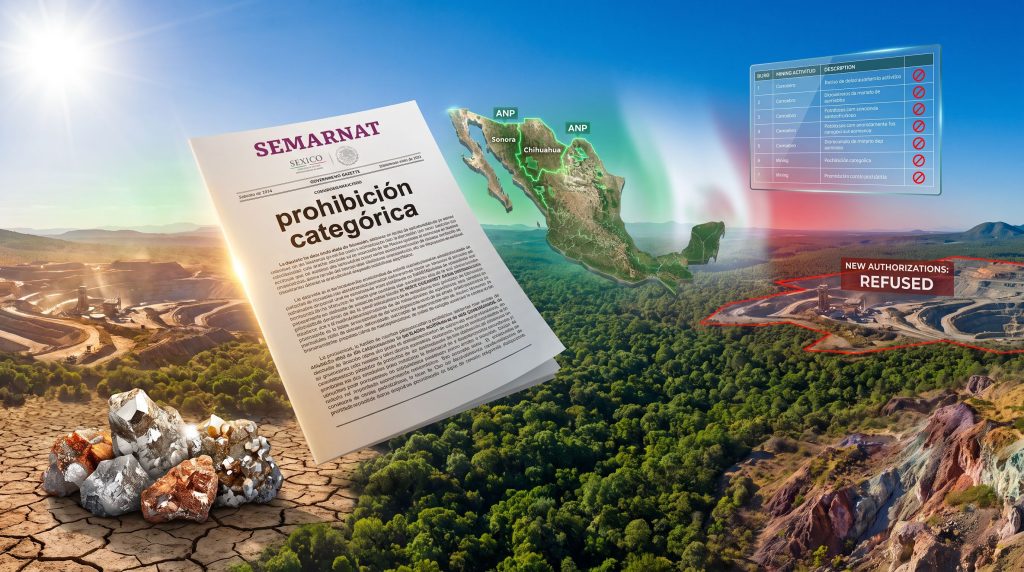
The issuance of SEMARNAT mining permits in protected natural areas being outright banned through a new directive represents a structural break in how Mexico governs the intersection of resource extraction and ecological preservation. Understanding what this means for operators, investors, and supply chain participants requires moving beyond the headline and into the legal architecture, operational mechanics, and strategic consequences that the prohibition sets in motion.
When big ASX news breaks, our subscribers know first
The Regulatory Architecture That Made This Moment Possible
Mexico administers one of Latin America's most extensive networks of federally protected natural areas, covering millions of hectares across biologically diverse ecosystems. These designations have long created a legally ambiguous coexistence with the country's mining claims framework and concession system, where a concession granted by the Ministry of Economy conveyed the right to explore or extract minerals but never conferred environmental authorization. That authorisation always required a separate, parallel approval from SEMARNAT through its Environmental Impact Assessment (EIA) process.
Before the 2026 directive, this dual-track system operated through several overlapping frameworks:
- LGEEPA (General Law of Ecological Equilibrium and Environmental Protection) established the statutory classification of NPAs and defined permissible land uses within them.
- The 2023 Mining Law amendments introduced strengthened environmental obligations for concession holders and recalibrated the relationship between extraction rights and ecological protections.
- SEMARNAT's EIA process served as the gateway through which any mining activity, from initial exploration to full production, had to pass before work could begin.
- CONANP (National Commission of Natural Protected Areas) provided technical reviews and zone-specific compatibility opinions, particularly for buffer and special-use areas within NPAs.
The critical vulnerability embedded in this architecture was enforcement inconsistency. A concession holder could hold an Economy Ministry title for land inside an NPA and, in practice, seek EIA approval through a compatibility assessment that CONANP and SEMARNAT evaluated on a case-by-case basis. The outcome was unpredictable, and the boundary between permissible and impermissible activity remained genuinely contested in many instances.
The 2026 SEMARNAT directive resolves that ambiguity by collapsing the discretionary review pathway entirely.
What the SEMARNAT Mining Prohibition Actually Establishes
The directive, published in Mexico's Official Gazette, instructs SEMARNAT officials to refuse all new authorisations, permits, registrations, licences, and favourable resolutions for mining exploration, exploitation, and beneficiation activities located within federally protected natural areas. This is not a heightened review standard requiring stronger environmental justification. It is a categorical refusal instruction, removing the approval pathway altogether for new mining activity within NPA boundaries.
Key Policy Distinction: The directive does not raise the bar for SEMARNAT mining permits in protected natural areas. It eliminates the bar entirely. Officials are not empowered to approve applications on project-specific grounds regardless of the quality of environmental mitigation measures proposed.
The scope of the prohibition spans the full mining activity lifecycle:
| Activity Category | Covered Under the Directive |
|---|---|
| New mining exploration | Yes, prohibited |
| New extraction and exploitation operations | Yes, prohibited |
| Mineral beneficiation within NPAs | Yes, prohibited |
| Pending EIA applications (in-queue) | Yes, resolved under new prohibitive criteria |
| Existing operations within prior approvals | Not automatically revoked |
| Final disposal of mining and metallurgical waste | Tighter restrictions in NPAs, wetlands, and waterways |
One of the directive's most operationally significant features is its treatment of pending applications. Projects that had already lodged EIA submissions with SEMARNAT but had not yet received a determination are not grandfathered under the old compatibility-based review. They must be evaluated under the new prohibitive criteria, which effectively means any pending application for activity inside NPA boundaries faces denial. This retroactive application to in-queue submissions substantially broadens the directive's immediate impact beyond what a purely forward-looking prohibition would achieve.
The Constitutional Foundation: How Mexico's Supreme Court Validated the Framework
The SEMARNAT prohibition draws its legal authority directly from a ruling by Mexico's Supreme Court of Justice (SCJN), which determined that the 2023 amendments to the Mining Law and related environmental legislation do not violate the constitutional principle of non-retroactivity. This ruling addressed the central legal challenge that industry actors had raised: that applying new environmental restrictions to previously granted concessions constituted an unconstitutional retroactive application of law.
The SCJN's determination cleared the path for SEMARNAT to enforce the prohibition without exposure to successful constitutional challenges from concession holders on non-retroactivity grounds. This is a legally significant outcome because it forecloses the most readily available avenue for judicial relief that affected operators might otherwise pursue.
The directive also operates within the framework of LGEEPA Article 46, which classifies federally protected natural areas and has long recognised inherent incompatibilities between certain NPA designations and industrial extraction. The 2026 measure converts this long-implicit principle into an enforceable administrative instruction, effectively operationalising what Article 46 implied but never previously mandated through a unified directive.
A critical legal boundary that the directive reinforces deserves particular attention:
Legal Framework Insight: A mining concession granted by Mexico's Ministry of Economy confers the right to explore or extract minerals from a defined area. It has never conferred environmental authorisation. The SEMARNAT directive reinforces this legal separation: a concession holder inside an NPA retains their concession title but cannot obtain the environmental authorisation required to act upon it.
This distinction has profound consequences for concession portfolio valuations and project development timelines across the sector.
How Different Stakeholder Groups Are Affected
New Project Developers
For any project at the exploration or pre-feasibility stage that overlaps with NPA boundaries, the environmental authorisation pathway is now formally closed. Developers cannot submit EIA applications expecting approval regardless of the strength of their proposed mitigation frameworks. Capital already allocated to NPA-overlapping project development is effectively stranded pending either a future policy reversal or a successful legal challenge on grounds other than non-retroactivity.
Existing Concession Holders
Operators holding active, previously authorised mining operations inside NPAs retain their existing environmental authorisations and may continue within their approved scope. However, these authorisations cannot be extended, modified, or expanded. Any operational change requiring fresh regulatory approval is subject to the prohibition, placing a practical ceiling on production growth and operational flexibility for affected sites.
Junior Explorers and Concession Portfolio Holders
Junior operators with exploration concessions overlapping NPA boundaries face the most acute exposure. A concession has development value only if it can be brought into production, and production requires environmental authorisation that is now unavailable. Furthermore, junior mining risks are considerably amplified in this environment, and the prohibition may trigger force majeure assessments and insurance claim reviews for affected projects.
Waste Management and Tailings Operations
The directive extends tighter restrictions to the final disposal of mining and metallurgical waste within protected areas, wetlands, waterways, and associated federal zones. This stretches the prohibition's operational reach beyond active extraction sites, affecting downstream waste management infrastructure for mines located near NPA boundaries even where the extraction site itself lies outside protected zones.
The ANP Exposure Audit: A Five-Step Framework for Operators
Given the prohibition's scope and the retroactive treatment of pending applications, immediate portfolio review is essential for any Mexico-focused mining operator. A structured approach to ANP boundary risk assessment should proceed through the following stages:
- Concession mapping against the ANP registry. Cross-reference all active concession coordinates against CONANP's official NPA boundary database, distinguishing between full overlaps, partial overlaps, and buffer zone adjacencies. Each category carries a distinct risk profile.
- Authorisation status verification. Confirm whether existing environmental authorisations cover all current operational activities. Flag any planned activities, including exploration drilling, waste facility expansion, or infrastructure development, that would require new SEMARNAT approval.
- Pending application status review. For companies with EIA applications already submitted, seek written confirmation of how SEMARNAT intends to resolve each application under the new criteria. Evaluate whether withdrawal and resubmission outside NPA boundaries is operationally feasible.
- Waste disposal infrastructure audit. Map all tailings storage facilities, heap leach pads, and metallurgical waste disposal sites relative to NPA boundaries, wetlands, and federal waterway zones. Verify whether existing waste management approvals remain valid under the tighter disposal restrictions.
- Legal opinion and contingency planning. Obtain formal legal opinions on the interaction between existing concession titles, prior environmental authorisations, and the directive. Develop contingency scenarios addressing scope limitations that may affect production guidance or reserve development timelines.
The next major ASX story will hit our subscribers first
Strategic and Investment Implications for Mexico's Mining Sector
Legal Certainty as a Double-Edged Variable
The SEMARNAT directive introduces a new form of regulatory certainty into Mexico's mining investment landscape. Investors now have an unambiguous answer regarding NPA-overlapping projects. As EC Rubio Managing Partner Pablo Méndez has noted, converting Mexico's mineral endowment into functioning supply chains requires far more than geological wealth, demanding legal certainty, clear secondary regulations, responsible exploration, and integrated social and environmental planning. Whether the certainty created by this prohibition is constructive or destructive for any given investor depends entirely on the NPA overlap profile of their Mexico exposure.
The Critical Minerals Supply Chain Tension
A geologically important complication underlies the prohibition's supply chain implications: federally protected areas in Mexico frequently coincide with geologically prospective zones. Biodiversity-rich ecosystems often develop over mineralised geological formations, meaning the ANP boundary map and the exploration target map overlap more than many outside the sector appreciate. For silver, copper, and lithium supply chain participants, the critical minerals demand pressures of the energy transition make this a structural tension that ANP boundary audits across Mexican supply relationships must now formally address.
How Active Operators Are Responding
The divergence between operators with clean NPA exposure profiles and those with overlapping concessions is becoming visible in capital allocation decisions. Coeur Mining's commitment of US$158 million to exploration in 2026, approximately double its prior-year budget, with more than US$50 million directed at its Chihuahua and Sonora operations (US$27 million and 83km of drilling at Palmarejo; US$24 million and 119km at Las Chispas), signals that well-positioned operators are accelerating their Mexican programmes rather than retreating from the country.
Corporate consolidation activity reflects parallel recalibration. Goldgroup Mining's completed merger with Gold Resource and the rebranding of Mexican Gold Mining as Platauro Metals Corp. following its acquisition of Alcon Silver (with Alcon's former shareholders receiving approximately 53% of the enlarged company) illustrate a sector reorganising around regulatory and capital efficiency rather than simply geographic diversification.
Comparative Regulatory Positioning
| Regulatory Dimension | Mexico (Post-2026 Directive) | Peru | Chile | Canada |
|---|---|---|---|---|
| Mining in protected areas | Categorically prohibited (new) | Restricted, case-by-case | Restricted, EIA-dependent | Province-dependent, generally restricted |
| Pending application treatment | Subject to new prohibitive criteria | Grandfathered in most cases | Case-by-case | Varies by province |
| Constitutional validation | SCJN-confirmed (2026) | Constitutional Court review ongoing | Generally stable | Stable |
| Waste disposal near protected zones | Tighter restrictions (2026) | Moderate restrictions | Moderate restrictions | Strict in most provinces |
Precious Metals Market Context
Silver's approximately 5% price surge and gold's advance of more than 1% on July 21, 2026, driven by Middle East mediation optimism and softening central bank rate expectations, provide a broadly favourable macro backdrop for Mexico's mining sector at a moment of significant regulatory change. Mexico's position as the world's leading silver producer amplifies the financial stakes of any regulatory development that constrains silver-bearing project development in protected zones.
Luca Mining's reported cash position decline from US$36.4 million to approximately US$24.7 million between the end of Q1 2026 and Q2 2026 illustrates the financial pressure that operational complexity and regulatory uncertainty can impose on smaller producers, underscoring why cost-effective navigation of Mexico's evolving compliance environment is becoming a genuine competitive differentiator.
The FRIMA Dimension: Tax Complexity Compounds the Regulatory Layer
The SEMARNAT prohibition does not operate in isolation from Mexico's broader mining compliance environment. Tax and legal advisory specialists operating in the sector, including those focused on SAT audit defence, pre-operating VAT refund optimisation, and concession risk management, now face an expanded mandate. ANP boundary verification must be integrated into concession due diligence, EIA feasibility assessments, and tax planning frameworks as a matter of standard practice.
Moreover, the broader mining permits overhaul occurring across North America adds a further layer of strategic complexity for operators managing cross-border portfolios. Digital seal restrictions and concession cancellation risks already represent significant concerns for operators navigating aggressive SAT audit environments. The new environmental authorisation barrier compounds these exposures, making hyper-specialised legal and tax advice an increasingly critical operational input rather than a discretionary professional service.
Frequently Asked Questions on SEMARNAT Mining Permits in Protected Natural Areas
Does the directive cancel existing mining concessions inside NPAs?
No. The directive prohibits new environmental authorisations but does not automatically revoke existing concessions or previously granted environmental approvals. Existing operations may continue within their approved scope.
Can companies challenge the SEMARNAT prohibition in court?
Legal challenges remain possible, but the SCJN's 2026 ruling validating the 2023 Mining Law amendments significantly reduces the likelihood of successful constitutional challenges on non-retroactivity grounds, which was the most accessible legal avenue for affected concession holders.
Does the prohibition apply to all minerals equally?
Yes. The directive covers all mining exploration, exploitation, and beneficiation activities regardless of the mineral commodity involved. Silver, gold, copper, lithium, and all other mineral extraction activities within NPAs are subject to the same prohibition.
What happens to a concession inside an NPA where environmental authorisation is permanently unavailable?
Concession holders face a choice between holding the title speculatively pending future policy change, pursuing legal remedies on available grounds, or allowing the concession to lapse. A concession without an obtainable environmental authorisation cannot be converted into a functioning mining operation under the current framework. Completing a definitive feasibility study under such conditions becomes commercially unviable for most operators.
How does CONANP's role change under the new framework?
CONANP's technical review function, previously a key input into case-by-case compatibility assessments, becomes largely redundant for new mining applications inside NPAs. SEMARNAT officials are now instructed to refuse approval regardless of CONANP's technical findings, effectively bypassing the advisory mechanism that previously gave some NPA-overlapping projects a viable pathway. Semarnat's own published guidance confirms this structural shift in the agency's role.
Summary for Decision-Makers: The 2026 SEMARNAT directive transforms Mexico's environmental permitting landscape for mining by converting a discretionary review process into a categorical prohibition within federal NPA boundaries. Constitutionally validated by the SCJN, the measure affects new projects, pending applications, and waste disposal operations while leaving existing authorised operations intact but scope-frozen. The strategic response for mining operators is immediate: ANP boundary audits, authorisation status verification, and legal contingency planning are now essential components of Mexico-focused portfolio management.
This article contains forward-looking analysis and regulatory interpretation. It does not constitute legal or investment advice. Readers should consult qualified legal counsel familiar with Mexican mining and environmental law for guidance specific to their operational circumstances.
Want to Stay Ahead of Significant Mineral Discoveries as They Happen?
While Mexico's regulatory landscape reshapes exploration opportunities across the sector, Discovery Alert's proprietary Discovery IQ model delivers real-time alerts on significant ASX mineral discoveries, transforming complex mineral data into actionable insights for both traders and long-term investors — explore historic discovery returns on Discovery Alert's discoveries page and begin your 14-day free trial to position yourself ahead of the broader market.