July 24, 2026
The Machinery Behind the Shift: How Technology Is Rewriting Africa's Mining Playbook
Across the global commodities landscape, the gap between digitally mature mining operations and those still reliant on analogue systems is widening at an accelerating pace. This divergence is not merely a technological curiosity. It is reshaping competitive positioning, capital allocation decisions, and the long-term viability of entire operations. For Africa's mining sector, which underpins the economic architecture of dozens of nations, digital innovation in Africa's mining industry carries consequences that extend well beyond the pit walls.
Understanding what is actually driving this shift requires looking past the surface-level narrative of technology adoption and examining the structural pressures that are making the old way of doing things genuinely unsustainable.
When big ASX news breaks, our subscribers know first
The Economic Weight Mining Carries Across Africa
Mining is not peripheral to African economies. In countries such as the Democratic Republic of Congo, Zambia, South Africa, and Ghana, the sector contributes materially to gross domestic product, generates significant formal employment, and accounts for a dominant share of export earnings. The DRC, for instance, supplies a substantial portion of the world's cobalt, a mineral now central to electric vehicle battery production.
Zambia remains one of Africa's largest copper producers. South Africa hosts some of the deepest gold and platinum group metal mines on the planet. Yet this resource endowment coexists with mounting structural fragility. Commodity price volatility, tightening environmental regulations, ageing equipment fleets, and deepening skills shortages are compounding simultaneously.
The consequence is that operations which were marginally profitable under favourable conditions become economically precarious when any single variable shifts adversely. The cost of unplanned equipment downtime illustrates this starkly. In high-volume open-pit operations, a single haul truck out of service for unscheduled maintenance can cost tens of thousands of dollars per day in lost productivity.
Multiply that across a fleet operating without predictive maintenance systems and the financial drag becomes structurally significant. This is where digital innovation in Africa's mining industry moves from being a discretionary investment to an operational necessity.
What Technologies Are Driving Digital Innovation in Africa's Mining Industry?
Autonomous Systems: Continuous Operation Without Human Risk
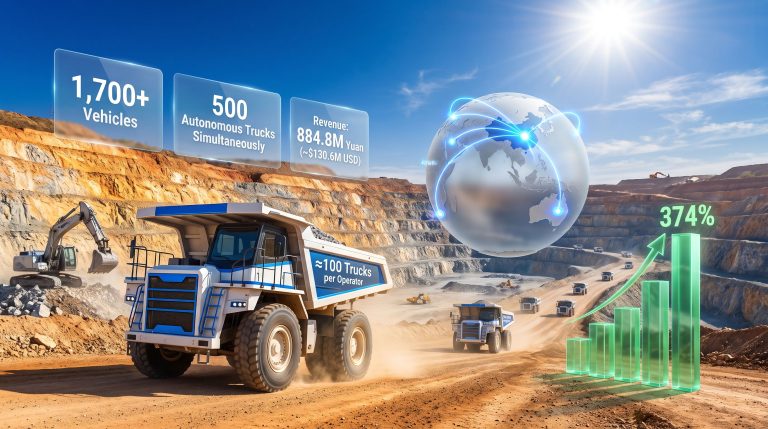
Autonomous haulage systems represent one of the most consequential technology shifts in modern open-pit mining. These systems combine GPS positioning, radar sensing, and laser guidance technologies to operate driverless trucks along pre-programmed haul routes with minimal human intervention.
The productivity case is compelling. Autonomous trucks do not require shift changes, do not tire, and do not need to be evacuated during adverse weather or safety events. This translates to higher utilisation rates across the operating cycle. Furthermore, fuel consumption decreases because autonomous systems follow optimised speed and braking profiles, while equipment wear reduces because acceleration and deceleration events are controlled algorithmically. Mining automation trends in underground environments present a different but equally important application, where toxic gas accumulation, rockfall, and flooding create constant threats, making automated drilling and loading critical for worker safety.
Artificial Intelligence and the Intelligence Layer Beneath the Surface
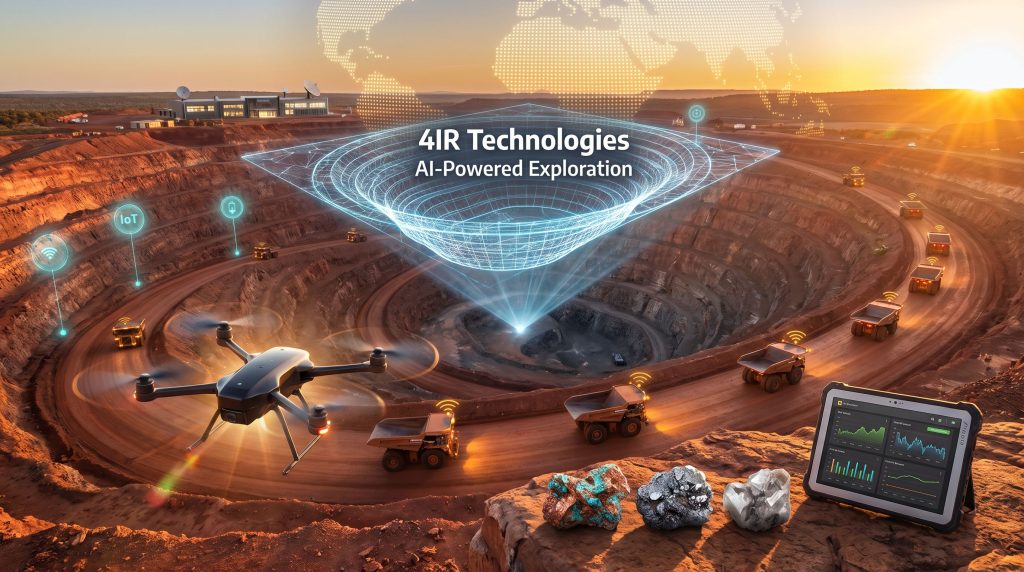
Artificial intelligence is doing something genuinely novel in mineral exploration: it is finding what human geologists miss. By processing vast datasets encompassing satellite imagery, geochemical survey results, seismic data, and historical drilling records, AI-driven mineral exploration algorithms can identify geological patterns indicative of mineralisation that would not be apparent through conventional interpretation methods.
KoBold Metals has deployed this approach in Zambia, using machine learning to accelerate copper and cobalt exploration across the Central African Copperbelt, a region considered one of the world's most significant repositories of critical battery minerals. The approach compresses exploration timelines and reduces the capital required to identify drill targets.
Richards Bay Minerals in South Africa has applied AI to ore body modelling and blast sequencing control, demonstrating that the technology's value extends beyond exploration into day-to-day production optimisation. Machine learning models are also being used to predict equipment failure events before they occur, enabling maintenance teams to intervene during planned downtime windows rather than responding to emergency breakdowns.
IoT Sensors and the Predictive Maintenance Revolution
Smart sensor networks installed across mining equipment and infrastructure are enabling a fundamental shift in maintenance philosophy, from time-based schedules that replace components whether or not they need replacing, to condition-based interventions triggered by actual equipment health data.
Vibration sensors, thermal imaging, acoustic emission monitors, and pressure transducers feed continuous data streams to centralised analytics platforms. When a bearing begins to degrade or a hydraulic system shows early signs of pressure loss, the system flags the anomaly and generates a maintenance work order. The result is a measurable reduction in unplanned downtime and improvement in overall equipment effectiveness, a key performance metric in mining operations.
Technology Adoption Summary: Africa's Mining Sector
| Technology | Primary Application | Key Benefit | Maturity in Africa |
|---|---|---|---|
| Autonomous Haulage Systems | Truck and loader operation | Safety, utilisation rates | Moderate to Advanced |
| AI and Machine Learning | Exploration, maintenance prediction | Cost reduction, accuracy | Moderate |
| IoT Smart Sensors | Equipment health, environmental monitoring | Downtime reduction | Moderate |
| Drones and UAVs | Surveying, pit wall inspection | Speed, personnel safety | Moderate to Advanced |
| Digital Twins | Production simulation, scenario planning | Decision accuracy | Early to Moderate |
| Blockchain | Supply chain traceability | Transparency, compliance | Early Stage |
| AR/VR and 3D Modelling | Training, remote collaboration | Operational agility | Early Stage |
How Drones Are Reshaping Mine Site Intelligence
Unmanned aerial vehicles have moved from novelty to operational standard across many African mining sites. Their versatility across multiple functional areas makes them one of the more cost-effective digital tools currently available to operators.
Topographic mapping that once required ground-based survey teams working across days or weeks can now be completed in hours using drone-mounted LiDAR and photogrammetry systems. Stockpile volume calculations, critical for inventory management and reconciliation, are generated with spatial accuracy that exceeds manual estimation methods.
Pit wall inspection is perhaps the most safety-critical application. Geotechnical failures at open-pit operations represent a catastrophic risk category. Traditional wall inspection required personnel to work in proximity to unstable faces. Drone-mounted cameras and structure-from-motion photogrammetry allow detailed inspection of wall stability indicators without placing a single person in the hazard zone.
Environmental monitoring applications are equally significant. Drone survey programmes can track rehabilitation progress across disturbed land areas, identify erosion pathways before they reach watercourses, and provide regulators with spatial evidence of environmental management performance.
Digital Twins and Advanced Simulation: Modelling Before Moving
What a Digital Twin Actually Does
A digital twin is a continuously updated virtual model of a physical asset or system, populated with real-time data from sensors, operational systems, and environmental monitoring. In a mining context, this might represent an entire processing plant, a section of underground workings, or a pit shell, with all relevant operating parameters reflected in the model as they evolve.
The strategic value lies in simulation. Before committing capital to a schedule change, an equipment configuration modification, or a processing circuit adjustment, operators can run the proposed change through the digital twin and observe the downstream consequences. This capability reduces decision latency and, critically, reduces the cost of being wrong.
Industry experience suggests that digital twin implementations are most successful when built on strong sensor infrastructure and integrated data management systems. Organisations that attempt to deploy digital twins without first resolving underlying data quality issues tend to generate models that reflect the noise in their data as accurately as the signal.
In addition, 3D geological modelling is increasingly being integrated with digital twin platforms, allowing operators to visualise subsurface conditions alongside live production data for more informed decision-making.
Remote Operations and Collaborative Decision-Making
The logical extension of digital twin technology is the remote operations centre, where cross-functional teams monitor live operational data from centralised facilities located away from the mine itself. This model, already established in parts of the Australian and Chilean mining industries, is gaining traction in Africa, enabled by improvements in satellite connectivity that are partially overcoming the continent's infrastructure gaps.
Cloud computing platforms underpin this model by enabling geographically distributed teams to access the same operational data simultaneously, reducing the communication friction that historically slowed decision-making in multi-site operations.
Worker Safety: The Most Compelling Digital Use Case
Wearables and Real-Time Physiological Monitoring
GPS-enabled wearable devices now allow mine safety systems to track not just worker location but biometric indicators including heart rate, body temperature, and fatigue markers. When a worker enters a designated exclusion zone, or when physiological readings suggest heat stress, the system can trigger immediate alerts to supervisors and, in some configurations, automatically halt nearby equipment.
The importance of this capability in the African mining context is difficult to overstate. High ambient temperatures, physically demanding work, and the difficulty of maintaining consistent human supervision across large and complex sites create a risk profile that passive safety systems cannot adequately address.
Environmental Hazard Detection Through Sensor Networks
Underground gas detection has historically relied on periodic manual sampling supplemented by fixed-point sensors with limited coverage. Networked IoT sensor deployments change this by providing continuous atmospheric monitoring across entire working areas, with automated alerts triggered when gas concentrations approach threshold levels.
Industry survey data from South Africa indicates that virtually all major mining operators in that country have initiated some form of digital safety transition, with worker protection consistently identified alongside productivity and cost management as a primary motivating factor.
The next major ASX story will hit our subscribers first
ESG Compliance and Environmental Sustainability Through Digital Tools
Water Management and Contamination Prevention
Water management is among the most legally and reputationally consequential environmental obligations facing African mining operators. Contamination events affecting downstream water users can trigger regulatory sanction, community opposition, and international investor concern simultaneously.
IoT-enabled water management systems address this risk by monitoring water quality and flow parameters continuously across mine water circuits. Contamination events are detected within minutes rather than discovered during periodic sampling, enabling rapid containment responses before impacts spread beyond the mine boundary.
Precision extraction planning, informed by geospatial analytics, reduces the footprint of mining disturbance relative to the volume of mineralised material recovered, directly limiting the extent of deforestation and soil erosion associated with operations.
Automated ESG Reporting and Blockchain Traceability
Automated compliance reporting platforms are reducing both the cost of ESG data collection and the legal exposure associated with manual reporting errors. Continuous sensor monitoring produces environmental performance records with a level of temporal resolution and accuracy that periodic manual reporting cannot match.
Blockchain technology is being explored as a mechanism for mineral provenance verification, creating immutable records of chain of custody from extraction point to end user. For African producers supplying critical minerals to European and North American battery manufacturers operating under increasingly stringent ethical sourcing requirements, this traceability capability may become a market access prerequisite. Glencore's digital operations in the DRC provide a live example of how large-scale operators are integrating digital tools across complex, multi-site environments to manage both operational performance and ESG obligations simultaneously.
According to Deloitte's analysis of digital transformation in mining, ESG-driven digital investment is increasingly becoming a board-level priority rather than an operational afterthought, particularly among African producers seeking to maintain access to international capital markets.
ESG Impact: Digital Tools Versus Traditional Approaches
| ESG Dimension | Traditional Approach | Digital-Enabled Approach | Improvement Potential |
|---|---|---|---|
| Water Management | Manual sampling, periodic testing | IoT sensors, real-time contamination alerts | Significant risk reduction |
| Emissions Tracking | Annual estimated reporting | Continuous sensor-based monitoring | Higher accuracy and regulatory confidence |
| Worker Safety | Periodic inspections, incident reports | Wearables, predictive hazard modelling | Proactive risk mitigation |
| Community Transparency | Periodic meetings | Digital dashboards, open data access | Improved social licence |
| Supply Chain Ethics | Manual audits | Blockchain provenance records | End-to-end verification |
The Barriers That Slow Digital Adoption Across the Continent
Infrastructure Deficits: Power and Connectivity
The fundamental constraint facing digital transformation programmes across much of Africa's mining geography is infrastructure. Reliable high-speed connectivity and uninterrupted power supply, baseline requirements for most advanced digital systems, cannot be taken for granted at remote mine sites across the continent.
Satellite broadband solutions, including low-earth orbit constellations that have dramatically reduced latency compared to traditional geostationary satellite services, are providing partial connectivity solutions. Edge computing architectures, which process data locally rather than routing everything to centralised cloud environments, are reducing bandwidth dependency. Neither approach fully resolves the underlying infrastructure gap, but together they are making digital deployments viable in locations that would previously have been excluded.
Skills Gaps and the Human Dimension of Digital Transition
The shortage of data scientists, automation engineers, and digital systems integration specialists across Africa is a structural constraint that technology investment alone cannot solve. Deploying sophisticated AI platforms or autonomous equipment systems without the local workforce capability to operate, maintain, and improve them creates dependency on external expertise that undermines long-term value capture.
Deloitte's analysis of African mining digitalisation highlights an important strategic preference among operators: modular, targeted digital deployments over comprehensive platform-wide transformations. This approach reflects not just capital constraints but a pragmatic recognition that institutional change management capacity is itself a limiting factor.
Research from the Brookings Institution supports the view that the productivity and environmental benefits of Fourth Industrial Revolution technologies in African mining are only achievable if both governments and private operators co-invest in the foundational infrastructure and human capital required to realise them. Technology deployment without this parallel investment produces underperforming systems and frustrated workforces.
Regulatory Complexity and Governance Variability
Digital investment decisions in African mining are further complicated by regulatory heterogeneity across jurisdictions. Data sovereignty requirements, environmental permitting processes, and labour regulations vary substantially between countries, creating compliance complexity for operators managing multi-jurisdiction portfolios. Consistent, predictable regulatory frameworks that create confidence in long-term investment returns are a prerequisite for the kind of scaled digital infrastructure spending the sector requires.
Country-Level Snapshot: Where Digital Mining Is Most Advanced
South Africa: The Continental Reference Point
South Africa stands as the most digitally advanced mining jurisdiction on the continent by most measurable indicators. The combination of a sophisticated mining engineering tradition, established university research capacity, and the economic weight of the sector has produced an environment where data-driven mining operations are well underway across major operators. CEO-level mandates for digital transformation, rather than technology-led bottom-up initiatives, have been a distinguishing feature of the South African approach.
Furthermore, the CSIR's assessment of digital transformation in South African mining highlights that the country's mining sector is progressing beyond isolated pilot programmes toward more integrated, enterprise-wide digital strategies.
Zambia: Critical Minerals and AI-Driven Exploration
Zambia's copper and cobalt endowment positions it centrally in the global critical minerals supply chain that is being driven by electric vehicle and grid storage demand growth. KoBold Metals' AI exploration programme represents the most prominent example of advanced digital tools being applied to unlock value from geological assets that conventional exploration methods have not fully characterised.
Democratic Republic of Congo: Digital Tools in Complex Terrain
The DRC presents a uniquely challenging environment for digital mining deployment. Security complexity, infrastructure limitations, and heightened international ESG scrutiny combine to create a high-stakes operating context. Large-scale operators active in the country are using digital tools to manage multi-site coordination, environmental monitoring obligations, and supply chain traceability requirements that would be unmanageable through purely manual systems.
Supply Chain Optimisation and the Commercial Case for Digital Investment
Machine learning models applied to supply chain optimisation are producing measurable commercial outcomes across extraction, processing, and logistics functions. Predictive demand modelling enables production scheduling that aligns output more closely with market demand, reducing both overextraction costs and inventory carrying burdens.
Transportation route optimisation algorithms reduce fuel costs and vehicle cycle times on haul routes that, in large open-pit operations, can span several kilometres. The cumulative financial impact of marginal improvements across high-volume operations compounds into material cost savings at the operation level.
The blockchain traceability question is becoming commercially significant as downstream buyers in regulated markets impose ethical sourcing obligations on their supply chains. African producers that can provide verified provenance data will have a competitive advantage over those that cannot, as regulatory frameworks in Europe and North America progressively tighten their critical mineral due diligence requirements.
Disclaimer: This article contains forward-looking statements and references to emerging technology applications that involve inherent uncertainty. Projections regarding technology adoption, market dynamics, and operational outcomes should not be interpreted as guarantees of future performance. Readers making investment or operational decisions should conduct independent due diligence and seek appropriate professional advice.
Frequently Asked Questions: Digital Innovation in Africa's Mining Industry
What Is Digital Transformation in Mining?
Digital transformation in mining refers to the systematic integration of technologies including AI, IoT sensor networks, autonomous equipment systems, drone survey platforms, digital twins, and cloud computing into mining operations with the objective of improving safety outcomes, reducing operational costs, strengthening environmental performance, and enabling faster and more accurate decision-making.
Which African Countries Are Leading in Mining Digitalisation?
South Africa leads across most indicators, with near-universal digital transition activity among major operators and established CEO-level transformation mandates. Zambia and the DRC are significant emerging hubs, particularly in critical minerals exploration and large-scale operational digitisation respectively.
What Are the Main Benefits of Digital Innovation in African Mining?
The primary benefits include:
- Reduced worker fatality and injury rates
- Lower operational costs through predictive maintenance
- Improved environmental compliance and reporting accuracy
- Faster and more cost-effective geological exploration
- Enhanced supply chain transparency that meets international ethical sourcing standards
What Are the Biggest Obstacles to Digital Adoption in African Mining?
The principal barriers are:
- Inadequate power and connectivity infrastructure at remote sites
- Shortages of digitally skilled workers
- High upfront capital requirements relative to short-term budget constraints
- Inconsistent regulatory frameworks across African jurisdictions that create investment uncertainty
How Does AI Improve Mining Exploration in Africa?
AI systems analyse large and heterogeneous datasets encompassing geochemical surveys, satellite imagery, seismic readings, and historical drilling records to identify mineralisation patterns that conventional geological interpretation methods frequently miss. This capability accelerates the identification of drill targets and reduces the capital expenditure associated with the early stages of exploration programmes.
Is Blockchain Being Used in African Mining?
Blockchain is being evaluated and piloted for supply chain traceability and mineral provenance verification across several African mining contexts. Adoption remains early-stage due to infrastructure constraints and interoperability challenges between different platforms, but regulatory pressure from downstream markets is accelerating the commercial case for investment.
The Road Ahead: Strategic Priorities for Africa's Digital Mining Future
From Isolated Pilots to Integrated Ecosystems
The current state of digital adoption across most African mining operations is characterised by isolated use cases rather than integrated mine-wide digital ecosystems. A predictive maintenance system here, a drone survey programme there, a standalone IoT environmental monitoring deployment at another site. The next phase of maturity requires these components to be connected into coherent data architectures that allow insights generated in one part of the operation to inform decisions in another.
Building the business case for this integration requires robust return-on-investment measurement frameworks that can demonstrate the compounding value of connected systems versus the sum of individual deployments.
Africa's Critical Minerals Opportunity and the Digital Differentiator
The global energy transition is creating sustained demand growth for the minerals Africa holds in abundance: copper for grid infrastructure, cobalt and lithium for battery storage, platinum group metals for hydrogen fuel cell systems, and manganese for battery cathode materials. African producers that can demonstrate not just resource endowment but digitally verified ESG performance will be better positioned to capture premium pricing and long-term supply agreements from manufacturers operating under ethical sourcing mandates.
The convergence of digital traceability capability, improved environmental monitoring, and the global critical minerals demand cycle creates a strategic window for African mining jurisdictions to position themselves as the preferred source of responsibly produced materials for the clean energy economy. Consequently, digital innovation in Africa's mining industry will be central to realising that positioning, requiring sustained investment in digital infrastructure, workforce capability, and regulatory consistency that credible claims to responsible production depend upon.
Further Exploration: Readers seeking additional perspectives on the intersection of technology and resource extraction in emerging markets may find related industry analysis at Metals and Mining Review, which covers developments across the global mining sector.
Ready to Capitalise on the Next Major Mineral Discovery Before the Market Does?
Discovery Alert's proprietary Discovery IQ model delivers real-time alerts on significant ASX mineral discoveries, transforming complex geological data into clear, actionable investment insights across more than 30 commodities — giving both new and experienced investors an immediate market edge. Explore how historic discoveries have generated substantial returns on Discovery Alert's dedicated discoveries page, and begin your 14-day free trial today to position yourself ahead of the broader market.