June 5, 2026
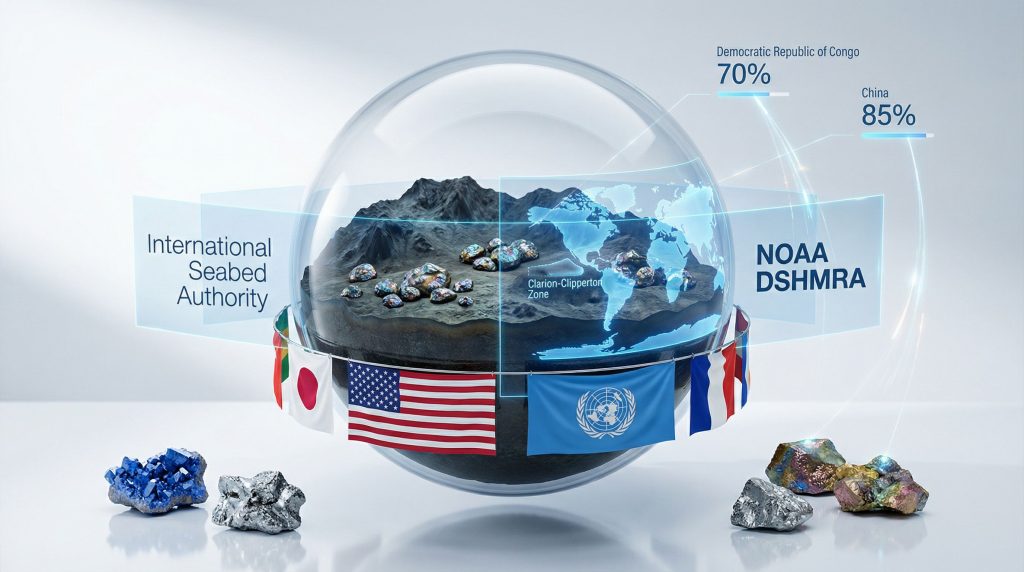
The global ocean floor represents one of the largest untapped mineral reserves on Earth, containing critical metals essential for modern technology and renewable energy systems. As nations grapple with supply chain vulnerabilities and resource security concerns, deep sea mining rules have emerged as a defining factor in 21st-century resource competition. These governance systems operate across multiple jurisdictional layers, creating complex legal landscapes that mining companies must navigate to access underwater mineral wealth.
The tension between resource extraction and environmental protection has intensified as technology advances make deep sea mining commercially viable. Current regulatory approaches reflect fundamentally different philosophies about ocean governance, international cooperation, and the balance between economic development and ecological preservation. Understanding these frameworks becomes crucial as the industry moves toward large-scale commercial operations, particularly given ongoing deep sea mining controversy surrounding environmental impacts.
Understanding the Global Framework for Seabed Resource Extraction
Deep sea mining rules operate under a complex dual-track regulatory system that divides ocean territories into distinct jurisdictional zones. Beyond the 200-nautical-mile exclusive economic zones of coastal nations, approximately 54% of the ocean floor falls under international oversight through multilateral institutions. This creates a fundamental division between national waters, where individual countries maintain regulatory sovereignty, and international waters governed by collective agreements.
The regulatory complexity stems from competing resource management philosophies. National frameworks typically emphasise strategic mineral security and domestic economic benefits, while international systems attempt to balance global equity with environmental protection. This creates operational challenges for companies seeking to develop projects across multiple jurisdictions.
Key jurisdictional divisions include:
• National Exclusive Economic Zones covering seabed areas within 200 nautical miles of coastlines
• Extended Continental Shelf zones where coastal nations can claim jurisdiction beyond 200 miles
• International seabed areas governed by multilateral institutions
• Regional management zones with specialised environmental protections
The Clarion-Clipperton Zone exemplifies the scale of international seabed territories, spanning approximately 4.5 million square kilometres in the eastern Pacific Ocean. This region alone contains an estimated 21 billion tons of polymetallic nodules, though resource estimates continue evolving as exploration activities expand baseline geological understanding. Furthermore, understanding polymetallic nodules benefits becomes essential for evaluating extraction potential.
Technical characteristics of seabed resources directly influence regulatory approaches. Polymetallic nodules occur naturally on abyssal plains at depths typically between 4,000 and 6,000 metres, containing multiple economically significant elements with nickel concentrations of 1.2-1.5%, copper at 0.8-1.0%, cobalt at 0.2-0.3%, and manganese at 24-30%. The extremely slow formation process over millions of years creates unique regulatory challenges regarding resource renewal and ecosystem recovery.
When big ASX news breaks, our subscribers know first
How Does the International Seabed Authority Regulate Deep Ocean Mining?
The International Seabed Authority operates as the primary multilateral regulator for seabed mining in areas beyond national jurisdiction, established in 1994 through the United Nations Convention on the Law of the Sea. The organisation currently maintains 31 active exploration contracts across multiple resource categories and governs activities affecting approximately half of the global ocean floor.
The ISA's regulatory framework treats deep ocean resources as the "common heritage of mankind," requiring shared governance among 168 state parties. This philosophical foundation creates operational complexities as the organisation attempts to balance commercial interests of sponsoring states against environmental protection demands from conservation advocates and vulnerable island nations. In addition, the organisation develops comprehensive environmental regulations through the mining code, which establishes detailed operational standards.
The Mining Code under development encompasses three distinct resource categories:
• Polymetallic nodules requiring hydraulic collection systems and sediment plume management
• Polymetallic sulfides formed around hydrothermal vents with extreme biodiversity concerns
• Cobalt-rich ferromanganese crusts necessitating selective extraction to preserve seamount ecosystems
Current ISA exploration contracts authorise surveying and environmental baseline studies but explicitly do not confer exploitation rights. Contract holders must fund comprehensive environmental assessments, with costs ranging from $5 million to $15 million per contract over exploration periods. The transition from exploration to commercial exploitation remains undefined pending completion of the Mining Code.
| Resource Type | Exploration Contracts | Environmental Focus | Technical Challenges |
|---|---|---|---|
| Polymetallic Nodules | 17 active contracts | Sediment plume dispersion | Selective collection methods |
| Polymetallic Sulfides | 7 active contracts | Hydrothermal vent protection | High-temperature operations |
| Ferromanganese Crusts | 7 active contracts | Seamount ecosystem preservation | Substrate separation |
The ISA's enforcement capabilities remain limited, relying primarily on contractor self-reporting and remote monitoring technology. The Marine Scientific Research Committee lacks independent inspection capacity for verifying compliance across vast oceanic territories. This creates regulatory gaps that could affect environmental protection effectiveness during commercial operations.
Areas of Particular Environmental Interest serve as protected zones within contract areas, currently requiring 9-12% allocation of each region for biodiversity preservation. However, conservation organisations argue these percentages remain inadequate given ecosystem resilience uncertainties and recovery timeline estimates extending over geological periods.
What Is the U.S. Deep Seabed Hard Mineral Resources Act?
The United States operates independently from ISA frameworks through the Deep Seabed Hard Mineral Resources Act, administered by the National Oceanic and Atmospheric Administration. This regulatory system allows U.S. companies to obtain seabed mining permits without ISA approval, creating potential jurisdictional conflicts in overlapping areas. Moreover, recent policy changes through the mining permits executive order have streamlined approval processes significantly.
NOAA's DSHMRA permitting framework encompasses two distinct authorisation categories designed to support different operational phases. The regulatory approach emphasises national mineral security and domestic industry development while maintaining environmental oversight through established federal environmental statutes.
DSHMRA Permit Structure:
• Exploration Licenses authorising 10-year surveying and resource assessment programs
• Commercial Recovery Permits enabling full-scale extraction across up to 65,000 square kilometres for 20-year periods
• Application fees ranging from $10,000 to $25,000 for initial regulatory review
• Bonding requirements between $500,000 to $2 million based on operational scope and environmental risk factors
The permitting process requires comprehensive environmental impact assessments examining sediment mobilisation, marine fauna impacts, and potential interference with existing ocean uses including submarine cables, shipping lanes, and fishing grounds. Applicants must demonstrate financial capacity for environmental remediation, establish multi-year baseline monitoring programmes, and maintain minimum separation distances from critical marine infrastructure. Additionally, understanding permitting fundamentals becomes crucial for successful applications.
Recent regulatory modifications under Executive Order 14285 have streamlined approval processes through consolidated application procedures and expedited review timelines. These changes reflect policy priorities emphasising domestic critical mineral supply chain development, particularly for battery metals essential to renewable energy infrastructure and defence applications.
Current DSHMRA Applications
The Metals Company's January 2026 permit application exemplifies contemporary utilisation of the streamlined framework. The filing targets a 65,000 square-kilometre area in the Clarion-Clipperton Zone with approval targeted by end-2026 and production operations beginning in 2027. This aggressive timeline demonstrates how regulatory expediting mechanisms affect project development schedules.
Financial assurance requirements escalate with operational scale, reflecting regulatory emphasis on environmental protection. Companies must demonstrate capacity to address potential ecosystem damage through surety bonds, insurance policies, or escrow arrangements calibrated to operation size and environmental sensitivity of target areas.
Why Are Environmental Groups Challenging Deep Sea Mining Rules?
Environmental organisations contend that existing deep sea mining rules inadequately address potential irreversible ecological damage in deep ocean environments. These challenges centre on scientific uncertainty regarding ecosystem resilience, recovery timelines, and the cumulative impacts of industrial-scale seabed extraction operations.
Sediment plume dispersion represents a primary environmental concern, with studies indicating that fine particles mobilised during nodule collection could affect marine life across areas 30-50 kilometres distant from extraction sites. Current patterns and water column characteristics determine plume behaviour, creating potential impacts on filter-feeding organisms thousands of kilometres from mining operations. Furthermore, deep-seabed mining research continues revealing new environmental concerns.
Quantifiable Environmental Impacts Include:
• Nodule formation rates of 1-4 millimetres per million years, indicating negligible natural recovery potential
• Acoustic emissions from collection systems reaching 170-200 decibels, potentially disrupting marine animal communication
• Infaunal organism recovery requiring 6-10 years to reach 50% of original populations following disturbance
• Complete ecosystem recovery potentially requiring decades to centuries depending on disturbance severity
The international moratorium movement encompasses over 40 countries advocating for comprehensive environmental assessments before commercial operations commence. Pacific Island nations, facing existential threats from climate-driven sea level rise, express particular concern that seabed mining could compound marine ecosystem disruption affecting critical fisheries resources.
Scientific institutions argue that environmental baselines remain inadequate for predicting impacts at proposed commercial scales, emphasising irreversibility as the fundamental regulatory challenge.
Conservation advocates differentiate between small-scale test operations and commercial-scale extraction across thousands of square kilometres, which would represent unprecedented environmental disruption in deep ocean ecosystems. This perspective emphasises that unlike terrestrial mining where land remediation remains theoretically possible, deep ocean ecosystem recovery from significant disruption may prove geologically impossible.
Areas of Scientific Uncertainty:
• Baseline biodiversity assessments revealing previously unknown species during exploration phases
• Ecosystem connectivity between mining areas and protected zones
• Carbon sequestration impacts from sediment disruption
• Cumulative effects of multiple simultaneous operations across ocean basins
How Do U.S. Rules Conflict With International Frameworks?
The United States' position creates fundamental legal tensions with international law, as UNCLOS prohibits unilateral mining activities in areas beyond national jurisdiction. These conflicts have diplomatic, legal, and practical implications for the global governance of seabed resources.
The U.S. approach prioritises national mineral security over multilateral cooperation, reflecting Cold War-era concerns about resource dependence. Recent policy developments strengthen emphasis on domestic critical mineral supply chains, positioning deep sea mining as essential infrastructure for renewable energy transitions and defence capabilities. However, this aligns with broader critical minerals strategy developments across multiple sectors.
Jurisdictional Conflict Areas:
• Overlapping permit areas where U.S. licenses conflict with ISA exploration contracts
• Enforcement mechanisms lacking clear authority in disputed zones
• Environmental standards potentially differing between national and international frameworks
• Revenue sharing obligations under UNCLOS versus unilateral resource claims
The contradiction between claiming regulatory authority while rejecting the international convention establishing seabed jurisdiction creates legal ambiguity regarding ultimate enforceability of U.S.-issued permits. This position could encourage other non-UNCLOS parties to issue independent permits, potentially undermining ISA authority and creating regulatory fragmentation.
Diplomatic Implications Include:
• Precedent setting for other nations to bypass multilateral frameworks
• ISA authority erosion through competing jurisdictional claims
• International cooperation strain affecting broader ocean governance issues
• Developing nation concerns about equitable benefit-sharing from seabed resources
The legal framework intersection between DSHMRA permits and other environmental statutes creates additional complexity. The Marine Mammal Protection Act, Endangered Species Act, and National Environmental Policy Act maintain independent regulatory requirements that could conflict with streamlined seabed mining approvals.
What Economic Factors Drive Deep Sea Mining Policy?
Government support for deep sea mining stems from strategic concerns about mineral supply security, particularly for battery metals essential to renewable energy infrastructure and national security applications. Current supply chain concentrations create vulnerability to geopolitical disruptions and price manipulation.
Critical Mineral Dependencies:
| Mineral | Current Dominant Suppliers | Supply Concentration | Deep Sea Potential | Strategic Applications |
|---|---|---|---|---|
| Cobalt | Democratic Republic of Congo (70%) | Extreme concentration | High in nodules | EV batteries, aerospace |
| Nickel | Indonesia, Philippines (60%) | Moderate concentration | High in nodules | Stainless steel, batteries |
| Rare Earth Elements | China (85%) | Extreme concentration | Moderate in sediments | Wind turbines, electronics |
| Manganese | South Africa, Australia (45%) | Moderate concentration | Very high in nodules | Steel production |
The regulatory environment significantly influences investment decisions and project economics. Permitting costs ranging from $500,000 to $2 million per application, combined with environmental compliance adding 15-30% to operational costs, affect project viability assessments. Technology development requirements demand $100-500 million in upfront investment, creating substantial capital barriers for market entry.
Economic Drivers Include:
• Supply chain diversification reducing dependence on politically unstable regions
• Price stability through alternative supply sources
• Domestic job creation in mining, processing, and technology sectors
• Export potential for processed battery metals to allied nations
Market uncertainty affects long-term financing availability, with investors requiring regulatory clarity before committing capital to multi-billion-dollar extraction projects. The timeline gap between exploration investment and commercial production creates cash flow challenges that regulatory predictability could address.
Investment climate considerations encompass environmental, social, and governance criteria increasingly emphasised by institutional investors. Companies must balance regulatory compliance costs against ESG investment requirements, creating complex decision matrices for project development strategies.
The next major ASX story will hit our subscribers first
How Are Companies Navigating Current Regulatory Frameworks?
Mining companies employ sophisticated risk management strategies to address regulatory uncertainty across multiple jurisdictions. These approaches encompass technical compliance, stakeholder engagement, and financial risk mitigation designed to maintain operational flexibility while advancing project development timelines.
Multi-Jurisdictional Permit Strategies:
• Parallel application processes across national and international frameworks
• Geographic diversification reducing regulatory concentration risk
• Technology partnerships for environmental compliance capabilities
• Stakeholder engagement programmes with conservation groups and local communities
The Metals Company's permit strategy demonstrates contemporary approaches to regulatory navigation. The January 2026 application leverages streamlined NOAA processes while maintaining parallel engagement with ISA frameworks for geographic coverage flexibility. The 65,000 square-kilometre coverage area represents maximum allowable scope under DSHMRA provisions.
Environmental monitoring programmes increasingly exceed minimum regulatory requirements as companies seek to demonstrate proactive environmental stewardship. These initiatives include real-time sediment plume monitoring, marine fauna impact assessments, and ecosystem recovery studies extending beyond mandatory compliance periods.
Risk Mitigation Approaches:
• Environmental insurance policies covering potential ecosystem damage liability
• Technology escrow arrangements ensuring remediation capability availability
• Community benefit agreements addressing local stakeholder concerns
• Regulatory compliance auditing through independent third-party verification
Companies increasingly recognise that regulatory approval represents only initial authorisation, requiring ongoing compliance demonstration throughout operational periods. This creates long-term relationship management requirements with regulatory agencies, environmental organisations, and affected communities.
What Does the Future Hold for Deep Sea Mining Regulations?
The evolution of deep sea mining rules will likely reflect technological advancement, international cooperation progress, and market-driven demand for critical minerals. Several trends suggest potential regulatory convergence mechanisms that could address current jurisdictional fragmentation.
Emerging Regulatory Trends:
• Advanced environmental monitoring systems enabling real-time compliance verification
• Selective extraction technologies reducing ecosystem impact through precision collection
• Blockchain-based transparency platforms for regulatory oversight and revenue sharing
• AI-powered impact assessment models improving environmental prediction accuracy
The ISA's exploitation regulation finalisation, expected by 2027, will establish international standards for commercial operations that may influence national regulatory frameworks. Bilateral agreements between mining nations could create regional harmonisation mechanisms addressing current jurisdictional conflicts.
Market-driven changes reflect increasing battery metal demand supporting policy justifications for deep sea mining, while ESG investment criteria pressure companies toward higher environmental standards. Alternative supply chain developments, including recycling technology advancement and terrestrial discovery programmes, could reduce deep sea mining pressure over longer time horizons.
Potential Regulatory Convergence Scenarios:
-
U.S.-ISA Cooperation Framework establishing mutual recognition mechanisms for overlapping jurisdictions
-
Regional Pacific Rim Harmonisation among major mining nations creating consistent standards
-
Technology-Based Universal Protocols enabling environmental protection regardless of jurisdictional framework
The regulatory landscape will likely require adaptive management approaches acknowledging scientific uncertainty while providing investment security for commercial development. This balance between precautionary principles and resource development needs represents the central challenge for future deep sea mining governance frameworks.
Investment and environmental considerations regarding deep sea mining involve significant uncertainties. Regulatory frameworks continue evolving, and potential environmental impacts remain subject to ongoing scientific investigation. Readers should consult current regulatory guidance and independent environmental assessments when evaluating deep sea mining developments.
Ready to Navigate the Complex World of Deep Sea Mining Investments?
Discovery Alert's proprietary Discovery IQ model delivers real-time alerts on significant ASX mineral discoveries across all commodities, instantly empowering subscribers to identify actionable opportunities ahead of the broader market. Begin your 30-day free trial today and secure your market-leading advantage whilst regulatory frameworks continue evolving in this rapidly developing sector.