
June 27, 2026
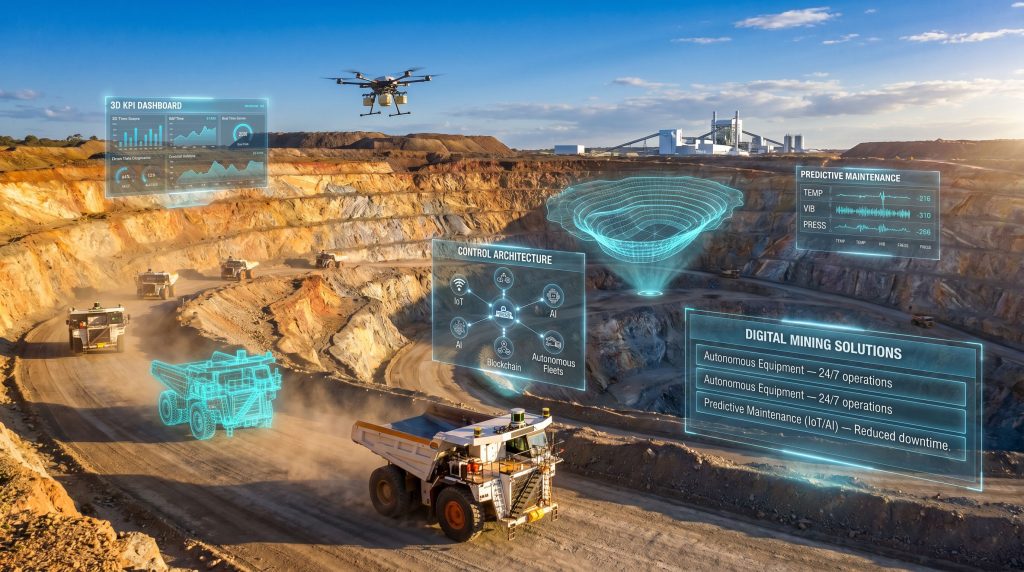
The Technological Forces Reshaping How the World Extracts Its Resources
Every major industrial era eventually reaches a point where incremental improvement stops being enough. For the global mining sector, that inflection point has arrived. Ore bodies are getting deeper and more complex. Energy costs are rising. Environmental scrutiny has intensified. And the skilled workforce that once operated heavy equipment in remote locations is aging faster than it can be replaced. Against this backdrop, digital mining solutions are emerging not as optional upgrades, but as fundamental requirements for any mining operation that intends to remain viable through the next decade.
What makes this transformation particularly significant is its scope. Digital integration in mining is not limited to swapping manual processes for automated ones. It represents a wholesale reimagining of how mines are planned, operated, monitored, and ultimately closed. From subsurface geological modelling to real-time supply chain traceability, the technologies reshaping this industry touch every stage of the mining value chain.
When big ASX news breaks, our subscribers know first
Understanding What Digital Mining Solutions Actually Cover
The term digital mining solutions is sometimes used loosely, which creates confusion when operators try to evaluate what they actually need. At its most precise, it refers to the integrated application of Industry 4.0 technologies across the full pit-to-port mining cycle. This includes exploration and orebody modelling, extraction and materials handling, mineral processing, environmental monitoring, logistics, and mine rehabilitation.
It is also worth distinguishing between the digitisation of ore extraction operations and the separate concept of digital asset mining, such as cryptocurrency infrastructure. These are fundamentally different fields that happen to share overlapping terminology. The focus here is squarely on the former: the application of artificial intelligence, autonomous systems, the Internet of Things, digital twins, and blockchain across physical resource extraction.
Industry 4.0 principles map cleanly onto the mining value chain when broken down by stage:
- Exploration: AI-enhanced geospatial analysis, drone-based surveying, and 3D geological modelling
- Extraction: Autonomous fleets, remote blasting systems, and precision drill guidance
- Processing: Real-time ore quality prediction, adaptive grinding optimisation, and AI-driven flotation control
- Logistics: Digital supply chain platforms, GPS-tracked haulage, and route optimisation algorithms
- Closure and rehabilitation: Environmental simulation modelling and long-term emissions tracking
Digital mining solutions are not a single technology but an interconnected ecosystem of tools, from AI-driven planning software to autonomous equipment fleets, designed to optimise every stage of the mining value chain simultaneously.
Autonomous Equipment and the Productivity Multiplier
Mining automation technology represents arguably the most visible and immediate impact of digital transformation in the mining sector. Mining companies are deploying autonomous trucks, drills, and loaders across operations in increasing numbers, enabling tasks to be carried out with minimal direct human involvement.
These machines are equipped with advanced sensor arrays, GPS navigation systems, and AI-based pathfinding algorithms that allow them to navigate complex and geologically variable terrain, avoid obstacles, and maintain continuous operations around the clock. The practical outcome is a material improvement in both productivity and safety.
Two primary categories of benefit emerge from autonomous fleet deployment:
- Safety outcomes: Reducing the number of workers physically present in high-risk environments, including underground headings, open pit haul roads, and areas with blast exposure risk
- Economic outcomes: Optimising fuel consumption, standardising operating patterns to reduce mechanical wear, and enabling maintenance scheduling based on actual usage data rather than fixed time intervals
The economic case for autonomous equipment strengthens further when fuel optimisation and predictive maintenance in mining scheduling are combined. Machines that operate within programmed efficiency parameters consume less fuel per tonne moved, while integrated diagnostics reduce the frequency and severity of unplanned breakdowns.
Predictive Maintenance: How IoT and AI Are Eliminating Unplanned Downtime
One of the most practically valuable applications of digital mining solutions is predictive maintenance. Traditional approaches to equipment upkeep have historically followed one of two models: fixing things after they break, or replacing components on a fixed schedule regardless of actual condition. Both approaches carry significant inefficiency.
The digital model allows mining companies to monitor the condition of their equipment, predict potential failures, and schedule maintenance activities more effectively. This shift is enabled by IoT sensors deployed across heavy equipment that continuously capture temperature, vibration, pressure, and operational load data. That data feeds into AI algorithms capable of identifying anomaly patterns that precede component failure.
| Maintenance Model | Trigger | Downtime Risk | Cost Efficiency |
|---|---|---|---|
| Reactive | Equipment failure | High | Low |
| Preventive | Fixed time schedule | Moderate | Moderate |
| Predictive (AI/IoT) | Data-driven forecast | Low | High |
The step-by-step process works as follows:
- Sensors embedded across equipment collect real-time operational data
- Data is transmitted to a centralised processing platform or edge computing node
- AI models analyse patterns and compare against failure signature libraries
- Anomalies trigger maintenance alerts before failure thresholds are reached
- Maintenance is scheduled at operationally convenient windows, not during production-critical periods
The downstream effects include reduced unplanned downtime, lower total repair costs, and meaningfully extended asset service life. For large-scale operations running fleets of haul trucks worth tens of millions of dollars each, the financial impact of even modest downtime reductions is substantial.
Digital Twin Technology: Running a Virtual Mine Before You Commit to Reality
A digital twin is a continuously updated virtual replica of a physical asset, process, or entire operational environment. In the mining context, this can range from a single haul truck to a complete underground mine system. What makes digital twins particularly powerful is that they evolve in real time alongside their physical counterparts, absorbing live sensor data and operational inputs to maintain accuracy.
Three primary applications define how digital twins are currently being used across the mining sector:
Mine Planning and Design
Traditional geological models carry inherent uncertainty because they are based on interpolated data from drill holes that may be spaced hundreds of metres apart. Digital twins allow engineers to construct dynamic, three-dimensional virtual mine environments that integrate real-time geospatial information. Multiple extraction sequences can be simulated and compared before any capital commitment is made.
Crucially, sustainability parameters including energy consumption, water usage, and projected emissions can be embedded into the design process from the outset rather than addressed reactively after construction.
Equipment Health Monitoring
Sensors mounted on trucks, conveyors, drills, and processing equipment feed continuous data into the digital twin, which simulates the real-time condition of each component. When wear indicators approach critical thresholds, the system generates predictive maintenance schedules. A haul truck digital twin evaluating data from engine temperature, suspension load, and tyre pressure simultaneously can identify a developing failure across any of those systems and flag it weeks before it would become apparent through conventional inspection.
Process Plant Optimisation
Crushing, grinding, and flotation circuits are energy-intensive and highly sensitive to variations in feed material composition. Digital twins allow operators to experiment with different process configurations in a virtual environment, identifying optimal settings for ore recovery and energy consumption without disrupting live operations. This eliminates the trial-and-error approach that has historically dominated process improvement in mineral processing plants and enables operators to respond dynamically when ore characteristics shift.
Real-Time Monitoring and the Centralised Control Revolution
IoT sensor networks deployed across mine sites are transforming operational visibility. Connected devices now capture equipment performance metrics, environmental conditions, worker location data, and safety indicators simultaneously, transmitting that information in real time to centralised control centres. Furthermore, operators can manage multiple sites from a single interface, a capability that was simply not achievable a decade ago.
The operational efficiency gains from this architecture are significant. Remote monitoring reduces the need for on-site personnel in many functional roles, compresses incident response times, and enables a level of operational oversight that was physically impossible when supervisors had to be present at each location. Centralised dashboards that unify operational, maintenance, safety, environmental, and financial KPIs into a single decision-making layer give management teams a genuinely integrated view of performance across an entire portfolio.
The next major ASX story will hit our subscribers first
AI in Ore Processing and Mine Planning: Where Machine Learning Creates Measurable Value
Artificial intelligence applications in mineral processing extend well beyond the automation of repetitive tasks. AI in drilling and blasting is one compelling example, and AI-driven ore quality prediction allows processing parameters to be adjusted in real time based on the predicted composition of incoming feed material, improving both recovery rates and energy efficiency.
Machine learning models are increasingly being applied to defect detection and quality assurance in processed outputs, identifying grade variations that human inspection would miss. In mine planning, AI tools analyse geological datasets to identify the most economically optimal extraction sequences while accounting for variables including ore grade distribution, haul distances, processing capacity, and commodity price scenarios.
Demand forecasting applications further extend this capability by aligning production schedules with anticipated market conditions, reducing both overproduction and the associated carrying costs of unsold inventory.
Blockchain and the Ethical Sourcing Imperative
As global manufacturers face increasing pressure to verify the provenance of the minerals they use, blockchain technology is gaining traction as a supply chain transparency tool. Distributed ledger systems create immutable, end-to-end records of mineral origin and chain-of-custody, making it technically difficult to misrepresent the source or handling history of a commodity.
For mining companies, blockchain adoption serves multiple strategic purposes:
- Reducing fraud risk across complex multi-party supply chains
- Demonstrating compliance with ethical sourcing standards required by downstream manufacturers
- Facilitating more efficient collaboration between miners, processors, traders, and off-takers
- Building buyer confidence in responsibly sourced critical minerals, which is increasingly factoring into procurement decisions at major industrial manufacturers
The Sustainability Architecture of Digital Mining
Environmental performance has moved from a compliance obligation to a strategic differentiator in the mining sector. Digital tools are central to how leading operators are managing this transition. Advanced environmental monitoring systems using drone networks and ground-based sensors now track air quality, water quality, and emissions across active mine sites in real time, enabling immediate corrective action when thresholds are breached.
Energy management is another critical application. Smart energy platforms monitor electricity consumption across processing circuits and infrastructure, identifying optimisation opportunities and integrating renewable energy inputs. The adoption of compressed gas vehicles and the digital management of tailings reprocessing operations represent further examples of how sustainability initiatives and digital capability are converging.
For investors and financing institutions, the ability to produce verified, real-time ESG data is becoming a meaningful factor in project assessment. Digital traceability systems that can demonstrate measurable progress against emissions targets are increasingly relevant to securing offtake agreements with ESG-conscious manufacturers and accessing project financing from institutions with sustainability mandates.
Evaluating Providers and Platforms: What to Look For
| Provider | Core Offering | Key Differentiator |
|---|---|---|
| Reactore (MineOne™) | Pit-to-port and underground digitisation suite | Customisable modular deployment |
| Wipro | Cognitive intelligence, Big Data, and IoT integration | Addresses market volatility and workforce challenges |
| Hatch | Safety, performance, and sustainability solutions | Brownfield and greenfield project expertise |
| CR Powered by Epiroc | Machine sensing, Lidar, and data analytics | Real-time decision confidence at the equipment level |
When selecting a digital mining platform, operators should assess four critical dimensions:
- Scalability: Can the solution expand from a single site deployment to a multi-asset portfolio without requiring architectural rework?
- Integration capability: Does the platform connect with existing fleet management systems, enterprise resource planning tools, and environmental monitoring infrastructure?
- ROI timeline: What is the realistic payback period, and are there modular entry points that allow targeted deployment before full platform commitment?
- Data sovereignty and cybersecurity: How is sensitive operational and geological data protected, and where does it physically reside?
Providers such as Wipro's digital mining division and Hatch's digital mine services offer well-established frameworks for operators navigating these evaluation criteria, particularly when assessing integration capability and long-term scalability.
The ROI Case: Where the Numbers Come From
Unlike large capital projects that require years to generate measurable returns, data-driven mining operations are increasingly delivering cost reductions and productivity gains within 12 to 24 months of deployment, making them among the most capital-efficient investments available to operators in the current environment.
Cost savings are generated across several distinct categories simultaneously:
- Predictive maintenance reducing unplanned downtime costs across heavy equipment fleets
- Autonomous fleet optimisation cutting fuel consumption and reducing maintenance frequency
- Process optimisation improving ore recovery rates without additional capital expenditure
- Remote operations reducing on-site staffing costs and associated logistics overhead
The resilience argument is equally important. Digital infrastructure allows operations to make rapid adjustments in response to commodity price movements. Supply chain visibility tools reduce exposure to logistics disruptions and input shortages. Scalable architecture means companies can expand digital capability incrementally as budgets and operational experience develop.
What Comes Next: The Connected Mine and the Digital Skills Imperative
The medium-term trajectory for digital mining points toward full operational convergence. Autonomous equipment, digital twins, AI, IoT sensor networks, and blockchain are increasingly being integrated into unified operational intelligence platforms rather than operating as separate modules. The arrival of 5G connectivity and edge computing at remote mine sites will accelerate real-time data processing and reduce latency in control systems, moving the industry closer to genuinely autonomous mine operations.
Workforce transformation is an underappreciated dimension of this shift. The skills required to operate a digitally integrated mine are fundamentally different from those needed to run a conventional operation. Demand is growing for data analysts, remote systems managers, AI oversight specialists, and cybersecurity professionals. Augmented and virtual reality tools are already being deployed in operator training and safety simulation programmes, allowing workers to develop competency in complex scenarios without exposure to real operational risk.
Companies that establish digital infrastructure early are positioned to outperform peers on cost, safety, and sustainability metrics simultaneously. Digital capability is becoming a prerequisite for operating competitively in a resource sector increasingly shaped by decarbonisation mandates and surging critical mineral demand.
Key Technologies at a Glance
| Technology | Primary Benefit | Operational Impact |
|---|---|---|
| Autonomous Equipment | 24/7 operations, reduced labour costs | Higher productivity, improved safety |
| Predictive Maintenance (IoT/AI) | Failure prevention before it occurs | Reduced downtime, extended asset life |
| Digital Twins | Scenario simulation without operational risk | Better planning, process optimisation |
| Real-Time Monitoring | Instant visibility across all site parameters | Faster decisions, remote management |
| AI in Ore Processing | Dynamic quality prediction and adjustment | Improved recovery rates, energy savings |
| Blockchain | Immutable supply chain records | Ethical sourcing compliance, fraud reduction |
| Environmental Monitoring | Proactive impact management | Regulatory compliance, ESG alignment |
Disclaimer: This article is intended for informational and educational purposes only. It does not constitute financial, investment, or operational advice. Readers should conduct independent due diligence before making any investment or procurement decisions related to digital mining technologies. Forecasts and projections referenced throughout represent industry estimates and should not be treated as guaranteed outcomes.
For additional perspectives on digital transformation across the mining sector, industry publications such as Metals Mining Review provide ongoing coverage of emerging technologies and operational trends.
Want to Know Which ASX Mining Companies Are Leading the Digital Transformation Race?
Discovery Alert's proprietary Discovery IQ model scans ASX announcements in real time, instantly identifying significant mineral discoveries and the exploration companies embracing next-generation operational advantages — delivering actionable insights to subscribers before the broader market reacts. Explore historic discoveries and their remarkable returns on Discovery Alert's dedicated discoveries page, and begin your 14-day free trial today to position yourself ahead of the market.