July 18, 2026
The Financial Impact of Mining's Digital Revolution
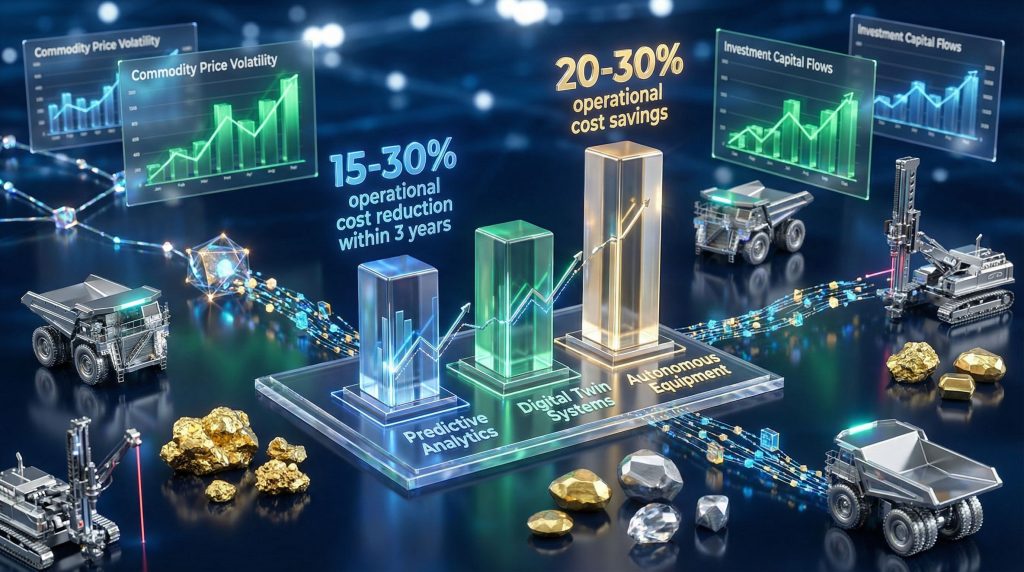
Digital transformation in mining is revolutionising the industry's economic landscape, delivering unprecedented returns on investment and reshaping traditional operational models. Mining companies worldwide are witnessing substantial cost reductions and productivity gains through strategic technology adoption, with some operations reporting efficiency improvements exceeding 30% within the first year of implementation.
When big ASX news breaks, our subscribers know first
What Are the Key Economic Drivers Behind Mining's Digital Shift?
The economic imperative for digital adoption in mining stems from mounting operational pressures. Furthermore, commodity price volatility demands greater operational efficiency, whilst regulatory requirements continue to increase operational complexity. Mining executives recognise that data-driven mining insights provide competitive advantages that directly translate to improved profit margins.
Traditional mining operations face escalating labour costs, safety concerns, and environmental compliance expenses. In addition, equipment maintenance costs consume significant portions of operational budgets. Consequently, digital technologies offer compelling solutions to these persistent challenges through predictive maintenance, automated systems, and real-time monitoring capabilities.
ROI Analysis of Core Digital Technologies
Automation and Robotics Investment Returns
Mining automation delivers some of the highest returns on digital investment. Companies implementing autonomous haulage systems typically achieve 15-20% cost reductions in transportation operations within two years. However, initial capital requirements range from $50-100 million depending on fleet size and operational scale.
Robotic systems for hazardous environments eliminate human exposure risks whilst maintaining continuous operation capabilities. For instance, automated drilling systems reduce labour costs by approximately 40% whilst increasing drilling precision and reducing equipment wear.
IoT and Sensor Technology Economics
Internet of Things (IoT) implementations in mining operations generate substantial economic benefits through enhanced asset utilisation. Moreover, predictive maintenance capabilities reduce unplanned downtime by up to 25%, translating to millions in preserved revenue for large-scale operations.
Sensor networks monitoring equipment health, environmental conditions, and production metrics cost approximately $500,000-2 million per site. Nevertheless, the return on investment typically occurs within 18-24 months through reduced maintenance costs and improved operational efficiency.
How Does AI Transform Mining Economics?
AI in mining operations fundamentally alters cost structures through intelligent resource allocation and predictive analytics. Machine learning algorithms optimise extraction processes, reducing waste and maximising ore recovery rates by 10-15% in typical implementations.
Artificial intelligence applications extend beyond operational efficiency. Furthermore, AI-powered geological analysis reduces exploration costs by identifying high-probability targets more accurately. Consequently, companies report 20-30% reductions in exploration expenditure whilst improving discovery success rates.
AI-enhanced mining efficiency becomes particularly valuable in complex geological environments where traditional methods prove inadequate. Digital twins powered by artificial intelligence enable virtual testing of extraction scenarios, reducing costly physical trials.
Investment Strategy Considerations for Mining Digital Transformation
Phased Implementation Approach
Mining companies adopting digital transformation benefit from phased investment strategies rather than comprehensive overhauls. Initially, pilot projects in specific operational areas demonstrate value before broader implementation. For instance, implementing digital solutions in single pit operations provides valuable learning experiences before fleet-wide deployment.
Investment strategy insights suggest allocating 5-10% of annual capital expenditure to digital initiatives during initial transformation phases. However, successful implementations often require increased allocation to 15-20% as digital maturity advances.
Technology Integration Costs
Integration expenses frequently exceed initial technology acquisition costs. Moreover, legacy system compatibility challenges require additional investment in middleware solutions and data migration services. Companies should budget approximately 30-50% above technology costs for integration and training requirements.
Industry evolution trends indicate that companies delaying digital adoption face increasing competitive disadvantages. Furthermore, delayed implementation often results in higher costs as legacy systems become increasingly incompatible with modern solutions.
Market Economics of Digital Mining Solutions
Vendor Landscape and Pricing Trends
The mining technology vendor landscape continues evolving, with established industrial companies competing alongside specialised technology startups. Pricing models range from traditional capital expenditure purchases to subscription-based services and performance-based contracts.
Software-as-a-Service (SaaS) models gain popularity in mining applications, reducing upfront capital requirements whilst providing continuous updates and support. However, subscription costs can accumulate significantly over operational lifespans, requiring careful digital transformation cost analysis.
Global Market Dynamics
Global mining technology markets demonstrate robust growth, with annual expansion rates exceeding 12% across most digital solution categories. Nevertheless, regional variations in adoption rates create opportunities for early adopters in emerging markets.
Supply chain considerations increasingly influence technology selection decisions. In addition, geopolitical factors affect vendor selection, particularly for critical infrastructure components. Consequently, mining companies diversify technology suppliers to mitigate supply chain risks.
The next major ASX story will hit our subscribers first
What Are the Long-term Economic Implications?
Digital transformation in mining creates fundamental shifts in industry economics beyond immediate operational improvements. Transformed operations require fewer personnel but demand higher skill levels, altering labour cost structures and employment patterns throughout mining regions.
Environmental compliance costs decrease through digital monitoring and optimisation systems. Furthermore, regulatory reporting becomes automated, reducing administrative overhead whilst improving accuracy and compliance reliability.
However, cybersecurity investments become essential operational expenses. Mining companies allocate 2-5% of IT budgets to cybersecurity measures protecting digital infrastructure from increasingly sophisticated threats.
Measuring Success in Digital Mining Investments
Key Performance Indicators
Successful digital transformation measurement requires comprehensive metrics beyond traditional financial returns. Operational efficiency indicators include equipment utilisation rates, energy consumption per tonne, and safety incident frequencies.
Additionally, environmental performance metrics demonstrate digital transformation's broader value proposition. Reduced water consumption, lower emissions per unit of production, and improved waste management contribute to sustainable mining practices whilst reducing regulatory compliance costs.
Financial Return Assessment
Mining companies evaluate digital investment returns through multiple financial lenses including net present value, internal rate of return, and payback period calculations. However, traditional financial metrics may undervalue strategic benefits such as improved market responsiveness and competitive positioning.
Risk-adjusted return calculations become crucial given technology obsolescence risks and implementation uncertainties. Moreover, digital investments often provide option values for future technology adoption, complicating traditional return calculations but adding strategic value.
The economic transformation of mining through digital technologies represents an irreversible industry shift. Companies embracing comprehensive digital strategies position themselves for sustained competitive advantages, whilst those delaying adoption risk operational obsolescence in increasingly technology-driven markets.
Looking for opportunities in digitally transforming mining companies?
Discovery Alert's proprietary Discovery IQ model delivers real-time alerts on significant ASX mineral discoveries, instantly empowering subscribers to identify actionable opportunities in companies leveraging digital transformation for competitive advantage. Begin your 30-day free trial today and secure your market-leading edge in the rapidly evolving mining sector.