June 16, 2026
The industrial extraction methodologies in battery metal production have reached a critical juncture where conventional approaches struggle against mounting efficiency demands. Traditional lithium recovery systems, constrained by geological limitations and extended processing timeframes, face increasing pressure to evolve beyond their current operational boundaries. Furthermore, this technological tension has catalysed development of lithium industry innovations designed to address fundamental structural weaknesses in existing supply chains.
The convergence of market volatility, environmental regulations, and geopolitical supply concentration has created an imperative for extraction technologies capable of operating across diverse resource types while maintaining consistent output quality. Direct lithium extraction represents one such technological response, offering potential solutions to longstanding challenges in battery metal production efficiency and geographic diversification.
Understanding Direct Lithium Extraction Technology Architecture
Direct lithium extraction operates through selective separation mechanisms rather than passive evaporation processes. This fundamental distinction enables targeted lithium isolation using five primary technological pathways: adsorption, ion exchange, solvent extraction, membrane separation, and electrochemical techniques. Each methodology employs different chemical principles to achieve lithium concentration and purification.
The core operational advantage lies in process selectivity. Unlike conventional evaporation systems that require specific climatic conditions and extended timeframes, direct lithium extraction systems utilise engineered materials and controlled chemical environments to isolate lithium directly from solution. This approach enables operation across variable brine compositions and environmental conditions previously considered unsuitable for lithium production.
Process Engineering Characteristics:
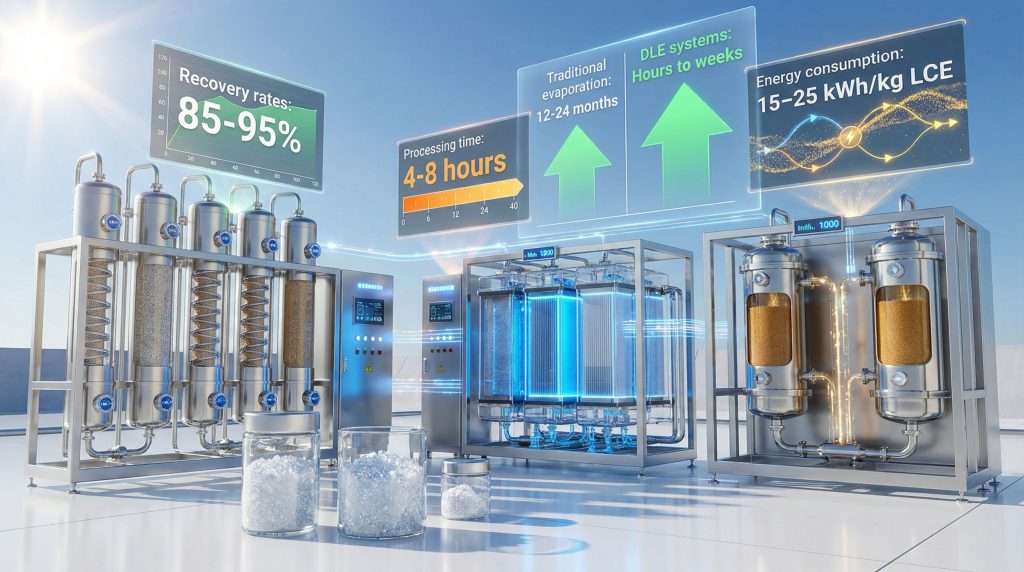
- Recovery Efficiency: Systems achieve lithium recovery rates exceeding 80%, compared to conventional brine evaporation recovery of 40-60%
- Processing Timeline: Operations complete within hours to days, contrasting with traditional 12-24 month evaporation cycles
- Brine Compatibility: Economic operation possible at lithium concentrations as low as 50 mg/L
- Geographic Flexibility: Technology functions independently of climate-specific evaporation requirements
The modular design of direct lithium extraction systems permits integration with existing brine infrastructure whilst enabling rapid scaling according to market demand fluctuations. This structural flexibility addresses capital efficiency concerns associated with large-scale evaporation pond investments that cannot respond quickly to market changes.
When big ASX news breaks, our subscribers know first
Comparative Analysis of DLE Technology Platforms
Technology maturity varies significantly across the five primary direct lithium extraction pathways. Current industrial assessments indicate that adsorption and ion-exchange systems demonstrate the highest commercial readiness, whilst electrochemical and membrane-based approaches remain in developmental phases with unresolved scalability questions.
Adsorption-Based Systems utilise selective binding materials to capture lithium from solution. These systems currently lead in operational maturity and demonstrate consistent performance across diverse brine chemistries. Moreover, the technology employs solid-phase materials engineered for lithium selectivity, enabling operation in high-contamination environments that would compromise other extraction methods.
Ion Exchange Technologies function through resin-based separation processes. Whilst demonstrating commercial viability, these systems require careful consideration of resin regeneration cycles and chemical consumption patterns. Performance sustainability depends on maintaining resin integrity across extended operational periods.
Electrochemical Extraction represents the most technically ambitious approach, utilising electrical potential to drive selective lithium separation. However, industry analysis identifies significant concerns regarding energy consumption, electrode stability over extended operational cycles, and commercial-scale manufacturing feasibility, as highlighted by leading industry experts.
Membrane-Based Systems employ selective permeability to isolate lithium from complex brine solutions. Technical challenges include fouling resistance, operational stability under variable brine conditions, and maintenance requirements for membrane replacement.
Solvent Extraction utilises organic phase chemistry to achieve lithium separation. This established chemical engineering approach offers potential for continuous processing but requires careful environmental management of organic solvents and chemical recovery systems.
The technological hierarchy reflects current commercial readiness rather than theoretical performance potential. Consequently, market analysis suggests that adsorption and ion-exchange systems will likely dominate initial commercial deployments, while electrochemical and membrane technologies may achieve prominence in subsequent development phases pending resolution of current technical limitations.
Operational Advantages Transforming Lithium Production
Direct lithium extraction addresses three critical vulnerabilities in conventional lithium supply: production timeline inefficiency, resource recovery optimisation, and environmental impact management. These operational improvements directly impact project economics and strategic supply chain positioning.
Production Timeline Compression represents perhaps the most significant operational advantage. Traditional evaporation pond systems require 12-24 months to produce battery-grade lithium carbonate, creating substantial working capital requirements and limiting response capability to market demand fluctuations. In contrast, direct lithium extraction systems compress this timeline to hours or days, fundamentally altering project cash flow profiles and market responsiveness.
Resource Recovery Optimisation through direct lithium extraction achieves two critical improvements: higher lithium extraction efficiency and expanded resource accessibility. Conventional evaporation systems typically recover 40-60% of contained lithium, whilst direct lithium extraction systems exceed 80% recovery rates. This efficiency improvement directly translates to reduced brine extraction requirements and enhanced project economics.
The technology enables economic operation on previously marginal resources, including geothermal brines, oilfield produced water, and lower-grade salar brines. This resource flexibility expands the geographic footprint of potential lithium production beyond the three countries currently suitable for evaporation-based production: Argentina, Chile, and China, addressing critical aspects of the global lithium market trends.
Environmental Impact Reduction through direct lithium extraction addresses mounting regulatory and social licence pressures. The technology eliminates requirements for large-scale evaporation ponds, reducing land use requirements by approximately 90% compared to conventional systems. Additionally, processed brine can be reinjected into source aquifers, addressing water consumption and aquifer depletion concerns.
Co-Product Recovery Potential emerges as an additional economic advantage. Direct lithium extraction systems can be configured to recover valuable co-products including potassium, magnesium, and other minerals present in source brines. This multi-product capability enhances project economics and resource utilisation efficiency.
Accessing Previously Uneconomic Brine Resources
Direct lithium extraction technology enables lithium production from resource categories previously considered uneconomic or technically unfeasible. This capability expansion addresses both supply diversification requirements and geographic concentration risks in current lithium production.
Geothermal Brine Applications represent a significant opportunity, particularly in European markets seeking domestic lithium supply. Geothermal brines typically contain lithium concentrations suitable for direct lithium extraction whilst offering integration opportunities with renewable energy generation. The dual-use potential creates synergistic economic benefits through combined geothermal power and lithium production operations.
Recent developments in European geothermal lithium projects, including pilot plant initiatives, demonstrate practical application of this resource category. However, technical specifications regarding temperature tolerance, chemistry management, and equipment durability in geothermal environments require additional validation through extended operational periods.
Oilfield Produced Water Utilisation opens substantial North American lithium resources previously inaccessible through conventional extraction methods. Oil and gas operations generate significant volumes of lithium-bearing produced water that could support commercial lithium production without competing for freshwater resources or requiring new brine field development.
The technical challenges include managing hydrocarbon contamination, variable lithium concentrations across different formations, and integration with existing oil and gas infrastructure. Successful implementation requires collaboration between lithium extraction specialists and petroleum industry operators.
Lower-Grade Salar Brines become economically viable through direct lithium extraction efficiency improvements. Traditional evaporation systems require high-grade brines with specific chemical compositions to achieve economic viability. Furthermore, direct lithium extraction systems can process lower-concentration brines economically, expanding the resource base for potential lithium production, particularly in regions developing lithium brine market insights.
This capability particularly benefits regions with lithium-bearing brines that lack the optimal conditions required for evaporation-based production, potentially supporting domestic lithium supply development in multiple jurisdictions currently dependent on imported lithium products.
Technical Implementation Challenges and Risk Factors
Despite promising technological capabilities, direct lithium extraction faces substantial implementation challenges that could impact commercial viability and operational performance. These technical barriers require systematic resolution before widespread commercial adoption becomes feasible.
Equipment Durability and Performance Consistency emerge as primary concerns for commercial-scale operations. Laboratory and pilot-scale performance must translate to industrial operations involving thousands of processing cycles under variable operating conditions. Material degradation patterns, particularly for selective adsorption materials and ion-exchange resins, directly impact operational costs and system reliability.
The operational challenge extends beyond chemistry to maintaining consistent performance across extended processing cycles whilst managing complex brine chemistries that vary seasonally and geologically.
Process Chemistry Optimisation requires site-specific adaptation to local brine characteristics. Each direct lithium extraction installation must accommodate specific contamination profiles, including magnesium, boron, calcium, and hydrocarbon content. Brine pretreatment requirements, chemical consumption rates, and selective material performance vary significantly across different resource types.
Scale-Up Engineering Risks represent a critical transition challenge from pilot-scale demonstrations to commercial production facilities. Process intensification requirements, quality control at industrial volumes, and integration with downstream processing create technical complexity that may not be apparent in smaller-scale operations.
The transition from pilot to commercial scale typically reveals engineering challenges related to heat management, mass transfer efficiency, and process control automation. These factors directly impact capital expenditure requirements and operational complexity, as detailed in comprehensive DLE analysis.
Capital Cost Management presents ongoing challenges as direct lithium extraction systems typically require higher upfront capital investment compared to conventional evaporation pond systems. Higher capital intensity must be offset by operational advantages including faster production timelines, higher recovery rates, and operational flexibility.
Regulatory and Environmental Compliance requirements vary significantly across jurisdictions and may impact technology selection and operational parameters. Brine reinjection permitting, chemical handling regulations, and environmental monitoring requirements create additional complexity for project development and ongoing operations.
Economic Competitiveness Analysis
Direct lithium extraction economics depend heavily on operational context, resource characteristics, and market positioning rather than universal cost advantages. Economic competitiveness emerges primarily in specific scenarios where conventional methods face constraints or where operational advantages justify higher capital requirements.
Capital Expenditure Considerations indicate that direct lithium extraction systems typically require higher upfront investment per unit of production capacity compared to conventional evaporation pond systems. However, faster production timelines and higher recovery rates can offset capital intensity through improved cash flow profiles and reduced working capital requirements.
Economic analysis must consider total project timeline from development through production, including permitting, construction, and ramp-up periods. Direct lithium extraction systems often achieve production status faster than evaporation pond systems, creating earlier revenue generation and improved project returns despite higher initial capital requirements.
Operating Cost Structure varies significantly across different direct lithium extraction technologies. Energy consumption represents a primary cost driver, particularly for electrochemical systems. Chemical reagent requirements, selective material replacement costs, and maintenance intervals directly impact ongoing operational expenses.
Market Context Dependencies significantly influence economic competitiveness. Direct lithium extraction systems demonstrate strongest economic advantages in high-cost operating environments, constrained resource situations, or markets with premium pricing for domestically produced lithium products, including markets developing battery-grade lithium refinery capabilities.
Geographic factors including labour costs, energy pricing, regulatory requirements, and infrastructure availability create variable economic conditions that may favour direct lithium extraction in specific markets whilst supporting conventional methods in others.
Economic Sensitivity Analysis reveals that lithium price volatility, brine grade consistency, and equipment durability represent primary risk factors for direct lithium extraction project economics. Recovery rate performance and processing timeline consistency directly impact project returns and financing viability.
The next major ASX story will hit our subscribers first
Strategic Supply Chain Implications
Direct lithium extraction technology enables fundamental restructuring of global lithium supply chains through geographic diversification and production flexibility improvements. These strategic implications extend beyond individual project economics to broader supply security and market dynamics.
Geographic Diversification Opportunities represent the most significant strategic advantage of direct lithium extraction technology. Current lithium production concentration in South America and China creates supply chain vulnerabilities that direct lithium extraction can address through enabling production in North America, Europe, and other regions with suitable brine resources.
The ability to process geothermal brines and oilfield produced water creates lithium production opportunities in jurisdictions seeking domestic battery supply chain development. This geographic expansion could reduce dependence on imports and improve supply chain resilience for regional battery manufacturing.
Production Flexibility and Market Responsiveness through direct lithium extraction systems enable faster response to demand fluctuations compared to conventional production systems. Shorter production cycles and modular system design permit capacity adjustments that conventional evaporation pond systems cannot accommodate.
This operational flexibility becomes particularly valuable during periods of lithium price volatility, enabling producers to adjust output levels according to market conditions rather than maintaining fixed production rates determined by evaporation pond capacity.
Integration with Renewable Energy Systems creates synergistic opportunities particularly for geothermal-based lithium production. Co-location of lithium extraction with renewable energy generation improves project economics whilst supporting carbon footprint reduction objectives, aligning with broader mining industry innovation trends.
The combination of geothermal power generation and lithium production enables dual revenue streams whilst sharing infrastructure costs and operational expertise. This integration model may become particularly attractive in European markets pursuing both renewable energy development and domestic lithium supply objectives.
Supply Chain Resilience Enhancement through distributed production capabilities reduces risks associated with supply concentration in specific geographic regions or production methodologies. Direct lithium extraction enables development of alternative supply sources that can provide backup capacity during supply disruptions.
Market Outlook and Technology Adoption Timeline
Industry projections suggest that direct lithium extraction will achieve increasing prominence over the next decade, driven by supply security concerns, environmental regulations, and technological maturity improvements. However, adoption rates will likely vary significantly across regions and resource types.
Technology Maturation Trajectory indicates that adsorption and ion-exchange systems will likely dominate initial commercial deployments, whilst more advanced technologies including electrochemical and membrane systems may achieve broader adoption in subsequent phases pending resolution of current technical limitations.
Market analysis suggests the coming decade will be decisive for direct lithium extraction commercial viability. Performance data from pilot and early commercial projects will determine whether the technology can deliver promised operational advantages at commercial scale and economic competitiveness.
Market Penetration Forecasts project that direct lithium extraction could capture meaningful market share within the next decade, particularly in regions seeking domestic lithium supply development. Early adoption will likely focus on high-value applications where operational advantages justify premium costs.
Regional Development Patterns suggest that North American and European markets will likely lead direct lithium extraction adoption due to strategic supply security objectives and suitable geothermal or oilfield brine resources. Asian markets may adopt the technology more selectively based on specific resource characteristics and economic conditions.
Investment and Financing Trends indicate growing capital availability for direct lithium extraction technology development and commercial deployment. Government support programmes in multiple jurisdictions reflect strategic interest in domestic lithium supply development using advanced extraction technologies.
The global lithium market is projected to reach approximately US$52 billion by 2036, creating substantial opportunities for alternative production technologies that can capture market share through operational advantages or cost competitiveness in specific applications.
Regulatory Environment Evolution will likely influence direct lithium extraction adoption rates through environmental standards, permitting requirements, and potential incentives for advanced extraction technologies. Regulatory frameworks supporting domestic supply chain development may accelerate adoption in specific jurisdictions.
Investment Considerations and Risk Assessment
Direct lithium extraction presents a complex investment proposition requiring careful evaluation of technological, economic, and market factors. Investment decisions must consider both the potential for transformative operational advantages and the risks associated with emerging technology deployment at commercial scale.
Technology Risk Evaluation requires assessment of specific direct lithium extraction methodologies, operational track records, and performance validation data. Investors must distinguish between proven technologies ready for commercial deployment and developmental approaches requiring additional technical advancement.
The technology maturity spectrum from established adsorption systems to emerging electrochemical approaches creates different risk profiles that require specialised technical evaluation and due diligence processes.
Economic Competitiveness Thresholds depend on operational context, resource characteristics, and market positioning. Investment analysis must evaluate site-specific economic conditions including brine quality, energy costs, regulatory requirements, and market access to determine competitiveness against conventional production methods.
Market Positioning and Strategic Value considerations extend beyond project-level economics to strategic supply chain positioning. Direct lithium extraction projects may command premium valuations in markets prioritising domestic supply development or operational flexibility advantages.
Regulatory Pathway Complexity varies significantly across jurisdictions and may impact project development timelines and capital requirements. Environmental permitting, brine rights, and reinjection authorisation create regulatory dependencies that require careful evaluation and management.
The successful deployment of direct lithium extraction technology will likely depend on matching specific technological approaches to appropriate resource characteristics and market conditions rather than universal application across all lithium production scenarios.
This analysis is based on publicly available information and industry reports. Potential investors should conduct independent technical and financial due diligence before making investment decisions. Direct lithium extraction technology continues to evolve, and actual performance may vary from projected capabilities.
Considering Investing in Advanced Lithium Extraction Technologies?
Discovery Alert's proprietary Discovery IQ model delivers instant notifications on significant lithium and battery metal discoveries across the ASX, helping investors identify actionable opportunities in this rapidly evolving sector ahead of the broader market. Explore historic examples of exceptional mining discovery returns on Discovery Alert's discoveries page and begin your 30-day free trial today to secure your competitive advantage in the battery metals space.