
August 14, 2026
Economic Consequences of Maritime Chokepoint Disruptions
International shipping networks depend heavily on maritime chokepoints that can reshape global commerce within days. These critical waterways represent vulnerability nodes where geographic constraints intersect with geopolitical tensions, creating systemic risks that extend far beyond energy markets. When these passages face disruption, the resulting economic shockwaves demonstrate how tightly interconnected modern supply chains have become and how quickly established pricing mechanisms can fracture under pressure. The current Strait of Hormuz shutdown exemplifies these vulnerabilities and provides critical insights into global energy security.
When big ASX news breaks, our subscribers know first
Understanding the Strait of Hormuz: Gateway to Global Energy Security
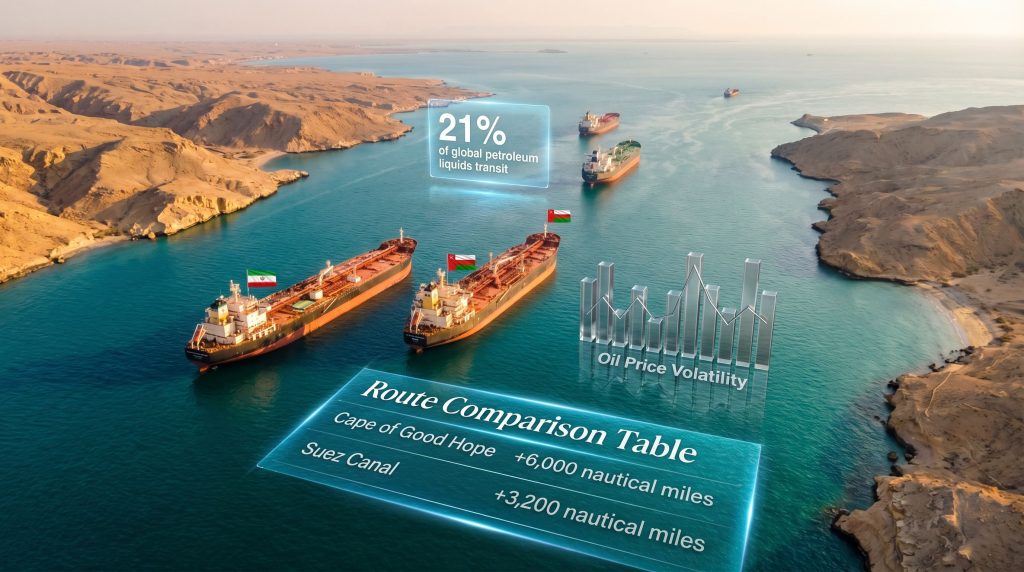
The Strait of Hormuz represents one of the most strategically significant maritime passages in the global energy system. This narrow waterway connects the Persian Gulf to the Gulf of Oman and Arabian Sea, with its narrowest point spanning just 21 miles. Through this chokepoint flows approximately 21% of global petroleum liquids, making it an indispensable transit route for crude oil exports from major producing nations including Saudi Arabia, UAE, Iraq, Kuwait, and Iran.
Geographic and Strategic Importance
The strategic importance of this waterway becomes evident when examining the volume of energy commerce that depends on its accessibility. According to recent market analysis, the Platts Dubai benchmark historically priced around 18 million barrels per day, representing nearly one-fifth of global petroleum supply that transited through this critical passage. This massive volume underscores how a single chokepoint can influence worldwide energy pricing mechanisms.
The geographic constraints of the Strait create inherent vulnerability. Ships must navigate through territorial waters where international maritime law intersects with national sovereignty claims. During periods of heightened geopolitical tension, this narrow passage becomes a pressure point where regional conflicts can immediately affect global markets. Moreover, our oil price rally analysis demonstrates how these disruptions amplify existing market pressures.
Legal Framework Under International Maritime Law
Under the United Nations Convention on the Law of the Sea (UNCLOS), vessels enjoy transit passage rights through straits used for international navigation. Article 38 of UNCLOS establishes that ships and aircraft of all states enjoy the right of transit passage through such straits, which shall not be impeded. However, the practical enforcement of these legal frameworks during times of conflict presents complex challenges.
Historical precedents demonstrate varying approaches to chokepoint management during crises. The 1967 closure of the Suez Canal following the Six-Day War lasted eight years and forced fundamental shifts in global shipping patterns. Similarly, during the 1980s Tanker War between Iran and Iraq, attacks on commercial shipping required international naval intervention to maintain passage security.
The current Strait of Hormuz shutdown scenario reveals how quickly established legal frameworks can be tested when regional conflicts escalate. While international law provides clear principles regarding freedom of navigation, enforcement mechanisms depend on the willingness and capability of maritime powers to maintain open shipping lanes through diplomatic or military means. Furthermore, understanding the broader OPEC production impact helps contextualise how supply constraints affect global markets during such disruptions.
How Maritime Blockades Reshape Global Oil Markets
When critical shipping routes become inaccessible, oil markets experience immediate and often dramatic price volatility that reflects both supply disruption fears and the complex mechanics of commodity pricing. The recent Strait of Hormuz shutdown has demonstrated these dynamics in real-time, with WTI Crude rising to $89.86 per barrel (up 7.17%) and Brent Crude reaching $95.64 per barrel (up 5.82%), while Murban Crude fell sharply to $91.70 per barrel (down 9.80%).
These divergent price movements reveal the breakdown of traditional pricing relationships when physical supply chains become disconnected from market benchmarks. The Platts Dubai pricing system, which historically functioned as a reliable price discovery mechanism, has become fundamentally compromised when the crude it references cannot physically move through blocked shipping lanes.
Immediate Price Volatility Mechanisms
Risk premium calculations in commodity trading incorporate multiple factors during supply disruptions. Traders must assess not only the immediate supply shortfall but also the duration uncertainty, alternative supply availability, and the potential for conflict escalation. These assessments translate into price premiums that can persist long after physical disruptions are resolved.
The structural breakdown of the Dubai benchmark illustrates how concentrated trading can amplify volatility. Market analysis shows that TotalEnergies' trading division spent approximately $4 billion on Dubai partial cargoes in March 2026, securing delivery of 77 out of 82 available cargoes (93.9% of available supply). This concentration demonstrates how thin liquidity during crisis periods enables individual market participants to exert disproportionate influence on price formation.
Benchmark supply constraints have fundamentally altered pricing dynamics. Platts reduced deliverable grades from five to two (Murban and Oman crude), representing a 60% reduction in available pricing baskets. This contraction has made the benchmark vulnerable to manipulation and disconnected from broader market realities. In addition, these developments highlight the importance of implementing effective market volatility hedging strategies during such unprecedented disruptions.
Supply Chain Rerouting Economics
Alternative routing options carry significant economic penalties that affect global energy costs:
| Alternative Route | Additional Distance | Cost Premium | Transit Time |
|---|---|---|---|
| Cape of Good Hope | +6,000 nautical miles | $2-4/barrel | +14-21 days |
| Suez Canal (when accessible) | +3,200 nautical miles | $1-2/barrel | +7-10 days |
| Pipeline alternatives | N/A | Variable | Capacity limited |
The Cape of Good Hope route around Africa adds substantial costs beyond the per-barrel premium. Extended transit times tie up tanker capacity, reduce fleet utilisation efficiency, and increase working capital requirements for oil trading operations. These costs ultimately flow through to end consumers in the form of higher energy prices.
Pipeline alternatives offer limited relief due to capacity constraints and existing contractual obligations. While some Middle Eastern producers have developed pipeline infrastructure to bypass maritime chokepoints, these systems cannot handle the full volume that would normally transit through the Strait of Hormuz. For a deeper understanding of how these factors connect to broader economic trends, our global recession insights provide valuable context.
Regulatory Response Frameworks: International Law vs. National Security
When maritime chokepoints face closure, the international community confronts complex questions about jurisdiction, enforcement, and coordinated response mechanisms. The tension between national security interests and global economic stability requires careful navigation of diplomatic, legal, and military options.
UN Security Council Jurisdiction and Enforcement
The United Nations Security Council possesses authority under Chapter VII of the UN Charter to address threats to international peace and security. Previous resolutions have established precedents for maintaining freedom of navigation, particularly in cases where chokepoint closures threaten global commerce. However, the effectiveness of these mechanisms depends heavily on the political consensus among permanent Security Council members.
Sanctions enforcement presents particular challenges during maritime blockades. While economic sanctions may provide diplomatic leverage, their implementation often depends on the same shipping routes that are under threat. This creates circular enforcement problems where the tools for applying pressure become unavailable precisely when they are most needed.
The current diplomatic landscape includes ongoing negotiations, as indicated by recent CNN reporting on Iran-related diplomatic developments alongside various peace initiatives. These diplomatic efforts represent attempts to resolve chokepoint access through negotiation rather than military confrontation.
Strategic Petroleum Reserve Activation Protocols
The International Energy Agency (IEA) coordinates emergency response procedures among member states when supply disruptions threaten energy security. These protocols include coordinated releases from strategic petroleum reserves, demand reduction measures, and fuel switching where technically feasible.
Strategic reserve activation requires careful calibration. Premature releases may prove insufficient to address extended disruptions, while delayed action can allow market panic to amplify economic damage. The timing and scale of reserve deployments send important signals to market participants about official assessments of crisis severity and duration.
Market intervention thresholds typically consider both the scale of supply disruption and the availability of alternative sources. When chokepoints like the Strait of Hormuz face closure, the percentage of global supply affected often exceeds normal intervention triggers, requiring larger-scale coordinated responses.
Economic Impact Assessment: Beyond Energy Markets
The ripple effects of chokepoint closures extend throughout the global economy, affecting sectors far removed from energy production. Transportation costs, manufacturing input prices, and consumer goods all experience inflationary pressure when major shipping routes become inaccessible.
Sectoral Vulnerability Analysis
Transportation and logistics sectors face immediate cost escalation when alternative routes require longer distances and higher fuel consumption. Airlines, shipping companies, and trucking operations must absorb higher energy costs while potentially rerouting operations to maintain service continuity.
Manufacturing industries dependent on petrochemical inputs experience dual pressure from both higher raw material costs and increased transportation expenses. The automotive, plastics, and pharmaceutical sectors prove particularly vulnerable to sustained energy price increases resulting from chokepoint disruptions.
Consumer goods price transmission occurs through multiple channels. Direct energy costs affect production and distribution, while indirect effects flow through increased raw material prices and logistics expenses. These cost increases typically appear in consumer prices with a lag of several months, creating sustained inflationary pressure even after initial supply disruptions are resolved.
Regional Economic Disruption Patterns
Asian refineries face particular challenges when Middle Eastern supply routes are disrupted. These facilities have invested heavily in complex upgrading capacity designed to process specific crude grades that may become unavailable during blockades. Chinese refineries have invested substantially in complex upgrading technology that enables processing of heavier crude grades while maintaining high-value light product output.
This technological evolution has altered crude quality preferences and reduced the structural premium that light sweet grades once commanded. However, when supply routes face disruption, these same refineries must quickly adapt to available crude grades, potentially operating at reduced efficiency until alternative supplies are secured. Additionally, the broader implications of US-China trade tensions further complicate regional supply chain dynamics during such crises.
European energy security implications include increased dependence on alternative supply sources and higher transportation costs for crude imports. The headlines indicate significant market shifts as alternative suppliers benefit from disrupted traditional routes.
Emerging market currencies face pressure from increased import costs when denominated in foreign currencies. Countries heavily dependent on energy imports must either absorb higher costs or allow currency depreciation to balance trade flows, both of which create domestic economic stress.
What Are the Long-Term Policy Implications?
Sustained chokepoint vulnerabilities drive fundamental shifts in energy infrastructure investment priorities and international cooperation frameworks. The current Strait of Hormuz shutdown has accelerated discussions about diversification strategies that were previously considered economically marginal.
Energy Infrastructure Diversification Mandates
Pipeline development acceleration has become a strategic priority for major energy producers seeking to reduce dependence on maritime chokepoints. Projects such as Iraq-Jordan pipeline expansions and East-Mediterranean pipeline networks offer alternative export routes that bypass vulnerable sea lanes.
LNG terminal expansion priorities reflect the growing importance of flexible energy supply chains. Liquefied natural gas can be transported via diverse routes and provides strategic flexibility during regional supply disruptions. Recent reports indicate substantial international investment commitments to help affected regions cope with supply disruptions.
Renewable energy transition timeline adjustments occur as countries reassess energy security priorities. While renewable sources reduce long-term dependence on imported hydrocarbons, the transition period still requires secure fossil fuel supplies to maintain economic stability.
Maritime Security Governance Evolution
Naval coalition formation for chokepoint protection requires sustained international cooperation and resource commitment. The cost of maintaining naval presence in contested waters must be balanced against the economic value of preserved commercial shipping access.
Insurance market risk assessment changes reflect updated understanding of chokepoint vulnerabilities. Marine insurance premiums for vessels transiting contested waters increase significantly, adding another layer of cost to global shipping operations.
International shipping route security protocols require updating to address modern threat environments. Coordination between commercial shipping operators, naval forces, and coastal states needs enhancement to maintain situational awareness and rapid response capabilities. As the Atlantic Council analysis demonstrates, the economic implications of such disruptions extend far beyond immediate energy markets.
The next major ASX story will hit our subscribers first
Diplomatic Resolution Mechanisms and Precedents
Historical analysis of chokepoint crisis management provides valuable insights for current diplomatic efforts. The pattern of conflict escalation, international intervention, and eventual resolution offers lessons for managing the current Strait of Hormuz shutdown.
Historical Chokepoint Crisis Management
The Tanker War period during the 1980s established precedents for international naval intervention to protect commercial shipping. Operation Earnest Will demonstrated how major maritime powers could coordinate convoy operations to maintain shipping access during active conflict periods.
Suez Canal closures and reopening negotiations have historically required complex diplomatic arrangements addressing both security concerns and commercial interests. The 1967 closure lasted eight years partly due to the intertwining of the waterway's status with broader Middle Eastern conflicts.
Malacca Strait piracy mitigation models show how regional cooperation can address maritime security threats through coordinated naval patrols, information sharing, and capacity building among coastal states.
Current Mediation Efforts and Stakeholder Interests
Regional power brokers including Pakistan and Oman possess important roles in facilitating dialogue between conflicting parties. These nations often maintain diplomatic relationships with multiple stakeholders and can provide neutral venues for negotiations.
Great power competition dynamics complicate resolution efforts when major powers have conflicting interests in chokepoint access and regional influence. The United States, China, and European Union may have different priorities regarding conflict resolution timelines and terms.
Economic incentive structures for conflict resolution must address the underlying issues driving chokepoint closure decisions. Compensation mechanisms, trade relationship restructuring, and security guarantees may be necessary components of sustainable agreements.
Regulatory Preparedness for Future Chokepoint Disruptions
The current crisis has revealed gaps in international preparedness for chokepoint disruptions that require systematic attention. Early warning systems, coordination mechanisms, and response protocols need enhancement to minimise economic damage from future incidents.
Early Warning System Development
Satellite monitoring and intelligence sharing capabilities require expansion to provide real-time assessment of chokepoint security conditions. Commercial shipping operators need timely information to make routing decisions and manage risk exposure.
Commercial shipping data integration with security monitoring systems can improve situational awareness for both operators and regulatory authorities. Automated tracking of vessel movements, cargo manifests, and route changes provides valuable intelligence for crisis management.
Automated market response triggers could help stabilise markets during initial crisis periods. Pre-established protocols for strategic reserve releases, alternative supply activation, and emergency transportation arrangements may reduce market volatility during developing crises.
International Coordination Mechanisms
G20 energy security protocols require updating to address modern chokepoint vulnerabilities. Coordinated response capabilities among major economies can help minimise global economic disruption when critical shipping routes face closure.
OPEC+ emergency production capacity provides one mechanism for offsetting supply disruptions, though this depends on available spare capacity and willingness of producers to increase output during crisis periods.
Allied naval cooperation agreements need regular updating to reflect current threat environments and operational capabilities. Burden-sharing arrangements for chokepoint security must balance national interests with collective security benefits.
Redefining Global Energy Security Governance
The lessons emerging from the current situation will likely reshape international approaches to energy security governance for years to come. The interconnection between maritime security, energy markets, and global economic stability requires new frameworks for cooperation and crisis management.
Policy Framework Modernisation Requirements
Chokepoint vulnerability assessment standards need systematic development to identify and prioritise risks across global shipping networks. These assessments should consider both the probability of disruption and the economic consequences of closure for different duration periods.
International maritime law enforcement capabilities require strengthening to ensure effective implementation of freedom of navigation principles during crisis periods. This may require enhanced coordination between naval forces and civilian maritime authorities.
Economic resilience planning for supply disruptions should become a standard component of national energy security strategies. Countries need contingency plans that address both immediate crisis management and longer-term adaptation to modified supply chain realities.
Strategic Recommendations for Stakeholders
Government energy security policy updates should incorporate lessons learned from chokepoint disruptions into long-term planning processes. This includes infrastructure investment priorities, diplomatic engagement strategies, and crisis response capabilities.
Corporate supply chain risk management must evolve to address the demonstrated vulnerabilities in maritime transport networks. Companies dependent on global supply chains need enhanced scenario planning and alternative sourcing strategies.
International organisation coordination improvements are necessary to ensure effective response to future chokepoint crises. The current experience reveals gaps in coordination mechanisms that could be addressed through enhanced planning and regular exercises.
Investment Disclaimer: The analysis contained in this article is for educational and informational purposes only. Market conditions and geopolitical situations can change rapidly, affecting energy prices and investment outcomes. Readers should conduct their own research and consult with financial professionals before making investment decisions based on supply disruption scenarios or energy market analysis.
This analysis is based on publicly available information and market data as of April 2026. Geopolitical situations remain fluid, and developments may have occurred subsequent to this analysis that could affect the accuracy of these assessments.
Ready to Capitalise on Energy Market Disruptions?
Discovery Alert's proprietary Discovery IQ model delivers real-time notifications on significant ASX mineral discoveries, including critical energy and strategic mineral opportunities that often surge during global supply chain disruptions. Stay ahead of market volatility by exploring Discovery Alert's historic discoveries and begin your 14-day free trial today to position yourself strategically when geopolitical events create exceptional investment opportunities.