
August 21, 2026
Economic Disruption Patterns in Australian Fuel Markets
Global supply chain vulnerabilities create cascading effects throughout national economies, with fuel-dependent nations experiencing amplified volatility during international crises. Australia's economic structure demonstrates particular sensitivity to these disruptions, given its geographical isolation and heavy reliance on imported refined petroleum products. The aussie fuel prices forecast indicates significant challenges ahead as multiple risk factors converge to potentially drive costs to unprecedented levels.
The complexity of modern fuel pricing extends well beyond simple crude oil cost calculations. Exchange rate fluctuations, international shipping insurance markets, and geopolitical risk premiums combine to create pricing dynamics that can shift rapidly based on events thousands of kilometres away from Australian consumers. These interconnected systems mean that a single policy announcement or military threat can trigger fuel price adjustments within days, affecting household budgets and business operations across the continent.
When big ASX news breaks, our subscribers know first
Australia's Fuel Import Dependency Framework
Australia's position as a significant net importer of refined petroleum products creates unique economic sensitivities that distinguish it from oil-producing nations. The nation's fuel supply chain operates through complex international relationships, with pricing mechanisms that respond to multiple variables simultaneously.
Import Structure Analysis:
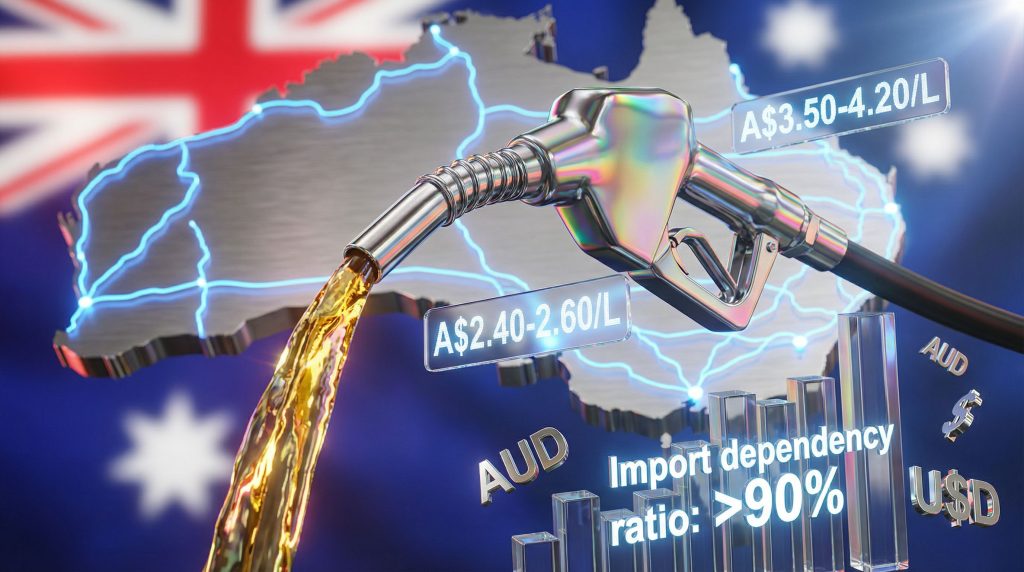
- Refined Product Dependency: Over 90% of Australia's fuel requirements are met through imports
- Supply Source Concentration: Heavy reliance on Asian refineries, particularly Singapore and South Korea
- Strategic Reserve Limitations: Current diesel coverage estimated at approximately 90 days under normal consumption patterns
- Distribution Network Costs: Interstate transport adds substantial regional price differentials
The vulnerability framework extends beyond simple import statistics. Furthermore, currency transmission effects create additional price volatility, as fuel purchases are predominantly denominated in US dollars while domestic sales occur in Australian dollars. This currency mismatch means that AUD/USD exchange rate movements directly impact fuel costs independent of crude oil price changes.
Recent oil price rally analysis suggests that a 10% depreciation in the Australian dollar typically translates to 15-20 cents per litre increase at service stations, even when international oil prices remain stable. This currency exposure represents a significant macroeconomic transmission channel that policymakers must consider when evaluating inflationary pressures.
Regional Distribution Cost Structure:
| Distribution Route | Additional Cost Per Litre | Primary Factors |
|---|---|---|
| Capital City Metro | Base Price | Terminal proximity, competition |
| Regional Centres | +8-15 cents | Transport costs, lower volumes |
| Remote Communities | +25-45 cents | Distance, infrastructure limitations |
Critical Supply Chain Chokepoints
The Strait of Hormuz represents the most significant single vulnerability point for Australian fuel security, despite Australia's geographical distance from the Middle East. This narrow waterway facilitates the transit of approximately 21% of global petroleum liquids, including crude oil and refined products that eventually reach Australian markets.
Insurance market dynamics play a crucial role in supply chain resilience. When international insurance providers withdraw coverage for shipping routes due to geopolitical tensions, the economic viability of using those routes diminishes rapidly, regardless of whether physical threats materialise. Consequently, this insurance-driven supply disruption mechanism can trigger price increases within 1-2 weeks of initial risk announcements.
Supply Disruption Timeline:
- Geopolitical Event Announcement (Day 0)
- Insurance Market Response (Days 1-3)
- Shipping Route Adjustments (Days 3-7)
- Wholesale Price Adjustments (Days 7-14)
- Retail Price Implementation (Days 14-28)
For instance, Westpac analysts have identified that Iranian production disruptions alone could increase oil prices by US$25 per barrel to around US$100, while broader Strait of Hormuz shipping interruptions could push Brent crude to US$113 per barrel within a month-long disruption scenario.
What Are the Extreme Pricing Scenarios for Australian Fuel?
Multiple converging factors could drive Australian fuel prices to unprecedented levels, with distinct pathways leading to different price outcomes and duration patterns. Economic modelling indicates several scenarios where consumers face costs exceeding A$3 per litre.
Scenario 1: Limited Supply Disruption
- Trigger: Iranian production facilities targeted
- Brent Crude Target: US$100/barrel
- Australian Pump Price: A$2.40-2.60/L
- Expected Duration: 4-8 weeks
- Currency Assumption: AUD/USD at 0.67-0.70
Scenario 2: Critical Infrastructure Impact
- Trigger: Strait of Hormuz shipping interruption
- Brent Crude Target: US$113/barrel
- Australian Pump Price: A$2.80-3.00/L
- Expected Duration: 2-3 months
- Additional Factors: Insurance premium increases, alternative routing costs
Scenario 3: Extended Regional Instability
- Trigger: Prolonged Middle Eastern conflict affecting multiple production zones
- Brent Crude Target: US$150-200/barrel
- Australian Pump Price: A$3.50-4.20/L
- Expected Duration: 6+ months
- Economic Impact: Demand destruction, alternative fuel acceleration
However, Reserve Bank of Australia Governor Michele Bullock has acknowledged that A$3 per litre fuel prices would create significant challenges for consumers, service station operators, and monetary policy implementation. The RBA's March 2026 communication strategy reflects preparation for managing inflation expectations during potential fuel price shocks.
Currency Market Transmission Mechanisms
Australian fuel pricing operates through a three-currency dynamic involving Brent crude pricing in US dollars, AUD/USD exchange rate fluctuations, and local distribution margins in Australian dollars. This structure creates unique transmission pathways that can amplify or cushion international price movements.
Exchange Rate Impact Framework:
| AUD/USD Level | Price Cushioning Effect | Risk Premium |
|---|---|---|
| 0.75+ | Strong natural hedge | Low |
| 0.65-0.75 | Limited cushioning | Moderate |
| <0.65 | Price amplification | High |
During periods of international uncertainty, risk-off sentiment typically strengthens the US dollar while weakening commodity-linked currencies including the Australian dollar. In addition, this dynamic means that geopolitical events affecting oil markets simultaneously create currency headwinds for Australian consumers, particularly given the tariffs impact on markets.
Goldman Sachs analysis suggests that equity markets require approximately two weeks to digest geopolitical developments, with currency markets typically adjusting more rapidly to new information. This timing differential means that AUD weakness often manifests within days of international crisis announcements, ahead of broader market stabilisation.
Macroeconomic Transmission Pathways
Fuel price increases create cascading effects throughout the Australian economy through multiple transmission channels that operate simultaneously. These pathways extend beyond direct consumer costs to influence business operations, monetary policy, and regional economic development patterns.
Direct Consumer Impact Channels:
- Household Budget Reallocation: Reduced discretionary spending as fuel costs consume larger income shares
- Transport Behaviour Changes: Shift toward public transport, carpooling, and trip consolidation
- Geographic Mobility Constraints: Reduced travel to regional areas, affecting tourism and family connections
Business Cost Structure Adjustments:
- Logistics Expense Increases: Delivery and distribution cost pressures across all sectors
- Service Pricing Adjustments: Transport-dependent businesses passing through cost increases
- Operational Efficiency Focus: Accelerated adoption of fuel-efficient technologies and route optimisation
Current economic conditions amplify these transmission effects. Furthermore, headline CPI already sits at 3.8%, driven partly by electricity price increases exceeding 30% over the past year. The Reserve Bank has implemented one interest rate increase in 2026, indicating active monetary tightening in response to inflationary pressures.
"Fuel prices form part of headline CPI but are classified as volatile items that get excluded when calculating Australia's core inflation measure, known as Trimmed Mean Inflation."
This measurement distinction creates complications for monetary policy implementation. Sharp fuel price increases boost headline inflation readings while potentially having limited impact on underlying inflationary pressures, requiring careful RBA communication to manage inflation expectations effectively.
The next major ASX story will hit our subscribers first
Regional Economic Vulnerability Assessment
Australia's geographic diversity creates uneven exposure to fuel price shocks, with regional and remote communities experiencing disproportionate impacts due to transport-dependent economic structures and limited alternative options. The aussie fuel prices forecast particularly affects these communities.
Regional Impact Differentiation:
Metropolitan Areas:
- Cushioning Factors: Public transport alternatives, shorter commuting distances, competitive retail markets
- Vulnerability Points: Service sector margins, discretionary consumer spending
Regional Centres:
- Amplifying Factors: Limited public transport, longer commuting distances, tourism dependencies
- Economic Transmission: Agricultural input costs, retail price pressures, reduced visitor numbers
Remote Communities:
- Critical Vulnerabilities: Essential service delivery costs, freight transport dependencies, limited fuel supplier competition
- Social Impacts: Reduced mobility, increased social isolation, community service sustainability
Additionally, ACCC analysis shows that petrol price cycles in major cities create further complexity for consumers attempting to manage fuel costs effectively.
Investment Strategy Implications
Fuel price volatility creates distinct investment opportunities and risks across Australian equity markets, with sector-specific impacts varying based on operational exposure to transport costs and consumer discretionary spending patterns. Understanding oil market movements becomes crucial for strategic positioning.
Sector Sensitivity Analysis:
| Sector | Direct Exposure | Consumer Impact | Investment Strategy |
|---|---|---|---|
| Transport & Logistics | Very High | High | Defensive positioning, cost pass-through capability assessment |
| Tourism & Hospitality | Moderate | Very High | Selective positioning based on domestic vs international exposure |
| Consumer Discretionary | Low | High | Focus on essential services, avoid discretionary retailers |
| Resources | Low | Low | Potential beneficiary through commodity price correlations |
Portfolio Construction Considerations:
- Energy Transition Acceleration: Fuel price shocks historically accelerate alternative energy adoption
- Infrastructure Investment: Focus on companies with pricing power and essential service characteristics
- Currency Hedging: Consider AUD-hedged international exposures to manage currency volatility
- Defensive Positioning: Prioritise companies with strong balance sheets and operational flexibility
How Will the RBA Respond to Fuel Price Shocks?
The Reserve Bank of Australia faces complex challenges when responding to fuel-driven inflation spikes, balancing the need to maintain price stability against the risk of over-tightening monetary policy in response to temporary supply shocks. The consideration of OPEC market influence adds another layer of complexity to these decisions.
RBA Policy Considerations:
Immediate Response Protocol:
- Headline vs Core Inflation Distinction: Fuel prices impact headline CPI but may not require policy response if core inflation remains contained
- Duration Assessment: Temporary shocks typically don't warrant rate adjustments, persistent increases may require action
- Communication Strategy: Managing public inflation expectations during volatile periods
Policy Transmission Concerns:
- Consumer Confidence: High fuel prices reduce discretionary spending independent of interest rate levels
- Business Investment: Uncertainty about fuel costs may delay capital expenditure decisions
- Housing Market: Fuel costs affect household debt servicing capacity, influencing mortgage payment ability
Historical precedent suggests that fuel price spikes exceeding 6-8 weeks duration begin influencing broader inflationary expectations, potentially requiring monetary policy responses to maintain credibility.
Long-term Economic Adjustment Mechanisms
Sustained high fuel prices trigger structural economic adjustments that reshape consumer behaviour, business strategies, and investment patterns across multiple sectors. These adaptations often persist beyond the initial price shock period.
Consumer Adaptation Patterns:
- Vehicle Purchase Decisions: Accelerated adoption of hybrid and electric vehicles
- Urban Planning Preferences: Increased demand for properties near public transport infrastructure
- Work Arrangement Changes: Permanent shift toward remote work arrangements to reduce commuting costs
Business Strategy Evolution:
- Supply Chain Localisation: Reduced reliance on distant suppliers to minimise transport cost exposure
- Technology Investment: Automation and efficiency improvements to offset higher operational costs
- Pricing Model Adjustments: Implementation of fuel surcharges and dynamic pricing mechanisms
Infrastructure Development Priorities:
- Public Transport Investment: Increased political and economic pressure for mass transit expansion
- Alternative Fuel Networks: Accelerated development of electric vehicle charging and hydrogen refuelling infrastructure
- Regional Connectivity: Focus on reducing transport costs for essential services in remote areas
Moreover, understanding OPEC production impact remains essential for long-term planning as global supply decisions continue influencing Australian markets.
Risk Management and Forward Planning
Understanding fuel price volatility enables better preparation for potential disruptions through strategic planning, financial hedging, and operational flexibility. Both businesses and individual consumers can implement measures to reduce exposure to extreme pricing scenarios.
Business Risk Mitigation Strategies:
- Fuel Hedging Programs: Forward contracting and financial derivatives to manage price exposure
- Operational Efficiency Improvements: Route optimisation, vehicle fleet modernisation, alternative transport modes
- Customer Contract Adjustments: Fuel escalation clauses and dynamic pricing mechanisms
Household Planning Considerations:
- Budget Allocation: Increased emergency fund allocation for transport costs during price spikes
- Transport Alternatives: Investment in public transport passes, bicycle infrastructure, car-sharing memberships
- Location Decisions: Consideration of fuel costs in housing and employment location choices
The complexity of Australia's fuel price dynamics requires ongoing monitoring of international geopolitical developments, currency market movements, and domestic economic conditions. While extreme pricing scenarios remain possible, understanding transmission mechanisms enables better preparation for various potential outcomes. Consequently, the aussie fuel prices forecast suggests that consumers and businesses must develop comprehensive strategies to navigate an increasingly interconnected global economy where fuel price volatility represents a persistent economic challenge requiring proactive management approaches.
Looking to Navigate Market Volatility Caused by Energy Price Fluctuations?
Discovery Alert's proprietary Discovery IQ model delivers real-time alerts on significant ASX mineral discoveries, including energy and resource companies positioned to benefit from commodity price volatility and supply chain disruptions. Start your 14-day free trial today to identify actionable investment opportunities ahead of broader market movements during these uncertain times.