May 22, 2026
Economic Transformation Drivers Behind Southeast Asia's Coal Import Surge
Southeast Asia's rapid industrialisation has fundamentally altered global energy trade patterns, with manufacturing relocations from higher-cost economies creating unprecedented demand for reliable baseload power generation. This economic transformation reflects broader development trends across emerging markets, where energy security trends become essential infrastructure supporting sustained GDP expansion.
The correlation between industrial expansion and coal consumption demonstrates how developing economies navigate the balance between immediate growth opportunities and long-term sustainability commitments. Vietnam's position as a regional manufacturing hub exemplifies this dynamic, where foreign direct investment flows concentrate in energy-intensive industries requiring consistent electricity supply reliability.
Economic data reveals striking patterns connecting manufacturing competitiveness with energy infrastructure investment. Nations pursuing export-oriented growth strategies must maintain reliable power generation capacity to attract and retain industrial operations, particularly in sectors where production interruptions create significant financial consequences.
When big ASX news breaks, our subscribers know first
What Economic Forces Drive Vietnam's Historic Coal Import Levels?
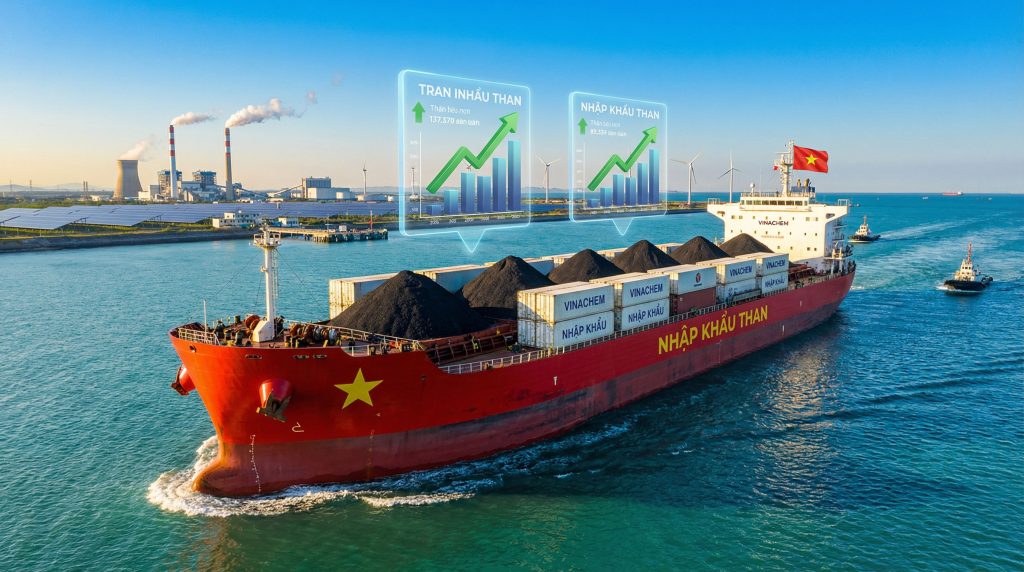
Vietnam's coal imports record high reached 65.43 million tonnes in 2025, surpassing the previous record of 63.82 million tonnes established in 2024. This achievement occurred alongside remarkable economic expansion, with GDP growing 8.02% compared to the previous year, demonstrating direct causation between economic activity and energy demand.
The nation's industrial production growth reached 10.1% year-over-year in December 2025, marking the second consecutive month of expansion. This industrial momentum creates sustained demand for reliable electricity generation, positioning coal imports as essential infrastructure supporting manufacturing competitiveness during high-growth development phases.
Manufacturing Hub Development and Energy Intensity Patterns
Vietnam's emergence as Southeast Asia's leading coal import growth market reflects strategic positioning within regional manufacturing value chains. The nation led Southeast Asian imported coal demand growth during 2025, with this leadership directly attributable to industrial expansion patterns that distinguish Vietnam from regional competitors.
Labour cost advantages combined with geographic proximity to major Asian markets create compelling investment opportunities for multinational manufacturing operations. These industrial relocations require predictable power supply arrangements, with coal-fired generation offering supply security that supports investor confidence during facility expansion phases.
Manufacturing-intensive economic development typically correlates with energy consumption growth across multiple industrial sectors. Furthermore, Vietnam's experience demonstrates how successful attraction of foreign investment depends significantly on electricity infrastructure reliability, particularly for production processes requiring 24/7 baseload power availability.
GDP Growth Correlation with Energy Security Priorities
The economy expanded 8.5% in the fourth quarter of 2025 compared to the same period in 2024, logging four consecutive quarters of growth. This consistent expansion pattern requires corresponding infrastructure development to sustain momentum, with electricity generation capacity serving foundational roles in economic planning strategies.
Total electricity production and power imports reached 322.8 TWh in 2025, representing a 4.6% increase from the previous year. Generation capacity expanded by 6.4 GW, bringing total capacity to 87.6 GW. This infrastructure expansion directly supports the nation's ability to absorb manufacturing relocations and industrial zone development initiatives.
Economic planners target at least 10% growth in 2026, with government projections indicating base case generation reaching approximately 350 TWh. This represents an anticipated 8.4% increase in electricity production needed to support higher GDP growth trajectories, demonstrating sophisticated coordination between energy policy and economic development objectives.
How Do Regional Supply Chain Dynamics Shape Vietnam's Coal Sourcing Strategy?
Global coal pricing conditions create both opportunities and constraints for Vietnam's procurement strategy. Market assessments show GAR 4,200 kcal/kg coal for Supramax vessels priced at $44.99 per tonne FOB Kalimantan as of December 24, 2025, representing a 71% decline from the all-time high of $154.21 per tonne recorded in October 2021.
| Supplier Analysis | December 2025 | December 2024 | Year-over-Year Change |
|---|---|---|---|
| Indonesian Suppliers | 2.36 million tonnes | 2.83 million tonnes | -16.6% decline |
| Australian Producers | 1.25 million tonnes | 1.56 million tonnes | -19.9% decline |
| Market Share (Indonesia) | ~65% of identified sources | Higher proportion | Maintained dominance |
Indonesia's Dominance in Southeast Asian Coal Trade Networks
Indonesian coal maintained its position as Vietnam's primary supplier despite volume declines, providing 2.36 million tonnes in December 2025. This continued dominance reflects established shipping routes, consistent quality specifications, and regional trade financing mechanisms that translate into cost advantages supporting Vietnam's industrial competitiveness goals.
However, Indonesian coal production declined 5.5% in 2025, producing 790 million tonnes compared to previous years. Indonesian exports fell 7.9%, with approximately 514 million tonnes exported in 2025, marking the first decline in five years. These supply constraints affect regional procurement dynamics and pricing strategies.
The Indonesian government implemented multiple policy measures to tighten coal supply in response to market conditions, including withholding export sales proceeds in onshore bank accounts, tweaking domestic coal reference prices, and imposing export taxes. Consequently, these interventions directly impact Vietnam's procurement options and timing strategies.
Diversification Strategies and Supply Chain Risk Management
Vietnam's procurement approach demonstrates sophisticated risk management principles despite theoretical transport cost advantages favouring Indonesian suppliers. Australian coal, representing approximately 26% of identified sources, serves supplementary roles while Indonesian coal maintains 65% market share concentration.
Indonesian miners must adhere to domestic market obligation (DMO) regulations requiring them to sell at least one-quarter of their production locally. DMO sales reached 254 million tonnes in 2025, with government-compiled stocks at 22 million tonnes year-end. This regulatory framework diverts supply that would otherwise be available for Vietnam and other importers.
Market participants recognise supply chain vulnerabilities despite geographic advantages. One Singapore-based coal trader noted that "uncertainty over supply and demand dynamics dominates market conditions, with no clear indication of when balance will return to global coal markets."
What Role Does Energy Infrastructure Investment Play in Economic Planning?
Coal-fired power generation serves as foundational infrastructure supporting Vietnam's broader economic development objectives. The strategic relationship between reliable electricity access and industrial productivity creates compelling economic justification for continued fossil fuel imports during renewable energy transition challenges development phases.
Infrastructure Investment Priorities Include:
• Baseload generation capacity expansion supporting manufacturing growth trajectories
• Grid reliability improvements enabling industrial zone development initiatives
• Port infrastructure enhancements facilitating efficient coal logistics operations
• Storage facility investments reducing supply chain vulnerability exposure
Power Generation Mix Evolution and Economic Trade-offs
Several coal-fired utilities are slated to come online to support the country's growth ambitions, which could raise imports by utilities in 2026. This infrastructure planning demonstrates how economic planners balance immediate industrial energy needs against long-term environmental commitments.
Seasonal variations affect generation dispatch decisions, with extended periods of seasonal rains boosting hydropower output and reducing reliance on coal-fired generation. December 2025 coal receipts slipped for the second straight month, declining 34% from the previous year and 5.2% from November's 3.82 million tonnes, demonstrating infrastructure flexibility where coal fulfils baseload roles dynamically.
The pace of electricity production growth moderated from 2024 levels despite continued expansion, indicating sophisticated economic dispatch principles where coal imports decline when renewable generation increases. This demonstrates economic optimisation rather than inflexible dependence on fossil fuel imports.
Industrial Zone Development and Electricity Demand Forecasting
Vietnam's ability to add 6.4 GW of capacity annually while maintaining steady electricity growth suggests infrastructure planning success that attracts manufacturing foreign direct investment. Strategic industrial development initiatives require predictable power supply arrangements, with coal imports offering supply security supporting investor confidence during manufacturing expansion plans.
Thermal coal accounted for approximately 69% of December's import volume, totalling 3.1 million tonnes out of 4.49 million tonnes overall coal imports. This data differentiates coal types within broader import categories, revealing energy generation priorities aligned with industrial development strategies.
In addition, the consistency of growth across multiple consecutive quarters suggests structural rather than cyclical demand drivers. Grid headroom provided by steady capacity expansion creates necessary infrastructure for new manufacturing facilities requiring continuous baseload power availability.
How Do Global Coal Market Dynamics Affect Vietnam's Economic Strategy?
International coal pricing trends create strategic opportunities for Vietnam's economic development approach. Lower global prices support industrial competitiveness by reducing input costs, while price volatility requires sophisticated procurement planning to manage cost structures effectively.
Current pricing levels reached more than four-year lows of $39.40 per tonne in June 2025, with subsequent trading in narrow ranges that some producers indicate barely cover operational costs. These conditions create favourable procurement environments for import-dependent economies expanding industrial capacity.
Price Advantage Periods and Industrial Expansion Timing
Vietnam's coal imports record high occurred during a period when India's coal-fired generation declined for the first time in five years, falling 3.4% to 1,247 TWh in 2025. India's thermal coal imports also fell 2.2% year-over-year to 160.32 million tonnes, creating opportunity contexts where Vietnam's growth contrasts with weakening demand from traditional major importers.
Strategic timing of industrial capacity expansion during favourable global coal pricing periods demonstrates sophisticated economic planning approaches. These timing decisions optimise long-term competitiveness while managing short-term cost pressures, particularly when commodity price impacts support buying decisions by utilities and industrial consumers.
Furthermore, Vietnam's import surge followed steady economic activity upticks, positioning coal as essential infrastructure during GDP expansion phases. Soft international coal prices supported procurement decisions in oversupplied markets, demonstrating how macroeconomic conditions create temporary advantages for developing economies.
Currency Risk Management in Large-Scale Commodity Procurement
Vietnam's approach to managing foreign exchange exposure in coal procurement reflects broader economic policy coordination between energy security and monetary policy objectives. Large-scale commodity imports require sophisticated financial planning to manage currency volatility impacts on industrial competitiveness.
The sharp depreciation of regional currencies has affected import dynamics across Southeast Asia, with procurement timing strategies becoming increasingly important for managing cost structures. Economic planners must balance immediate energy needs with currency risk exposure when negotiating large-scale commodity purchase agreements.
Multi-year coal purchase agreements offer price stability benefits, particularly when constrained global supply conditions prompt producers to offer spot coal at premium pricing. Some utilities have entered longer-term deals expecting continued policy support for coal-fired generation well into the latter half of this decade.
What Are the Macroeconomic Implications of Sustained High Coal Import Levels?
Continued reliance on coal imports creates both economic opportunities and structural dependencies requiring careful policy management. The balance between short-term growth support and long-term sustainability presents complex macroeconomic challenges that influence regional development patterns.
Economic Impact Assessment Framework:
• Trade balance effects from large-scale energy imports requiring offsetting strategies
• Industrial competitiveness benefits from reliable power supply supporting manufacturing
• Employment generation in energy-intensive manufacturing sectors creating multiplier effects
• Regional economic development patterns influenced by power infrastructure availability
Trade Balance Considerations and Economic Sustainability
Large-scale coal imports affect Vietnam's external account calculations, requiring offsetting export growth or alternative economic strategies to maintain sustainable trade balance positions. The relationship between energy import costs and manufacturing export revenues becomes critical for long-term economic stability.
Import volume growth of 65.43 million tonnes annually represents substantial foreign exchange outflows that must be balanced against economic benefits from industrial expansion. Economic planners evaluate these trade-offs when determining optimal energy infrastructure investment timing and procurement strategies.
Currency depreciation risks compound coal import cost pressures, particularly when global commodity prices experience volatility. Successful navigation of these challenges requires coordination between trade policy, monetary policy, and industrial development strategies to maintain overall economic competitiveness.
Employment and Industrial Development Multiplier Effects
Reliable electricity supply from coal imports enables employment generation in manufacturing sectors, creating positive economic multiplier effects supporting broader development objectives. Industrial production growth of 10.1% year-over-year demonstrates how energy infrastructure investment translates into measurable economic outcomes.
Manufacturing hub development attracts foreign investment flows concentrated in energy-intensive industries, creating employment opportunities across multiple economic sectors. The correlation between electricity reliability and investor confidence suggests that energy infrastructure investment generates returns exceeding direct cost calculations.
However, economic development multiplier effects extend beyond direct manufacturing employment to include transportation, logistics, construction, and service sector opportunities. This comprehensive economic impact justifies energy infrastructure investment during development phases focused on industrial competitiveness enhancement.
The next major ASX story will hit our subscribers first
How Does Vietnam's Energy Strategy Compare to Regional Economic Development Models?
Vietnam's approach to balancing immediate energy needs with long-term sustainability goals reflects successful development strategies employed across Southeast Asia. Comparative analysis reveals common patterns in managing energy security during rapid economic transformation periods experienced by other emerging economies.
The nation's leadership in Southeast Asian imported coal demand growth demonstrates strategic positioning within regional value chains. While regional peers experience declining demand, Vietnam's sustained growth trajectory contrasts with traditional major importers, indicating successful economic development model implementation.
ASEAN Economic Integration and Energy Cooperation Opportunities
Regional energy cooperation initiatives offer potential alternatives to bilateral coal import arrangements, with multilateral approaches potentially providing cost advantages and supply security benefits. Economic integration within ASEAN frameworks creates opportunities for coordinated energy infrastructure development reducing individual nation dependencies.
Vietnam's coal import patterns occur within broader regional supply chain dynamics affecting Indonesia, Australia, and other traditional suppliers. Understanding these interconnections enables more sophisticated procurement strategies leveraging regional cooperation mechanisms for enhanced energy security.
Trade flow evolution shows Indonesian supplies to Southeast Asia likely surpassed export volumes to India for the second consecutive year in 2025, underscoring changing regional dynamics. This shift creates opportunities for Vietnam to secure favourable supply arrangements as traditional demand centres reduce requirements.
Development Phase Analysis and Energy Transition Timing
Vietnam's current development phase parallels successful economic transformation models from other Asian economies, with coal imports serving similar bridging functions during renewable energy infrastructure development. The strategic approach balances immediate economic expansion needs against longer-term sustainability commitments.
Economic growth targets of at least 10% in 2026 require corresponding energy infrastructure development, with coal-fired utilities providing necessary baseload generation capacity. This development timing reflects proven approaches where emerging economies prioritise immediate industrial competitiveness while building clean energy foundations.
Successful transition models from other rapidly industrialising nations demonstrate how energy security during development phases enables subsequent investment in renewable infrastructure. Vietnam's strategy follows established patterns optimising economic growth timing with sustainable energy transition pathways.
What Future Economic Scenarios Could Affect Vietnam's Coal Import Patterns?
Multiple economic development pathways influence Vietnam's future coal import requirements, from accelerated renewable energy deployment scenarios to continued manufacturing sector expansion trajectories. Scenario planning reveals ranges of potential outcomes affecting long-term energy procurement strategies.
Government projections indicate base case generation reaching approximately 350 TWh in 2026, supporting ambitious economic growth targets. However, renewable energy deployment acceleration could significantly influence future coal requirements as infrastructure development progresses.
High Growth Economic Scenarios and Energy Infrastructure Requirements
Sustained high economic growth rates maintaining 10% annual expansion would likely increase coal import requirements until renewable energy infrastructure reaches sufficient scale supporting industrial expansion needs. Economic development momentum creates energy demand growth exceeding renewable capacity addition rates during transition periods.
Industrial zone development initiatives require predictable power supply arrangements extending beyond short-term renewable generation capacity. High growth scenarios necessitate flexible energy infrastructure combining coal-fired baseload generation with expanding renewable capacity to support investor confidence requirements.
Manufacturing sector expansion trajectories depend significantly on electricity reliability guarantees that current renewable infrastructure cannot independently provide. Economic planners must balance growth opportunity capture with transition timing to renewable energy systems offering comparable reliability characteristics.
Renewable Energy Transition Pathways and Economic Timing Considerations
The pace of renewable energy infrastructure development significantly influences future coal import patterns, with economic considerations affecting transition timing and implementation strategies. Successful navigation requires coordination between industrial development objectives and clean energy capacity building initiatives.
Extended periods of seasonal rains boosting hydropower output demonstrate renewable generation potential while highlighting variability challenges. Coal imports provide flexible response capacity when renewable generation experiences seasonal limitations, suggesting complementary rather than competitive infrastructure relationships during transition phases.
Economic optimisation principles guide transition timing decisions, with coal imports declining when renewable generation increases and expanding when seasonal conditions limit clean energy availability. This dynamic relationship suggests sophisticated energy planning approaches balancing multiple objectives simultaneously.
Balancing Economic Growth with Energy Security in Vietnam's Development Strategy
Vietnam's coal imports record high levels reflect sophisticated economic planning prioritising immediate growth opportunities while building foundations for long-term sustainability. This balanced approach demonstrates successful navigation of complex development challenges facing rapidly growing Asian economies seeking competitive positioning.
The integration of energy security considerations with broader economic development objectives positions Vietnam to maintain competitive advantages while gradually transitioning toward more sustainable energy systems. Success in managing this balance influences regional development patterns and provides valuable lessons for other emerging economies facing similar challenges, particularly regarding energy exports challenges.
Vietnam's strategic approach to energy infrastructure investment creates conditions supporting sustained economic expansion while maintaining flexibility for future transition pathways. The coordination between immediate industrial needs and long-term sustainability commitments exemplifies sophisticated development planning approaches proven successful across emerging economies, considering both decarbonisation benefits and growth objectives.
According to Reuters analysis, Vietnam's industrial boom has driven global coal imports to new highs, reflecting the nation's strategic positioning in regional manufacturing networks. Furthermore, Vietnamese government data shows substantial investment in thermal power generation infrastructure supporting this economic development strategy.
Investment Considerations: The analysis presented in this article reflects current market conditions and economic projections that may change significantly due to policy shifts, global economic factors, or technological developments. Readers should conduct independent research and consider multiple scenarios when making investment or business decisions related to energy infrastructure or commodity markets.
Further exploration of Vietnam's energy market developments can be found through commodity research organisations such as Argus Media, which provides detailed coverage of Asian coal trade patterns and market dynamics affecting regional economic development strategies.
Ready to Capitalise on Asia's Energy Market Transformation?
Discovery Alert's proprietary Discovery IQ model delivers real-time alerts on significant ASX mineral discoveries, including coal and energy transition commodities that are shaping Asia's economic landscape. Begin your 30-day free trial today and gain actionable insights into the market opportunities emerging from global energy sector developments.