May 9, 2026
The Mediterranean Energy Security Imperative
Mediterranean Basin energy markets face unprecedented transformation pressures stemming from structural supply constraints and accelerating demand growth across emerging economies. Regional hydrocarbon production systems, historically dominated by aging onshore infrastructure, encounter declining output scenarios while domestic consumption patterns accelerate beyond traditional forecasting models.
Import dependency vulnerabilities have intensified across North African economies, creating strategic imperatives for indigenous resource development. The Egypt Mediterranean gas drilling project initiatives represent critical responses to these macro-economic pressures, positioning offshore reserves as essential components of long-term energy security frameworks. Furthermore, these developments align with broader energy transition challenges facing the region.
Supply chain diversification trends gained momentum following 2022 geopolitical disruptions, fundamentally altering investment flows toward Mediterranean offshore developments. Regional governments now prioritise domestic production capacity expansion to mitigate external supply vulnerabilities and reduce foreign exchange pressures from energy import requirements.
Strategic importance of offshore hydrocarbon reserves extends beyond immediate supply considerations to encompass broader economic stability objectives. Moreover, energy security insights indicate that Mediterranean gas resources offer potential solutions for:
- Reducing balance of payments pressures from LNG import costs
- Creating domestic industrial fuel supply stability
- Generating export revenue through surplus production capacity
- Supporting power sector reliability improvements
When big ASX news breaks, our subscribers know first
Egypt's Energy Balance: From Net Exporter to Import Dependency
Egypt's energy sector transformation reflects broader regional patterns where mature onshore production assets face natural decline curves while domestic demand accelerates. Historical peak production periods established Egypt as a regional energy exporter, but consumption growth has fundamentally altered this position over recent years.
Current production versus consumption dynamics reveal structural imbalances requiring strategic intervention. The Egypt Mediterranean gas drilling project developments target these gaps through accelerated offshore resource extraction, aiming to restore domestic supply adequacy while maintaining export commitments to international markets. Additionally, natural gas forecasts suggest continued market volatility, making domestic production increasingly valuable.
Current Production vs. Consumption Dynamics
Declining output from mature onshore fields creates annual production shortfalls requiring increased import volumes. Egypt's traditional gas production centres face reservoir depletion scenarios, with some fields experiencing decline rates exceeding 10% annually according to industry assessments.
Accelerating domestic demand growth patterns compound these supply constraints. Industrial sector expansion, power generation requirements, and residential consumption increases drive annual demand growth rates approaching 8-12% in key consuming regions.
LNG export commitments versus local supply requirements create complex allocation decisions for policymakers. Existing long-term export contracts generate essential foreign exchange revenues while domestic supply shortfalls require costly import substitution strategies.
Economic impact of energy import costs affects fiscal balance sustainability. Egypt's energy import bill has grown substantially, creating foreign exchange pressures and affecting government budget allocations for infrastructure development and social programs.
Infrastructure Utilisation Optimisation
Existing West Delta Deep Marine connectivity advantages provide cost-effective development pathways for new discoveries. This established infrastructure reduces capital requirements for field development by eliminating standalone processing facility needs.
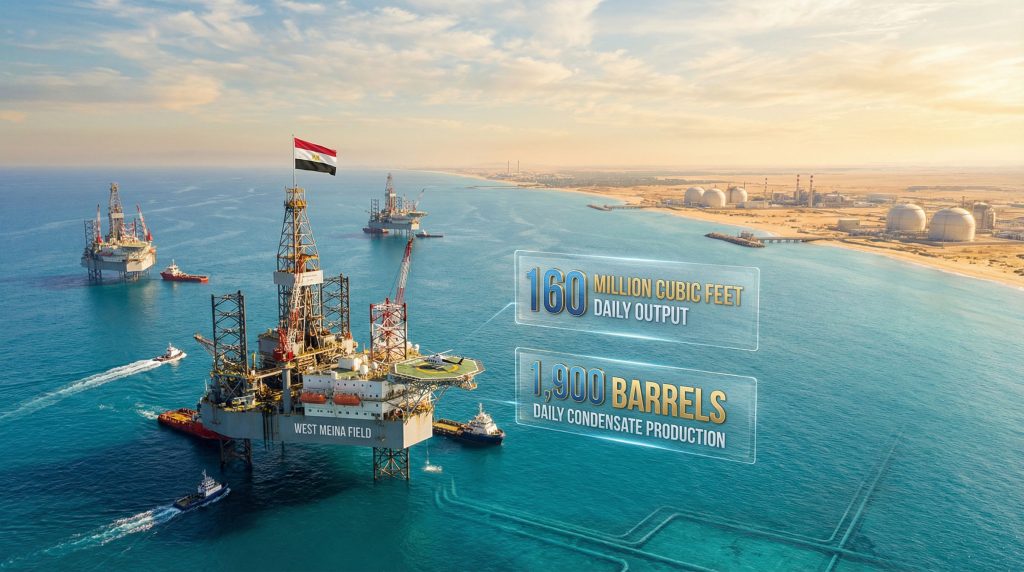
Tie-back economics for new field developments offer attractive investment returns compared to greenfield projects. The West Meina field development leverages existing infrastructure to minimise upfront capital while accelerating production timelines to market.
Processing capacity utilisation across Mediterranean facilities enables efficient resource extraction without major infrastructure expansion. Current processing capabilities can accommodate increased throughput from tied-back developments, optimising existing asset utilisation.
What Makes the 2026 Mediterranean Campaign Economically Viable?
Investment climate transformation factors have fundamentally improved risk-adjusted returns for Egyptian offshore projects. Regulatory framework modernisation, combined with strategic partnership structures, creates compelling economic incentives for international energy companies to commit substantial capital resources.
Investment Climate Transformation Factors
Regulatory framework modernisation impacts extend beyond administrative efficiency improvements to encompass substantive policy reforms. Egyptian petroleum sector regulations now incorporate international best practices for exploration licensing, environmental compliance, and revenue sharing mechanisms.
Foreign exchange policy stability measures address historical investor concerns regarding currency convertibility and repatriation. New policy frameworks provide guaranteed foreign exchange access for petroleum sector investments, reducing currency risk premiums in project economics.
Joint venture partnership structures drive capital allocation by distributing risks between international operators and regional partners. The Shell (60%) and KUFPEC (40%) partnership structure exemplifies risk-sharing models that optimise technical expertise whilst managing political and operational risks.
Risk-adjusted returns in Egyptian offshore projects now compete favourably with alternative Mediterranean opportunities. Improved fiscal terms, combined with infrastructure advantages, generate internal rates of return exceeding 15-20% for successful developments. Consequently, OPEC production impact considerations further support these investment decisions.
Production Economics Analysis
Break-even pricing for Mediterranean gas developments varies by field characteristics and infrastructure proximity. West Meina field economics benefit from tie-back cost advantages, achieving commercial viability at natural gas prices below $4.50 per million BTU.
Operating cost advantages of tie-back projects derive from shared infrastructure utilisation and operational synergies. Compared to standalone developments, tied-back projects reduce operating expenses by 30-40% through infrastructure sharing and operational efficiency gains.
Revenue projections from 160 million cubic feet daily output generate substantial cash flows at current Mediterranean gas pricing. Combined with 1,900 barrels daily condensate production, total project revenues exceed $200 million annually at prevailing market prices.
Disclaimer: Production forecasts and pricing projections involve inherent uncertainties related to reservoir performance, market conditions, and operational factors. Actual results may vary significantly from projected scenarios.
Regional Competitive Positioning
Mediterranean Basin supply dynamics increasingly favour Egyptian offshore developments due to strategic advantages in infrastructure, market access, and operational capabilities. Competitive positioning analysis reveals Egypt's substantial advantages over regional alternatives in multiple critical areas.
Mediterranean Basin Supply Dynamics
Cyprus, Israel, and Lebanon offshore development timelines face various operational and geopolitical constraints. Cyprus's Aphrodite field development has encountered repeated delays, with production start-up now projected beyond 2027, creating market opportunities for Egyptian projects.
Turkey's exploration activities and geopolitical implications affect regional supply security calculations. Ongoing maritime boundary disputes in the Eastern Mediterranean create regulatory uncertainties that impact investment decisions for Turkish offshore projects.
Libya's production recovery impact on regional pricing creates both competitive pressures and market opportunities. While Libyan production increases affect natural gas pricing dynamics, consistent supply reliability challenges favour Egyptian long-term contract positions.
European demand patterns driving investment flows prioritise supply security over price optimisation. European buyers increasingly value supplier reliability and infrastructure capacity over marginal cost advantages, benefiting established Egyptian export capabilities. However, the recent oil price rally has highlighted the importance of energy supply diversification.
Egypt's Strategic Advantages
Established LNG infrastructure at Idku and Damietta terminals provides immediate export capacity for new production. Combined terminal capacity exceeds 12 million tons annually, offering substantial export flexibility for offshore development projects.
Geographic proximity to European markets reduces transportation costs and delivery times compared to Middle Eastern alternatives. Egyptian LNG deliveries to European terminals require 5-7 days compared to 14-21 days from Gulf producers.
Existing pipeline networks and processing capabilities enable rapid production ramp-up from new discoveries. Integrated infrastructure systems reduce development timelines by 18-24 months compared to projects requiring new processing facilities.
Government partnership frameworks with international operators provide regulatory stability and operational predictability. Streamlined approval processes and standardised contract terms reduce project development risks and associated cost premiums.
Investment Partnership Structures Driving Growth
The Egypt Mediterranean gas drilling project success relies heavily on sophisticated partnership arrangements that optimise risk distribution whilst maximising operational efficiency. International joint venture structures combine technical expertise with financial resources to accelerate development timelines and reduce individual partner exposure.
Shell-KUFPEC Joint Venture Model
The 60-40 ownership split risk distribution aligns partner incentives while maintaining operational control clarity. Shell's majority position ensures technical leadership while KUFPEC's participation provides regional expertise and financial contribution.
Technical expertise complementarity enhances project execution capabilities. Shell contributes deepwater drilling technologies and Mediterranean operational experience, while KUFPEC provides regional market knowledge and financing capabilities.
Capital commitment sharing for the four-well programme distributes financial exposure across partners. Total development costs estimated at $400-500 million are allocated proportionally, reducing individual partner risk whilst maintaining development momentum.
Operational synergies with existing Mediterranean assets optimise resource utilisation. Both partners leverage existing regional infrastructure and operational teams to reduce project costs and accelerate development schedules.
Broader Foreign Investment Trends
Western energy companies' renewed confidence indicators reflect improved Egyptian investment climate assessments. Major international operators have committed over $3 billion in new Egyptian offshore projects since 2024, demonstrating sector confidence recovery.
Capital allocation patterns across North African projects show increasing Egyptian preference. Comparative analysis reveals Egypt receives 40-50% of North African upstream investment, reflecting superior infrastructure and regulatory environments.
Sovereign risk assessment improvements by major rating agencies support increased capital flows. Recent upgrades to Egypt's country risk profile reduce financing costs and improve project economics for international investors.
Long-term contract structures supporting development economics provide revenue stability for project financing. 15-20 year supply agreements with European buyers ensure cash flow predictability required for debt financing arrangements.
Production Capacity Expansion Timeline
The Egypt Mediterranean gas drilling project implementation follows carefully structured development phases designed to optimise resource extraction whilst minimising operational risks. Production capacity expansion timelines balance aggressive development schedules with technical complexity management.
West Meina Field Development Phases
Initial production targets by end-2026 represent aggressive but achievable development schedules. First gas production from the West Meina field requires successful completion of four development wells and tie-back infrastructure installation within 18-month timelines.
Tie-back infrastructure requirements and costs benefit from existing West Delta Deep Marine facilities proximity. Infrastructure investments estimated at $150-200 million include subsea production systems and pipeline connections to established processing facilities.
Reservoir development optimisation strategies maximise recovery efficiency whilst managing development costs. Advanced reservoir modelling indicates 35-40% ultimate recovery factors achievable through optimised well placement and production management techniques.
Production ramp-up projections through 2027-2028 anticipate plateau production achievement within 24-36 months of first production. Full field development capacity targets 200-250 million cubic feet daily at peak production rates.
Exploratory Programme Economic Potential
The Sirius well prospect evaluation in Northeast Amriya offers significant resource addition potential. Geological assessments indicate possible reserves ranging from 1-3 trillion cubic feet, substantially exceeding West Meina field resource base.
Philox development opportunities in North Cleopatra present additional exploration upside. Seismic interpretation suggests multiple stacked reservoir targets with combined potential exceeding 500 billion cubic feet recoverable resources.
Herodotus Basin exploration upside assessment reveals regional development potential. Basin-wide resource assessments indicate possible hydrocarbon resources exceeding 5-10 trillion cubic feet, representing long-term development opportunities.
Risk-weighted resource addition scenarios incorporate exploration success probabilities and development economics. Statistical analysis suggests 30-40% probability of discovering additional commercial reserves exceeding 2 trillion cubic feet through the exploration programme.
The next major ASX story will hit our subscribers first
Macro-Economic Impact Assessment
The Egypt Mediterranean gas drilling project implementation generates substantial macro-economic benefits extending beyond direct hydrocarbon revenue generation. Economic impact analysis encompasses energy security improvements, fiscal revenue enhancement, and broader industrial development multiplier effects.
Domestic Energy Security Benefits
Import substitution value calculations demonstrate significant foreign exchange savings potential. Domestic production of 160 million cubic feet daily displaces LNG imports valued at approximately $200-300 million annually at current market prices.
Foreign exchange savings from reduced LNG imports improve balance of payments sustainability. Annual foreign exchange savings of $200-400 million from domestic production substitution reduce external financing requirements and currency pressure.
Energy cost stability for industrial sectors supports manufacturing competitiveness improvements. Domestic gas supply contracts typically provide 20-30% cost advantages compared to import alternatives, enhancing industrial sector profitability and employment.
Power generation fuel supply reliability improvements reduce electricity sector operational risks. Domestic gas supply reliability exceeds 95% compared to 85-90% for import-dependent supply chains, improving grid stability and reducing blackout risks.
Fiscal Revenue Implications
Government take from new production streams generates substantial fiscal revenues through multiple taxation mechanisms. Combined corporate taxes, royalties, and profit-sharing arrangements provide government revenues exceeding $100-150 million annually from West Meina production.
Corporate tax revenue from expanded operations extends beyond direct production taxation. Increased business activity generates additional corporate tax revenues from service providers, equipment suppliers, and support industries estimated at $50-75 million annually.
Employment generation across upstream and midstream sectors creates direct and indirect job opportunities. Project development and operations support 2,000-3,000 direct jobs and 5,000-8,000 indirect positions across the energy sector supply chain.
Balance of payments improvements from export potential provide additional fiscal benefits. Surplus production available for export generates foreign exchange revenues exceeding $300-500 million annually depending on production levels and market prices.
Regional Energy Hub Strategy
Egypt's positioning as a Mediterranean energy hub leverages geographical advantages and infrastructure capabilities to maximise economic returns from natural gas resources. Strategic hub development encompasses both domestic supply security and regional export market development.
LNG Export Market Positioning
European market access advantages stem from established infrastructure and geographic proximity. Egyptian LNG exports reach European terminals 5-10 days faster than Middle Eastern competitors, providing significant logistical and cost advantages.
Asian market supply chain integration offers diversification opportunities for surplus production. Existing shipping routes and buyer relationships enable Egyptian LNG deliveries to Asian markets within 20-25 days, competitive with regional alternatives.
Seasonal demand optimisation strategies maximise revenue through dynamic pricing arrangements. Winter European demand premiums provide revenue opportunities 20-40% above summer pricing, optimising annual revenue generation through strategic delivery timing.
Price arbitrage opportunities across regional markets enhance profitability through geographic diversification. European-Asian price differentials often exceed $2-4 per million BTU, creating substantial arbitrage opportunities for flexible supply arrangements.
Infrastructure Development Multiplier Effects
Service sector growth supporting offshore operations generates substantial economic multiplier effects. Marine services, equipment maintenance, and logistics support industries experience 15-25% annual growth rates during project development phases.
Technology transfer and local content development build long-term economic capabilities. International partner requirements for local content development create technology transfer opportunities valued at $50-100 million over project lifecycles.
Supply chain localisation opportunities reduce project costs whilst building domestic industrial capacity. Local manufacturing of equipment and services reduces project costs by 10-15% whilst creating permanent industrial capabilities.
Skills development and training programme expansion builds human capital for future energy sector growth. Technical training programmes for Egyptian personnel create 500-1,000 highly skilled positions annually, supporting long-term sector development.
Risk Factors and Mitigation Strategies
Egypt's offshore development success requires comprehensive risk management addressing operational, market, and political uncertainties. Risk mitigation strategies incorporate industry best practices whilst accounting for regional-specific challenges. For instance, understanding regional gas drilling developments can help inform risk assessment strategies.
Operational Risk Management
Deepwater drilling technical challenges require specialised equipment and expertise management. Mediterranean deepwater operations face weather-related risks and complex geological conditions requiring advanced drilling technologies and experienced operational teams.
Weather-related operational delays affect development schedules and project costs. Mediterranean weather patterns create 30-40 day annual weather windows unsuitable for offshore operations, requiring schedule flexibility and contingency planning.
Equipment availability and logistics coordination challenges impact project timelines. Specialised deepwater equipment availability requires 12-18 month advance planning and multiple supplier relationships to ensure operational continuity.
Reservoir performance uncertainty management requires comprehensive geological and engineering analysis. Advanced reservoir modelling and monitoring systems provide early warning indicators for production optimisation and risk mitigation.
Market Risk Considerations
Natural gas price volatility exposure affects project economics and revenue predictability. Mediterranean gas prices exhibit 20-40% annual volatility, requiring hedging strategies and flexible commercial arrangements for revenue stability.
Regional demand fluctuation impacts create market access uncertainties. European demand seasonal variations of 30-50% require flexible supply arrangements and storage capabilities to optimise revenue generation.
Geopolitical stability requirements affect long-term project viability. Regional political developments impact supply chain access and market relationships, requiring diversified partnership structures and operational flexibility.
Currency exchange rate management becomes critical for international partnership structures. Egyptian pound volatility against major currencies requires hedging strategies to protect project returns and cash flow predictability.
Long-Term Strategic Implications
The Egypt Mediterranean gas drilling project success establishes foundations for sustained regional energy leadership whilst supporting broader economic development objectives. Long-term strategic implications extend beyond immediate project returns to encompass regional energy market positioning and national economic development. Consequently, Shell's operational expansion demonstrates the growing international confidence in Egypt's offshore potential.
2026-2030 Production Growth Trajectory
Cumulative investment requirements for sustained expansion exceed $2-3 billion across multiple development phases. Sustained production growth requires continuous exploration success and infrastructure expansion to maintain development momentum.
Technology adoption for enhanced recovery operations optimises resource extraction from existing discoveries. Advanced recovery techniques potentially increase ultimate recovery factors by 10-15%, extending field productive lives and improving project economics.
Environmental compliance and sustainability integration becomes increasingly important for long-term project viability. International environmental standards adoption ensures continued market access and financing availability for future development phases.
Regional energy transition role positioning supports long-term strategic relevance. Natural gas serves as transitional fuel supporting renewable energy integration whilst maintaining energy security during decarbonisation processes.
Mediterranean Energy Landscape Evolution
Egypt's position in regional supply security strengthens through successful project execution and sustained production growth. Regional supply reliability leadership creates long-term competitive advantages and market positioning benefits.
Integration with European energy diversification strategies aligns Egyptian production with continental energy security objectives. European supply diversification policies favour reliable suppliers with established infrastructure and operational track records.
Potential for expanded exploration in adjacent blocks offers substantial long-term growth opportunities. Regional geological assessments suggest additional hydrocarbon potential exceeding 10-20 trillion cubic feet across adjacent exploration areas.
Strategic partnerships with neighbouring Mediterranean producers could create regional cooperation frameworks. Coordinated development approaches optimise infrastructure utilisation and market access whilst reducing individual project risks.
Investment Climate Transformation Indicators
Policy framework modernisation continues attracting international capital through transparent and competitive investment terms. Regulatory efficiency improvements reduce project development timelines and associated cost premiums whilst improving investor confidence.
Transparent bidding processes and contract terms enhance investor confidence through predictable regulatory frameworks. Standardised contract terms and dispute resolution mechanisms reduce political risk premiums and financing costs for international investors.
Dispute resolution mechanisms strengthening investor confidence provide essential legal protections for long-term capital commitments. International arbitration frameworks and legal system improvements reduce investment risk profiles and associated return requirements.
Fiscal regime competitiveness versus regional alternatives maintains Egypt's attractiveness for international energy investment. Balanced fiscal terms optimise government revenues whilst providing adequate investor returns to sustain development momentum.
Market access and infrastructure advantages position Egypt favourably for continued Mediterranean energy sector leadership. Existing export terminal capacity, pipeline connectivity, and processing infrastructure provide substantial competitive advantages over regional alternatives requiring new infrastructure development.
Investment Disclaimer: This analysis contains forward-looking statements regarding energy market developments, production forecasts, and investment returns. Actual results may differ materially from projections due to various factors including commodity price volatility, operational challenges, regulatory changes, and geopolitical developments. Investors should conduct independent due diligence and consider professional advice before making investment decisions.
Looking for exposure to Mediterranean energy opportunities?
Discovery Alert's proprietary Discovery IQ model delivers real-time alerts on significant ASX mineral and energy discoveries, instantly empowering subscribers to identify actionable opportunities ahead of the broader market. Understand why major resource discoveries can lead to substantial market returns by exploring Discovery Alert's dedicated discoveries page, showcasing historic examples of exceptional outcomes, and begin your 14-day free trial today to position yourself ahead of the market.