May 11, 2026
When the Global Lithium Market Splits in Two, Every Transaction Tells a Story
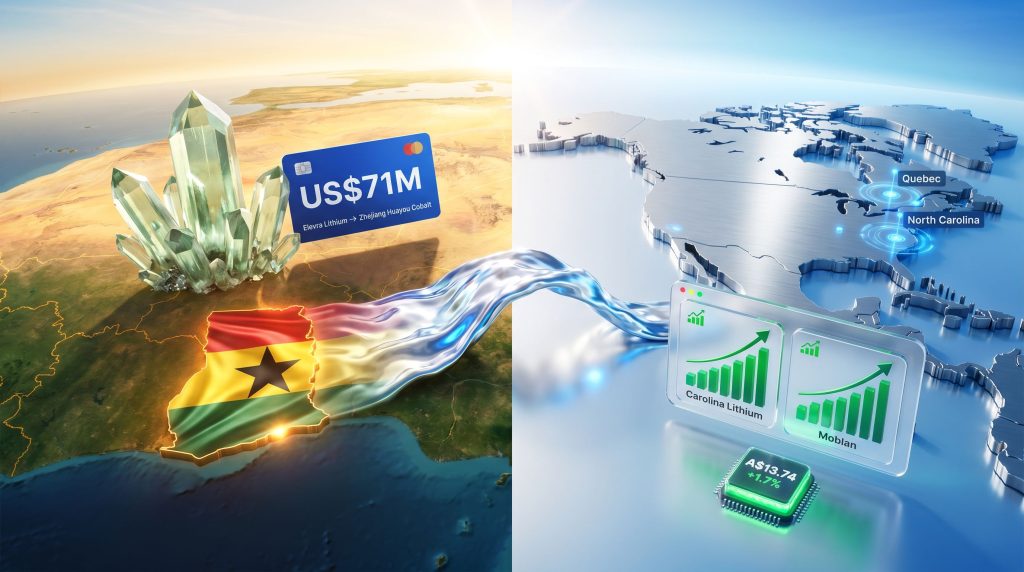
The critical minerals sector is undergoing a fundamental architectural shift. Over the past several years, the global lithium market has been quietly reorganising itself along geopolitical fault lines, with Chinese battery materials companies consolidating upstream feedstock positions in Africa and Southeast Asia while Western capital increasingly concentrates in North American and Australian processing capacity. This is not a temporary market cycle adjustment. It reflects deliberate industrial policy choices by governments on both sides of the divide, and the corporate transactions flowing from those choices are becoming increasingly legible as strategic statements rather than routine portfolio management decisions.
The Elevra Lithium Huayou Ewoyaa sale, announced on 11 May 2026, is one of those transactions. It carries meaning that extends well beyond a single company exiting a single asset.
When big ASX news breaks, our subscribers know first
Why the Ewoyaa Exit Is a Strategic Statement, Not a Fire Sale
Understanding What Was Actually Sold
Ghana's Ewoyaa Lithium Project occupies a distinctive position within sub-Saharan Africa's emerging critical minerals landscape. It holds the distinction of being Ghana's first major lithium deposit to have completed a Definitive Feasibility Study, a milestone that separates speculative exploration assets from development-ready projects with validated economics. That completion represents years of technical work and substantial capital expenditure, making Ewoyaa a genuinely rare commodity within the African lithium universe.
Elevra Lithium (ASX:ELV / NASDAQ:ELVR) held its Ewoyaa interest through a 50% earn-in option structured alongside Atlantic Lithium (ASX:A11), granting it a corresponding 50% life-of-mine offtake entitlement for spodumene concentrate at prevailing market prices. This offtake right was not a minor operational detail. It represented a direct, long-dated claim on Ewoyaa's production volumes across the entire operational life of the mine, theoretically extending across decades of battery materials output.
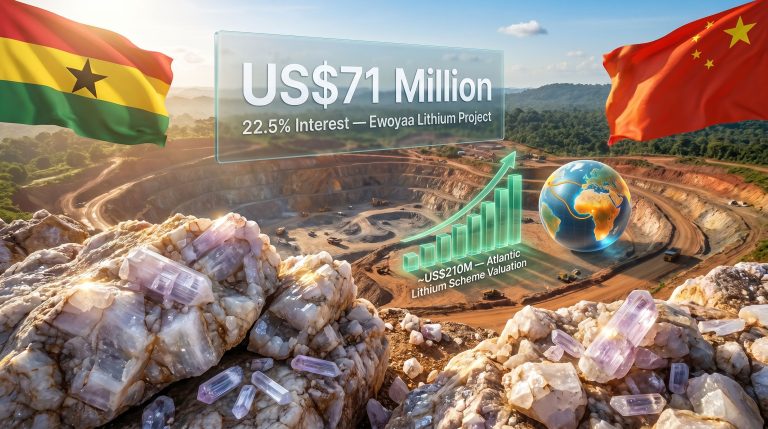
The sale to Zhejiang Huayou Cobalt transferred the entirety of this position for US$71 million in cash (approximately A$98 million before applicable fees and taxes), with deal closure targeted by the end of Q1 FY2027, conditional upon Ghanaian regulatory approvals.
What makes this transaction analytically interesting is not merely its headline value. It is the combination of what Elevra chose to exit, what it chose to retain, and the broader architecture of who is buying African lithium assets and why.
The Hidden Cost of African Joint Venture Complexity
One dimension of this deal that deserves closer examination is what Ewoyaa was actually costing Elevra before the sale. African mining joint ventures impose a category of costs that rarely appears prominently in financial statements but materially affects capital allocation decisions. These include:
- Ongoing funding obligations for project development
- Governance complexity arising from shared decision-making authority across multiple partners
- Currency and regulatory risk premiums embedded in financing costs
- Management bandwidth consumed by maintaining relationships with multiple stakeholders across multiple jurisdictions simultaneously
The Ewoyaa joint venture structure with Atlantic Lithium embedded all of these characteristics. By exiting this structure, Elevra did not merely receive US$71 million. It removed a category of ongoing financial and operational obligations that had been silently competing with the company's North American development priorities for capital and attention.
Furthermore, the transaction was not a distressed exit. The price reflects a genuine market assessment of Ewoyaa's development value, and Huayou's willingness to pay that price in a soft lithium market environment speaks to the strategic premium Chinese buyers currently attach to feedstock security over spot market optionality. Indeed, the Ewoyaa project progress leading up to this point had been substantial enough to attract precisely this kind of strategic attention.
How Huayou Is Building Full Ownership of Ghana's Lithium Flagship
A Two-Pronged Consolidation Architecture
Zhejiang Huayou Cobalt's approach to acquiring Ewoyaa is structurally elegant. Rather than pursuing a single transaction covering the entire asset, Huayou has constructed a parallel acquisition architecture that addresses the two separate ownership stakes simultaneously through independent deal structures.
The first component is the binding agreement with Elevra for US$71 million covering Elevra's 50% earn-in position and its associated offtake rights. The second is a separate Scheme of Arrangement with Atlantic Lithium (ASX:A11) valued at US$210 million, which covers Atlantic Lithium's full ownership interest in the project. According to reporting on the broader deal, Huayou's combined push into Ewoyaa represents one of the most significant consolidation moves in West African lithium to date.
| Transaction Component | Counterparty | Value | Structure | Status |
|---|---|---|---|---|
| Elevra's Ewoyaa interest | Elevra Lithium | US$71M | Binding sale agreement | Closes Q1 FY2027 |
| Atlantic Lithium's full stake | Atlantic Lithium (ASX:A11) | US$210M | Scheme of Arrangement | Subject to shareholder vote |
| MIIF equity participation | Ghana Government (MIIF) | US$27.9M (6% equity) | Non-binding investment | Separate arrangement |
| Total combined outlay | ~US$309M | Subject to approvals |
The Critical Independence Clause
One of the most practically significant features of the Elevra-Huayou agreement is its structural independence from the Atlantic Lithium Scheme outcome. Elevra receives its full US$71 million payment regardless of whether the Atlantic Lithium Scheme of Arrangement proceeds to completion.
This independence clause has meaningful implications for Elevra shareholders. It eliminates a category of deal risk that would otherwise create a conditional dependency between Elevra's realisation and the outcome of a shareholder vote and regulatory process entirely outside Elevra's control. From a risk architecture perspective, this is a materially superior deal structure compared to a fully interdependent transaction.
Ghana's Minerals Income Investment Fund (MIIF) holds a non-binding US$27.9 million investment representing 6% equity in the project. This arrangement sits entirely separate from the Huayou acquisition transactions and does not represent a contingent liability on either deal.
What Ghanaian Regulatory Approval Involves
The closure timeline of end of Q1 FY2027 reflects the reality that foreign acquisition of strategically significant mineral assets in Ghana requires navigation through multiple regulatory approval layers. Ghana's mining sector regulatory framework involves the Minerals Commission as the primary approvals body, with oversight from the Environmental Protection Agency and broader government stakeholder engagement given MIIF's existing project involvement.
The non-binding nature of MIIF's equity position introduces an additional dimension: how Ghana's government balances national resource sovereignty considerations against the practical development capital that Chinese acquirers bring to projects that might otherwise face extended development timelines due to Western capital market constraints in a suppressed lithium price environment.
Elevra's Restructured Portfolio: A Pure-Play Western Lithium Platform
The Post-Sale Asset Map
Following the Ghana exit, Elevra's portfolio configuration becomes geographically concentrated and thematically coherent:
- North American Lithium (100% ownership) in Quebec, Canada
- Moblan (60% ownership) in Quebec, Canada
- Carolina Lithium (100% ownership) in North Carolina, United States
- Pilbara exploration tenements in Western Australia (minor exploratory position)
This portfolio has a defining characteristic that the pre-sale configuration lacked: every primary asset sits within a jurisdiction that is either IRA-eligible or aligned with Western critical minerals supply chain policy frameworks. The elimination of African jurisdictional exposure removes a meaningful governance and political risk premium that institutional investors had previously been required to price into their Elevra holdings.
Carolina Lithium: The Value Inflection Point
Among Elevra's retained assets, Carolina Lithium represents the most consequential near-term catalyst. The project's planned conversion facility, targeted for commissioning in mid-2026, is designed to accomplish something that most spodumene-focused miners never achieve: a vertical transition from raw concentrate production to battery-grade lithium output within the United States.
| Attribute | Carolina Lithium (US) | Ewoyaa (Ghana) |
|---|---|---|
| IRA eligibility | Yes, domestic US production | No |
| Target commissioning | Mid-2026 (conversion facility) | DFS complete; timeline uncertain |
| Primary output | Battery-grade lithium hydroxide/carbonate | Spodumene concentrate |
| Supply chain alignment | US automakers, domestic battery gigafactories | Chinese downstream processing |
| Jurisdiction risk profile | Low (US regulatory framework) | Moderate (Ghanaian approvals, MIIF involvement) |
This distinction matters enormously for pricing. Spodumene concentrate is a commodity product sold on global markets at benchmark prices with limited ability to command premiums based on origin. Battery-grade lithium hydroxide or carbonate produced within the United States and qualifying under IRA sourcing requirements occupies a structurally different market position, one where domestic automakers and battery manufacturers face policy-driven incentives to source locally rather than from Chinese-processed feedstock.
Balance Sheet Transformation in a Soft Market
The US$71 million cash injection lands on a balance sheet that, per publicly available reporting, already carried no secured project debt. The result is a net-cash positioning that carries outsized strategic value in a commodity cycle downturn. In a suppressed lithium price environment, balance sheet strength functions as a strategic option rather than a passive financial metric.
A net-cash company can continue developing assets through the cycle without being forced into dilutive equity raises at depressed valuations or high-cost debt facilities at unfavourable covenants.
For institutional investors with mandates that restrict holdings in companies carrying significant development-stage debt or African political risk exposures, the post-sale Elevra represents a structurally more accessible investment. Portfolio simplification of this kind typically commands a re-rating premium as the investment thesis becomes easier to model, the ESG and governance scoring improves, and the number of eligible institutional buyers expands.
The ASX market's initial response, a 1.7% gain to A$13.74 on announcement day, was directionally positive but modest. This likely reflects that the strategic logic of the transaction was already partially anticipated, with the incremental information being confirmation and deal pricing rather than strategic surprise.
The Structural Bifurcation of the Global Lithium Market
Chinese Capital Flowing Into African Feedstock
The Elevra Lithium Huayou Ewoyaa sale fits within a pattern that has become increasingly visible across the critical minerals sector over the past several years. Chinese battery materials companies, of which Zhejiang Huayou Cobalt is among the most acquisitive, have systematically been securing upstream feedstock positions in Africa and Southeast Asia. The strategic rationale is straightforward: China's domestic lithium resources, while significant, are geographically concentrated in the Tibetan Plateau brines and certain hard-rock deposits, and diversifying upstream supply geographically reduces concentration risk in the battery materials supply chain that underpins Chinese electric vehicle manufacturing competitiveness.
Huayou specifically has built an extensive portfolio of upstream battery materials assets extending from cobalt in the Democratic Republic of Congo to nickel processing positions in Indonesia, establishing itself as a vertically integrated battery materials platform rather than a simple mining company. The Ewoyaa consolidation extends this architecture into lithium, with Ghana's Atlantic coast export infrastructure providing practical logistics advantages over more landlocked African alternatives.
Western Capital Concentrating in IRA-Aligned Jurisdictions
Simultaneously, Western mining capital is flowing with increasing deliberateness toward North American and Australian assets. The US Inflation Reduction Act creates a structural incentive architecture that effectively assigns a cost advantage to lithium produced within the United States or under qualifying free trade agreements. This functions as a policy-engineered premium that Chinese-origin lithium products cannot access regardless of their price competitiveness on global spot markets.
The result is a bifurcated market structure emerging in parallel to the geopolitical bifurcation of the broader tech and trade relationship between the US and China. However, it is worth noting that the lithium market downturn has compounded the strategic urgency for Western miners to position in IRA-aligned jurisdictions, where structural premiums can partially offset suppressed spot prices.
Consequently, African and Southeast Asian spodumene increasingly flows into Chinese processing infrastructure, while North American production, when it reaches sufficient scale, flows into an IRA-protected domestic supply chain commanding structural price premiums. Elevra's repositioning through the Ghana exit places it entirely within the Western half of this bifurcated architecture. In addition, the broader picture of global lithium supply shifts further underlines that this is a deliberate and timely repositioning, not a reactive one.
Scenario Analysis: Three Pathways for Elevra Post-Ewoyaa
Bull Case: Execution Meets Policy Tailwinds
In the most favourable scenario, Carolina Lithium's conversion facility commissions on its mid-2026 target, producing battery-grade lithium that qualifies for IRA-eligible domestic procurement. Spodumene and lithium hydroxide prices recover from their cyclical lows as the excess supply overhang from 2023 to 2025 production expansions is absorbed by accelerating EV demand.
Furthermore, IRA-driven procurement preferences from US automakers and battery gigafactory operators generate offtake demand at premiums over internationally sourced alternatives. Moblan and North American Lithium progress through permitting toward development decisions. Elevra re-rates as a vertically integrated, IRA-compliant domestic lithium platform with multiple near-term production catalysts.
Base Case: Measured Progress, Stable Conditions
A more moderate trajectory sees Carolina Lithium face 6 to 12 months of commissioning delays due to typical construction and engineering challenges. Lithium prices stabilise but fail to recover materially from suppressed levels. Elevra's net-cash balance sheet provides development runway without triggering financial distress, but the re-rating catalyst is deferred until demonstrated production replaces commissioning timelines as the primary valuation input.
Bear Case: Persistent Oversupply and Execution Challenges
The most challenging scenario combines prolonged lithium price suppression from continued global oversupply with Carolina commissioning delays extending into FY2027 or beyond. Uncertainty over IRA policy continuity under changing US political administrations adds an additional discount to the IRA-premium thesis. Net-cash reserves erode through ongoing development expenditure across the North American portfolio, compressing the balance sheet buffer that currently differentiates Elevra's risk profile.
Jurisdiction quality and financial strength reduce structural downside, but they cannot insulate shareholders from commodity price cycles. Lithium price recovery remains the single most consequential variable in any scenario modelling exercise for Elevra's post-Ewoyaa investment case.
The next major ASX story will hit our subscribers first
What This Deal Signals for ASX-Listed African Lithium Developers
Chinese Acquirers Are Paying Strategic Premiums
The Huayou transaction reveals an important dynamic for ASX companies with African lithium exposure: Chinese buyers are demonstrating willingness to pay consolidation premiums for strategically significant African projects even during a period of soft global lithium prices. This willingness reflects the strategic value of feedstock security over spot market cost optimisation, a fundamentally different valuation framework than typical commodity market pricing.
For other ASX-listed companies holding African lithium assets, particularly those with completed feasibility studies or advanced development credentials, this transaction provides a potential valuation reference point. The question is whether comparable assets carry the combination of resource quality, logistics practicality, and jurisdictional stability that attracted Huayou to Ewoyaa specifically.
The Ewoyaa Characteristics That Attracted Premium Pricing
Several specific attributes of Ewoyaa contributed to its attractiveness to a strategic acquirer of Huayou's profile. Advances in lithium extraction technology are also reshaping how acquirers assess project value, making technically de-risked assets like Ewoyaa even more attractive to well-capitalised buyers.
- Completed Definitive Feasibility Study reducing technical uncertainty and accelerating the path to production decisions
- High-grade spodumene deposit within a West African jurisdiction with established mining regulatory frameworks
- Atlantic coast proximity providing practical export logistics infrastructure advantages
- Existing joint venture partner (Atlantic Lithium) separately pursuing its own transaction with Huayou, enabling full consolidation in a single strategic operation
- Ghana's MIIF engagement providing a degree of government stakeholder alignment that reduces sovereign intervention risk
Not every African lithium asset combines these characteristics, which means the Huayou-Ewoyaa premium should not automatically be extrapolated to lower-quality or less development-advanced African peers.
Frequently Asked Questions
What exactly did Elevra Lithium sell to Huayou?
Elevra sold its complete interest in the Ewoyaa Lithium Project in Ghana, including all associated rights and its full 50% life-of-mine offtake entitlement for spodumene concentrate, representing a direct, long-dated claim on Ewoyaa's production volumes across the operational life of the mine.
How much did Elevra receive for the Ewoyaa sale?
The agreed consideration is US$71 million (approximately A$98 million) in cash before applicable fees and taxes.
Is Elevra's payment conditional on the Atlantic Lithium takeover completing?
No. Elevra's US$71 million payment is structurally independent of Huayou's separate Scheme of Arrangement with Atlantic Lithium. Elevra receives its consideration regardless of that transaction's outcome.
When is the deal expected to close?
Completion is targeted by the end of Q1 FY2027, conditional on Ghanaian government and regulatory approvals.
What assets does Elevra hold after the Ghana exit?
Post-sale, Elevra's portfolio comprises North American Lithium (100%, Quebec), Moblan (60%, Quebec), Carolina Lithium (100%, United States), and Pilbara exploration tenements (Western Australia).
Why is Carolina Lithium's commissioning target so significant?
The planned mid-2026 commissioning of Carolina's conversion facility would transform Elevra from a raw spodumene concentrate miner into a battery-grade lithium producer operating within the United States, making its output eligible for IRA-aligned domestic procurement premiums. This represents a fundamental shift in the company's margin profile and market positioning.
Why does Huayou want 100% control of Ewoyaa?
Full ownership eliminates joint venture governance complexity, provides unilateral operational control, and secures a direct, non-Chinese feedstock source for Huayou's downstream battery materials processing infrastructure, reducing its supply chain dependence on domestic Chinese lithium resources. The Elevra Lithium Huayou Ewoyaa sale consequently represents one of the most strategically coherent transactions to emerge from the current cycle of African critical minerals consolidation.
This article is general information only and does not constitute financial advice. Past performance and strategic positioning are not reliable indicators of future returns. Readers should conduct their own research and consider seeking independent financial advice before making investment decisions. For additional context and ongoing ASX mining sector coverage, visit StocksDownUnder.com.
Want to Catch the Next Major ASX Mineral Discovery Before the Broader Market Does?
The strategic reshaping of the global lithium sector — from African consolidation to IRA-aligned repositioning — underscores just how consequential timing can be in critical minerals investing. Discovery Alert's proprietary Discovery IQ model delivers real-time alerts the moment significant ASX mineral discoveries are announced, turning complex data across more than 30 commodities into clear, actionable insights for both short-term traders and long-term investors. Explore Discovery Alert's dedicated discoveries page to see how historic finds have generated extraordinary returns, and begin your 14-day free trial today to ensure you're positioned ahead of the market when the next transformative discovery lands.