May 13, 2026
Emergency Energy Security Threshens Shape National Economic Defence Strategies
Modern economies increasingly rely on predetermined crisis response mechanisms that activate when commodity prices breach specific thresholds. These automated policy triggers represent sophisticated risk management frameworks designed to protect national economic interests during periods of supply shock volatility. Energy-dependent nations have developed intricate contingency systems that balance individual mobility rights against collective economic security, creating measurable intervention points where governments can implement South Korea driving restrictions during critical periods.
The strategic significance of such threshold-based approaches reflects deeper understanding of how energy price spikes transmit through economic systems, affecting everything from industrial input costs to consumer purchasing power. Advanced economies now maintain detailed scenario planning frameworks that model various intervention levels, each calibrated to achieve specific fuel conservation targets whilst minimising broader economic disruption.
When big ASX news breaks, our subscribers know first
South Korea's Strategic Energy Crisis Response Framework
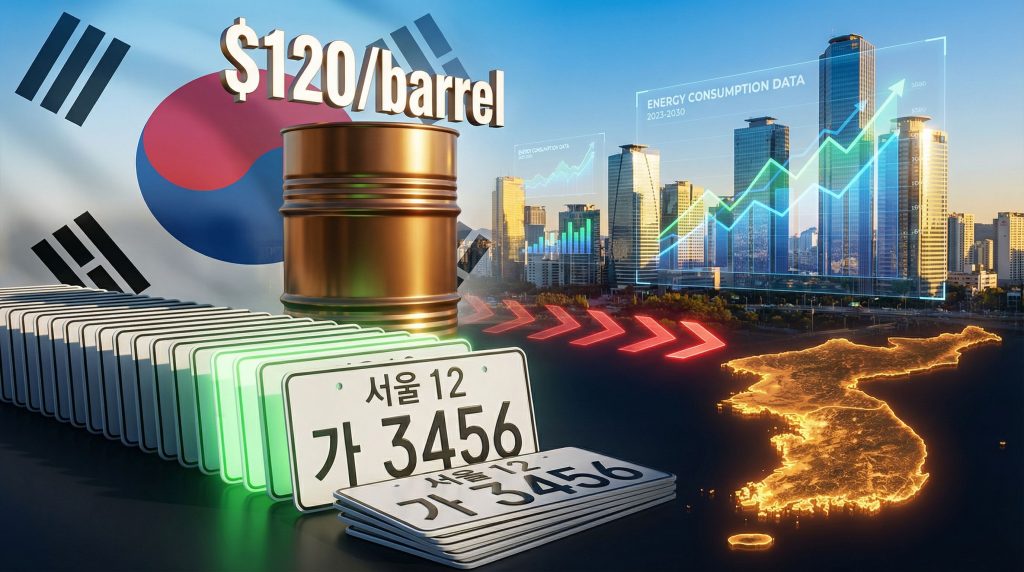
South Korea has established a sophisticated energy crisis management system centred on specific oil price thresholds that trigger escalating conservation measures. The government has determined that crude oil prices exceeding $120 per barrel represent a critical inflection point requiring expanded public participation in fuel conservation efforts.
The $120 Threshold Mechanism and Implementation Strategy
The $120 per barrel crude oil price represents more than an arbitrary figure; it reflects careful economic modelling of South Korea's energy import vulnerability and industrial competitiveness thresholds. Furthermore, this level could significantly impact the broader oil price rally analysis. Finance Minister Koo Yun Cheol has indicated that this price level would trigger consideration of extending existing government sector driving restrictions to private citizens, marking the first such civilian mobility controls since the 1991 Gulf War period.
Current government implementation already demonstrates the operational framework through civil servant restrictions. These measures limit government employee vehicle access to official buildings based on license plate number systems, creating a pilot programme that could scale to broader public application. The license plate-based rotation system uses the final digits of vehicle registration numbers to determine which days individuals can access designated areas, providing an administratively manageable approach to fuel demand reduction.
Economic Vulnerability Assessment and Import Dependency
South Korea's position as a major crude oil importer and refined fuel exporter creates unique economic pressures during global energy supply disruptions. The nation's substantial dependence on Middle Eastern energy imports means that regional conflicts directly impact domestic economic stability through multiple transmission channels.
Key Economic Exposure Factors:
- Supply chain vulnerability: Technology manufacturing requires stable energy input costs
- Export competitiveness: Rising raw material costs affect international market positioning
- Inflation transmission: Energy price increases rapidly propagate through consumer goods
- Trade balance pressure: Higher import costs strain foreign exchange reserves
The government recognises that uncontrolled energy price spikes pose greater long-term economic risks than temporary mobility restrictions, indicating sophisticated cost-benefit analysis underlying these contingency plans.
Geopolitical Energy Supply Disruptions and Regional Response Mechanisms
Contemporary Middle Eastern conflicts create cascading effects throughout Asian energy markets, particularly affecting nations with concentrated import dependencies. The ongoing Iran situation exemplifies how regional geopolitical instability translates into immediate economic policy responses across energy-importing countries.
Iran Conflict Impact on Asian Energy Security Architecture
The current Iran conflict has generated specific concerns about oil supply stability and shipping route security, particularly through critical chokepoints like the Strait of Hormuz. Consequently, these developments have influenced oil price movements across global markets. South Korea's policy response reflects broader recognition among Asian economies that energy security requires proactive demand management rather than reactive price absorption.
President Lee Jae Myung's public appeals for voluntary energy conservation demonstrate government preference for cooperative approaches before implementing mandatory South Korea driving restrictions. This communication strategy aims to build public acceptance for potential future measures whilst encouraging immediate behavioural changes that could reduce the likelihood of formal restrictions becoming necessary.
Supply Chain and Export Competitiveness Considerations
South Korea's role in global technology supply chains adds complexity to energy crisis management. Semiconductor manufacturing and other high-tech industries require stable energy inputs, making sudden cost increases particularly disruptive to export competitiveness. The government's measured approach to restriction implementation reflects awareness that overly aggressive demand reduction could harm industrial production capacity.
Critical Supply Chain Vulnerabilities:
- Manufacturing energy intensity: Technology production requires consistent power supply
- Raw material cost sensitivity: Energy price increases affect input cost calculations
- International competitiveness: Higher domestic energy costs impact export pricing
- Investment planning: Uncertainty about energy costs affects long-term business decisions
Historical Precedents and Crisis Management Evolution
The 1991 Gulf War period provides the primary historical benchmark for civilian driving restrictions in South Korea, representing the last time the government implemented broad mobility controls for energy conservation purposes. This precedent demonstrates both the feasibility of such measures and the conditions under which public acceptance can be achieved.
Lessons from 1991 Gulf War Transportation Controls
The 1991 implementation offers valuable insights into public cooperation mechanisms and economic impact mitigation strategies. During that period, the government successfully implemented civilian driving restrictions that contributed to national energy conservation efforts whilst maintaining essential service delivery and economic function.
Historical Implementation Insights:
- Public acceptance: Crisis conditions created social consensus for temporary restrictions
- Administrative feasibility: License plate systems proved manageable for enforcement
- Economic adaptation: Alternative transportation and business practices developed rapidly
- Duration planning: Temporary measures maintained legitimacy through clear end conditions
Regional Energy Crisis Management Approaches
Other Asian economies have developed varying approaches to energy crisis management, providing comparative frameworks for policy effectiveness. Japan's post-Fukushima demand response programmes demonstrated how systematic conservation campaigns can achieve significant consumption reductions through voluntary participation and industrial cooperation.
Moreover, China's approach to energy allocation during supply constraints typically involves industrial production curtailment and provincial-level power rationing, representing a more centralised model compared to South Korea's transportation-focused approach. These different methodologies reflect varying economic structures and governance systems whilst pursuing similar energy security objectives.
Effectiveness Analysis of Transportation-Based Demand Management
Transportation sector fuel demand represents a significant component of national energy consumption that can be reduced through targeted policy interventions. Unlike industrial energy use, transportation demand offers flexibility for short-term reduction without permanent economic disruption.
Quantitative Impact Assessment Framework
Driving restriction effectiveness depends on implementation scope and public compliance rates. Government sector restrictions provide limited overall impact due to the relatively small percentage of total vehicle usage they represent, whilst broader private sector inclusion could achieve substantial fuel savings.
Estimated Conservation Impact Levels:
- Limited government restrictions: Minimal overall fuel reduction but demonstrates policy commitment
- Partial private sector inclusion: Moderate consumption reduction with manageable economic disruption
- Comprehensive implementation: Significant fuel savings requiring substantial alternative transportation capacity
However, the effectiveness of any restriction system depends heavily on alternative transportation infrastructure capacity and public compliance mechanisms. South Korea's advanced public transit systems in major metropolitan areas provide foundation for alternative mobility during restriction periods.
Alternative Transportation Infrastructure Readiness
Seoul and other major South Korean cities possess sophisticated public transportation networks that could absorb increased ridership during driving restriction periods. Nevertheless, suburban and rural areas with limited transit alternatives would require different implementation approaches or exemption frameworks.
Infrastructure Capacity Considerations:
- Metropolitan transit systems: Existing capacity and expansion potential
- Rural transportation alternatives: Limited options requiring targeted solutions
- Freight logistics adaptation: Commercial transportation exemption requirements
- Essential service access: Healthcare, emergency services, and critical worker mobility
Digital work adoption acceleration represents another demand reduction mechanism that could complement transportation restrictions. South Korea's advanced telecommunications infrastructure and significant remote work experience during previous crisis periods provide foundation for expanded telework policies.
Economic Trade-offs and Strategic Investment Implications
Energy security measures involve complex economic calculations that balance short-term disruption costs against long-term vulnerability reduction benefits. In addition, factors such as declining US oil production contribute to global market dynamics. South Korea's consideration of South Korea driving restrictions reflects sophisticated understanding of these trade-offs and commitment to proactive crisis management.
Short-term Economic Impact Analysis
Transportation restrictions would generate immediate economic effects through reduced consumer mobility, affecting service sector revenues and supply chain efficiency. However, these costs must be evaluated against the alternative scenario of unconstrained energy price increases affecting the entire economy.
Economic Impact Categories:
- Consumer spending patterns: Reduced mobility affecting retail and service sectors
- Business operational costs: Alternative logistics and transportation arrangements
- Tourism sector effects: Reduced domestic travel and international visitor mobility
- Supply chain adaptation: Freight scheduling and delivery system modifications
The government's measured approach to implementation suggests recognition that gradual introduction of restrictions with clear communication could minimise economic disruption whilst achieving conservation objectives.
Long-term Energy Independence Strategy Development
Crisis response measures often accelerate longer-term strategic investments in energy independence and efficiency technologies. South Korea's current situation could catalyse accelerated adoption of electric vehicles, renewable energy infrastructure, and smart transportation systems.
Strategic Investment Opportunities:
- Electric vehicle adoption acceleration: Crisis-driven consumer behaviour changes
- Public transportation enhancement: Increased political support for infrastructure investment
- Energy storage technology development: Grid resilience and supply security improvements
- Regional energy cooperation: Enhanced diplomatic and economic coordination mechanisms
These investments represent positive economic externalities from crisis management that could strengthen long-term energy security whilst reducing future vulnerability to supply disruptions.
The next major ASX story will hit our subscribers first
Regional Cooperation and Multilateral Energy Security Frameworks
South Korea's energy crisis response occurs within broader Northeast Asian energy security dynamics that involve complex relationships with China, Japan, and other regional economies. Effective crisis management increasingly requires coordinated approaches that leverage collective bargaining power and shared infrastructure investments.
Northeast Asian Energy Cooperation Dynamics
Regional energy cooperation mechanisms provide opportunities for shared crisis response strategies and coordinated supply diversification efforts. Furthermore, the OPEC production impact remains a crucial consideration in regional planning. South Korea's transportation restriction policies could complement similar measures in neighbouring countries, creating regional demand reduction effects that influence global energy markets.
Cooperation Framework Elements:
- Strategic reserve coordination: Shared emergency supply release mechanisms
- Alternative supply development: Joint investment in renewable energy projects
- Crisis communication protocols: Coordinated policy announcement timing
- Technology sharing agreements: Energy efficiency and conservation innovation transfer
Enhanced regional coordination could reduce individual country vulnerability whilst creating economies of scale for alternative energy infrastructure development.
Global Supply Chain Resilience Testing
South Korea's role in global technology supply chains means that its energy crisis response measures could have international implications for semiconductor availability, automotive production, and consumer electronics manufacturing. The government's careful implementation approach reflects awareness of these broader economic responsibilities.
International businesses operating in South Korea would need to adapt logistics and operational planning to accommodate potential transportation restrictions, potentially accelerating adoption of more resilient supply chain practices that could prove valuable beyond the immediate crisis period.
Implementation Scenarios and Policy Effectiveness Measurement
Successful energy crisis management requires clear implementation frameworks with measurable objectives and adaptive mechanisms that respond to changing conditions. South Korea's threshold-based approach provides structure whilst maintaining flexibility for policy adjustment based on actual energy market developments.
Operational Implementation Timeline and Monitoring Systems
The $120 per barrel threshold triggers government decision-making processes rather than automatic implementation, allowing for situational assessment and public preparation. This approach provides time for alternative transportation arrangement and business adaptation whilst maintaining crisis response capability.
Implementation Phase Structure:
- Monitoring phase: Continuous oil price tracking and economic impact assessment
- Preparation phase: Public communication and alternative transportation capacity verification
- Decision phase: Government evaluation of implementation necessity and scope
- Activation phase: Graduated introduction with compliance monitoring and adjustment capability
Clear communication about implementation timelines and exemption criteria would be essential for maintaining public cooperation and minimising economic disruption during the transition period.
Alternative Policy Mechanisms and Comparative Effectiveness
Transportation restrictions represent one approach among several potential demand management strategies. Alternative mechanisms such as fuel rationing, price subsidies, or strategic reserve releases each offer different trade-offs between economic impact and conservation effectiveness.
Policy Alternative Comparison:
| Approach | Implementation Speed | Conservation Potential | Economic Disruption | Public Acceptance |
|---|---|---|---|---|
| Transportation Restrictions | Fast | High | Moderate | Variable |
| Fuel Rationing | Medium | Very High | High | Low |
| Price Mechanisms | Fast | Medium | Low | High |
| Strategic Reserve Release | Very Fast | Low | Very Low | Very High |
South Korea's preference for transportation restrictions over fuel rationing suggests prioritisation of market mechanism preservation whilst achieving conservation through behavioural modification rather than supply control.
Strategic Implications for National Energy Policy Architecture
Contemporary energy crises increasingly require government intervention frameworks that balance market mechanisms with emergency response capabilities. In addition, nations face energy export challenges that influence regional energy security. South Korea's approach demonstrates sophisticated integration of economic analysis, public communication, and implementation flexibility within democratic governance constraints.
Crisis Preparedness Framework Development
Effective energy crisis management requires comprehensive preparedness systems that address multiple contingency scenarios whilst maintaining democratic legitimacy and economic functionality. South Korea's threshold-based approach provides a model for predetermined response mechanisms that avoid ad-hoc policy making during crisis periods.
Key Preparedness Elements:
- Threshold monitoring: Continuous economic indicator tracking with clear activation criteria
- Alternative capacity mapping: Public transportation and remote work infrastructure assessment
- Communication strategies: Pre-developed public information campaigns for crisis implementation
- Economic support mechanisms: Business adaptation assistance and essential service protection
Long-term Energy Security Architecture Enhancement
Crisis response measures often catalyse structural improvements in energy security architecture that provide lasting benefits beyond immediate crisis resolution. According to Korean policy analysts, South Korea's current situation could accelerate investments in energy independence, regional cooperation, and technological innovation that strengthen long-term economic resilience.
Structural Enhancement Opportunities:
- Diversified supply development: Reduced dependence on specific regional sources
- Efficiency technology advancement: Transportation and industrial energy conservation innovation
- Regional integration: Enhanced cooperation mechanisms with neighbouring economies
- Crisis response capability: Improved institutional frameworks for future emergency management
These investments represent strategic positioning for future energy security challenges whilst addressing immediate crisis management requirements through South Korea driving restrictions and other policy measures.
Disclaimer: This analysis is based on publicly available information and government statements as of March 2026. Energy policy implementation depends on rapidly changing geopolitical and economic conditions that may affect actual government decisions. Economic impact projections represent estimates based on historical precedents and may vary significantly depending on implementation details and external economic factors.
Ready to Capitalise on Energy Crisis Investment Opportunities?
Discovery Alert's proprietary Discovery IQ model delivers real-time notifications on significant ASX mineral discoveries, helping investors identify actionable opportunities in critical materials and energy-related commodities as geopolitical tensions reshape global markets. Begin your 14-day free trial today and gain the market intelligence needed to navigate volatile commodity cycles with confidence.