May 13, 2026
Global energy infrastructure faces unprecedented vulnerability as geopolitical tensions reshape investment strategies and supply chain calculations. Modern conflict dynamics increasingly target economic chokepoints rather than traditional military objectives, creating cascading effects that extend far beyond regional boundaries. The strategic implications of energy asset protection policies now influence commodity markets, currency valuations, and long-term capital allocation decisions across multiple sectors, particularly as energy security trends continue evolving.
Energy Infrastructure Targeting Creates Systematic Market Disruption
Energy asset targeting represents a fundamental shift in warfare methodology, where economic disruption becomes the primary objective rather than territorial control. When critical facilities processing significant daily output face operational threats, the resulting market volatility extends across global commodity trading networks.
Recent events have demonstrated how infrastructure attacks can trigger immediate price responses across energy markets. The targeting of facilities handling substantial gas processing capacity creates supply bottlenecks that ripple through interconnected global networks. These disruptions force market participants to rapidly reassess supply security assumptions and adjust pricing models accordingly, contributing to broader oil market volatility.
Immediate Market Response Patterns:
- Commodity price volatility spikes within hours of confirmed attacks
- Currency fluctuations in energy-dependent economies intensify
- Insurance premiums for energy sector investments increase substantially
- Alternative supply route pricing adjustments occur rapidly
The interconnected nature of modern energy infrastructure means that localised attacks can create global supply chain disruptions. Processing facilities, pipeline networks, and export terminals operate as integrated systems where damage to one component affects the entire network's operational capacity.
Critical Infrastructure Categories at Risk:
- Refinery Complexes: Integrated processing facilities serving multiple product lines
- LNG Export Terminals: High-value installations connecting domestic production to international markets
- Pipeline Networks: Transportation infrastructure linking production areas to processing and export facilities
- Strategic Storage Facilities: Reserve capacity installations maintaining supply security buffers
When big ASX news breaks, our subscribers know first
Diplomatic Commitments Shape Energy Market Stability
Political statements regarding energy asset protection carry significant weight in commodity markets, often producing immediate price stabilisation effects even when specific implementation details remain unclear. Market participants interpret such diplomatic communications as signals of broader strategic intentions that could influence long-term supply security.
The Netanyahu Iran energy assets pledge exemplifies how diplomatic positioning can moderate market volatility during periods of heightened geopolitical tension. When Israeli Prime Minister Benjamin Netanyahu publicly committed to avoiding Iranian energy infrastructure targeting, markets responded with cautious optimism despite ongoing regional conflicts.
Furthermore, these diplomatic developments often intersect with broader oil price rally insights, as geopolitical positioning influences both immediate price movements and longer-term supply chain planning. The Guardian reports that Netanyahu claims Israel is "winning against Iran" whilst Iranian forces continue targeting Gulf energy infrastructure.
Diplomatic Impact Assessment Framework:
- Credibility Analysis: Historical precedent evaluation for similar commitments
- Implementation Capability: Military and political resources available for enforcement
- Economic Incentives: Financial motivations for maintaining infrastructure integrity
- Alliance Structures: International support networks backing or opposing such pledges
Market psychology plays a crucial role in how diplomatic statements translate into commodity price movements. Traders often respond to the perception of reduced supply disruption risk rather than concrete policy implementation, creating opportunities for both stabilisation and manipulation.
Investment Strategy Implications:
- Short-term volatility reduction opportunities in energy futures markets
- Long-term positioning adjustments based on sustained diplomatic adherence
- Risk premium recalculations for energy sector investments in affected regions
- Currency hedging strategy modifications reflecting changed geopolitical risk profiles
Australian Energy Sector Benefits from Middle East Supply Disruptions
Australia's geographic isolation from Middle Eastern conflict zones creates competitive advantages for domestic energy producers during periods of regional supply instability. The ASX energy sector often experiences inverse correlation with Middle East tensions, as global buyers seek alternative supply sources from politically stable jurisdictions.
Woodside Energy demonstrated this dynamic recently, gaining 7.2% in a single trading session despite broader market declines. The company's performance reflected both rising oil prices from regional supply concerns and positive corporate developments, including the appointment of former Anglo American executive Mark Cutifani to the board.
Australian Energy Sector Positioning:
| Company Category | Primary Advantage | Market Response Pattern | Investment Implications |
|---|---|---|---|
| LNG Exporters | Geographic security premium | Immediate price benefits | Long-term contract renegotiation opportunities |
| Coal Producers | Alternative thermal supply | Asian market preference shifts | Export volume and pricing improvements |
| Pipeline Infrastructure | Domestic distribution security | Stable operational environment | Infrastructure investment attraction |
| Energy Technology | Supply security solutions | Innovation demand increase | R&D and deployment acceleration |
The Australian market's response to Middle Eastern instability demonstrates how geopolitical risk creates sector rotation opportunities. Energy companies with established export infrastructure to Asian markets particularly benefit from supply security premiums that emerge during regional conflicts.
Strategic Market Advantages:
- Long-term Supply Contracts: Existing agreements provide revenue stability during volatile periods
- Established Export Infrastructure: Operational facilities enable rapid response to increased demand
- Political Stability: Regulatory consistency attracts risk-averse international buyers
- Geographic Proximity: Lower transportation costs to major Asian consuming markets
Strait of Hormuz Vulnerabilities Reshape Global Trade Calculations
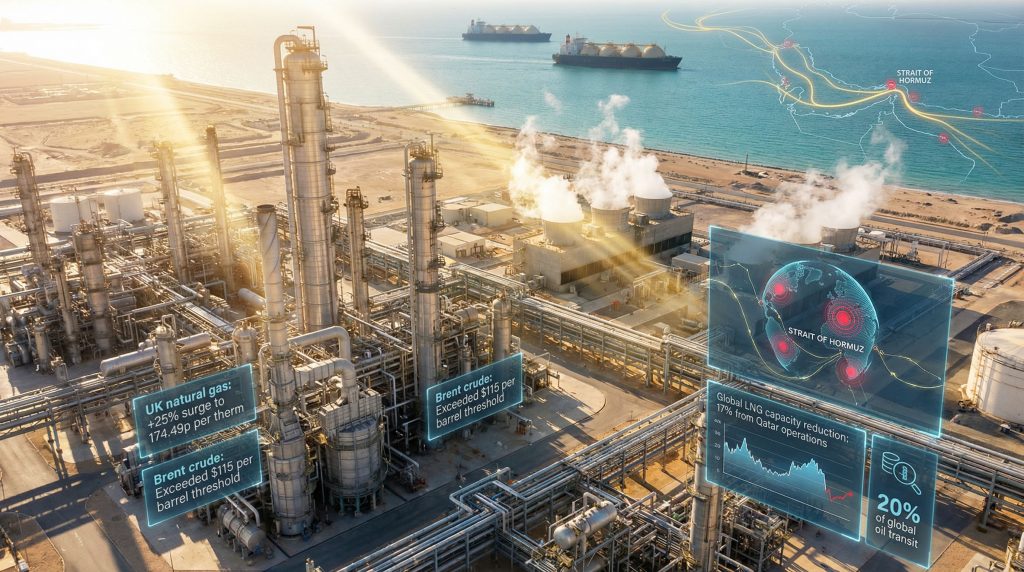
The Strait of Hormuz represents the world's most critical energy chokepoint, with closure scenarios triggering immediate supply chain recalculations across multiple industries. Approximately 20% of global oil transit passes through this narrow waterway, creating systematic vulnerabilities that extend beyond energy markets into manufacturing, transportation, and petrochemical sectors.
Historical analysis reveals that even temporary disruptions to Strait of Hormuz traffic create lasting changes in global trade patterns. Companies develop alternative supply chains and transportation routes that often persist long after immediate threats subside, permanently altering global energy geography.
Supply Chain Vulnerability Assessment:
Petrochemical Sector:
- Immediate production delays as feedstock availability decreases
- Alternative sourcing from higher-cost suppliers increases input expenses
- Long-term facility development in regions with secure supply access
Manufacturing Industries:
- Energy input cost volatility affects production planning and pricing strategies
- Inventory management strategies shift toward larger strategic reserves
- Supply chain diversification initiatives accelerate to reduce chokepoint dependencies
Transportation Networks:
- Fuel cost fluctuations create route optimisation pressures
- Alternative fuel adoption timelines accelerate due to supply security concerns
- Logistics companies develop contingency planning for extended disruptions
Power Generation Sector:
- Natural gas and oil price volatility affects electricity market pricing
- Fuel switching capabilities become strategic competitive advantages
- Renewable energy solutions investment acceleration driven by supply security considerations
Investment Monitoring Framework for Energy Conflicts
Energy-related geopolitical events create complex risk-return profiles that require sophisticated monitoring and analysis frameworks. Successful navigation of these market conditions demands real-time tracking of multiple indicators across commodity markets, currency exchanges, and political developments.
Immediate Market Indicators:
- Commodity Price Movements: Track energy complex pricing across crude oil, natural gas, refined products, and coal markets
- Currency Fluctuations: Monitor exchange rates for energy-exporting nations and reserve currencies
- Transportation Costs: Assess shipping rates and insurance premiums for energy cargo routes
- Strategic Reserve Actions: Follow government releases or acquisitions from national petroleum reserves
Medium-term Development Tracking:
- Infrastructure Reconstruction: Monitor damage assessment and repair timeline announcements
- Alternative Supply Development: Track new pipeline, LNG terminal, and production facility projects
- Diplomatic Progress: Assess negotiation outcomes affecting long-term regional stability
- Technology Deployment: Follow energy security technology adoption and implementation
Long-term Strategic Considerations:
- Energy Transition Acceleration: Evaluate renewable energy investment increases driven by security concerns
- Regional Power Dynamics: Analyse shifting alliances and their implications for energy trade patterns
- International Cooperation: Monitor multilateral frameworks for energy security coordination
- Climate Policy Integration: Assess how energy security priorities interact with decarbonisation objectives
Investment success in energy conflict scenarios requires balancing immediate volatility opportunities against long-term structural changes in global energy systems.
Risk Management Strategies for Energy Investment Portfolios
The intersection of geopolitical risk and energy security demands sophisticated risk management approaches that account for both systematic market disruptions and sector-specific opportunities. Traditional portfolio theory requires modification to address the unique characteristics of energy-related geopolitical events.
Defensive Portfolio Construction:
- Geographic Diversification: Spread energy investments across multiple politically stable jurisdictions
- Operational Security Focus: Emphasise companies with robust physical and cybersecurity frameworks
- Supply Chain Redundancy: Target firms with diversified supplier networks and alternative sourcing capabilities
- Financial Hedging Programs: Prioritise companies with comprehensive commodity price and currency risk management
Opportunistic Investment Approaches:
- Undervalued Stable Assets: Identify quality energy companies in secure jurisdictions trading at geopolitical risk discounts
- Infrastructure Development: Focus on alternative supply route and energy security technology investments
- Service Provider Opportunities: Target companies providing security, insurance, and logistical services to energy sector
- Technology Solutions: Invest in firms developing energy independence and supply security technologies
Advanced Risk Mitigation Techniques:
- Political Risk Insurance: Utilise specialised insurance products for international energy investments
- Multi-Currency Hedging: Implement comprehensive foreign exchange risk management for global exposure
- Scenario-Based Position Sizing: Adjust investment allocations based on multiple conflict escalation pathways
- Liquidity Management: Maintain sufficient cash reserves for rapid position adjustments during crisis periods
Recent market data illustrates the importance of flexible risk management approaches. As of March 20, 2026, commodity prices showed mixed signals with Iron Ore at $107.45/tonne (+0.2%), Brent Crude at $107.47/barrel (flat), and Gold at $4,667/ounce, while US Natural Gas Futures declined 2.0% to $3.12/GJ. The Australian Dollar trading at 70.8 cents against the US Dollar reflected these complex cross-currents in global risk sentiment.
How Can Investors Navigate Energy Sector Volatility?
Effective market volatility hedging requires understanding both immediate market reactions and longer-term structural changes. Consequently, investors must develop comprehensive strategies that account for multiple scenario outcomes whilst maintaining sufficient flexibility to adapt to rapidly changing conditions.
The next major ASX story will hit our subscribers first
Future Energy Security Investment Landscape
The evolving nature of energy-related geopolitical conflicts suggests that infrastructure protection and supply security considerations will become increasingly important factors in investment decision-making. Companies and investors must adapt to a world where energy asset vulnerability creates both systematic risks and competitive advantages.
Emerging Investment Themes:
- Distributed Energy Systems: Investments in decentralised generation and distribution networks that reduce single-point-of-failure risks
- Energy Storage Technologies: Battery, hydrogen, and other storage solutions that provide supply security buffers
- Alternative Transportation Fuels: Biofuels, synthetic fuels, and other alternatives that reduce dependency on traditional supply chains
- Cybersecurity Solutions: Technologies protecting critical energy infrastructure from digital threats
Market Structure Evolution:
- Regional Energy Hubs: Development of diversified supply and processing centers reducing chokepoint dependencies
- Strategic Alliance Networks: Formation of energy security partnerships among politically aligned nations
- Technology Transfer Acceleration: Increased sharing of energy security technologies among allied countries
- Regulatory Framework Harmonisation: Coordination of energy security policies across international partnerships
Yahoo Finance reports that Netanyahu maintains Israel is "winning against Iran" whilst market participants continue monitoring developments that could affect global energy supplies. However, the Netanyahu Iran energy assets pledge represents one example of how diplomatic positioning intersects with market dynamics in the modern energy security landscape.
As geopolitical tensions continue evolving, investors must develop frameworks that account for both immediate volatility opportunities and long-term structural changes in global energy systems. The interconnection between diplomatic statements, market reactions, and strategic positioning will likely intensify as energy security becomes an increasingly critical component of national and corporate strategy.
This analysis is based on publicly available information and market data. Investment decisions should be made in consultation with qualified financial advisers and after conducting thorough due diligence. Geopolitical events can create significant volatility and risk in energy markets, and past performance does not guarantee future results.
Ready to Navigate Energy Market Volatility?
Discovery Alert's proprietary Discovery IQ model delivers real-time alerts on significant ASX mineral discoveries, empowering subscribers to identify actionable opportunities ahead of broader market movements during periods of geopolitical uncertainty. Explore how historic discoveries have generated substantial returns and begin your 14-day free trial today to position yourself strategically in volatile energy and commodity markets.