
June 22, 2026
Energy Market Dynamics and Corporate Resilience in Australia's Gas Sector
Australia's natural gas industry continues to demonstrate remarkable adaptability amid volatile global energy markets, with leading producers implementing sophisticated risk management strategies to maintain operational excellence and financial stability. The sector's ability to navigate commodity price fluctuations while delivering consistent production growth reflects deep operational expertise and strategic asset positioning across diverse geographical regions, particularly as experts analyse the latest natural gas price forecast trends.
The Australian energy landscape has evolved significantly over recent years, with companies developing comprehensive approaches to hedge against market volatility while capitalising on long-term demand growth in Asia-Pacific markets. This strategic positioning becomes particularly crucial during periods of sustained commodity price weakness, where operational efficiency and risk management capabilities determine market leadership.
When big ASX news breaks, our subscribers know first
Production Excellence Amid Commodity Price Volatility
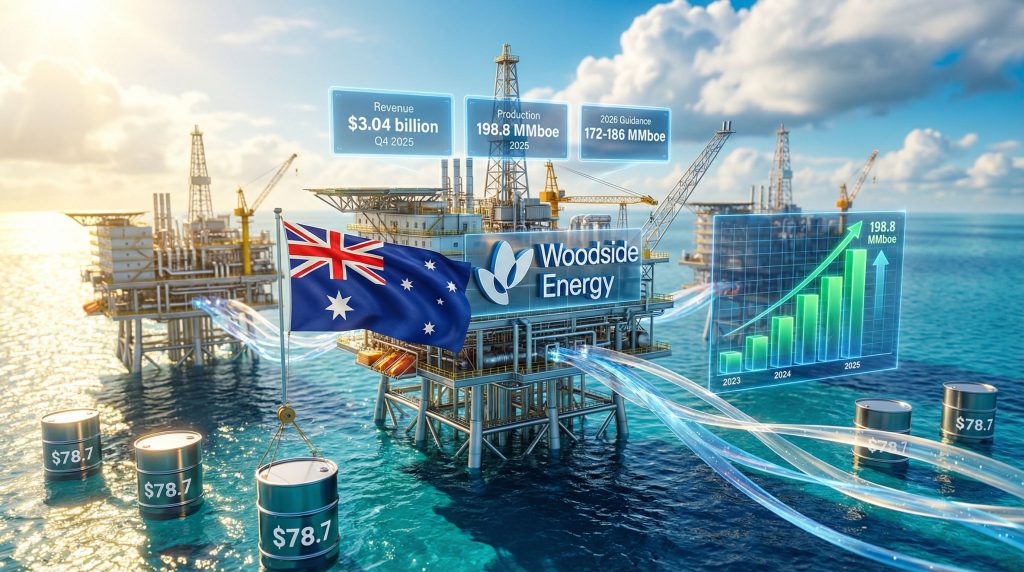
Woodside Energy Q4 revenue estimates despite oil slump showcase how Australia's premier gas producers leverage operational excellence to offset external market pressures. The company's Q4 2025 results demonstrated the effectiveness of maintaining high asset reliability rates across its portfolio, achieving production milestones that exceeded analyst expectations despite challenging market conditions.
Key operational achievements included:
- Record annual production of 198.8 million barrels of oil equivalent (MMboe) in 2025
- Q4 2025 production of 48.9 MMboe, representing sustained output despite seasonal challenges
- Asset reliability rates consistently above 98% across major facilities
- Successful maintenance of plateau production at key offshore developments
The company's ability to deliver these results reflects years of investment in operational infrastructure and maintenance protocols. Industry experts note that such reliability metrics are particularly valuable during volatile price environments, where maximising production uptime directly translates to revenue protection.
Strategic Asset Portfolio Management
Woodside's diversified asset base spans multiple geographical regions and production types, providing natural hedging against localised operational risks and market dynamics. Furthermore, this geographical diversification enables companies to capitalise on emerging LNG supply opportunities across different markets. The portfolio includes:
| Asset Type | Location | Strategic Significance |
|---|---|---|
| Offshore Oil Fields | West Africa (Senegal) | Geographic diversification |
| LNG Processing | Western Australia | Asian market access |
| Deepwater Operations | Gulf of Mexico | North American exposure |
| Gas Processing | North West Shelf | Domestic market supply |
This geographical and operational diversification enables the company to optimise production scheduling and maintenance planning across different market cycles, reducing overall portfolio risk while maintaining consistent output levels.
Risk Management Through Financial Hedging Strategies
Modern energy companies employ sophisticated financial instruments to manage commodity price exposure, with hedging programmes becoming increasingly critical during periods of market volatility. Woodside's approach to risk management demonstrates the importance of strategic hedging in maintaining financial stability.
2025 Hedging Programme Results:
- 30 million barrels of oil equivalent hedged at $78.7 per barrel
- Generated $221 million in pre-tax profits for Q4 2025
- $203 million specifically attributed to oil price hedges
- Forward hedging of 10 MMboe for 2026 at $70.1 per barrel
"Financial hedging represents a crucial risk management tool that allows energy companies to provide earnings guidance and maintain capital allocation discipline regardless of short-term commodity price movements," according to Reuters analysis.
These hedging strategies enable companies to maintain operational focus and investment discipline while protecting against downside price risk. The timing and structure of hedge positions often reflect management's view of long-term commodity cycles and operational cash flow requirements.
Advanced Hedging Methodologies in Energy Markets
Energy companies utilise various hedging instruments beyond simple forward contracts, including:
- Collar strategies combining put and call options for downside protection
- Asian average pricing hedges matching LNG contract structures
- Basis differential swaps managing geographical price variations
- Calendar spread positions optimising seasonal price exposure
These sophisticated approaches allow companies to tailor risk management programmes to their specific operational profiles and market exposures, creating more precise protection against adverse price movements while preserving upside participation during favourable market conditions.
Infrastructure Development and Capital Allocation Strategy
Australia's gas industry continues significant infrastructure investment to support long-term production growth and market access. Woodside's capital allocation demonstrates the strategic priorities driving sectoral development, with major projects representing multi-billion dollar commitments to future production capacity.
Major Development Projects:
- Scarborough Energy Project – 94% complete as of December 2025
- Louisiana LNG development – North American market expansion
- Beaumont New Ammonia facility – Industrial diversification strategy
The Scarborough project represents Australia's largest recent LNG development, with first cargo delivery targeted for Q4 2026. This project exemplifies the technical complexity of modern offshore gas developments, requiring floating production units, subsea infrastructure, and onshore processing modifications.
Technical Challenges in Offshore Gas Development
Modern offshore gas projects involve numerous technical complexities that impact development timelines and capital requirements. In addition, these challenges often intersect with broader market dynamics and energy security analysis considerations:
- Subsea production systems operating in water depths exceeding 900 metres
- Floating production units capable of handling extreme weather conditions
- Gas treatment facilities removing impurities for LNG production specifications
- Pipeline infrastructure connecting offshore fields to onshore processing
These technical requirements necessitate extensive engineering and project management expertise, with development timelines typically spanning 5-7 years from final investment decision to first production. The complexity explains why project completion percentages like Scarborough's 94% completion represent significant milestone achievements.
Market Positioning and Competitive Advantages
Australia's strategic position in global LNG markets provides structural advantages for domestic producers, particularly regarding access to growing Asian demand centres. Geographic proximity to major consuming markets creates transportation cost advantages and supply security benefits that support long-term contract structures.
Australian LNG Market Advantages:
- Geographic proximity to Asian growth markets
- Political stability supporting long-term investment
- Technical expertise in offshore development
- Established infrastructure reducing development costs
These advantages become particularly valuable during global supply disruptions, when buyers prioritise supply security alongside competitive pricing. Australia's position as a reliable supplier enhances the premium pricing potential for long-term contracts.
Global LNG Demand Growth Projections
Industry forecasts suggest continued growth in global LNG demand, driven primarily by Asian economic development and energy transition policies. Key demand drivers include:
- Industrial switching from coal to natural gas in China and India
- Power generation fuel substitution in Southeast Asia
- Peak shaving demand from developed markets during extreme weather
- Marine fuel applications following international emission regulations
These demand trends support the investment case for continued Australian LNG capacity expansion, though project economics remain sensitive to construction costs and commodity price assumptions.
Financial Performance Metrics and Investment Implications
Woodside's financial metrics demonstrate how operational excellence and strategic positioning translate into investment returns, even during challenging market conditions. The company's Q4 2025 revenue of $3.04 billion exceeded analyst expectations despite oil prices declining approximately 20% throughout 2025, reflecting broader economic conditions analysed in US economy insights.
Key Financial Indicators:
| Metric | Value | Market Significance |
|---|---|---|
| Q4 2025 Revenue | $3.04 billion | Beat analyst expectations |
| Operating Margins | 44.96% | Industry-leading efficiency |
| Dividend Payout Ratio | 76% | Strong shareholder returns |
| Net Debt Position | ~$8 billion | Manageable leverage |
These metrics reflect the company's ability to maintain profitability and cash generation despite external pressures, supporting continued investment in growth projects and shareholder distributions. According to Simply Wall St analysis, this performance contrasts with broader challenges facing the energy sector.
Capital Structure Optimisation
Energy companies must balance growth investment requirements with financial stability, particularly given the capital-intensive nature of offshore development projects. Woodside's capital structure reflects strategic choices regarding:
- Debt capacity utilisation for project financing
- Equity retention for operational flexibility
- Working capital management during commodity cycles
- Currency hedging for international operations
The company's debt-to-equity ratio of 0.38 provides sufficient leverage for growth while maintaining financial flexibility during market downturns.
The next major ASX story will hit our subscribers first
Production Outlook and Market Expectations
Woodside Energy Q4 revenue estimates despite oil slump reflect careful strategic planning, with the company's 2026 production guidance of 172-186 MMboe representing a strategic approach to asset management. Lower projected volumes reflect planned maintenance activities and project development timing rather than operational constraints.
2026 Production Factors:
- Five-week Pluto LNG turnaround in Q2 for Scarborough gas preparation
- Major maintenance programmes across multiple facilities
- New volume additions from development projects
- Weather contingency planning for seasonal operations
This conservative guidance approach reflects industry best practices in managing market expectations while preserving operational flexibility for potential upside delivery.
Maintenance Planning and Operational Efficiency
Major maintenance turnarounds represent critical periods in LNG facility operations, requiring extensive planning and coordination to minimise production impacts:
- Inspection protocols ensuring equipment integrity
- Component replacement extending asset life cycles
- System upgrades improving operational efficiency
- Safety systems testing maintaining regulatory compliance
The Pluto LNG turnaround scheduled for Q2 2026 will prepare the facility to process gas from the Scarborough field, representing a strategic investment in future production capacity rather than routine maintenance.
Investment Risk Assessment and Strategic Opportunities
Energy sector investments involve multiple risk categories that investors must evaluate when assessing company prospects. Woodside's business model presents both execution risks and strategic opportunities that influence long-term investment attractiveness, particularly as they relate to broader share market performance trends.
Primary Risk Factors:
- Project execution complexity in offshore developments
- Commodity price volatility affecting cash flows
- Regulatory changes impacting operational requirements
- Technology risks in new facility commissioning
Strategic Opportunities:
- Growing Asian LNG demand supporting long-term contracts
- Operational excellence driving market share gains
- Portfolio optimisation through asset rationalisation
- Technology advancement reducing development costs
The balance between these factors determines investment thesis strength and appropriate valuation metrics for energy companies operating in volatile commodity markets.
Regulatory Environment and Operational Compliance
Australia's energy sector operates under comprehensive regulatory frameworks designed to ensure environmental protection and operational safety. These requirements influence project development timelines and operational costs:
- Environmental impact assessments for new developments
- Offshore safety regulations governing platform operations
- Gas quality specifications for domestic and export markets
- Emissions reporting requirements under climate policies
Compliance with these frameworks requires ongoing investment in monitoring systems and operational procedures, representing both cost obligations and competitive advantages for companies with established compliance capabilities.
The Australian gas sector's demonstrated resilience during recent commodity price volatility reflects the maturation of operational expertise and risk management capabilities across leading producers. Companies like Woodside continue investing in asset optimisation and portfolio expansion while maintaining financial discipline through sophisticated hedging strategies.
However, Woodside Energy Q4 revenue estimates despite oil slump demonstrate that success in this capital-intensive sector requires continued operational excellence and strategic adaptability to evolving market conditions and regulatory requirements. Long-term investment prospects remain supported by structural demand growth in Asian markets and Australia's competitive positioning as a reliable LNG supplier.
Ready to Capitalise on Australia's Next Major Gas Discovery?
Discovery Alert's proprietary Discovery IQ model delivers instant notifications on significant ASX energy and mineral discoveries, empowering investors to identify actionable opportunities in Australia's dynamic gas and resources sector ahead of the broader market. Begin your 30-day free trial today to position yourself at the forefront of Australia's next major discovery breakthrough.