June 2, 2026

Understanding Energy Market Vulnerability Through Infrastructure Dependencies
The Iran war impact on global oil prices has exposed critical vulnerabilities within global energy markets, demonstrating how single points of failure can trigger cascading effects across entire economies. The architecture of modern energy distribution relies heavily on critical maritime chokepoints, processing facilities, and transportation networks that have evolved over decades to optimise efficiency rather than resilience.
Maritime transit corridors represent the most concentrated vulnerability in global energy infrastructure. These narrow waterways channel massive volumes of crude oil and refined products through geographically constrained passages, creating bottlenecks where disruption can instantly affect worldwide supply chains. The concentration of energy flows through these strategic locations reflects decades of infrastructure development designed around stable geopolitical conditions.
Processing capacity constraints compound transportation vulnerabilities by creating additional pressure points where supply disruptions amplify. Refineries operate with limited spare capacity, making the system particularly sensitive to input supply variations. When crude oil flows face interruption, the resulting shortage of refined products like diesel, petrol, and aviation fuel creates immediate impacts across multiple economic sectors.
Regional supply redistribution patterns emerge rapidly during crisis conditions as market participants seek alternative sources and routes. This restructuring process involves significant logistical challenges and cost increases that ultimately transmit through to end consumers via higher prices and reduced availability.
When big ASX news breaks, our subscribers know first
Critical Infrastructure Interdependence Mechanisms
The relationship between crude oil supply and refined product availability demonstrates how modern energy markets have become increasingly specialised and interdependent. European refineries, for example, have historically relied on specific crude oil grades that arrive via particular shipping routes, creating technical and logistical constraints that cannot be easily bypassed during supply disruptions.
Aviation fuel markets exemplify these interdependencies, with approximately 40 percent of global kerosene supplies originating from Persian Gulf refineries. This concentration creates acute vulnerability for airlines and aviation-dependent industries when regional conflicts disrupt production or transportation. The specialised nature of aviation fuel refining means that alternative suppliers cannot rapidly scale production to compensate for lost capacity.
Industrial manufacturing sectors face compound effects as energy input costs increase while transportation costs simultaneously rise. Chemical producers, steel manufacturers, and other energy-intensive industries experience margin compression that forces production adjustments and price increases throughout supply chains.
Economic Transmission Mechanisms Across Market Sectors
Energy price shocks propagate through economic systems via multiple interconnected pathways that extend far beyond direct energy costs. Understanding these transmission mechanisms requires analysing how energy price increases affect input costs, consumer behaviour, monetary policy, and international trade flows.
Input cost inflation represents the most immediate transmission channel, with energy-intensive industries experiencing rapid margin compression. Transportation costs increase across all sectors, affecting everything from food distribution to e-commerce delivery. Manufacturing processes that rely heavily on energy inputs face immediate pressure to raise prices or reduce production volumes.
Consumer spending patterns shift as households allocate larger portions of budgets to energy costs, reducing discretionary spending on other goods and services. This demand destruction effect spreads throughout the economy as businesses in non-energy sectors experience reduced sales volumes. The magnitude of this effect depends on energy's share of total household spending and the availability of substitution options.
Monetary Policy Constraint Dynamics
Central banks face complex trade-offs when energy price shocks create inflationary pressure while simultaneously threatening economic growth. Traditional monetary policy responses become less effective when inflation stems from supply constraints rather than excess demand. Raising interest rates to combat energy-driven inflation risks exacerbating economic contraction without addressing underlying supply problems.
Currency market disruptions emerge as energy-importing countries face deteriorating trade balances while energy-exporting nations experience windfall revenues. These imbalances create exchange rate volatility that further complicates international trade and investment decisions. Countries with significant energy import dependencies may experience currency depreciation that amplifies the domestic cost of energy imports.
Financial market stress manifests through sector rotation as investors reassess risk-return profiles across industries. Energy sector equities typically benefit from higher commodity prices, while energy-intensive industries face declining valuations. Credit markets may tighten as lenders reassess default risks for companies with high energy cost exposure.
Secondary Economic Effects and Amplification
Investment flow redirection accelerates during sustained energy crises as both private and public sector decision-makers reassess long-term strategic priorities. Companies may defer expansion plans in energy-intensive operations while accelerating investments in energy efficiency or alternative technologies. Government budgets face pressure from multiple directions as tax revenues decline while energy subsidy costs increase.
International trade rebalancing occurs as countries seek to reduce energy import dependencies through supply diversification or domestic production enhancement. These adjustments often involve significant upfront costs and long-term contractual commitments that reshape global trade relationships beyond the immediate crisis period.
Labour market effects emerge gradually as energy-intensive industries adjust employment levels in response to sustained cost pressures. Service sectors may experience increased demand as consumers substitute away from energy-intensive goods, creating sectoral employment shifts that require workforce adaptation.
Historical Energy Crisis Analysis and Market Memory
Energy market behaviour during crisis periods reflects both rational economic responses and psychological factors rooted in collective memory of past disruptions. Historical analysis reveals patterns in how markets price uncertainty, how governments respond to supply shocks, and how economic systems adapt to sustained energy price increases.
Furthermore, crisis severity assessment requires comparing multiple dimensions including price volatility, duration, economic impact magnitude, and policy response effectiveness. The current energy crisis has been characterised by experts as exceeding the severity of previous major disruptions, suggesting that market participants may be operating in uncharted territory regarding impact magnitude and duration.
Government policy responses during energy crises typically follow established patterns that reflect both domestic political pressures and international coordination requirements. Emergency measures often include strategic reserve releases, demand reduction mandates, consumer subsidies, and diplomatic initiatives to resolve underlying conflicts.
The next major ASX story will hit our subscribers first
Market Psychology and Behavioural Adaptation
Trader decision-making during uncertainty periods demonstrates how market psychology influences price formation beyond fundamental supply-demand calculations. Risk premiums embedded in energy futures prices reflect not just current supply disruptions but expectations about conflict duration, escalation potential, and policy response effectiveness.
Consumer adaptation timelines vary significantly across different energy applications and economic sectors. Transportation fuel demand shows relatively inelastic short-term response due to limited substitution options, while industrial energy consumption may adjust more rapidly through production scheduling changes or fuel switching where technically feasible.
Historical precedent suggests that market participants often over-discount the possibility of extended disruptions during the early stages of geopolitical conflicts, leading to price volatility as reality diverges from initial expectations. This pattern reflects cognitive biases that favour rapid conflict resolution scenarios over prolonged instability.
Comparative Crisis Framework Analysis
Different crisis types produce distinct market response patterns based on underlying causal factors, geographic scope, and available resolution mechanisms. Supply disruptions caused by military conflicts differ from those resulting from natural disasters or infrastructure failures in terms of uncertainty duration and escalation risks.
Economic impact magnitude varies significantly based on the global economy's starting conditions, energy market structure at crisis onset, and the availability of spare production capacity. Markets that enter crisis periods with tight supply-demand balances tend to experience more severe price volatility than those with significant spare capacity.
Policy effectiveness depends heavily on international coordination and the willingness of major energy producers to increase output. Historical analysis shows that coordinated government responses tend to be more effective at moderating price spikes than unilateral actions by individual countries.
Regional Economic Vulnerability Assessment
Geographic exposure to energy supply disruptions varies dramatically based on domestic production capacity, import dependency ratios, strategic reserve levels, and alternative supply source availability. Understanding these vulnerability patterns requires analysing both direct energy import statistics and indirect exposure through trade relationships and industrial structure.
European Union economies face particular challenges due to their combination of high energy import dependency and significant exposure to specific supply routes. Despite diversification efforts in recent years, EU countries remain vulnerable to global energy market disruptions through price transmission effects even when direct supply impacts are limited.
| Region | Import Dependency | Strategic Reserves | Alternative Suppliers | Vulnerability Score |
|---|---|---|---|---|
| European Union | 85% crude oil | 90-day coverage | Moderate diversity | High |
| Asia-Pacific | 75% crude oil | 60-day coverage | High diversity | Moderate-High |
| North America | 45% crude oil | 180-day coverage | High diversity | Moderate |
| Latin America | Variable by country | Limited coverage | Regional focus | High variability |
Asian manufacturing economies experience vulnerability primarily through input cost increases that affect export competitiveness. Countries with significant manufacturing sectors face the dual challenge of higher domestic energy costs and potential demand reduction in energy-importing markets that are their primary export destinations.
Emerging market economies often lack the fiscal resources to implement large-scale consumer protection measures, making their populations more directly exposed to energy price increases. These countries may also face external financing constraints if energy import costs create current account pressures.
Economic Diversification as Resilience Factor
Economies with significant indigenous energy production capacity demonstrate greater resilience during global energy crises, though they still face price volatility through global market integration. Countries like the United States, which has achieved relative energy independence through unconventional production growth, maintain exposure through integrated global markets even with domestic production capacity.
Industrial structure diversity affects how energy price shocks transmit through different economic sectors. Service-oriented economies may show greater resilience than manufacturing-heavy economies, though transportation and logistics sectors remain universally vulnerable to fuel cost increases.
Financial system resilience varies based on the energy sector's role in domestic banking and capital markets. Countries where energy companies represent significant portions of equity market capitalisation or banking sector lending may experience amplified financial market effects during oil market volatility.
Energy Market Architecture Transformation During Conflict
Supply chain vulnerability mapping reveals how quickly global energy markets can restructure during crisis periods, with market participants rapidly identifying alternative sources, routes, and contractual arrangements. This adaptive capacity demonstrates both the flexibility and fragility inherent in modern energy market architecture.
Current market data illustrates the speed and magnitude of energy market adjustments during the Iran conflict. WTI crude oil prices declined 17.58% to $93.09 following ceasefire announcements, while Brent crude fell 16.23% to $91.54, demonstrating how geopolitical developments can trigger immediate price corrections. These movements reflect not just supply availability changes but also risk premium adjustments as market participants reassess conflict duration probabilities.
Physical crude oil markets have experienced unprecedented premium levels as buyers compete for available supplies outside disrupted regions. Murban crude declined 20.86% to $94.38 during ceasefire relief, indicating the extreme volatility experienced across different crude oil grades during supply disruption periods.
Real-Time Supply Rerouting Documentation
Market participants have demonstrated remarkable adaptability in redirecting energy flows to alternative sources and routes. India's decision to import Iranian oil for the first time in seven years illustrates how geopolitical alignments can shift rapidly when energy security concerns take precedence over other policy considerations.
Simultaneous supply diversification efforts show how importing countries hedge against regional concentration risks. India's pivot toward Venezuelan crude as Middle Eastern supplies face disruption demonstrates strategic supply portfolio management during crisis periods. Similarly, Chinese refiners rushing to secure Iranian crude as prices decline shows how market participants capitalise on supply availability and price opportunities.
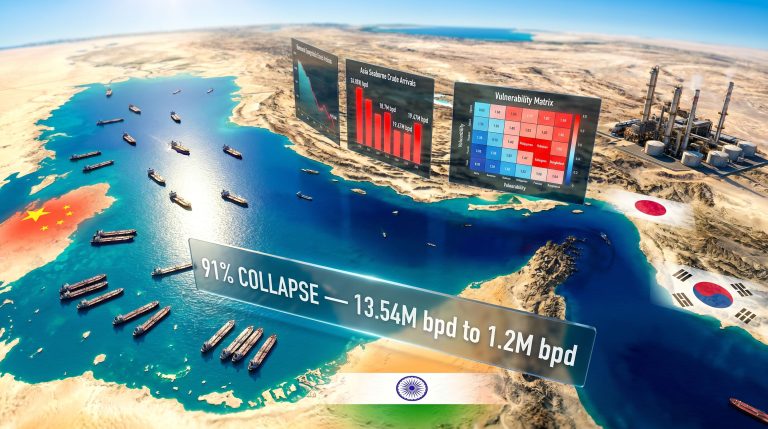
Logistics adaptation has occurred remarkably quickly, with tanker vessels successfully navigating previously restricted passages. Reports of Malaysian tankers carrying Iraqi crude passing through the Strait of Hormuz and Indian LPG tankers clearing the strategic waterway indicate that operational adaptation can occur even during active conflict periods, though at elevated risk premiums.
Financial Market Response Patterns
Energy sector equity performance has dramatically outpaced broader market indices, with energy stocks surging nearly 38% in Q1 2026 while other sectors experienced declines. This performance differential reflects both higher commodity prices and investor expectations about sustained elevated energy prices.
Trading profit expectations have increased substantially across major energy companies. Shell's anticipation of significantly higher oil trading profits in Q1 2026 reflects the increased volatility and price differentials that create arbitrage opportunities for companies with global trading capabilities.
Natural gas market volatility has mirrored crude oil patterns, with European natural gas futures experiencing 20% declines following ceasefire relief and 3% increases as conflict deadlines approached. These movements demonstrate how integrated energy markets transmit volatility across different commodity types and regional markets.
Policy Response Mechanisms and Market Stabilisation
Government intervention strategies during energy crises reflect both domestic political pressures and international coordination requirements. The effectiveness of these interventions depends on their scale, timing, coordination with other nations, and compatibility with underlying market fundamentals.
European Union policy responses illustrate the complexity of coordinating emergency measures across multiple sovereign nations with different energy profiles and political constraints. EU consideration of more flexible state aid rules for energy companies and potential EU-wide gas price caps demonstrate how crisis conditions can accelerate policy integration in areas typically reserved for national decision-making.
Strategic petroleum reserve deployment represents one of the most direct policy tools available to governments during supply disruptions. However, the effectiveness of reserve releases depends on their scale relative to supply disruptions, coordination among major consuming nations, and market expectations about release duration and replenishment timing.
Demand Management Implementation
Emergency demand reduction measures have been implemented rapidly across multiple jurisdictions, drawing on policy frameworks developed during previous energy crises. EU recommendations for reduced air travel, highway speed limits, and work-from-home directives parallel measures implemented during the early stages of the Ukraine conflict, demonstrating how institutional memory facilitates rapid policy deployment.
International Energy Agency recommendations provide a coordinated framework for demand reduction across member countries. The IEA's 10-point action plan includes measures such as working from home, reduced air travel, car-sharing programmes, speed limit reductions, and alternative transportation promotion that can be implemented relatively quickly without major infrastructure changes.
Aviation sector impact has received particular policy attention due to the concentration of kerosene supply chains and the 40% dependency on Persian Gulf refineries. Airlines have begun signalling potential flight reductions on certain routes as fuel costs increase and availability becomes constrained, with policy makers considering demand management measures specific to aviation.
Bilateral Supply Diversification Initiatives
Individual countries have pursued bilateral arrangements to secure alternative energy supplies outside multilateral frameworks. Hungary's agreement to purchase U.S. oil during diplomatic visits illustrates how energy security concerns can accelerate bilateral trade relationships and diplomatic engagement.
Regional mediation efforts have emerged as important mechanisms for conflict resolution, with Pakistan emerging as a key mediator in efforts to end the Strait of Hormuz crisis. These diplomatic initiatives reflect how energy supply disruptions create incentives for non-aligned countries to engage in conflict resolution efforts.
Producer country responses have included commitments to increase output once supply routes reopen. OPEC production impact and OPEC's commitment to boost output following Hormuz reopening provides market participants with forward guidance about supply availability, though the credibility and timing of such commitments remain subject to ongoing geopolitical developments. OPEC's global influence continues to shape market expectations during these crisis periods.
How Does Current Crisis Compare to Previous Oil Shocks?
The current situation differs significantly from previous energy crises in several key dimensions. Furthermore, this crisis occurs during a period of already elevated geopolitical tensions and follows closely after previous supply disruptions, leaving markets with reduced spare capacity and strategic reserves. Additionally, the Iran war impact on oil prices represents a new paradigm in energy market vulnerability.
However, market participants have demonstrated greater adaptability than during previous crises, with more diverse supply sources and improved logistics capabilities. The US oil production decline has paradoxically created more balanced global markets, reducing American dominance while increasing overall vulnerability to regional disruptions.
Consequently, the combination of these factors suggests that while individual supply disruptions may be managed more effectively than in the past, the cumulative effect of multiple simultaneous challenges creates unprecedented complexity for energy market stability.
What Happens if the Crisis Extends Beyond Current Projections?
Extended crisis scenarios would likely trigger more fundamental changes in global energy market architecture beyond temporary supply rerouting. In addition, prolonged disruptions would accelerate investments in alternative energy sources and supply chain diversification that might otherwise take decades to implement.
The potential for an oil price crash remains significant if geopolitical tensions resolve rapidly while demand destruction measures prove more effective than anticipated. However, the underlying structural vulnerabilities exposed during this crisis would likely persist even after immediate supply concerns are resolved.
For instance, long-term policy changes including strategic reserve expansion, supply diversification mandates, and accelerated alternative energy deployment could fundamentally reshape global energy markets over the coming decade.
The Iran war impact on global oil prices demonstrates how quickly modern energy markets can restructure during crisis periods while revealing the fundamental vulnerabilities embedded in globally integrated energy systems. Market participants, policy makers, and economic analysts continue monitoring developments as both immediate supply concerns and longer-term strategic energy security considerations reshape investment flows, policy frameworks, and international relationships across the global energy sector.
Disclaimer: This analysis is based on publicly available information and market data as of April 2026. Energy market conditions, geopolitical developments, and policy responses remain subject to rapid change. Readers should consult current sources and professional advisors for investment and policy decisions. Economic forecasts and scenario modelling involve significant uncertainty and should be considered speculative in nature.
Want to Capitalise on Energy Market Volatility?
Discovery Alert's proprietary Discovery IQ model delivers real-time alerts on significant ASX mineral discoveries, helping investors navigate volatile markets by identifying opportunities in energy-adjacent sectors like uranium, copper, and critical battery minerals. With energy supply disruptions reshaping investment landscapes, explore how historic discoveries have generated substantial returns and begin your 14-day free trial today to position yourself ahead of market movements.